
What is an industrial pH sensor?
An industrial pH sensor is a rugged, chemically resistant pH-measuring device designed to continuously monitor and control the acidity or alkalinity of liquids in harsh process environments such as wastewater, chemical manufacturing, power plants, food production, and mining. Originating from early 20th-century glass electrode technology developed by pioneers like Fritz Haber and Zygmunt Klemensiewicz, industrial pH sensors evolved as industries demanded stronger materials, more stable reference systems, and noise-resistant designs capable of surviving abrasive slurries, corrosive chemicals, and extreme temperatures. Today’s industrial pH sensors use advanced junctions, differential measurement technology, digital outputs, and durable bodies made from PVDF, PEEK, and stainless steel, playing a crucial role in process control, environmental compliance, safety, and product quality across modern industrial operations.
Why were industrial pH sensors invented?
Industrial pH sensors were invented to provide reliable, continuous, and accurate pH measurement in harsh process environments where standard laboratory or combination electrodes quickly fail due to contamination, abrasion, chemical attack, temperature extremes, electrical noise, and mechanical stress. Industrial processes such as wastewater treatment, chemical production, pulp and paper, mining, electroplating, and power generation required sensors with rugged materials, clog-resistant junctions, reinforced reference systems, and stable long-term performance to maintain process control, ensure safety, protect equipment, and meet regulatory compliance.
What are the key components of an industrial pH sensor?
An industrial pH sensor is built from multiple specialized components—including the measuring electrode, reference electrode, solution ground, pH-sensitive glass membrane, junction, electrolyte system, temperature compensation element, salt bridge, internal preamplifier, housing/probe body, cable assembly, industrial connector, O-rings/seals, mounting fittings, and protective guard—because each part supports reliable, stable, and long-term pH measurement under harsh process conditions involving chemicals, solids, temperature extremes, and electrical noise. These components work together to maintain a stable millivolt signal, protect the sensor from contamination, and ensure durability in demanding industrial environments.
- Measuring electrode: Generates the millivolt signal based on hydrogen ion activity in the process fluid.
- Reference electrode: Provides a stable baseline potential required for accurate pH comparison.
- Solution ground: Cancels electrical noise and eliminates ground loops in electrically harsh environments.
- pH-sensitive glass membrane: Interacts selectively with hydrogen ions to develop the pH-dependent voltage.
- Junction (open, annular, PTFE, or ceramic): Controls electrolyte flow and resists clogging in dirty or high-solid media.
- Electrolyte (gel, polymer, or pressurized): Maintains ionic conductivity and stabilizes the reference potential.
- Temperature compensation element (NTC, PT100, PT1000): Adjusts the pH reading according to sample temperature.
- Salt bridge: Isolates and protects the reference chamber in differential-style sensors for longer life.
- Internal preamplifier (analog or digital): Boosts and stabilizes the high-impedance signal for long cable runs.
- Housing/probe body (PVDF, PEEK, epoxy, stainless steel): Provides chemical resistance and mechanical durability.
- Cable assembly: Carries the electrode signal securely to the transmitter without interference.
- Industrial connector (VP, M12, S8, etc.): Ensures reliable integration with transmitters and controllers.
- O-rings and sealing components: Protect the internal elements from leaks and chemical intrusion.
- Mounting threads/fittings: Allow installation into pipes, tanks, flow cells, or submersion assemblies.
- Protective guard or sensor tip shield: Prevents mechanical damage to the sensitive glass and junction in abrasive media.

Measuring electrode
Measuring electrode is the core sensing element of an industrial pH sensor, responsible for detecting the hydrogen ion activity in the process liquid and converting it into a millivolt signal that reflects the actual pH value. It typically consists of a special pH-sensitive glass membrane—often a ruggedized bulb, flat surface, or heavy-duty formulation—connected internally to a conductive element (usually Ag/AgCl or a similar internal reference conductor) suspended in a stable internal buffer. When the glass membrane contacts the process fluid, hydrogen ions exchange with alkali ions within the hydrated surface layer of the glass, creating an electrochemical potential that changes with the acidity or alkalinity of the medium. In industrial designs, the measuring electrode is engineered for long-term stability through toughened glass formulations, abrasion-resistant shapes, and protective guards, allowing it to withstand high solids, aggressive chemicals, high temperatures, and continuous flow conditions without signal degradation.
Reference electrode
Reference electrode serves as the stable electrical baseline inside an industrial pH sensor, providing a constant and predictable potential against which the measuring electrode’s changing millivolt signal can be compared. It typically contains an internal Ag/AgCl element immersed in a carefully formulated electrolyte—gel-filled, polymer, or pressurized—to maintain a consistent ionic environment even when exposed to harsh industrial conditions. The reference electrode works by supplying a fixed electrochemical potential that remains unaffected by the sample’s pH, temperature, flow rate, or chemical composition, ensuring that any voltage difference measured between the reference and measuring electrode reflects only the true hydrogen ion concentration of the process. In industrial sensors, the reference electrode often features reinforced electrolyte reservoirs, double-junction or polymer barriers, and large-surface contact designs to resist contamination, poisoning from sulfides or heavy metals, and electrolyte depletion during long-term continuous operation. Its role is crucial, as the stability of the reference electrode directly determines the accuracy, drift resistance, and lifespan of the industrial pH sensor in aggressive media and demanding process environments.
Solution ground
Solution ground is an additional electrode built into many industrial pH sensors to provide a stable electrical reference to the process liquid itself, allowing the sensor to cancel out electrical noise, eliminate ground loops, and stabilize readings in electrically harsh environments. It is typically made from platinum, titanium, or stainless steel, materials chosen for their excellent conductivity and resistance to corrosion in aggressive industrial media. The solution ground works by creating a direct, low-impedance electrical connection between the sensor body and the process fluid; this connection allows the pH transmitter to detect and subtract stray electrical potentials—such as those caused by pumps, motors, variable-frequency drives, or long cable runs—that would otherwise distort the millivolt signal from the measuring electrode. In differential pH sensors, the solution ground plays an even more critical role by serving as the third reference point in the three-electrode measurement system, helping isolate the reference electrode from electrical interference and ensuring highly stable, drift-free measurement in wastewater, pulp & paper, plating baths, and high-conductivity industrial streams. The solution ground is often integrated as a metal band, ring, or exposed metal insert in the sensor body, offering long-term durability and reliable noise suppression in demanding process environments.
pH-sensitive glass membrane
pH-sensitive glass membrane is the functional surface of an industrial pH sensor, responsible for detecting hydrogen ion activity in the process liquid by developing an electrochemical potential directly proportional to the sample’s pH. It is made from a specially formulated ion-exchange glass that contains alkali metal ions (typically Li⁺ or Na⁺), which can freely exchange with hydrogen ions (H⁺) in the surrounding solution; when the membrane contacts the process fluid, this ion exchange forms a measurable voltage across the hydrated gel layer on the glass surface. The membrane’s role is to convert chemical activity into an electrical signal with extremely high sensitivity, following the Nernst equation (~59.16 mV per pH unit at 25°C), allowing precise monitoring even under challenging conditions. Industrial pH membranes are engineered using toughened, abrasion-resistant, high-temperature, ion-resistant, or dehydration-resistant glass compositions, enabling them to survive slurries, high solids, caustics, strong acids, solvents, and temperature fluctuations that would quickly damage standard laboratory membranes. Common industrial membrane shapes include rugged bulbs, flat-surface designs for slurries, spear tips for semi-solids, and reinforced heavy-duty membranes, each selected to optimize durability, response time, and resistance to coating or breakage in specific process environments.
Junction (open, annular, PTFE, or ceramic)
Junction (open, annular, PTFE, or ceramic) is the controlled interface between the industrial pH sensor’s internal reference electrolyte and the process liquid, allowing a small, stable flow of ions while preventing contaminants from entering and destabilizing the reference system. It works by creating a porous or open pathway—depending on the design—through which ionic exchange can occur, enabling the reference electrode to maintain a constant electrical potential that the measuring electrode can compare against. The junction’s role is critical: it governs electrolyte flow, influences response time, prevents poisoning by sulfides or heavy metals, and determines how well the sensor resists clogging in demanding process media. Industrial sensors use specialized junction designs tailored for harsh conditions, such as open junctions for slurries and high solids, annular gap junctions for high-flow stabilization, PTFE junctions for fouling resistance in oily or protein-rich media, and ceramic junctions for clean, stable, low-flow applications, ensuring reliable, drift-free performance across a wide range of chemical, wastewater, and industrial processes.
Electrolyte (gel, polymer, or pressurized)
Electrolyte (gel, polymer, or pressurized) is the internal conductive medium that surrounds the reference electrode in an industrial pH sensor, enabling stable ionic contact between the reference system and the process through the junction. It works by maintaining a consistent ionic environment—usually based on potassium chloride (KCl) or specialized polymer formulations—that ensures the reference electrode’s electrical potential remains constant regardless of changes in the process fluid. The electrolyte’s role is fundamental: it supports stable reference performance, prevents contamination from process chemicals, and sustains long-term signal integrity in high-demand industrial environments. Industrial sensors use gel electrolytes for durability and reduced maintenance, polymer electrolytes for resistance to dilution and poisoning in aggressive media, and pressurized electrolytes for processes with high flow, high temperature, or strong vacuum forces, where maintaining outward electrolyte flow prevents intrusion of contaminants. These electrolyte systems are engineered for continuous operation and enhanced lifespan, making them suitable for wastewater treatment, chemical production, pulp and paper, mining, and other challenging industrial applications.
Temperature compensation element (NTC, pt100, pt1000)
Temperature compensation element (NTC, PT100, PT1000) is the built-in temperature-sensing component of an industrial pH sensor that continuously measures the process temperature so the transmitter or pH meter can automatically correct the pH reading according to the Nernst equation. Because the millivolt output of the glass measuring electrode changes with temperature (approximately 0.198 mV/°C per pH unit), accurate pH measurement requires real-time temperature feedback; the temperature element provides this by converting thermal changes into electrical resistance changes that the transmitter interprets. In industrial sensors, NTC thermistors (e.g., NTC 2.252K or NTC 10K) offer fast response and are commonly used in general-purpose applications, while PT100 and PT1000 platinum RTDs provide higher accuracy, stability, and chemical resistance for demanding industrial environments. The temperature compensation element plays a crucial role in ensuring precise, stable, and reproducible pH readings in processes with fluctuating temperatures, such as chemical reactors, wastewater lines, power plant loops, and CIP/SIP cleaning cycles.
Salt bridge (for differential-style industrial sensors)
Salt bridge (for differential-style industrial sensors) is the internal ionic pathway that connects the reference electrode chamber to the process liquid while keeping the reference electrolyte chemically isolated, ensuring long-term stability and resistance to contamination in demanding industrial applications. In differential pH sensors, the salt bridge is typically filled with concentrated KCl or a specially formulated gel that maintains strong ionic conductivity while preventing aggressive chemicals, sulfides, heavy metals, or process impurities from reaching and poisoning the reference element. It works by allowing controlled ion exchange through a robust, chemically resistant barrier—often made of ceramic, polymer, or engineered porous materials—so the reference electrode maintains a stable potential even in dirty, abrasive, or chemically reactive environments. The salt bridge plays a central role in keeping differential sensors exceptionally stable by protecting the reference system, extending sensor lifespan, preventing drift, and maintaining consistent pH measurements in wastewater, pulp and paper, mining, plating baths, and other harsh industrial processes.
Internal preamplifier (analog or digital)
Internal preamplifier (analog or digital) is the onboard electronic circuit inside an industrial pH sensor that strengthens, stabilizes, and conditions the weak high-impedance millivolt signal generated by the glass measuring electrode before it travels through long cables to the transmitter or controller. Because raw pH electrode signals are extremely low-current and highly susceptible to electrical noise, moisture intrusion, and signal loss over distance, the preamplifier converts this fragile millivolt output into a low-impedance, noise-resistant signal that can be transmitted reliably—often over tens or even hundreds of meters in industrial facilities. In analog designs, the preamplifier stabilizes the mV signal and protects it from interference caused by pumps, motors, or variable-frequency drives, while digital preamplifiers convert the electrode output into digital protocols such as Modbus, HART, or proprietary smart sensor formats that further improve noise immunity, diagnostics, and calibration retention. This component plays a critical role in enabling accurate pH measurement in electrically harsh environments by reducing drift, preventing ground-loop interference, supporting long cable runs, and ensuring long-term performance in industrial applications like wastewater, chemical processing, and power generation.
Housing/probe body (PVDF, PEEK, epoxy, stainless steel)
Housing/probe body (PVDF, PEEK, epoxy, stainless steel) is the structural casing that holds and protects all internal components of an industrial pH sensor, ensuring mechanical strength, chemical resistance, and long-term durability in harsh process environments. It works by shielding the sensitive measuring electrode, reference electrode, junction, electrolyte system, and internal electronics from physical impact, abrasive flow, corrosive chemicals, pressure fluctuations, and temperature extremes. The housing’s role is fundamental to industrial performance: it maintains the sensor’s structural integrity, prevents leaks, ensures proper installation through threaded or flange fittings, and provides the necessary robustness for continuous operation in pipelines, tanks, and reactors. Industrial pH sensors use PVDF for high chemical resistance and good mechanical strength, PEEK for extreme chemical and thermal resistance, epoxy for cost-effective durability in moderate conditions, and stainless steel for high-pressure or sanitary environments. Together, these materials allow the probe body to survive aggressive acids, caustics, solvents, slurries, high solids, CIP/SIP cleaning cycles, and mechanical abrasion—making the housing one of the most critical components for ensuring longevity and reliability in industrial pH measurement.
Cable assembly
Cable assembly is the signal transmission link of an industrial pH sensor, designed to carry the delicate electrode output—or its conditioned signal—from the sensor body to the transmitter or controller while protecting it from electrical noise, moisture, chemicals, and mechanical damage. It works by integrating shielded conductors, insulation layers, and chemical-resistant jacketing materials that preserve signal integrity over long distances, especially in electrically harsh industrial environments filled with pumps, motors, heaters, and variable-frequency drives. The cable assembly’s role is essential: it ensures low-noise signal transmission, prevents ground-loop interference, maintains proper impedance matching, and forms a reliable electrical connection between the sensor and the measurement system. Industrial pH sensor cables commonly feature coaxial shielding, twisted pairs, drain wires, and chemical-resistant polymers such as EPDM, TPE, FEP, or polyurethane, and may include integrated temperature compensation wires or digital communication lines. Many designs also use molded strain reliefs or sealed cable glands to prevent moisture ingress, allowing the cable assembly to endure chemical splashes, steam, vibration, and continuous washdowns common in industrial process environments.
Industrial connector (VP, M12, S8, etc.)
Industrial connector (VP, M12, S8, etc.) is the standardized electrical interface that links an industrial pH sensor to its transmitter, controller, or monitoring system, providing a secure, sealed, and noise-resistant connection capable of withstanding harsh industrial environments. It works by using ruggedized mechanical designs—such as threaded, bayonet, or locking mechanisms—along with sealed electrical contacts that prevent moisture ingress, chemical attack, and signal degradation, ensuring stable communication between the sensor’s internal electrodes or preamplifier and the receiving instrument. The connector’s role is critical: it protects the high-impedance pH signal from interference, supports long-distance transmission, allows quick sensor replacement, and enables compatibility with industry-standard wiring systems. Common types include VP connectors for combination signal + temperature lines, M12 connectors for digital and industrial automation systems, S8 connectors for traditional analog sensors, and other sealed industrial formats designed to handle vibration, washdowns, corrosive media, and outdoor exposure. These connectors ensure that the sensor integrates reliably into process control architectures, even in environments with electrical noise, aggressive chemicals, and continuous operational demands.
O-rings and sealing components
O-rings and sealing components are the critical mechanical barriers within an industrial pH sensor that prevent process liquids, moisture, and contaminants from entering the sensor’s internal chambers, protecting the sensitive electrodes, electrolyte system, and electronics from chemical intrusion and mechanical failure. They work by forming tight, chemically resistant seals at connection points—such as between the housing sections, cable glands, and reference chambers—using elastomeric or fluoropolymer materials that compress to block fluid pathways under pressure. Their role is essential for maintaining sensor integrity in harsh industrial environments, ensuring that electrolyte does not leak out, process media does not seep in, and internal components remain isolated from corrosive chemicals, steam, particulates, and temperature fluctuations. Industrial pH sensors commonly use EPDM for water and mild chemicals, Viton (FKM) for aggressive solvents and acids, Kalrez for extreme chemical resistance, and PTFE for high-temperature or high-purity applications. These sealing components allow the sensor to withstand high-pressure lines, CIP/SIP cycles, washdowns, and long-term immersion, making them vital for durability, accuracy, and long operational life in demanding industrial processes.
Mounting threads/fittings
Mounting threads/fittings are the mechanical interfaces that allow an industrial pH sensor to be securely installed into process lines, tanks, submersion assemblies, or flow-through housings, ensuring proper immersion depth, stable positioning, and leak-proof integration with industrial equipment. They work by using standardized thread types—such as ¾” NPT, 1″ NPT, PG13.5, or tri-clamp sanitary fittings—that mechanically engage with process piping or mounting hardware, creating a sealed and rigid connection capable of withstanding pressure, vibration, and continuous flow. Their role is fundamental in industrial applications: mounting threads and fittings keep the sensor in direct contact with the process fluid, maintain correct orientation for accurate measurement, prevent bypass flow or dead zones, and protect internal components from pressure surges or mechanical stress. Industrial sensors commonly use NPT threads for inline and pipe-mounted systems, PG13.5 fittings for standard process electrodes, tri-clamp sanitary fittings for food and pharmaceutical applications, and custom flanges or retractable assemblies for high-pressure or high-solids processes. These fittings ensure reliable installation, safe operation, and long-term durability in chemical processing, wastewater treatment, power generation, and other demanding industrial environments.
Protective guard or sensor tip shield
Protective guard or sensor tip shield is the structural barrier placed around the sensitive glass membrane and junction of an industrial pH sensor to prevent mechanical damage, abrasion, and breakage during operation in harsh or high-solid process environments. It works by forming a rigid cage or reinforced cover—usually made of stainless steel, PVDF, PEEK, or other impact-resistant materials—that absorbs physical forces, deflects debris, and shields the delicate sensing elements from direct contact with rocks, grit, agitators, pump suction, or fast-moving slurry. Its role is crucial: the guard dramatically reduces the risk of membrane fractures, extends sensor lifespan, and maintains measurement integrity in conditions where turbulence, vibration, and particulate impact are common. Industrial tip shields often take the form of slotted cages, perforated covers, extended housings, or recessed membrane wells, each designed to balance protection with proper exposure to the process fluid. This makes the protective guard indispensable in applications such as wastewater streams, pulp and paper slurries, mining slurries, and chemical reactors where mechanical stress is unavoidable.
What are the industrial pH sensors made of?
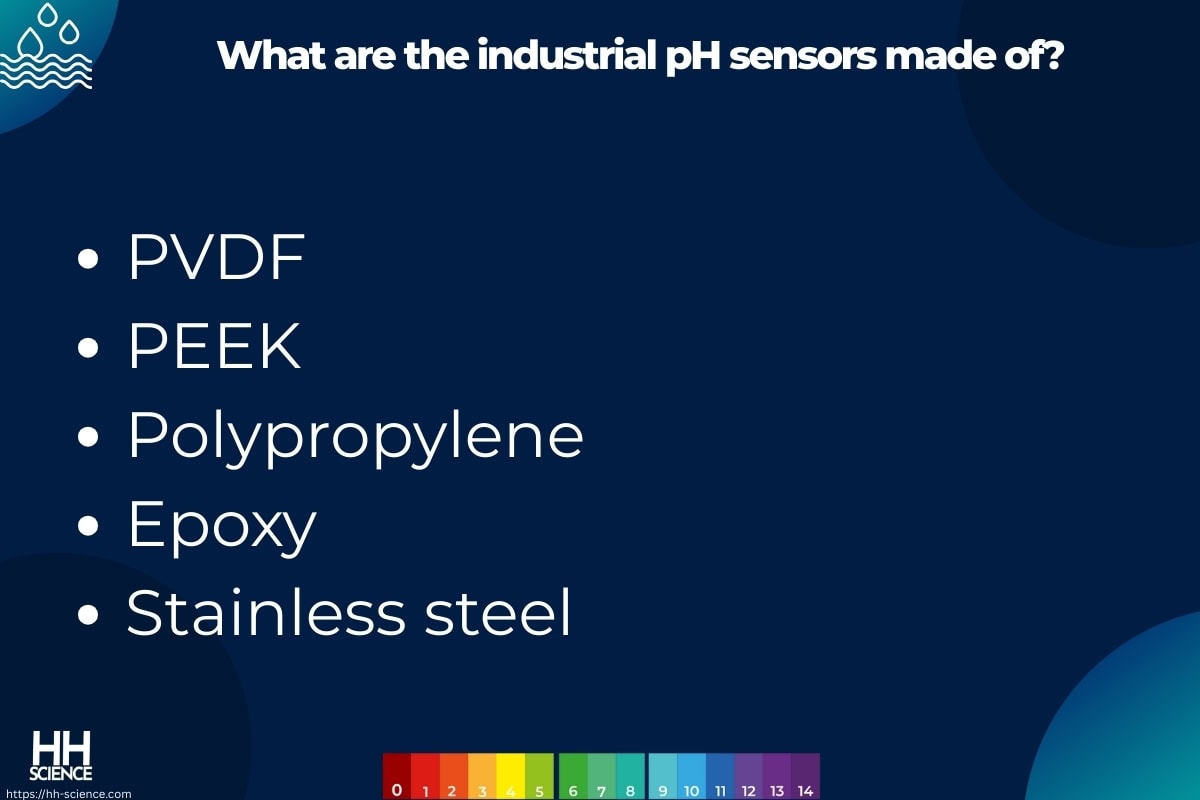
Industrial pH sensors are typically made of PVDF, PEEK, polypropylene, epoxy, and stainless steel, because these materials provide the chemical resistance, mechanical strength, temperature tolerance, and long-term durability required to survive corrosive chemicals, high solids, high pressure, and continuous operation in industrial environments. Each material is selected to match specific process conditions and optimize sensor lifespan, stability, and performance.
- PVDF: Offers excellent chemical resistance and strong mechanical strength, making it suitable for aggressive acids, caustics, and wastewater streams.
- PEEK: Provides exceptional thermal and chemical resistance, ideal for high-temperature, high-pressure, and solvent-heavy industrial applications.
- Polypropylene: Delivers cost-effective chemical compatibility and is commonly used for general-purpose industrial sensors in mild to moderate conditions.
- Epoxy: Provides a durable, economical housing material used in less aggressive environments where chemical exposure is moderate.
- Stainless steel: Ensures high structural strength and hygienic compatibility, making it suitable for sanitary applications, high-pressure lines, and CIP/SIP processes.
How does an industrial pH sensor work?
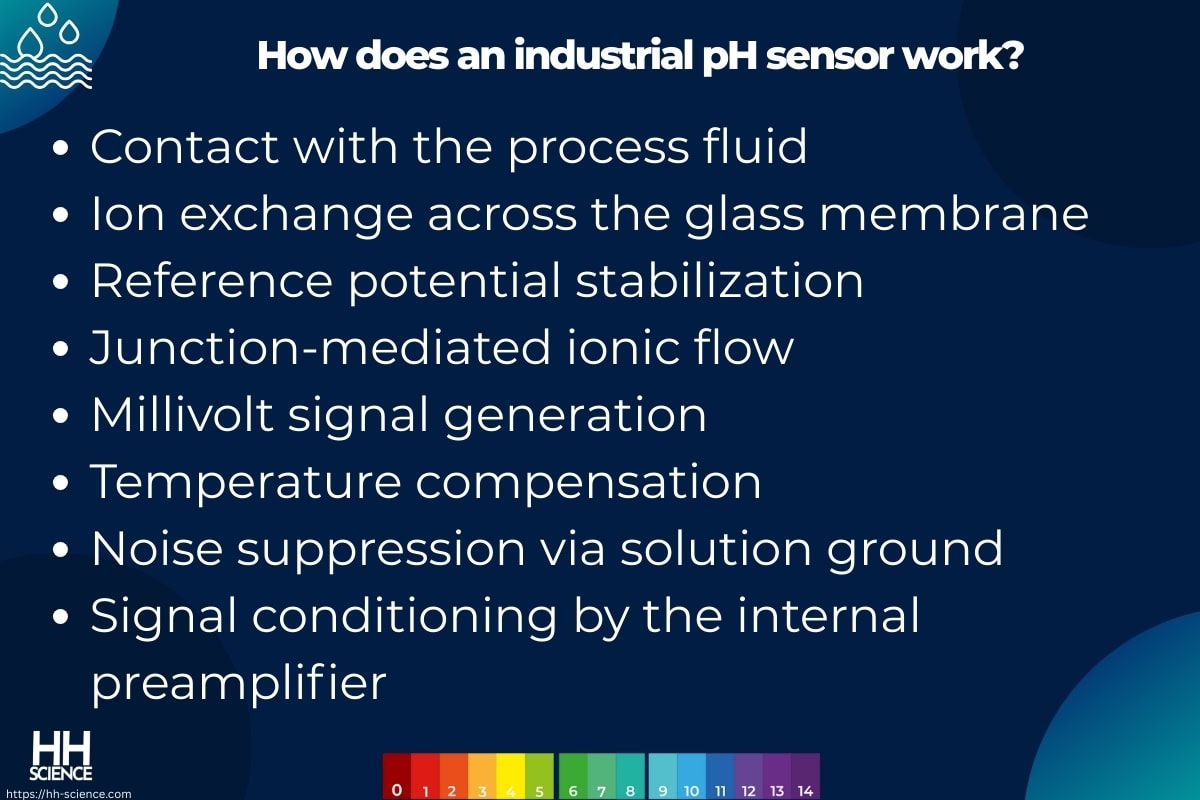
An industrial pH sensor works through a multi-step electrochemical process involving the measuring electrode, pH-sensitive glass membrane, reference electrode, junction, electrolyte system, temperature compensator, solution ground, and (if present) internal preamplifier, because these components work together to convert hydrogen ion activity in the process fluid into a stable, temperature-corrected electrical signal suitable for industrial transmitters. The mechanism includes contact with the process fluid, ion exchange across the glass membrane, reference potential stabilization, junction-mediated ionic flow, millivolt signal generation, temperature compensation, noise suppression by solution ground, and signal conditioning by the preamplifier.
- Contact with the process fluid: The glass membrane and junction are immersed in the industrial medium, exposing the sensor to hydrogen ions and enabling electrochemical interaction.
- Ion exchange across the glass membrane: Hydrogen ions from the process replace alkali ions in the membrane’s hydrated layer, generating a voltage proportional to pH.
- Reference potential stabilization: The reference electrode and electrolyte maintain a constant electrical baseline that the measuring electrode can be compared against.
- Junction-mediated ionic flow: The junction allows controlled electrolyte exchange, ensuring stable contact between the reference system and the process fluid.
- Millivolt signal generation: The voltage difference between the measuring electrode and reference electrode—following the Nernst equation—forms the raw pH signal.
- Temperature compensation: The built-in NTC, PT100, or PT1000 element reports real-time temperature so the transmitter can correct the pH slope and offset.
- Noise suppression via solution ground: The solution ground electrode cancels electrical interference from pumps, motors, and VFDs, stabilizing the signal.
- Signal conditioning by the internal preamplifier: The optional analog or digital preamplifier strengthens the high-impedance mV signal for long-distance, noise-resistant transmission to the controller.
What are the types of industrial pH sensors?
The main types of industrial pH sensors can be grouped by measurement technology, junction type, reference system, temperature compensation type, installation method, electrode shape or tip style, application-specific design, material or property-specific variants, signal/output format, and cleaning compatibility, because industrial processes vary widely in chemical composition, solids content, pressure, temperature, electrical noise, and regulatory requirements, making each category essential for selecting the correct sensor for long-term stability and accurate process control. These classifications help industries match the sensor’s construction and functionality to harsh environments such as wastewater, chemical production, power plants, mining, food processing, and high-purity applications.
Industrial pH sensor types by measurement technology
Industrial pH sensor types by measurement technology include combination pH sensors, differential pH sensors, process pH sensors, and ISFET pH sensors, because each technology uses a different sensing architecture and reference system designed to address specific industrial challenges such as contamination, electrical noise, high solids, extreme chemicals, or rapid process changes. These categories ensure that industries can choose a sensor technology that matches the chemical, mechanical, and environmental demands of their processes.
- Combination pH sensor: Uses a single body containing both measuring and reference electrodes, providing a simple, general-purpose design suitable for moderate industrial conditions.
- Differential pH sensor: Features a three-electrode system (process, reference, and solution ground) that delivers exceptional stability and contamination resistance in harsh, dirty, or noisy environments.
- Process pH sensor: A ruggedized variant of combination sensors designed specifically for continuous monitoring in pipelines, reactors, tanks, and industrial systems.
- ISFET pH sensor: Uses a solid-state ion-sensitive field-effect transistor instead of glass, offering fast response, break resistance, and excellent performance in applications requiring high durability or sterility.
Industrial pH sensor types by junction type
Industrial pH sensor types by junction type include open junction, annular gap, PTFE junction, ceramic junction, and double junction designs, because different industrial processes vary in solids content, viscosity, fouling tendency, and chemical aggressiveness, requiring tailored junction structures to ensure stable electrolyte flow, prevent clogging, and maintain long-term measurement reliability. Each junction type is engineered to match specific environmental and chemical challenges commonly found in wastewater, chemical processing, pulp and paper, mining, food production, and other demanding industries.
- Open junction: Provides a large, unobstructed electrolyte interface ideal for slurries, high solids, and heavily contaminated wastewater.
- Annular gap junction: Uses a circumferential flow path that stabilizes measurements in flowing, turbulent, or variable conductivity processes.
- PTFE junction: Offers excellent resistance to fouling, oils, greases, and organic coatings in oily or protein-rich industrial media.
- Ceramic junction: Delivers precise, low-flow electrolyte contact for cleaner, more stable process conditions with minimal contamination.
- Double junction: Adds an extra barrier to protect the reference system from poisoning by sulfides, heavy metals, or aggressive chemicals.
Industrial pH sensor types by reference system
Industrial pH sensor types by reference system include gel-filled reference, polymer reference, pressurized reference, solid-state reference, and refillable reference designs, because different industrial environments expose the reference electrode to contamination, pressure fluctuations, chemical attack, and electrolyte dilution, requiring tailored reference architectures to maintain a stable potential and long-term measurement accuracy. These reference systems are engineered to resist poisoning, prevent backflow, and ensure consistent ionic contact across a wide range of harsh industrial processes.
- Gel-filled reference: Uses a thickened KCl gel that resists dilution and leakage, offering low maintenance and good durability in general industrial applications.
- Polymer reference: Uses a chemically resistant polymer matrix that prevents contamination and provides excellent stability in aggressive or high-organic media.
- Pressurized reference: Maintains constant outward electrolyte flow under pressure or vacuum, ideal for high-temperature, high-flow, and chemically harsh processes.
- Solid-state reference: Eliminates liquid electrolyte entirely, providing exceptional resistance to poisoning and long service life in extreme industrial environments.
- Refillable reference: Contains liquid KCl that can be replenished, offering high accuracy and long-term stability for applications requiring frequent calibration or extended operation.
Industrial pH sensor types by temperature compensation type
Industrial pH sensor types by temperature compensation type include NTC 2.252K, NTC 5K, NTC 10K, NTC 22K, PT100, and PT1000, because different transmitters, control systems, and industrial processes require specific temperature compensation elements to correctly adjust the pH reading according to the Nernst equation and ensure accurate measurement under varying thermal conditions. Each compensation type offers distinct advantages in response speed, accuracy, compatibility, and durability, making them suitable for different industrial environments.
- NTC 2.252K: A fast-responding thermistor used in legacy or specialized industrial controllers requiring low-resistance temperature inputs.
- NTC 5K: Provides stable temperature feedback for mid-range industrial systems that rely on moderate-resistance thermistors.
- NTC 10K: The most common NTC element, offering excellent compatibility and quick response in general industrial pH applications.
- NTC 22K: A higher-resistance thermistor used when extended sensitivity or specific controller matching is required.
- PT100: A platinum RTD known for its high accuracy, stability, and linearity, ideal for high-precision or high-temperature industrial processes.
- PT1000: A higher-resistance RTD offering improved noise immunity and accuracy over long cable runs, making it well-suited for electrically harsh industrial environments.
Industrial pH sensor types by installation type
Industrial pH sensor types by installation type include inline, submersion, flow-through, retractable, and sanitary tri-clamp designs, because industrial processes differ in piping layout, tank geometry, flow conditions, pressure, and hygienic requirements, making it necessary to mount pH sensors in ways that maintain accurate measurement, easy maintenance, and safe operation. Each installation type supports a specific process configuration to ensure reliable long-term monitoring.
- Inline: Installed directly into pipelines using threaded fittings to measure pH continuously under flowing, pressurized conditions.
- Submersion: Mounted on a rod or cable and submerged into tanks, basins, or open channels for flexible installation in wastewater or chemical baths.
- Flow-through: Used in dedicated chambers that allow controlled, continuous sampling, ideal for clean or recirculating systems requiring stable flow.
- Retractable: Installed in housings that allow the sensor to be withdrawn for cleaning or calibration without stopping the process.
- Sanitary tri-clamp: Designed for hygienic food, beverage, and pharmaceutical processes, allowing easy cleaning and compliance with sanitary regulations.
Industrial pH sensor types by electrode shape/tip style
Industrial pH sensor types by electrode shape or tip style include bulb, flat surface, spear tip, and heavy-duty rugged bulb designs, because different industrial media—ranging from clear liquids to slurries, semi-solids, and abrasive streams—require specific membrane geometries to ensure accurate measurement, fast response, and long sensor life under harsh conditions. These tip styles allow the sensor to match the physical characteristics of the process fluid and resist coating, breakage, or abrasion.
- Bulb: The standard round glass membrane used for general industrial liquids, providing high sensitivity and fast response.
- Flat surface: A flush membrane design that resists coating and abrasion, ideal for slurries, pulp, and viscous or high-solid media.
- Spear tip: A pointed or sharp-tip membrane used for penetrating semi-solids such as gels, soil, meat, or food pastes.
- Heavy-duty rugged bulb: A reinforced or recessed bulb designed to withstand abrasion, turbulence, and mechanical stress in aggressive industrial processes.
Industrial pH sensor types by application-specific industrial
Industrial pH sensor types by application-specific design include aggressive media–resistant sensors, high chemical–resistance sensors, precise measurement sensors, hydroponics digital smart sensors, moist-soil digital sensors, high-pressure industrial sensors, high-purity water sensors, and OEM replacement pH/ORP sensors, because different industrial environments expose sensors to unique combinations of chemicals, solids, pressure, temperature, and electrical noise, requiring customized construction materials, junction designs, and electronics to ensure long-term stability, accuracy, and durability. Each type is engineered to solve specific process challenges where standard industrial sensors would fail or require excessive maintenance.
- Aggressive media–resistant sensors: Built with chemically inert materials and specialized junctions for strong acids, caustics, solvents, and corrosive industrial streams.
- High chemical–resistance sensors: Designed using PEEK, PVDF, or advanced glass formulations to withstand continuous exposure to harsh chemical baths and reactive compounds.
- Precise measurement sensors (high-accuracy process grade): Optimized for tight process control in high-purity or critical manufacturing environments requiring minimal drift.
- Hydroponics digital smart pH sensors: Equipped with digital outputs and moisture-resistant bodies for nutrient solution monitoring in agricultural automation.
- Moist soil digital pH sensors: Use ISFET or rugged flat-surface designs to measure pH directly in soil or semi-solid media with minimal maintenance.
- High-pressure industrial pH sensors: Feature reinforced housings and pressurized reference systems to remain stable under elevated system pressures and rapid pressure changes.
- High-purity water pH sensors (PURE series style): Tailored for low-conductivity water with specialized junctions and glass formulations to prevent drift in ultrapure applications.
- OEM replacement pH/ORP sensors: Manufactured to fit directly into existing industrial probes, controllers, or housings while maintaining equivalent performance and compatibility.
Industrial pH sensor types by material / property-specific variants
Industrial pH sensor types by material and property-specific variants include ION-resistant glass sensors, high-temperature sensors, dehydration-resistant sensors, solvent- and VOC-resistant sensors, slurry-compatible sensors, sodium-resistant sensors, and zinc-resistant sensors, because different industrial and chemical environments subject the sensing glass and junction to unique ion interactions, coating, thermal stress, and chemical attack, requiring specialized materials and engineered glass formulations to ensure accuracy, longevity, and resistance to drift or membrane damage. These variants allow pH sensors to perform reliably where standard industrial electrodes would fail prematurely.
- ION-resistant glass sensors: Use specialized glass formulations that resist ion exchange interference from aggressive ions such as lithium, fluoride, or heavy metals.
- High-temperature sensors: Built with heat-stable glass and high-temperature junctions for continuous operation in hot chemical baths, reactors, or CIP/SIP cycles.
- Dehydration-resistant sensors: Designed to maintain membrane hydration and stable performance in environments with intermittent exposure or high airflow.
- Solvent- and VOC-resistant sensors: Made using chemically inert materials that withstand organic solvents, alcohols, ketones, and volatile compounds.
- Slurry-compatible sensors: Feature rugged membranes and flush or flat-surface designs that resist abrasion and coating in high-solid or abrasive processes.
- Sodium-resistant (Na⁺) sensors: Utilize Na⁺-interference-resistant glass to prevent alkaline error and drift in high-pH, high-sodium industrial environments.
- Zinc-resistant (Zn⁻) sensors: Designed to prevent membrane poisoning and junction blockage in processes with elevated zinc or other metal ion concentrations.
Industrial pH sensor types by signal/output type
Industrial pH sensor types by signal/output type include analog millivolt, 4–20 mA, digital Modbus, digital HART, digital RS485, CAN protocol, and proprietary digital smart sensor outputs, because different industrial control systems—from legacy PLCs to modern SCADA and IoT platforms—require specific communication formats to ensure accurate transmission, noise immunity, long-distance signaling, and seamless integration with automation networks. These output types allow industrial pH sensors to function reliably in electrically noisy environments, support advanced diagnostics, and match the architecture of diverse industrial facilities.
- Analog millivolt: Provides the raw high-impedance pH signal directly from the electrode, typically used with short cables or built-in preamplifiers to avoid noise.
- 4–20 mA: Converts pH into a robust current loop signal ideal for long cable runs, harsh electrical environments, and universal PLC compatibility.
- Digital Modbus: Offers two-way digital communication with parameter access, diagnostics, and multi-sensor networking over RS485.
- Digital HART: Combines analog 4–20 mA with digital data overlay, enabling advanced diagnostics and configuration in process automation systems.
- Digital RS485: Provides long-distance, noise-resistant transmission with multi-drop capability for distributed industrial installations.
- CAN protocol: Supports fast, stable communication in machine control, mobile equipment, and industrial automation networks.
- Proprietary digital smart sensors: Use manufacturer-specific protocols to enable plug-and-play integration, auto-recognition, internal calibration storage, and enhanced diagnostics.
Industrial pH sensor types by cleaning method compatibility
Industrial pH sensor types by cleaning method compatibility include manual cleaning, automatic jet cleaning, CIP-compatible designs, SIP/steam-sterilizable designs, and other high-sanitation cleaning-ready variants, because industrial processes differ widely in fouling tendencies, hygienic requirements, chemical exposure, and cleaning frequency, requiring sensors engineered to withstand mechanical washing, chemical detergents, high-temperature sanitation, and automated cleaning cycles to maintain accuracy and extend lifetime. These cleaning-compatible categories ensure reliable pH measurement in environments ranging from wastewater to food, beverage, biotech, and pharmaceutical production.
- Manual cleaning: Standard sensors designed to be removed and manually cleaned using water, detergents, or light acid/alkali solutions when fouling occurs.
- Automatic jet cleaning: Sensors built with spray ports or paired with external cleaning systems to remove coatings, slurries, and biofilm without process interruption.
- CIP-compatible: Designed to withstand caustic wash cycles, high-flow detergents, and chemical disinfectants used in clean-in-place systems.
- SIP/steam sterilizable: Engineered with high-temperature-resistant materials and seals to handle steam sterilization and sustained exposure to 121–135°C.
- High-sanitation cleaning-ready: Includes sanitary tri-clamp designs and polished surfaces for food, pharma, and biotech applications where microbial control is critical.
What are the benefits of industrial pH sensor?
The benefits of industrial pH sensors include high durability, long service life, resistance to harsh chemicals, stable measurement performance, reduced maintenance, high accuracy, electrical noise immunity, compatibility with automated systems, and suitability for extreme process conditions, because industrial environments expose sensors to abrasive slurries, corrosive chemicals, high pressures, temperature swings, and electrical interference, requiring designs that remain reliable and cost-effective over long operational cycles. These advantages make industrial pH sensors essential for stable process control, safety, regulatory compliance, and reduced total cost of ownership.
- High durability: Built with PVDF, PEEK, stainless steel, or epoxy housings that withstand abrasion, vibration, and mechanical stress in pipelines and reactors.
- Long service life: Rugged junctions, pressurized references, and thickened electrolytes slow down contamination and poisoning, extending operational lifespan.
- Chemical resistance: Specialized glasses, polymer junctions, and corrosion-resistant bodies survive strong acids, alkalis, solvents, and oxidizers.
- Stable measurement performance: Differential or pressurized reference systems maintain stable baselines even in dirty, oily, or high-solid media.
- Reduced maintenance: Open or PTFE junctions resist clogging and reduce cleaning frequency, lowering downtime and labor costs.
- High accuracy: Temperature compensation elements (PT100/PT1000) and advanced glass membranes ensure precise pH readings under fluctuating conditions.
- Electrical noise immunity: Solution ground electrodes and built-in preamplifiers suppress ground loops and EMI from pumps, motors, and VFDs.
- Automation compatibility: 4–20 mA, Modbus, HART, and smart digital outputs integrate seamlessly with PLC, SCADA, and plant-wide monitoring systems.
- Extreme condition readiness: High-temperature, high-pressure, and slurry-resistant variants maintain performance where standard laboratory sensors fail.

What are the disadvantages of industrial pH sensor?
The disadvantages of industrial pH sensors include higher cost, larger physical size, more complex installation, increased calibration requirements in harsh media, potential junction fouling, sensitivity to reference poisoning, cable noise in analog systems, and the need for specialized maintenance, because industrial environments expose the sensor to extreme chemical, mechanical, and electrical stresses that require more robust construction and more frequent verification to maintain accuracy and stability. These limitations arise from the demanding conditions in which industrial sensors must operate and the advanced materials and components required to survive them.
- Higher cost: Rugged housings, pressurized references, and reinforced membranes make industrial sensors significantly more expensive than laboratory or combination probes.
- Larger physical size: Heavy-duty bodies, mounting threads, and protective guards result in bulkier sensors that may not fit compact installations.
- More complex installation: Inline, retractable, or submersion setups require correct orientation, proper sealing, and compatible fittings to prevent leaks or measurement errors.
- Increased calibration needs in harsh media: Coating, scaling, or abrasive slurries cause drift over time, requiring more frequent calibration to maintain accuracy.
- Potential junction fouling: Even with open or PTFE junctions, heavy solids, oils, or biofilms can still clog the junction and restrict ionic flow.
- Reference poisoning risk: Sulfides, heavy metals, and harsh chemical contaminants can degrade the reference system, shortening sensor lifespan.
- Cable noise in analog systems: Long cable runs and high-impedance millivolt outputs are vulnerable to EMI without proper grounding or preamplifiers.
- Specialized maintenance required: Tasks like cleaning, salt bridge replacement (for differential sensors), and junction monitoring require trained personnel to avoid damage.

What are the differences between industrial and combination pH sensor?
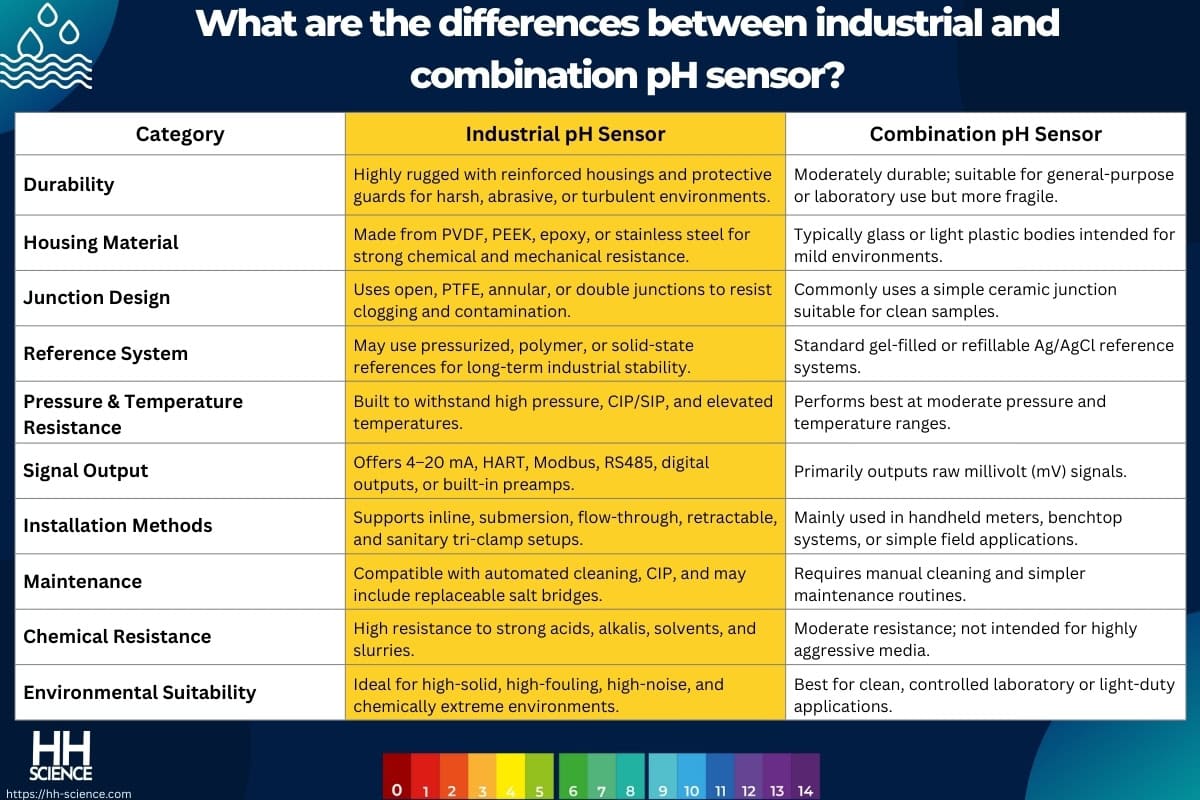
The differences between industrial and combination pH sensors include overall durability, housing material, junction design, reference system robustness, pressure/temperature tolerance, signal output types, installation methods, maintenance needs, chemical resistance, and suitability for harsh environments, because industrial sensors are engineered for continuous operation in chemically aggressive, high-solid, high-noise, and high-pressure processes, while combination pH sensors are designed primarily for general-purpose or light-to-moderate duty measurement. These differences reflect the demands of industrial process control compared to standard laboratory or portable applications.
- Durability: Industrial sensors use reinforced bodies and impact-resistant tip guards to survive heavy flow, turbulence, and mechanical stress, whereas combination sensors are more fragile.
- Housing material: Industrial probes use PVDF, PEEK, epoxy, or stainless steel to handle corrosive and abrasive media, while combination sensors often use glass or light plastic bodies.
- Junction design: Industrial sensors employ open, PTFE, annular, or double junctions to prevent clogging in dirty or oily media; combination sensors typically use simple ceramic junctions.
- Reference system robustness: Industrial designs may include pressurized, polymer, or solid-state references for long-term stability, while combination sensors rely on standard gel or liquid references.
- Pressure/temperature tolerance: Industrial sensors withstand high pressure, CIP/SIP, and elevated temperatures, whereas combination sensors operate best in moderate conditions.
- Signal output types: Industrial sensors offer 4–20 mA, HART, Modbus, digital smart outputs, or built-in preamplifiers, while combination sensors typically output raw millivolt signals.
- Installation methods: Industrial probes support inline, submersion, retractable, flow-through, and sanitary fittings, while combination sensors mainly support handheld or benchtop use.
- Maintenance needs: Industrial sensors are designed for automated or CIP cleaning and may include replaceable salt bridges, while combination sensors rely on manual cleaning.
- Chemical resistance: Industrial probes are formulated to resist strong acids, caustics, solvents, and slurries, whereas combination sensors are meant for clean or lightly contaminated samples.
- Environmental suitability: Industrial sensors function in high solids, high noise, and chemically aggressive processes, while combination sensors are intended for simpler laboratory or field tasks.
| Category | Industrial pH Sensor | Combination pH Sensor |
| Durability | Highly rugged with reinforced housings and protective guards for harsh, abrasive, or turbulent environments. | Moderately durable; suitable for general-purpose or laboratory use but more fragile. |
| Housing Material | Made from PVDF, PEEK, epoxy, or stainless steel for strong chemical and mechanical resistance. | Typically glass or light plastic bodies intended for mild environments. |
| Junction Design | Uses open, PTFE, annular, or double junctions to resist clogging and contamination. | Commonly uses a simple ceramic junction suitable for clean samples. |
| Reference System | May use pressurized, polymer, or solid-state references for long-term industrial stability. | Standard gel-filled or refillable Ag/AgCl reference systems. |
| Pressure & Temperature Resistance | Built to withstand high pressure, CIP/SIP, and elevated temperatures. | Performs best at moderate pressure and temperature ranges. |
| Signal Output | Offers 4–20 mA, HART, Modbus, RS485, digital outputs, or built-in preamps. | Primarily outputs raw millivolt (mV) signals. |
| Installation Methods | Supports inline, submersion, flow-through, retractable, and sanitary tri-clamp setups. | Mainly used in handheld meters, benchtop systems, or simple field applications. |
| Maintenance | Compatible with automated cleaning, CIP, and may include replaceable salt bridges. | Requires manual cleaning and simpler maintenance routines. |
| Chemical Resistance | High resistance to strong acids, alkalis, solvents, and slurries. | Moderate resistance; not intended for highly aggressive media. |
| Environmental Suitability | Ideal for high-solid, high-fouling, high-noise, and chemically extreme environments. | Best for clean, controlled laboratory or light-duty applications. |
What are the differences between industrial and differential pH sensor?
The differences between industrial and differential pH sensors include measurement architecture, noise immunity, contamination tolerance, reference system design, maintenance requirements, durability level, accuracy stability, installation flexibility, and suitability for extreme fouling environments, because differential sensors use a unique three-electrode measurement method that offers superior stability in dirty, noisy, or chemically aggressive processes, while industrial sensors are a broader category that includes many designs—some simple, some advanced—optimized for general industrial duty. These differences determine how each sensor performs under electrical interference, high solids, sulfides, heavy metals, and long cable runs.
- Measurement architecture: Differential sensors use three electrodes (process, reference, solution ground), while industrial sensors often use standard combination-style two-electrode designs.
- Noise immunity: Differential sensors excel in eliminating ground loops and EMI, whereas general industrial sensors rely on shielding or preamps and are more noise-sensitive.
- Contamination tolerance: Differential sensors resist reference poisoning and junction fouling far better due to replaceable salt bridges and isolated reference chambers.
- Reference system design: Differential sensors have an internal reference + process reference + ground loop isolator, while industrial sensors typically use gel-filled or pressurized single references.
- Maintenance requirements: Differential sensors require salt bridge replacement but need far less frequent calibration; industrial sensors need regular cleaning and calibration depending on media.
- Durability level: Differential sensors are ultra-rugged for harsh, dirty, or oily environments, while industrial sensors vary from moderate to high durability depending on type.
- Accuracy stability: Differential sensors maintain stable readings over long periods even in abrasive or scaling media, while industrial sensors may drift sooner under heavy fouling.
- Installation flexibility: Industrial sensors come in many formats (inline, submersion, sanitary, retractable), whereas differential sensors are mostly inline or submersion.
- Suitability for extreme fouling: Differential sensors outperform all other types in high solids, sulfides, slurries, plating baths, and wastewater streams, while industrial sensors must be specifically selected for such conditions.
| Category | Industrial pH Sensor | Differential pH Sensor |
| Measurement Architecture | Typically uses a two-electrode (combination) system with a single reference. | Uses a three-electrode system (process electrode, reference electrode, solution ground) for superior stability. |
| Noise Immunity | Moderate; relies on shielding, grounding, or preamplifiers to reduce interference. | Excellent; naturally cancels ground loops and electrical noise due to differential measurement. |
| Contamination Tolerance | Varies by model; can struggle in heavy oils, slurries, or sulfide-rich media. | Very high; isolated reference system and replaceable salt bridge resist poisoning and fouling. |
| Reference System | Usually gel-filled, pressurized, or polymer reference with a single junction. | Unique dual-chamber reference with salt bridge offering long-term stability. |
| Maintenance Requirements | Regular cleaning and calibration needed, especially in high-solids or oily processes. | Less frequent calibration; requires periodic salt bridge replacement instead. |
| Durability Level | High, but varies widely depending on body material and junction style. | Extremely high; designed specifically for the harshest industrial conditions. |
| Accuracy Stability Over Time | Good in moderate conditions; may drift faster in harsh media. | Excellent; maintains stable readings even in contaminated or variable environments. |
| Installation Flexibility | Available in inline, submersion, retractable, sanitary, and flow-through styles. | Mainly available in inline or submersion configurations optimized for industrial heavy-duty use. |
| Best Use Case | General industrial processes, water treatment, chemical tanks, pipelines. | Extreme fouling, high solids, plating baths, mining slurries, wastewater, or strong electrical noise environments. |

What are the differences between industrial and laboratory pH sensor?
The differences between industrial and laboratory pH sensors include durability, housing materials, junction design, reference system type, measurement stability under harsh conditions, temperature/pressure tolerance, installation method, signal output, maintenance needs, accuracy behavior, and intended application environments, because industrial sensors are engineered for continuous operation in aggressive, high-solid, high-noise process conditions, while laboratory sensors are optimized for precision measurement in controlled, clean, low-pressure environments. These differences reflect the contrasting demands of process control versus analytical bench work.
- Durability: Industrial sensors use rugged, reinforced bodies and protective guards for long-term exposure to harsh media, whereas laboratory sensors are more delicate and designed for gentle handling.
- Housing materials: Industrial probes employ PVDF, PEEK, epoxy, or stainless steel for chemical and mechanical resistance, while laboratory sensors typically use glass or lightweight plastics.
- Junction design: Industrial sensors use open, PTFE, annular, or double junctions to resist coating and clogging, while lab sensors rely on ceramic or simple single junctions suited for clean samples.
- Reference system: Industrial models may use pressurized, polymer, or solid-state references for stability, while lab sensors mostly use gel-filled or refillable standard references.
- Performance in harsh media: Industrial sensors maintain stability in slurries, oils, and sulfide-rich or high-solid environments, while lab sensors will drift or foul quickly under such conditions.
- Temperature/pressure tolerance: Industrial designs withstand high temperature, CIP/SIP, and system pressure, while laboratory sensors must operate at moderate conditions.
- Installation method: Industrial sensors mount inline, submersion, retractable, or sanitary, while lab sensors are handheld, benchtop, or used in small-volume sample measurements.
- Signal output: Industrial sensors offer 4–20 mA, Modbus, HART, or digital smart output, while lab sensors mostly output raw mV through BNC or proprietary lab connectors.
- Maintenance demands: Industrial sensors require periodic cleaning, salt bridge replacement (if differential type), and junction checks, while lab sensors require simpler rinsing and calibration.
- Accuracy considerations: Laboratory sensors offer ultra-high accuracy in controlled conditions, while industrial sensors prioritize stability and drift resistance over absolute precision.
- Intended environment: Industrial sensors are built for continuous process monitoring, whereas laboratory sensors are for batch measurements, R&D, routine testing, and analytical work.
| Category | Industrial pH Sensor | Laboratory pH Sensor |
| Durability | Extremely rugged; designed for continuous operation in harsh, abrasive, and high-solid environments. | More delicate; designed for gentle handling and controlled laboratory conditions. |
| Housing Materials | PVDF, PEEK, epoxy, stainless steel for maximum chemical and mechanical resistance. | Glass or lightweight plastic bodies optimized for precision rather than durability. |
| Junction Design | Open, PTFE, annular, or double junctions to prevent clogging in dirty or oily media. | Ceramic or simple single junctions suitable for clean, low-solid samples. |
| Reference System | Pressurized, solid-state, polymer, or industrial gel references for long-term stability. | Standard gel-filled or refillable liquid references for accuracy in clean samples. |
| Performance in Harsh Media | Stable in slurries, oils, sulfides, high solids, and chemically aggressive conditions. | Drifts or fouls quickly when exposed to heavy solids, oils, or highly contaminated samples. |
| Temperature & Pressure Tolerance | Handles high pressure, high temperature, CIP/SIP, and process fluctuations. | Limited to moderate laboratory temperatures and atmospheric pressure. |
| Installation Method | Inline, submersion, retractable, flow-through, or sanitary mounting. | Handheld, benchtop, or used with small sample containers. |
| Signal Output | 4–20 mA, Modbus, HART, RS485, CAN, or digital smart outputs. | BNC or proprietary raw mV outputs for lab meters. |
| Maintenance Requirements | Requires cleaning, junction inspections, and possible salt bridge replacement. | Simple rinsing and routine calibration with low maintenance demand. |
| Accuracy Characteristics | Focused on stability and drift resistance over long-term industrial cycles. | High analytical precision in controlled, clean-sample environments. |
| Intended Use | Continuous real-time monitoring in industrial processes and production lines. | Bench measurements, R&D, quality control, and educational laboratory use. |

What are the differences between industrial and process pH sensor?
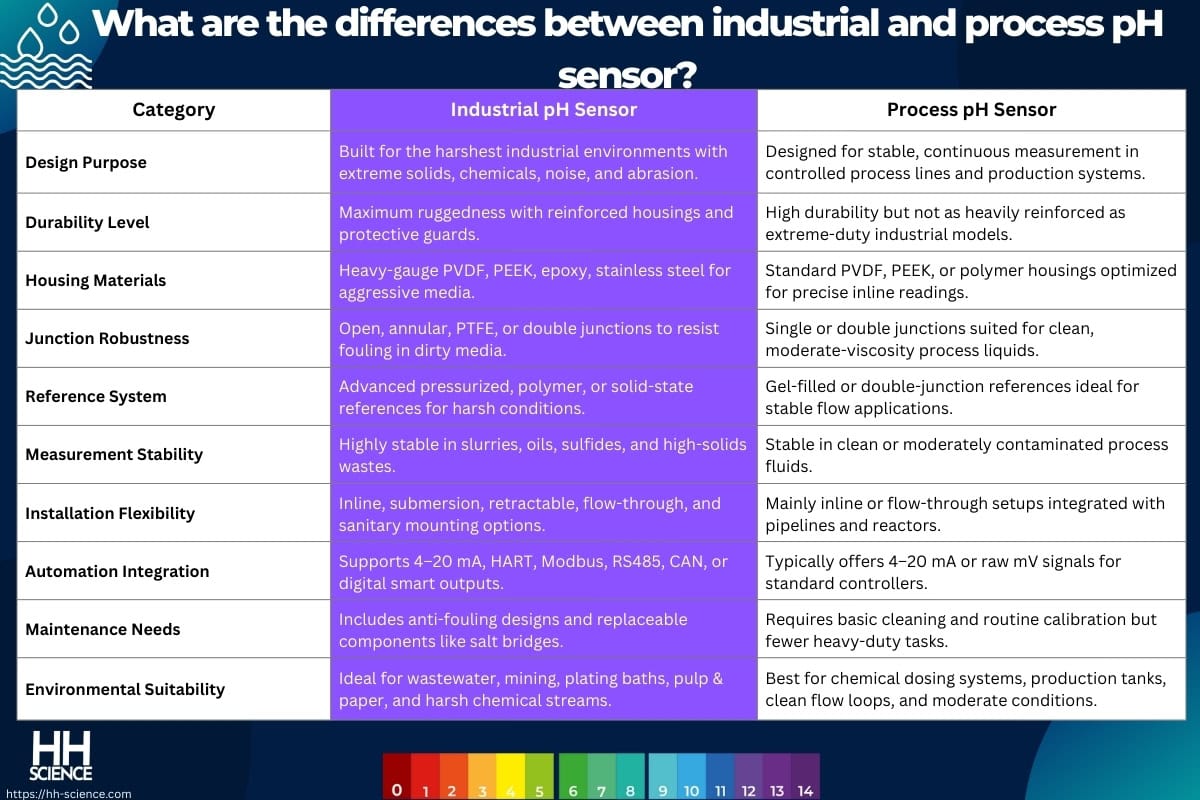
The differences between industrial and process pH sensors include design purpose, durability level, housing material options, junction robustness, reference system type, measurement stability, installation flexibility, integration with automation systems, maintenance demands, and suitability for extreme vs. moderate industrial environments, because “industrial” is a broad category covering all heavy-duty pH sensors, while “process pH sensors” are a more specific subset optimized for continuous inline measurement in controlled industrial processes rather than the harshest or dirtiest applications. These differences reflect how each sensor type is built to match the chemical, mechanical, and environmental conditions of its intended use.
- Design purpose: Industrial sensors are engineered for the harshest, most variable environments, whereas process pH sensors target stable, continuous monitoring in controlled process lines.
- Durability level: Industrial sensors offer maximum ruggedness for slurries, oils, abrasives, and shock, while process sensors provide solid durability but not the extreme reinforcement found in heavy-duty industrial models.
- Housing materials: Industrial sensors use PVDF, PEEK, epoxy, or stainless steel in heavy-gauge forms, whereas process sensors often use standard PVDF/PEEK bodies optimized for flow-through accuracy.
- Junction robustness: Industrial designs rely on open, annular, or PTFE junctions for anti-fouling, while process sensors typically use stable single or double junctions optimized for flow stability.
- Reference system type: Industrial sensors may include polymer-filled, solid-state, or pressurized references for difficult media; process sensors mostly use gel-filled or double-junction designs suitable for clean liquids.
- Measurement stability: Industrial sensors are designed for minimal drift in dirty, noisy, or chemically aggressive applications, while process sensors maintain stability under moderate load and cleaner conditions.
- Installation flexibility: Industrial sensors come in inline, retractable, submersion, and sanitary options; process sensors are mainly inline or flow-through for smooth process integration.
- Automation integration: Industrial sensors commonly support 4–20 mA, HART, Modbus, or digital smart protocols, while process sensors usually offer standard 4–20 mA or raw mV output.
- Maintenance demands: Industrial sensors include anti-fouling features and replaceable components (e.g., salt bridges), while process sensors need simpler cleaning and routine calibration.
- Environmental suitability: Industrial sensors thrive in wastewater, mining slurries, plating baths, and caustic/acidic extremes; process sensors are best for chemical dosing lines, production tanks, and steady flow systems.
| Category | Industrial pH Sensor | Process pH Sensor |
| Design Purpose | Built for the harshest industrial environments with extreme solids, chemicals, noise, and abrasion. | Designed for stable, continuous measurement in controlled process lines and production systems. |
| Durability Level | Maximum ruggedness with reinforced housings and protective guards. | High durability but not as heavily reinforced as extreme-duty industrial models. |
| Housing Materials | Heavy-gauge PVDF, PEEK, epoxy, stainless steel for aggressive media. | Standard PVDF, PEEK, or polymer housings optimized for precise inline readings. |
| Junction Robustness | Open, annular, PTFE, or double junctions to resist fouling in dirty media. | Single or double junctions suited for clean, moderate-viscosity process liquids. |
| Reference System | Advanced pressurized, polymer, or solid-state references for harsh conditions. | Gel-filled or double-junction references ideal for stable flow applications. |
| Measurement Stability | Highly stable in slurries, oils, sulfides, and high-solids wastes. | Stable in clean or moderately contaminated process fluids. |
| Installation Flexibility | Inline, submersion, retractable, flow-through, and sanitary mounting options. | Mainly inline or flow-through setups integrated with pipelines and reactors. |
| Automation Integration | Supports 4–20 mA, HART, Modbus, RS485, CAN, or digital smart outputs. | Typically offers 4–20 mA or raw mV signals for standard controllers. |
| Maintenance Needs | Includes anti-fouling designs and replaceable components like salt bridges. | Requires basic cleaning and routine calibration but fewer heavy-duty tasks. |
| Environmental Suitability | Ideal for wastewater, mining, plating baths, pulp & paper, and harsh chemical streams. | Best for chemical dosing systems, production tanks, clean flow loops, and moderate conditions. |
What are the applications of industrial pH sensor?
The applications of industrial pH sensors include wastewater treatment, chemical processing, power plants, mining and metals processing, pulp and paper production, food and beverage manufacturing, pharmaceuticals and biotech, plating and surface finishing, cooling tower monitoring, oil & gas operations, and high-purity water systems, because these industries require continuous, stable, and chemically resilient pH measurement to ensure process control, regulatory compliance, safety, and product quality. Their rugged construction, specialized junctions, and advanced reference systems allow them to operate reliably in harsh, high-solid, corrosive, or high-temperature environments where laboratory or general-purpose sensors cannot survive.
- Wastewater treatment: Measures pH in aeration basins, clarifiers, influent/effluent lines, and sludge streams where high solids and fouling demand rugged sensors.
- Chemical processing: Controls reactions, neutralization, and dosing in highly corrosive acids, alkalis, and solvents.
- Power plants: Monitors boiler water, condensate return, cooling systems, and flue-gas scrubbing where precision and high-temperature resistance are essential.
- Mining & metals: Handles abrasive slurries, flotation tanks, leaching solutions, and metal-rich streams with high fouling potential.
- Pulp & paper: Provides stable readings in fibrous slurries, bleaching chemicals, and recovery processes with strong chemical loads.
- Food & beverage manufacturing: Ensures quality and compliance in CIP systems, fermentation tanks, and process water with sanitary or chemical-resistant designs.
- Pharmaceuticals & biotech: Supports sterile, hygienic, or high-purity applications requiring SIP/CIP compatibility and low-contamination junctions.
- Plating & surface finishing: Maintains precise chemical balance in plating baths, anodizing solutions, and metal finishing processes.
- Cooling towers: Controls chemical dosing to prevent corrosion, scaling, and biological growth in recirculating water systems.
- Oil & gas: Provides reliable monitoring in brine, produced water, drilling fluids, and refining processes with solvent-resistant materials.
- High-purity water systems: Ensures accurate pH in DI/RO water, boiler feedwater, and semiconductor-grade water with low-conductivity-optimized sensors.

When to choose industrial over combination, differential, or process types?
You should choose an industrial pH sensor when the measurement environment involves harsh chemicals, high solids, abrasive slurries, pressure or temperature fluctuations, electrical noise, continuous operation, or long cable runs, because industrial sensors are built with reinforced housings (PVDF, PEEK, stainless steel), rugged junctions (open/annular/PTFE), stable reference systems, strong temperature elements, and optional preamplifiers designed specifically for demanding process conditions. Industrial sensors outperform combination and laboratory sensors in durability and contamination resistance, and they offer broader installation formats—inline, submersion, flow-through, or retractable—that suit real-world industrial process lines. Compared with differential sensors, industrial sensors are chosen when standard industrial durability is needed but full differential-level contamination protection is not required, giving a cost-effective yet robust option for many applications.
| Condition / Requirement | Industrial pH Sensor | Combination pH Sensor | Differential pH Sensor | Process pH Sensor |
| Harsh Chemicals / Corrosive Media | Best choice – rugged materials (PVDF, PEEK, stainless steel). | Not suitable – limited chemical resistance. | Excellent – best for highly aggressive media with contaminants. | Good – depends on model and materials. |
| High Solids / Slurries | Very good – open or annular junctions resist clogging. | Poor – ceramic junction clogs easily. | Best – differential design prevents contamination of reference. | Good – rugged and clog-resistant designs available. |
| Continuous 24/7 Operation | Ideal – built for long-term industrial monitoring. | Not ideal – meant for sampling, not continuous use. | Ideal – highest stability for long-term operation. | Ideal – designed specifically for continuous process control. |
| Electrical Noise Environment | Good – optional preamplifiers reduce noise. | Poor – sensitive to interference. | Excellent – solution ground cancels electrical noise. | Good – more resistant than basic combination sensors. |
| Extreme Temperature / Pressure | Excellent – PEEK/stainless designs handle harsh conditions. | Poor – limited to moderate temperatures. | Good – strong design but depends on model. | Best – engineered for industrial temperature/pressure limits. |
| Maintenance Requirements | Moderate – longer life but still requires cleaning/calibration. | Low – simple, but short life in harsh media. | Lowest – salt bridge protects reference, reducing maintenance. | Moderate – depends on environment and junction type. |
| Measurement Accuracy | High – good accuracy suitable for industrial process control. | Moderate – routine-use accuracy. | High – very stable long-term accuracy. | High – optimized for process control accuracy. |
| Installation Method | Flexible – inline, submersion, flow-through, retractable. | Handheld/beaker use only. | Inline/submersion industrial installations. | Inline and sanitary installations. |
| Best Use Case | General industrial environments needing durability + performance. | Simple lab/field sampling with clean liquids. | Highly dirty, noisy, or contamination-prone industrial processes. | Controlled industrial processes requiring continuous monitoring. |

How is the compatibity of a industrial pH sensor with transmitter and pH meters?
The compatibility of an industrial pH sensor with transmitters and pH meters depends on its connector type, signal format, temperature compensation element, internal preamplifier, and reference design, because industrial sensors must integrate with process controllers that expect specific electrical characteristics and communication standards. Industrial pH sensors typically offer analog millivolt output, 4–20 mA signals, or digital protocols (Modbus, HART, RS485), making them compatible with most industrial transmitters used in PLC, DCS, and SCADA systems. The sensor’s industrial connectors (VP, M12, S8, or fixed cable) ensure sealed, noise-resistant interfacing, while the temperature compensation element (NTC, PT100, or PT1000) must match the transmitter’s input tables to ensure proper temperature-corrected pH calculations. Sensors with an internal preamplifier provide low-impedance, noise-immune signals that support long cable runs—often over 100 meters—making them far more compatible with electrically harsh industrial environments than standard laboratory or combination sensors. Overall, compatibility is achieved when the signal type, impedance, ATC element, and connector format match the transmitter’s specifications, enabling stable, accurate, and interference-free pH measurement in continuous industrial processes.
How to maintain the industrial pH sensor?
Proper maintenance of an industrial pH sensor requires regular cleaning, proper storage when offline, junction inspection, electrolyte or salt-bridge servicing (if applicable), calibration at appropriate intervals, temperature element verification, cable/connector inspection, and protection from coating or mechanical damage, because industrial environments expose sensors to fouling, electrical noise, abrasive solids, and chemical attack that can cause drift, slow response, and shortened lifespan if not properly managed.
- Regular cleaning: Removes coatings, scale, oils, or slurry buildup that interfere with ion exchange at the glass membrane and junction.
- Proper storage when offline: Keeps the glass membrane hydrated in KCl solution to maintain sensitivity and prevent dehydration damage.
- Junction inspection: Ensures the open, annular, or PTFE junction remains unclogged so reference electrolyte can maintain stable ionic contact.
- Electrolyte or salt-bridge servicing: Restores reference stability in differential or refillable sensors by replacing depleted or contaminated electrolyte.
- Calibration at appropriate intervals: Compensates for drift caused by chemical exposure, temperature cycling, and continuous industrial operation.
- Temperature element verification: Confirms the NTC, PT100, or PT1000 sensor is functioning correctly so temperature-compensated pH values remain accurate.
- Cable and connector inspection: Prevents signal noise and intermittent readings by checking for moisture ingress, corrosion, or mechanical strain.
- Protection from coating or abrasion: Uses automatic cleaning systems or protective guards to reduce mechanical wear and heavy buildup in high-solid or turbulent processes.
How to calibrate the industrial pH sensor?
Calibrating an industrial pH sensor requires selecting appropriate buffer standards, cleaning the sensor before calibration, rinsing between buffers, performing at least a two-point calibration, allowing readings to stabilize, adjusting slope and offset, verifying the temperature compensator, and confirming calibration accuracy afterward, because industrial sensors operate in harsh conditions where coating, drift, temperature fluctuations, and reference aging can affect the millivolt output and must be corrected to maintain reliable process control.
- Selecting appropriate buffer standards: Ensures calibration uses clean, accurate reference points that match the process pH range for best slope and offset accuracy.
- Cleaning the sensor before calibration: Removes coatings or deposits so the glass membrane and junction can respond correctly during buffer measurement.
- Rinsing between buffers: Prevents cross-contamination that would distort the true pH of each calibration solution.
- Performing at least a two-point calibration: Establishes both the offset (zero pH point) and the slope (sensitivity), which is essential for accurate industrial measurement.
- Allowing readings to stabilize: Gives the electrode time to equilibrate with each buffer, preventing premature capture of drifting values.
- Adjusting slope and offset: Aligns the electrode’s real output with theoretical Nernst behavior, correcting for aging or process-related drift.
- Verifying the temperature compensator: Confirms the NTC, PT100, or PT1000 element is working so the transmitter applies proper temperature correction.
- Confirming calibration accuracy afterward: Checks the sensor in a fresh buffer or known sample to ensure the calibration holds before returning it to the process.
What are the common troubleshooting issues with industrial pH sensors?
Common troubleshooting issues with industrial pH sensors include slow response, drifting readings, noisy or unstable signals, junction clogging, coating or fouling buildup, temperature compensation errors, reference contamination, electrolyte depletion, preamplifier failure, and cable or connector problems, because industrial environments expose sensors to harsh chemicals, solids, electrical interference, and mechanical stress that degrade electrochemical performance and signal stability over time.
- Slow response: Often caused by coating, dehydration, or aging of the glass membrane, reducing ion exchange efficiency.
- Drifting readings: Typically indicates reference electrode instability due to electrolyte depletion, contamination, or temperature cycling.
- Noisy or unstable signals: Caused by electrical interference from motors or VFDs, poor grounding, or damaged shielding in the cable assembly.
- Junction clogging: Occurs when solids, oils, or biological material block electrolyte flow through ceramic, PTFE, or annular junctions.
- Coating or fouling buildup: Heavy solids, scale, or biofilm on the membrane distort readings by blocking interaction with hydrogen ions.
- Temperature compensation errors: Result from a faulty NTC/PT100/PT1000 element, causing incorrect slope adjustments by the transmitter.
- Reference contamination: Happens when aggressive chemicals or sulfides penetrate the junction and poison the reference system.
- Electrolyte depletion (refillable or differential): Leads to unstable reference potential and erratic readings.
- Preamplifier failure: Causes weak or distorted signals, especially over long cable runs in harsh electrical environments.
- Cable or connector problems: Moisture ingress, corrosion, or mechanical strain causes intermittent signals, noise spikes, or complete signal loss.
What are the industrial pH sensor lifespan and replacement indicators?
The lifespan and replacement indicators of an industrial pH sensor include loss of slope, excessive drift, slow response time, unstable calibration, persistent junction clogging, coating that cannot be removed, reference electrolyte degradation, preamplifier malfunction, physical damage, and temperature element failure, because industrial sensors operate in harsh chemical, mechanical, and electrical conditions that gradually degrade the glass membrane, junction, reference system, and electronic components, reducing measurement stability and reliability over time.
- Loss of slope: When the sensor’s slope drops below ~85–90% of the theoretical Nernst value, the glass membrane is aging and can no longer respond accurately.
- Excessive drift: Continuous drift during measurement indicates reference instability or junction failure, signaling end-of-life.
- Slow response time: Long stabilization times show membrane hydration loss, coating damage, or irreversible aging.
- Unstable calibration: Frequent recalibration or inability to hold calibration points means the reference system or glass membrane has deteriorated.
- Persistent junction clogging: If cleaning no longer restores flow, the junction structure has degraded beyond recovery.
- Coating that cannot be removed: Chemical or particulate films that permanently alter membrane behavior indicate replacement is needed.
- Reference electrolyte degradation: Cloudy, depleted, or contaminated electrolyte in refillable or differential sensors leads to unstable reference potential.
- Preamplifier malfunction: Weak, noisy, or distorted signals suggest electronic failure in sensors with onboard amplification.
- Physical damage: Cracks, chips, or abrasions on the glass membrane or sensor body compromise measurement accuracy and safety.
- Temperature element failure: Incorrect or missing temperature readings from NTC/PT100/PT1000 sensors cause improper compensation and require sensor replacement.
What are the industrial pH sensor installation methods?
Industrial pH sensors can be installed using inline installation, submersion installation, flow-through installation, retractable installation, and sanitary/tri-clamp installation, because each method is designed to match specific process conditions, such as continuous flow, open tanks, high solids, CIP/SIP cleaning, pressurized lines, or applications requiring frequent maintenance without stopping the process. These installation methods ensure correct immersion depth, stable measurement conditions, safe maintenance access, and long-term sensor reliability in diverse industrial environments.
- Inline installation: The sensor is threaded or flanged directly into a pipe or reactor wall, providing continuous measurement in closed pressurized systems.
- Submersion installation: The sensor is mounted on a rod or holder and immersed into open tanks, basins, or lagoons, ideal for wastewater and high-solid applications.
- Flow-through installation: The sensor sits inside a dedicated flow cell or sample line, ensuring controlled flow, clean conditions, and easy isolation for maintenance.
- Retractable installation: A retractable housing allows the sensor to be removed for cleaning or calibration without shutting down the process or depressurizing the line.
- Sanitary/tri-clamp installation: The sensor uses hygienic tri-clamp fittings for food, beverage, and pharmaceutical systems requiring CIP/SIP cleaning and sterile operation.
What are the industrial pH sensor accessories used with industrial sensors?
Industrial pH sensors commonly use preamp modules, extension cables, junction boxes, automatic cleaning systems, flow cells, retractable housings, protective guards, and calibration/storage accessories, because these accessories improve signal stability, extend installation distance, simplify maintenance, protect the sensor from harsh process conditions, and ensure long-term measurement accuracy in demanding industrial environments.
- Preamp modules: Strengthen the high-impedance pH signal and reduce electrical noise for long cable runs or electrically noisy facilities.
- Extension cables: Allow flexible installation distances between the sensor and transmitter without degrading signal quality.
- Junction boxes: Provide protected wiring transitions and connection points, making maintenance and cable management easier.
- Automatic cleaning systems: Reduce fouling and extend sensor life by periodically spraying or flushing the membrane in high-solid or scaling applications.
- Flow cells: Create a controlled environment for pH measurement, improving stability and simplifying calibration or sensor replacement.
- Retractable housings: Enable the sensor to be withdrawn for cleaning or calibration without shutting down or depressurizing the process.
- Protective guards: Shield the sensor tip from mechanical impact, abrasion, or debris in turbulent or slurry-heavy processes.
- Calibration and storage accessories: Include buffer solutions, storage caps, and KCl solution to maintain hydration and ensure accurate calibration readiness.


