
pH alkaline vs acidic, what are the differences?
pH alkaline vs acidic differences include hydrogen ion concentration, hydroxide ion concentration, pH value range, taste, chemical behavior, biological effects, and practical applications, because comparing them shows how opposite ends of the pH scale (0–14) influence chemistry, health, environment, and industry.
- Hydrogen ion concentration: Acids have higher [H⁺], while alkaline solutions have lower [H⁺].
- Hydroxide ion concentration: Acids have lower [OH⁻], while alkaline solutions have higher [OH⁻].
- pH value range: Acids fall below 7, alkalines are above 7, and 7 is neutral.
- Taste: Acids taste sour (like lemon juice, vinegar), alkalines taste bitter or soapy (like baking soda).
- Chemical behavior: Acids donate protons (H⁺), bases/alkalines accept protons or release OH⁻.
- Biological effects: Acidic conditions can cause corrosion and irritation, while alkaline conditions can reduce acid reflux but disrupt stomach acidity if excessive.
- Practical applications: Acids are used in cleaning, food preservation, and industry, while alkalines are used in water treatment, antacids, and balancing acidity in agriculture.
| Aspect | Acidic (pH < 7) | Alkaline (pH > 7) |
| Hydrogen ion concentration | High [H⁺] (e.g., 1 × 10⁻³ M at pH 3) | Low [H⁺] (e.g., 1 × 10⁻⁹ M at pH 9) |
| Hydroxide ion concentration | Low [OH⁻] (less than 1 × 10⁻⁷ M) | High [OH⁻] (greater than 1 × 10⁻⁷ M) |
| pH value range | 0 – 6.9 | 7.1 – 14 |
| Taste | Sour (lemon juice pH ~2, vinegar pH ~3) | Bitter/soapy (baking soda pH ~9, soap pH ~10–11) |
| Chemical behavior | Proton donor (Bronsted-Lowry acid) | Proton acceptor or OH⁻ donor (base) |
| Biological effects | Corrosion, tooth enamel erosion, irritation | Reduces acid reflux, but excessive intake disrupts stomach acid |
| Applications | Cleaning agents, food preservation, industrial processing | Water treatment, antacids, agriculture (soil balance) |

What metrics are considered acidic vs alkaline?
The metrics considered acidic vs alkaline are pH value, hydrogen ion concentration [H⁺], hydroxide ion concentration [OH⁻], and relative position on the pH scale (0–14), because these parameters define acidity or alkalinity based on ion activity and chemical behavior.
- pH value: Acidic solutions have pH < 7, alkaline solutions have pH > 7, and neutral is pH 7.0 at 25 °C.
- Hydrogen ion concentration [H⁺]: Acids have higher [H⁺] (e.g., 1 × 10⁻³ M at pH 3), while alkalines have lower [H⁺] (e.g., 1 × 10⁻⁹ M at pH 9).
- Hydroxide ion concentration [OH⁻]: Acids have lower [OH⁻] than 1 × 10⁻⁷ M, while alkalines have higher [OH⁻] than 1 × 10⁻⁷ M.
- Position on the pH scale: The logarithmic scale (0–14) is based on the negative log of hydrogen ion activity, where each pH unit change equals a tenfold change in [H⁺].
Acid vs alkaline pH scale
Acid vs alkaline pH scale compares the two opposite ends of the pH scale (0–14), where acidic solutions (pH < 7) have higher hydrogen ion concentration [H⁺] and lower hydroxide ion concentration [OH⁻], while alkaline solutions (pH > 7) have lower [H⁺] and higher [OH⁻]. Acid strength increases as pH approaches 0 (e.g., gastric acid ~pH 1.5–2.0), while alkalinity increases as pH approaches 14 (e.g., concentrated NaOH ~pH 13–14). This comparison matters because the scale is logarithmic, meaning each unit change reflects a tenfold difference in [H⁺] activity, making pH 4 ten times more acidic than pH 5, and pH 9 ten times more alkaline than pH 8.
pH balance acid vs alkaline
pH balance acid vs alkaline describes the equilibrium between hydrogen ions (H⁺) and hydroxide ions (OH⁻) in a solution, where acidic conditions (pH < 7) mean excess H⁺ and alkaline conditions (pH > 7) mean excess OH⁻, while neutrality (pH 7 at 25 °C) reflects equal concentrations of both. The difference is compared on the pH scale (0–14), which is logarithmic, so each unit represents a tenfold change in [H⁺]; for example, pH 4 is ten times more acidic than pH 5, and pH 9 is ten times more alkaline than pH 8. Comparing acid vs alkaline balance is important in biology (blood pH 7.35–7.45), environment (oceans ~8.1), and water treatment (drinking water 6.5–8.5) because imbalance can cause corrosion, poor disinfection, or metabolic stress.
Acid vs base vs alkaline
Acid vs base vs alkaline refers to three closely related but distinct terms in chemistry. An acid is a substance that donates protons (H⁺) or increases the hydrogen ion concentration, giving a pH below 7. A base is a substance that accepts protons (H⁺) or produces hydroxide ions (OH⁻), while alkaline specifically describes bases that are soluble in water and result in a pH above 7. These distinctions are important for understanding chemical reactions, biological balance, and water chemistry.
| Feature | Acid | Base | Alkaline |
| pH Range | 0 – 6.9 | Above 7 (general) | 7.1 – 14 (water-soluble bases) |
| Ion Activity | High [H⁺], low [OH⁻] | Accepts H⁺ or releases OH⁻ | Releases OH⁻ in aqueous solution |
| Chemical Definition | Proton donor (Bronsted-Lowry) | Proton acceptor (Bronsted-Lowry) | Subset of bases that dissolve in water |
| Taste | Sour (e.g., lemon juice pH ~2) | Bitter (general property) | Bitter/soapy (e.g., baking soda pH ~9) |
| Examples | HCl, vinegar, citric acid | Ammonia (NH₃), CaO | NaOH, KOH, Ca(OH)₂ |
| Applications | Food preservation, cleaning, digestion | Neutralization reactions, industry | Water treatment, antacids, agriculture |

Is there an accurate way to test acidic vs alkaline?
Yes, there is an accurate way to test acidic vs alkaline by using a calibrated electronic pH meter with a glass or ISFET electrode, because it measures the electrochemical potential of hydrogen ion activity and converts it into a precise pH value (±0.01–0.1). Unlike test strips or reagent kits (accuracy ±0.2–0.5), pH meters rely on the Nernst equation (slope ≈ 59.16 mV per pH unit at 25 °C) and are calibrated with standard buffers (pH 4.00, 7.00, 10.00), making them the most reliable method to distinguish acidic (pH < 7) from alkaline (pH > 7) solutions.
Acid vs alkaline hydrogen and hydroxide
Acid vs alkaline hydrogen and hydroxide refers to the balance between hydrogen ions (H⁺) and hydroxide ions (OH⁻), which defines where a solution lies on the pH scale (0–14). In acidic solutions (pH < 7), [H⁺] is higher than [OH⁻] (e.g., at pH 3, [H⁺] = 1 × 10⁻³ M and [OH⁻] = 1 × 10⁻¹¹ M), while in alkaline solutions (pH > 7), [OH⁻] is higher than [H⁺] (e.g., at pH 10, [H⁺] = 1 × 10⁻¹⁰ M and [OH⁻] = 1 × 10⁻⁴ M). Comparing them shows that acids act as proton donors and bases/alkalines act as proton acceptors or OH⁻ producers, with neutrality at pH 7 where [H⁺] = [OH⁻] = 1 × 10⁻⁷ M.
Acidic vs alkaline solutions
Acidic vs alkaline solutions differ in their hydrogen ion (H⁺) and hydroxide ion (OH⁻) concentrations, which determine their position on the pH scale (0–14) and their chemical behavior. Acidic solutions (pH < 7) have excess H⁺ compared to OH⁻, such as vinegar at pH ~3 with [H⁺] = 1 × 10⁻³ M, while alkaline solutions (pH > 7) have excess OH⁻ compared to H⁺, such as baking soda solution at pH ~9 with [OH⁻] = 1 × 10⁻⁵ M. Comparing them highlights that acids act as proton donors, alkalines as proton acceptors or OH⁻ producers, and neutrality (pH 7) represents the balance where [H⁺] = [OH⁻] = 1 × 10⁻⁷ M at 25 °C.
Alkaline buffer vs acid buffer
Alkaline buffer vs acid buffer refers to two types of buffer solutions that resist pH changes, with the difference being whether they maintain pH above or below 7. An acid buffer keeps the solution acidic (pH < 7) by combining a weak acid and its conjugate base, such as acetic acid (CH₃COOH) and sodium acetate (CH₃COONa), typically stabilizing around pH 4–6. An alkaline buffer keeps the solution basic (pH > 7) by combining a weak base and its conjugate acid, such as ammonia (NH₃) and ammonium chloride (NH₄Cl), usually stabilizing around pH 8–10. Comparing them shows that acid buffers resist increases in pH by neutralizing added OH⁻, while alkaline buffers resist decreases in pH by neutralizing added H⁺, both working according to the Henderson–Hasselbalch equation.
Alkaline vs acidic diet
Alkaline vs acidic diet differences include food types, pH effect in the body, impact on urine pH, health claims, and scientific support, because comparing them shows how diet choices are believed to influence acid–base balance, though blood pH remains tightly regulated at 7.35–7.45.
- Food types: Acidic diets emphasize meats, dairy, refined grains, and processed foods, while alkaline diets focus on fruits, vegetables, nuts, and legumes.
- pH effect in the body: Acidic diets are thought to increase acid load, whereas alkaline diets are believed to reduce acid load and support buffering.
- Impact on urine pH: Acidic diets lower urine pH (<6.0), while alkaline diets raise urine pH (>7.0), though blood pH stays constant.
- Health claims: Acidic diets are linked to inflammation, bone loss, or kidney strain, while alkaline diets claim benefits like improved energy, reduced reflux, and better bone health.
- Scientific support: Acidic diet risks are mostly related to long-term kidney stress and mineral balance, while the benefits of alkaline diets are more about nutrient-rich foods rather than direct systemic pH change.
| Feature | Acidic Diet | Alkaline Diet |
| Food types | Meats, dairy, refined grains, processed foods | Fruits, vegetables, nuts, legumes |
| pH effect in body | Increases acid load, produces more H⁺ ions | Reduces acid load, increases buffering capacity |
| Impact on urine pH | Lowers urine pH (<6.0) | Raises urine pH (>7.0) |
| Impact on blood pH | No significant effect, blood remains ~7.35–7.45 | No significant effect, blood remains ~7.35–7.45 |
| Health claims | Linked to inflammation, bone loss, kidney strain | Claims improved energy, reduced reflux, better bone health |
| Scientific support | Risks relate to long-term kidney stress and mineral balance | Benefits mostly from nutrient-rich foods, not direct pH change |

What is the alkaline diet?
The alkaline diet is a dietary approach based on the idea that consuming foods that leave an “alkaline ash” (mainly fruits, vegetables, nuts, and legumes) can reduce the body’s acid load, raise urine pH above 7, and improve health, while limiting acid-forming foods like meat, dairy, and processed grains. The concept became popular in the early 2000s through proponents like Dr. Robert O. Young in the United States, though its roots trace back to early 20th-century nutrition theories about acid–base balance and metabolic health.
Is the alkaline diet healthy?
Yes, the alkaline diet can be healthy if it emphasizes whole, nutrient-rich foods like fruits, vegetables, nuts, and legumes, because these provide vitamins, minerals, fiber, and antioxidants while reducing processed and high-sodium foods; studies link such patterns to lower risks of chronic disease. But it does not actually change blood pH (which is tightly regulated at 7.35–7.45)—its main measurable effect is raising urine pH (>7.0), meaning the health benefits come from improved nutrition quality rather than altering systemic acid–base balance.
How does the alkaline diet work?
The alkaline diet works on the principle that foods leave either an acidic or alkaline “ash” after metabolism, influencing the body’s acid load and urinary pH. The alkaline diet reduces acid-forming foods like meats, dairy, refined grains, and processed products, while emphasizing alkaline-forming foods like fruits, vegetables, nuts, and legumes, which supply bicarbonate precursors and reduce net acid excretion. In the body, blood pH remains tightly regulated at 7.35–7.45 through the bicarbonate buffer system, lungs (CO₂ exhalation), and kidneys (H⁺ excretion, HCO₃⁻ reabsorption), so the diet primarily changes urine pH rather than blood pH. The mechanism of benefit comes from decreased acid load on the kidneys, improved mineral intake (calcium, magnesium, potassium), and reduced metabolic stress, which may support bone health, lower risk of kidney stones, and improve overall nutrient balance.
What are the benefits of the alkaline diet?
The benefits of the alkaline diet include higher intake of fruits and vegetables, improved nutrient balance, potential bone health support, reduced kidney stone risk, better hydration, and lower chronic disease risk, because its food choices emphasize plant-based, mineral-rich, and minimally processed sources that reduce dietary acid load.
- Higher intake of fruits and vegetables: Provides vitamins, minerals, fiber, and antioxidants that support overall health.
- Improved nutrient balance: Supplies alkaline minerals such as potassium, calcium, and magnesium that help regulate metabolic functions.
- Potential bone health support: Reduced dietary acid load may lower calcium excretion, supporting stronger bones.
- Reduced kidney stone risk: Alkaline urine (pH > 7.0) decreases the likelihood of uric acid and cystine stone formation.
- Better hydration: Many alkaline-promoting foods have high water content, improving fluid balance.
- Lower chronic disease risk: Diet patterns high in plant foods are linked to reduced risk of hypertension, cardiovascular disease, and type 2 diabetes.

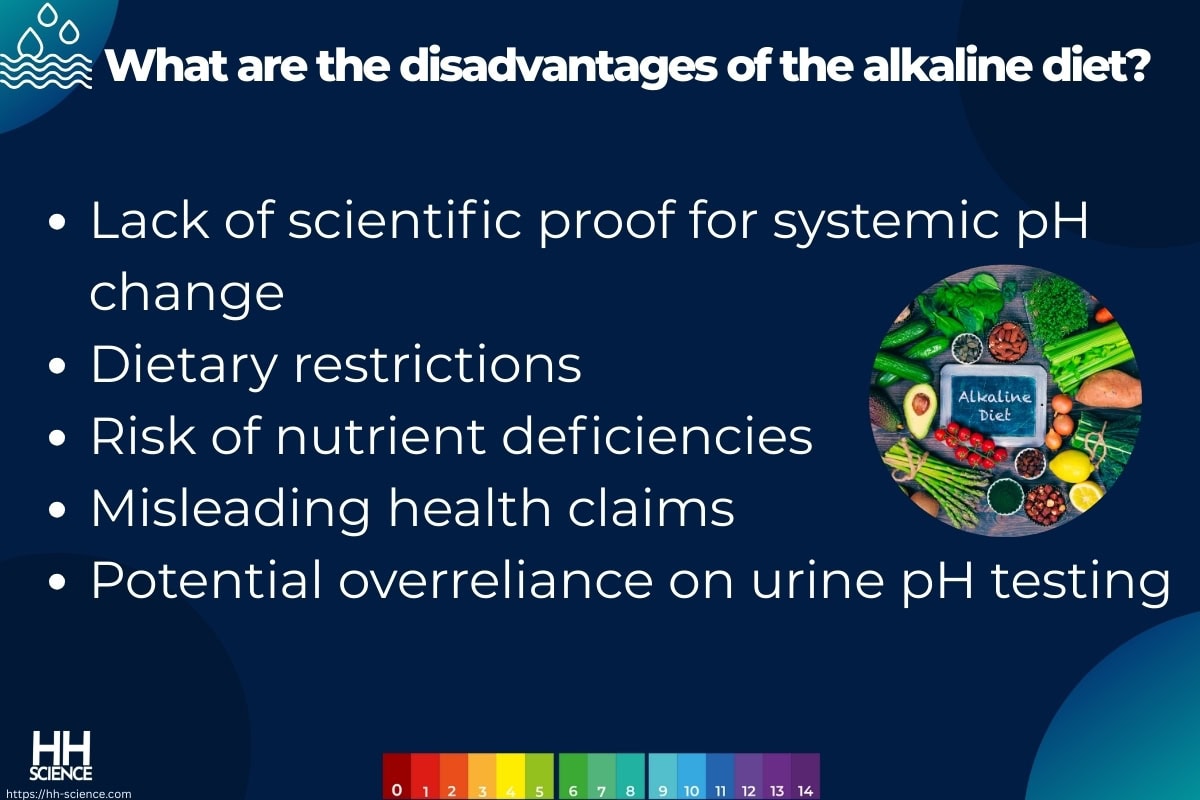
What are the disadvantages of the alkaline diet?
The disadvantages of the alkaline diet include lack of scientific proof for systemic pH change, dietary restrictions, risk of nutrient deficiencies, misleading health claims, and potential overreliance on urine pH testing, because while it promotes healthy foods, its core premise does not alter blood pH, which is tightly regulated at 7.35–7.45.
- Lack of scientific proof for systemic pH change: Blood pH remains constant due to buffering, lungs, and kidneys, regardless of diet.
- Dietary restrictions: Limiting meats, dairy, and grains may make the diet difficult to follow long-term.
- Risk of nutrient deficiencies: Avoiding entire food groups can reduce intake of protein, vitamin B12, iron, and zinc.
- Misleading health claims: Evidence does not support the promise of curing cancer or chronic diseases through pH change.
- Potential overreliance on urine pH testing: Urine pH reflects food intake but does not represent true systemic acid–base balance.
What meat can you eat on the alkaline diet?
You can eat only limited or lean meat on the alkaline diet, such as skinless poultry (chicken, turkey), certain types of fish (salmon, trout, sardines), and plant-based meat alternatives, because the diet classifies most animal proteins as acid-forming that increase dietary acid load and lower urine pH. Poultry and fish are considered “less acid-forming” compared to red meat (beef, pork, lamb), which produces more sulfuric acid during metabolism of sulfur-containing amino acids (methionine, cysteine). While the strict alkaline diet often recommends avoiding meat entirely, some modified versions allow small amounts of lean poultry and fish for protein balance, while emphasizing plant-based proteins like legumes, tofu, and nuts to maintain a more alkaline-ash profile.
How fast can I lose weight on the alkaline diet?
You can lose weight on the alkaline diet at a pace similar to other plant-based, calorie-conscious eating patterns—typically around 0.5 to 1 kg (1–2 pounds) per week, meaning noticeable results may appear within a few weeks and more significant changes over several months. The weight loss comes not from altering blood pH (which stays regulated at 7.35–7.45) but from emphasizing low-calorie, high-fiber foods like fruits, vegetables, and legumes, which improve satiety, reduce processed food intake, and support a sustainable calorie deficit.
Alkaline diet recipes
The science behind alkaline diet recipes is that foods are classified by the “ash” (residue) they leave after metabolism: acid-forming foods (meat, dairy, refined grains) increase hydrogen ion load, while alkaline-forming foods (fruits, vegetables, legumes, nuts) provide bicarbonate precursors, potassium, calcium, and magnesium that reduce net acid excretion. Although blood pH remains constant at 7.35–7.45, these foods raise urine pH (>7.0) and reduce the acid burden on the kidneys, while supplying nutrient-dense, low-calorie meals that support weight management and chronic disease prevention.
| Alkaline Diet Meal | Recipe Example | Concrete Recipe | Alkaline Features |
| Breakfast | Green smoothie with spinach, kale, cucumber, avocado, almond milk, and chia seeds | Blend 1 cup spinach, 1 cup kale, ½ cucumber, ½ avocado, 1 cup unsweetened almond milk, and 1 tbsp chia seeds until smooth | High in potassium and magnesium; chlorophyll-rich greens support alkalinity and hydration |
| Lunch | Quinoa salad with chickpeas, cherry tomatoes, cucumber, arugula, lemon–olive oil dressing | Cook 1 cup quinoa, toss with 1 cup chickpeas, 1 cup cherry tomatoes, ½ cucumber, 1 cup arugula, juice of 1 lemon, 2 tbsp olive oil, and herbs | Plant-based proteins with alkaline minerals; lemon provides citric acid that metabolizes to alkaline ash |
| Dinner | Stir-fry with broccoli, bok choy, zucchini, bell peppers, tofu, and ginger–garlic tamari sauce | Sauté 1 cup broccoli, 1 cup bok choy, 1 zucchini, 1 bell pepper in 1 tbsp olive oil with garlic and ginger, add 200 g tofu cubes, finish with 2 tbsp low-sodium tamari | Tofu offers plant protein; cruciferous and green vegetables add calcium, magnesium, and antioxidants |

Can the alkaline diet help with weight loss and inflammation?
Yes, the alkaline diet can help with weight loss and inflammation if it is followed as a plant-rich, low-calorie, nutrient-dense eating pattern, because emphasizing fruits, vegetables, legumes, and nuts increases fiber intake, reduces energy density, and supports a natural calorie deficit that leads to gradual weight loss (~0.5–1 kg per week). It can also lower markers of inflammation indirectly by reducing consumption of processed and high-sodium foods while providing antioxidants, potassium, magnesium, and phytochemicals, although the benefits come from diet quality rather than actual changes in blood pH, which remains tightly regulated at 7.35–7.45.
Alkaline foods vs acidic foods
Alkaline foods vs acidic foods differ in food groups, metabolic ash, pH effect on urine, mineral content, and health implications, because comparing them shows how different foods influence the body’s dietary acid load even though blood pH stays constant at 7.35–7.45.
- Food groups: Acidic foods include meat, dairy, refined grains, and processed products, while alkaline foods include fruits, vegetables, legumes, and nuts.
- Metabolic ash: Acidic foods leave an acid-forming ash rich in sulfuric and phosphoric acids, while alkaline foods leave an alkaline ash rich in bicarbonate precursors.
- pH effect on urine: Acidic foods lower urine pH (<6.0), while alkaline foods raise urine pH (>7.0).
- Mineral content: Acidic foods are high in sulfur, phosphorus, and protein, while alkaline foods are high in potassium, calcium, and magnesium.
- Health implications: Acidic foods in excess may contribute to kidney stress and mineral loss, while alkaline foods support hydration, mineral balance, and reduced kidney stone risk.
Alkaline foods vs acidic foods chart
Alkaline foods vs acidic foods are often categorized based on the metabolic ash hypothesis, which classifies foods by the type of residue they leave after digestion and metabolism. Acidic foods (like meats, dairy, refined grains, and processed items) tend to increase dietary acid load and lower urine pH (<6.0), while alkaline foods (like vegetables, fruits, legumes, and nuts) supply bicarbonate precursors and minerals such as potassium, calcium, and magnesium, which raise urine pH (>7.0). Comparing them helps understand how diet affects kidney workload, bone mineral balance, and overall nutrient intake, even though blood pH remains tightly regulated at 7.35–7.45.
| Food Category | Alkaline Foods (pH effect > 7) | Acidic Foods (pH effect < 7) |
| Vegetables | Spinach, kale, broccoli, bok choy, cucumber, celery, lettuce, zucchini | Corn, potatoes (white), olives, pickled vegetables |
| Fruits | Lemon, lime, avocado, watermelon, grapefruit, apples, pears, berries | Cranberries, blueberries, canned fruits with added sugar |
| Nuts & Seeds | Almonds, chestnuts, pumpkin seeds, flaxseeds, sesame seeds | Peanuts, walnuts, cashews, sunflower seeds |
| Legumes | Lentils, chickpeas, mung beans, lima beans | Black beans, kidney beans, soy products (processed) |
| Grains | Quinoa, buckwheat, amaranth, millet | Wheat, rice, pasta, bread, pastries |
| Dairy | – (most dairy is acid-forming) | Milk, cheese, yogurt, butter |
| Meat & Fish | – (animal proteins are acid-forming) | Beef, pork, lamb, chicken, turkey, fish, processed meats |
| Drinks | Herbal tea, coconut water, green smoothies | Coffee, soda, alcohol, energy drinks |
| Sweets & Processed | Natural sweeteners (stevia, raw honey in moderation) | Refined sugar, candy, chocolate, ice cream, fried foods, packaged snacks |

What are the best alkaline foods to eat?
The best alkaline foods to eat are leafy green vegetables (spinach, kale, bok choy), cruciferous vegetables (broccoli, cauliflower), citrus fruits (lemon, lime, grapefruit), avocados, almonds, quinoa, and legumes like chickpeas and lentils, because they are rich in alkaline minerals (potassium, magnesium, calcium), antioxidants, and fiber that reduce dietary acid load while supporting hydration, bone health, and kidney function. Leafy greens provide chlorophyll and high potassium for buffering, citrus fruits metabolize to bicarbonate despite their acidic taste, avocados supply healthy monounsaturated fats and magnesium, almonds add alkaline minerals and protein, and quinoa and legumes balance plant-based protein with low acid-forming potential, making them ideal for maintaining a favorable urine pH above 7 and overall nutrient balance.
Does the pH of food matter?
Yes, the pH of food matters because it influences how the body metabolizes it and the type of residual ash it leaves, which affects urine pH, kidney workload, and mineral balance, even though blood pH stays tightly regulated at 7.35–7.45. Acid-forming foods (meat, dairy, refined grains) increase dietary acid load and can raise calcium excretion, while alkaline-forming foods (fruits, vegetables, legumes, nuts) supply bicarbonate precursors and minerals like potassium and magnesium that help buffer acids, reduce risk of kidney stones, and support bone health.
Is food acid or alkaline-forming?
Food is classified as acid- or alkaline-forming because during metabolism it leaves a residue, called metabolic ash, that either increases hydrogen ion load (acid-forming) or provides bicarbonate precursors (alkaline-forming). Acid-forming foods like meat, dairy, eggs, and refined grains produce sulfuric and phosphoric acids from amino acids and phosphorus compounds, lowering urine pH below 6.5, while alkaline-forming foods like fruits, vegetables, nuts, and legumes provide potassium, magnesium, and calcium salts that metabolize to bicarbonates, raising urine pH above 7.0; however, blood pH remains tightly regulated at 7.35–7.45 regardless of diet.
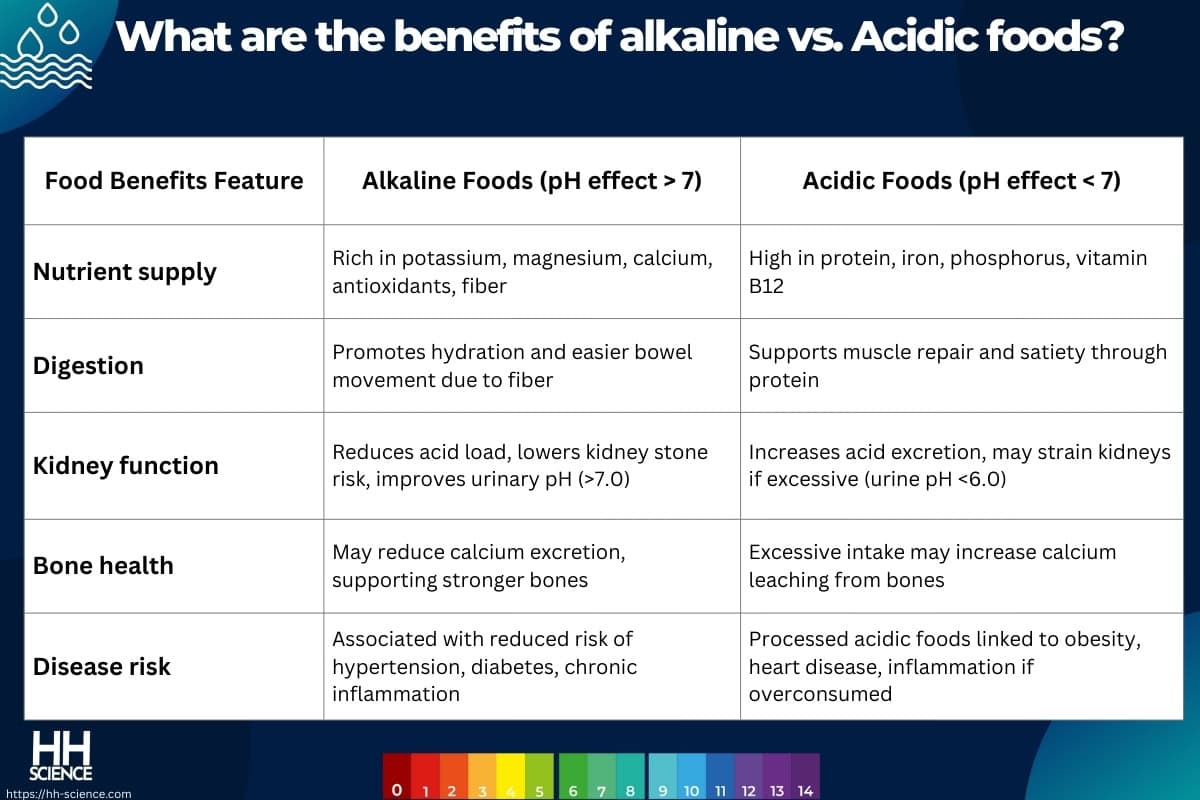
What are the benefits of alkaline vs. Acidic foods?
Comparing the benefits of alkaline vs acidic foods is important because they influence the body in different categories such as nutrient supply, digestion, kidney function, bone health, and disease risk, even though blood pH remains stable at 7.35–7.45. Alkaline foods are valued for their mineral richness and buffering effect, while acidic foods contribute essential proteins and nutrients despite increasing acid load.
| Food Benefits Feature | Alkaline Foods (pH effect > 7) | Acidic Foods (pH effect < 7) |
| Nutrient supply | Rich in potassium, magnesium, calcium, antioxidants, fiber | High in protein, iron, phosphorus, vitamin B12 |
| Digestion | Promotes hydration and easier bowel movement due to fiber | Supports muscle repair and satiety through protein |
| Kidney function | Reduces acid load, lowers kidney stone risk, improves urinary pH (>7.0) | Increases acid excretion, may strain kidneys if excessive (urine pH <6.0) |
| Bone health | May reduce calcium excretion, supporting stronger bones | Excessive intake may increase calcium leaching from bones |
| Disease risk | Associated with reduced risk of hypertension, diabetes, chronic inflammation | Processed acidic foods linked to obesity, heart disease, inflammation if overconsumed |
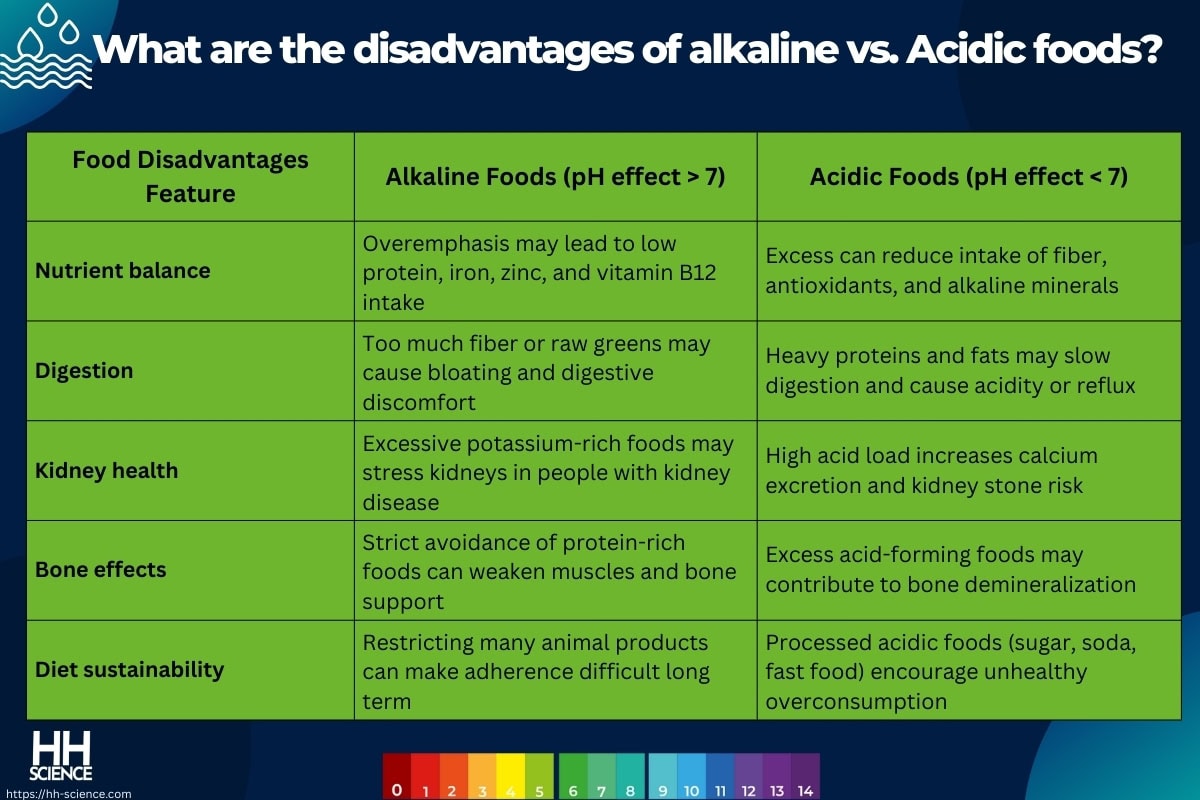
What are the disadvantages of alkaline vs. Acidic foods?
Comparing the disadvantages of alkaline vs acidic foods is important because both extremes can have drawbacks in categories such as nutrient balance, digestion, kidney health, bone effects, and overall diet sustainability. Alkaline foods may lack certain nutrients when overemphasized, while acidic foods can strain the kidneys and bones if consumed in excess.
| Food Disadvantages Feature | Alkaline Foods (pH effect > 7) | Acidic Foods (pH effect < 7) |
| Nutrient balance | Overemphasis may lead to low protein, iron, zinc, and vitamin B12 intake | Excess can reduce intake of fiber, antioxidants, and alkaline minerals |
| Digestion | Too much fiber or raw greens may cause bloating and digestive discomfort | Heavy proteins and fats may slow digestion and cause acidity or reflux |
| Kidney health | Excessive potassium-rich foods may stress kidneys in people with kidney disease | High acid load increases calcium excretion and kidney stone risk |
| Bone effects | Strict avoidance of protein-rich foods can weaken muscles and bone support | Excess acid-forming foods may contribute to bone demineralization |
| Diet sustainability | Restricting many animal products can make adherence difficult long term | Processed acidic foods (sugar, soda, fast food) encourage unhealthy overconsumption |
Acid vs. Alkaline foods for cancer
Acid vs alkaline foods for cancer are often compared in terms of dietary acid load, urine pH effect, nutrient density, influence on inflammation, and scientific evidence, because many claims suggest that alkaline foods may slow cancer progression, while acidic foods may promote it, even though blood pH remains tightly regulated at 7.35–7.45 regardless of diet.
- Dietary acid load: Acidic foods (meat, dairy, refined grains) increase net acid production, while alkaline foods (fruits, vegetables, legumes) reduce it.
- Urine pH effect: Acidic foods lower urine pH (<6.0), while alkaline foods raise urine pH (>7.0), though this does not change blood pH.
- Nutrient density: Alkaline foods are rich in antioxidants, fiber, potassium, and magnesium, while acidic foods provide protein, iron, and phosphorus but fewer protective phytonutrients.
- Influence on inflammation: High intake of acidic, processed foods is linked to inflammation, while alkaline plant foods are associated with anti-inflammatory effects.
- Scientific evidence: There is no proof that diet can change cancer cell environment by altering blood pH, but alkaline foods support health through better nutrition, whereas acidic processed foods may increase cancer risk factors indirectly.
Acidic vs alkaline eggs
Acidic vs alkaline eggs differ in pH value, freshness, protein behavior, cooking properties, and microbial resistance, because egg white naturally shifts from slightly acidic to more alkaline over time, making it important to compare for quality and food safety.
- pH value: Fresh eggs have an albumen pH of ~7.6–8.0, while older eggs rise to ~9.0–9.7 due to CO₂ loss.
- Freshness: Acidic (lower-pH) eggs are fresher, while alkaline (higher-pH) eggs indicate aging.
- Protein behavior: At lower pH, egg white proteins remain tighter and more viscous, while at higher pH they thin out and spread more easily.
- Cooking properties: Acidic fresher eggs poach and fry better (compact whites), while alkaline older eggs are better for baking and whipping (more foam volume).
- Microbial resistance: Slightly acidic fresher eggs resist bacterial growth better, while alkaline eggs are more susceptible to contamination.
Acidic fruits vs alkaline fruits
Acidic fruits vs alkaline fruits differ in their taste, metabolic ash effect, pH impact on urine, mineral composition, and nutritional role, because although many fruits taste acidic, their metabolism determines whether they are acid-forming or alkaline-forming in the body. Acidic fruits like cranberries, blueberries, and pomegranates lower urine pH (<6.5) due to organic acids that do not metabolize into bicarbonates, while alkaline fruits like lemons, limes, avocados, and watermelon taste sour but metabolize into bicarbonate precursors, raising urine pH (>7.0). Comparing them highlights that acidity in taste does not equal acid-forming effect, since metabolism and mineral salts (potassium, magnesium, calcium) determine whether a fruit is classified as alkaline or acidic.
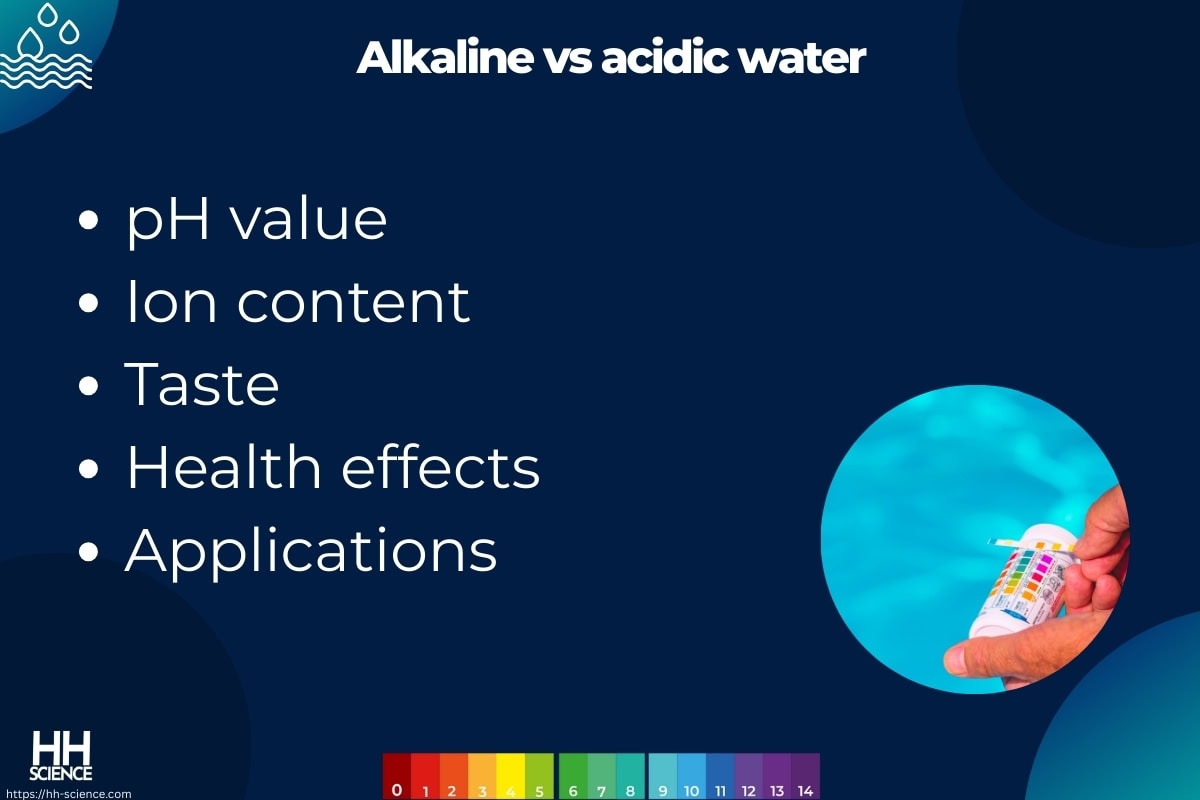
Alkaline vs acidic water
Alkaline vs acidic water differ in pH value, ion content, taste, health effects, and applications, because comparing them shows how water chemistry influences hydration, safety, and industrial or medical uses.
- pH value: Alkaline water has a pH above 7 (typically 8.0–9.5), while acidic water has a pH below 7 (typically 5.5–6.5 in natural sources).
- Ion content: Alkaline water contains more bicarbonates, calcium, and magnesium, while acidic water contains more free hydrogen ions (H⁺) and sometimes dissolved CO₂.
- Taste: Alkaline water tastes smoother and less sour, while acidic water has a sharper or tangier taste.
- Health effects: Alkaline water may help neutralize stomach acid and reduce reflux symptoms, while acidic water can irritate digestion and leach metals from pipes if consumed long term.
- Applications: Alkaline water is marketed for drinking and wellness, while acidic water is often used for cleaning, sanitation, and skin treatments.
Is alkaline water better?
Yes, alkaline water is better when it is used to neutralize excess stomach acid, improve taste, or provide minerals like calcium and magnesium, because its higher pH (8.0–9.5) can relieve acid reflux and support hydration in mineral-poor diets. But it is not universally better than regular water, since blood pH remains tightly regulated at 7.35–7.45, and long-term reliance on alkaline water offers no proven systemic health advantage beyond the benefits of adequate hydration and a nutrient-rich diet.
Alkaline vs acidic drinking water
Alkaline vs acidic drinking water differ in pH level, mineral composition, taste, health impact, and safety, because comparing them helps evaluate water quality and its suitability for consumption. Alkaline drinking water has a pH above 7 (typically 8.0–9.5) due to bicarbonates, calcium, and magnesium, giving it a smoother taste and potential benefits such as reducing acid reflux. Acidic drinking water has a pH below 7 (commonly 5.5–6.5 in natural or untreated sources) with higher hydrogen ion concentration (H⁺) and sometimes dissolved CO₂, which can taste sour, leach metals from pipes, and cause digestive irritation if consumed long-term.
What should we know about alkaline water?
You should know that alkaline water has a pH above 7 (usually 8.0–9.5) because it contains alkaline minerals like calcium, magnesium, and bicarbonates or is produced through ionization or filtration. It may help neutralize excess stomach acid, improve hydration taste, and reduce the risk of acid reflux, but it does not change blood pH (tightly regulated at 7.35–7.45). Long-term safety depends on mineral content and source, as overly alkaline water (>10 pH) can cause digestive irritation, while mildly alkaline water is generally safe and often marketed as a wellness drink.
Acetic acid fermentation vs alkaline fermentation
Acetic acid fermentation vs alkaline fermentation differ in pH outcome, microorganisms, substrates, and applications, because fermentation can either produce acidic compounds or alkaline end products depending on microbial activity. Acetic acid fermentation lowers pH (<4.0) as Acetobacter convert ethanol into acetic acid (vinegar production), while alkaline fermentation raises pH (>8.0) as Bacillus species break down proteins into ammonia and peptides (used in foods like natto or African locust bean condiments).
Acid ingestion vs alkaline ingestion
Acid ingestion vs alkaline ingestion differ in chemical effect, tissue damage, and medical risk, because both extremes disrupt normal physiology. Acid ingestion (e.g., hydrochloric acid, pH <2) causes coagulative necrosis, protein denaturation, and esophageal injury, while alkaline ingestion (e.g., sodium hydroxide, pH >12) causes liquefactive necrosis, deeper tissue penetration, and long-term strictures; both are medical emergencies requiring immediate care.
Acidic vs alkaline metabolic
Acidic vs alkaline metabolic refers to body metabolic state, pH balance, and waste products, because different processes shift hydrogen ion activity. Acidic metabolism occurs when excess acids (lactic acid, ketone bodies) accumulate, lowering blood pH below 7.35 (acidosis), while alkaline metabolism reflects excessive base or bicarbonate presence, raising blood pH above 7.45 (alkalosis); both conditions are tightly regulated by lungs (CO₂ exhalation) and kidneys (H⁺/HCO₃⁻ balance).
Acid vs alkaline herbs
Acid vs alkaline herbs differ in their pH effect, phytochemical profile, and traditional uses, because plants can be classified based on whether they leave acid-forming or alkaline-forming residues. Acid herbs include coffee, black tea, and some spices that lower urine pH (<6.5), while alkaline herbs include parsley, cilantro, basil, mint, and wheatgrass that provide minerals (potassium, calcium, magnesium) and raise urine pH (>7.0), supporting detoxification and anti-inflammatory effects.
Alkaline vs acidic in the body
Alkaline vs acidic in the body differ in blood pH regulation, urine pH changes, digestive system acidity, metabolic states, and health effects, because comparing them explains how the body maintains balance while handling different acid and base loads.
- Blood pH regulation: Blood stays slightly alkaline at 7.35–7.45, tightly controlled by buffers, lungs, and kidneys, regardless of diet.
- Urine pH changes: Acidic diets lower urine pH (<6.5), while alkaline diets raise urine pH (>7.0), reflecting dietary acid load.
- Digestive system acidity: The stomach is highly acidic (pH 1.5–3.5) for digestion, while the small intestine is alkaline (pH 7–8) for nutrient absorption.
- Metabolic states: Excess acid can lead to acidosis (pH <7.35), while excess base can cause alkalosis (pH >7.45), both of which disrupt normal physiology.
- Health effects: Acidic shifts may contribute to bone mineral loss and kidney stress, while alkaline shifts may cause muscle weakness or arrhythmias if extreme.
Acidic vs alkaline body symptoms
Acidic vs alkaline body symptoms differ in how the body reacts when blood pH shifts outside the normal range (7.35–7.45), because both acidosis (too acidic) and alkalosis (too alkaline) disrupt enzyme function, electrolyte balance, and cellular metabolism.
| Body Symptoms | Acidic Body (Acidosis, pH < 7.35) | Alkaline Body (Alkalosis, pH > 7.45) |
| Energy & Brain | Fatigue, confusion, headache, possible coma | Dizziness, lightheadedness, seizures in severe cases |
| Muscles | Weakness, reduced function | Muscle twitching, hand tremors, cramps |
| Respiration | Rapid breathing (to blow off CO₂) | Slow or shallow breathing in compensation |
| Electrolytes | High potassium (hyperkalemia) | Low calcium (hypocalcemia) |
| Cardiovascular | Arrhythmias from high potassium | Irregular heartbeat from calcium imbalance |

What is high acidity?
High acidity is a condition where the hydrogen ion concentration [H⁺] is elevated, resulting in a pH lower than the normal range of the system being measured. In the human body, high acidity refers to acidosis, when blood pH falls below 7.35 (normal 7.35–7.45), caused by excess production of acids (like lactic acid or ketone bodies), reduced acid excretion by the kidneys, or buildup of CO₂ from respiratory failure. At the cellular level, high acidity disrupts enzyme function, oxygen transport, and electrolyte balance, leading to symptoms such as fatigue, rapid breathing, confusion, and in severe cases, coma.
What are the dangers of high acidity in the body?
The dangers of high acidity in the body include enzyme dysfunction, impaired oxygen transport, electrolyte imbalances, bone mineral loss, kidney strain, and cardiovascular instability, because excess hydrogen ions (H⁺) interfere with normal biochemical processes and acid–base balance. The body’s normal blood pH range is 7.35–7.45, and when it drops below 7.35 (acidosis), proteins denature, potassium rises (hyperkalemia), and calcium is leached from bones, increasing risk of arrhythmias, osteoporosis, kidney overload, and in severe cases, respiratory failure or coma.
What is alkalinity?
Alkalinity is the capacity of a solution to neutralize acids by buffering hydrogen ions (H⁺), determined mainly by the presence of bicarbonates (HCO₃⁻), carbonates (CO₃²⁻), and hydroxide ions (OH⁻), and is typically expressed in mg/L as CaCO₃ in water chemistry. In the human body, alkalinity refers to the buffering ability of systems like the bicarbonate buffer system, which maintains blood pH within the narrow range of 7.35–7.45 by balancing carbonic acid (H₂CO₃) with bicarbonate; this ensures stable enzyme activity, proper oxygen delivery, and electrolyte regulation despite varying acid or base intake.
What are the benefits of alkalinity?
The benefits of alkalinity include stable pH regulation, buffering against excess acids, protection of bone and kidney health, improved metabolic efficiency, and enhanced water quality, because alkalinity helps neutralize hydrogen ions (H⁺) and maintain chemical balance. The body relies on alkalinity—mainly through the bicarbonate buffer system—to keep blood pH within 7.35–7.45, preventing dangerous swings toward acidosis. In water systems, alkalinity expressed as mg/L CaCO₃ protects against corrosion, supports aquatic life, and ensures effective disinfection in drinking water treatment.
How can you bring your body into balance?
You can bring your body into balance by maintaining blood pH within the normal range of 7.35–7.45 through lifestyle factors that support the body’s natural buffering systems. This includes eating a nutrient-rich diet with plenty of fruits, vegetables, and adequate protein, staying hydrated to help the kidneys excrete acids, engaging in regular breathing and physical activity to regulate CO₂ levels, and avoiding excessive intake of processed, high-acid foods that increase metabolic acid load.
What is the fastest way to alkalize your body?
The fastest way to alkalize your body is through respiratory regulation, because increasing breathing rate lowers CO₂ in the blood, which reduces carbonic acid (H₂CO₃) and raises blood pH toward the normal range of 7.35–7.45. Drinking alkaline fluids (such as water with added bicarbonate, pH 8–9) and consuming potassium- and magnesium-rich foods (leafy greens, fruits, vegetables) also support the bicarbonate buffer system, but true systemic alkalization is controlled mainly by the lungs and kidneys, not diet alone.
Acidic vs alkaline urine
Acidic vs alkaline urine differ in pH range, causes, dietary influence, and clinical significance, because urine pH reflects how the kidneys excrete hydrogen ions (H⁺) and bicarbonate (HCO₃⁻) to maintain blood pH at 7.35–7.45. Acidic urine has a pH typically between 4.5 and 6.5, caused by high protein intake, metabolic acidosis, or diabetes, while alkaline urine has a pH between 7.0 and 8.5, often resulting from vegetarian diets, urinary tract infections with urea-splitting bacteria, or after consuming bicarbonates. Comparing them helps assess kidney function, dietary acid load, and underlying metabolic or infectious conditions.
Cancer alkaline vs acidic
Cancer alkaline vs acidic refers to the claim that acidic environments promote cancer, while alkaline conditions may inhibit it, because cancer cells often thrive in acidic microenvironments caused by high lactic acid production. However, blood pH remains tightly regulated at 7.35–7.45, and while alkaline diets raise urine pH (>7.0), they do not change tumor pH directly; comparison is important to distinguish between metabolic acidosis and local tumor acidity.
Alkaline vs acid cancer treatment
Alkaline vs acid cancer treatment compares approaches that attempt to influence cancer cell growth through pH, because some therapies explore buffering tumor acidity to improve drug effectiveness. Acidic tumor environments (pH ~6.5–6.9) reduce chemotherapy uptake, while experimental alkaline treatments (e.g., bicarbonate infusion) aim to raise tumor pH toward neutrality, but these are still under research and not standard clinical practice.
Alkaline vs acidic blood symptoms
Alkaline vs acidic blood symptoms differ in pH range, respiratory effects, muscle function, neurological signs, electrolyte balance, and cardiovascular risk, because comparing them shows how deviations from the normal blood pH of 7.35–7.45 (homeostasis) affect the body in opposite ways.
- pH range: Acidic blood (acidosis) is below 7.35, while alkaline blood (alkalosis) is above 7.45.
- Respiratory effects: Acidosis causes rapid, deep breathing to expel CO₂, while alkalosis causes slow or shallow breathing.
- Muscle function: Acidosis leads to weakness and fatigue, while alkalosis causes twitching, tremors, and cramps.
- Neurological signs: Acidosis brings confusion, headache, and drowsiness, while alkalosis causes dizziness, tingling, and seizures in severe cases.
- Electrolyte balance: Acidosis is associated with high potassium (hyperkalemia), while alkalosis is linked to low calcium (hypocalcemia).
- Cardiovascular risk: Acidosis may cause arrhythmias from high potassium, while alkalosis increases arrhythmia risk from calcium and potassium shifts.
Acid vs alkaline hemoglobin electrophoresis
Acid vs alkaline hemoglobin electrophoresis differ in pH medium, migration patterns, and diagnostic purpose, because pH determines how hemoglobin variants separate under electric charge. In alkaline electrophoresis (pH ~8.6), hemoglobins migrate based on net negative charge, useful for initial screening, while in acidic electrophoresis (pH ~6.0–6.2, citrate agar), migration depends on isoelectric points, helping differentiate variants that overlap under alkaline conditions (e.g., HbS from HbD or HbC).
Acidic vs alkaline saliva
Acidic vs alkaline saliva differ in pH range, oral health impact, and microbial growth, because saliva normally buffers mouth pH between 6.2 and 7.6. Acidic saliva (pH <6.0) promotes enamel erosion and cavities by demineralizing teeth, while alkaline saliva (pH >7.5) favors remineralization but may encourage calculus buildup; comparison is used in dental health monitoring.
Acidic vs alkaline skin
Acidic vs alkaline skin differ in pH balance, barrier function, and microbiome health, because normal skin maintains an acid mantle at pH 4.5–5.5. Acidic skin supports protective bacteria and barrier lipids, while alkaline skin (pH >6.0) disrupts barrier integrity, increases dryness, and promotes pathogenic bacteria like Staphylococcus aureus; comparison matters for dermatology and skincare product design.
Acidic vs alkaline vaginal pH balance
Acidic vs alkaline vaginal pH balance differ in pH range, microbial balance, and infection risk, because normal vaginal pH is acidic (3.8–4.5) due to lactic acid from Lactobacillus species. Acidic vaginal pH protects against pathogens, while alkaline vaginal pH (>4.5) often indicates bacterial vaginosis, trichomoniasis, or reduced estrogen, and comparing them is critical in gynecology for diagnosis and treatment.
Alkaline vs acidic in industrial applications
Alkaline vs acidic in industrial applications are used in industrial water & wastewater treatment, municipal water & wastewater treatment, environmental monitoring, laboratory & analytical testing, pool & spa maintenance, aquaculture & aquarium management, hydroponics & agriculture, food & beverage production, and metallurgy & mining, because pH balance determines corrosion control, chemical reactions, microbial growth, product quality, and regulatory compliance. Knowing whether conditions are alkaline or acidic is crucial since even small deviations from the optimal pH range (often 6.5–8.5 for water systems) can cause equipment damage, safety hazards, or process failure, making pH monitoring a key factor in both efficiency and sustainability.
Alkaline vs acidic in industrial water & wastewater treatment
Alkaline vs acidic in industrial water & wastewater treatment affects corrosion control, scaling, chemical dosing, and biological activity, because acidic water (pH < 6.5) accelerates pipe corrosion and heavy metal solubility, while alkaline water (pH > 8.5) promotes scaling from calcium carbonate and reduces disinfectant efficiency. In this industry, maintaining an optimal pH (typically 6.5–8.5) is critical for treatment efficiency, and pH is tested and measured using electronic pH meters, in-line sensors, or laboratory titration methods to ensure compliance with discharge regulations and protect infrastructure.
Alkaline vs acidic in municipal water & wastewater treatment
Alkaline vs acidic conditions in municipal water & wastewater treatment influence disinfection efficiency, pipe integrity, coagulation, and biological treatment performance, because acidic water (pH < 6.5) can corrode distribution systems and reduce chlorine effectiveness, while alkaline water (pH > 8.5) causes scaling, lowers solubility of some treatment chemicals, and interferes with coagulation. Municipal facilities maintain water in the range of 6.5–8.5, measured by online pH analyzers, bench pH meters, and grab sampling, to ensure safe drinking water and regulatory compliance.
Alkaline vs acidic in environmental monitoring
Alkaline vs acidic conditions in environmental monitoring are critical for ecosystem health, pollutant behavior, and compliance with water quality standards, because acidic waters (pH < 6.0) from acid rain or mine drainage can mobilize toxic metals, while alkaline waters (pH > 9.0) may harm aquatic species and alter nutrient availability. Monitoring programs use portable field pH meters, in-situ probes, and laboratory analysis to track pH trends in rivers, lakes, oceans, and groundwater, ensuring that most natural waters remain within the pH 6.5–8.5 range required to support aquatic life.
Acidic vs alkaline lawn
Acidic vs alkaline lawn refers to how soil pH affects grass growth, nutrient availability, and lawn health, because acidic soils (pH < 6.0) limit calcium, magnesium, and phosphorus while favoring moss, whereas alkaline soils (pH > 7.5) restrict iron, manganese, and zinc uptake, leading to yellowing leaves (chlorosis). Lawn soil is compared using soil pH tests (color kits, electronic meters, or lab analysis), with most grasses thriving in a slightly acidic to neutral range (pH 6.0–7.0).
Alkaline cleaner vs acid cleaner
Alkaline cleaner vs acid cleaner differs in chemical composition, cleaning mechanism, and application, because alkaline cleaners (pH 9–13, with sodium hydroxide or carbonate) break down oils, fats, and organic soils, while acid cleaners (pH 1–5, with hydrochloric, phosphoric, or citric acid) dissolve mineral deposits, rust, and scale. Comparison is done by pH testing and evaluating the surface or soil type, with alkaline cleaners used for kitchens and degreasing, and acid cleaners used for descaling, bathrooms, and metal treatments.
Alkaline vs acidic in laboratory & analytical
Alkaline vs acidic conditions in laboratory & analytical settings determine reaction pathways, sample stability, and measurement accuracy, because acidic media (pH < 7) favor protonation reactions, protein denaturation, and certain chromatography separations, while alkaline media (pH > 7) enable deprotonation, nucleophilic reactions, and enzyme activity in assays. Laboratories control and compare pH using standard buffer solutions, calibrated pH meters, and titration methods, since many analytical techniques require strict ranges (e.g., pH 4.0–10.0) to maintain reproducibility.
Alkaline vs acidic in pool & spa
Alkaline vs acidic conditions in pool & spa water affect disinfection efficiency, user comfort, and equipment durability, because acidic water (pH < 7.0) causes eye irritation and corrodes pipes, while alkaline water (pH > 8.0) reduces chlorine effectiveness and promotes scale formation. Pools and spas are tested with pH test kits, colorimetric strips, and electronic pH meters, with the ideal range maintained between 7.2–7.8 to balance sanitation, comfort, and protection of infrastructure.
Acidic vs alkaline car shampoo
Acidic vs alkaline car shampoo differ in pH level, cleaning action, surface safety, and applications, because acidic shampoos (pH 3–6) are designed to dissolve mineral deposits, water spots, and brake dust, while alkaline shampoos (pH 9–12) are formulated to cut through oil, grease, and heavy organic dirt. Comparison is important since acidic shampoos are safer for removing inorganic residues without stripping wax or coatings, while alkaline shampoos provide stronger degreasing but may require neutralization to avoid damaging paint, plastics, or protective sealants; neutral or pH-balanced shampoos (around pH 7) are often preferred for regular maintenance.
Alkaline vs acidic in aquaculture & aquarium
Alkaline vs acidic conditions in aquaculture & aquarium systems affect fish health, microbial balance, and water chemistry, because acidic water (pH < 6.5) stresses most freshwater and marine species by reducing oxygen availability and increasing metal solubility, while overly alkaline water (pH > 8.5) interferes with ammonia detoxification and damages gill function. Operators test and measure pH using aquarium test kits, digital pH meters, or continuous probes, maintaining optimal ranges of 6.5–7.5 for freshwater and 8.0–8.4 for marine/reef systems to ensure survival and growth.
Alkaline vs acidic in hydroponics & agriculture
Alkaline vs acidic conditions in hydroponics & agriculture control nutrient solubility, root uptake, and soil fertility, because acidic soils (pH < 6.0) increase availability of metals like aluminum and manganese (toxic at high levels), while alkaline soils (pH > 7.5) lock out nutrients such as iron, zinc, and phosphorus. Farmers and growers test and measure pH with soil pH kits, laboratory analysis, and electronic probes, keeping the ideal range of 5.5–6.5 for hydroponics and 6.0–7.0 for most crops to maximize nutrient efficiency and yield.
Acidic vs alkaline soil
Acidic vs alkaline soil differ in pH range, nutrient availability, crop suitability, and soil chemistry, because soil pH directly controls how minerals dissolve and whether plants can absorb them efficiently. Acidic soils (pH < 6.0) increase solubility of aluminum, iron, and manganese—sometimes to toxic levels—while reducing availability of phosphorus, calcium, and magnesium, making them suitable for crops like blueberries, potatoes, and pine trees. Alkaline soils (pH > 7.5) restrict nutrients such as iron, zinc, and phosphorus, leading to deficiencies like chlorosis, but support crops like cabbage, asparagus, and barley. Comparison is done through soil pH testing kits, electronic meters, or laboratory analysis, with most plants thriving in a slightly acidic to neutral range (pH 6.0–7.0).
Alkaline vs acidic in food & beverage
Alkaline vs acidic conditions in the food & beverage industry influence flavor, preservation, processing, and safety, because acidic environments (pH < 4.6) inhibit microbial growth and are used in foods like yogurt, pickles, and soft drinks, while alkaline conditions (pH > 7) improve texture, reduce acidity, and are applied in products like ramen noodles or cocoa processing. Manufacturers test and measure pH with laboratory pH meters, titration, and in-line sensors, since controlling the pH range ensures product quality, shelf life, and compliance with food safety standards.
Alkaline vs acidic in metallurgy & mining
Alkaline vs acidic conditions in metallurgy & mining affect metal extraction, corrosion, leaching, and wastewater management, because acidic solutions (pH < 5) are used for processes like heap leaching of copper or gold with sulfuric acid, while alkaline conditions (pH > 9) are critical in cyanide leaching of gold and in preventing acid mine drainage. Mining operations test and measure pH with portable field meters, automatic probes, and laboratory titrations, as maintaining correct ranges is essential for maximizing yield, reducing corrosion, and ensuring environmental compliance.


