
What is a laboratory pH sensor?
A laboratory pH sensor is a precision electrochemical instrument designed to measure the hydrogen ion activity of clean or moderately complex samples with high accuracy, using a sensitive glass membrane and a stable reference system optimized for controlled laboratory conditions. First introduced in the early 1900s after Fritz Haber and Zygmunt Klemensiewicz developed the glass electrode in Germany, laboratory pH sensors evolved alongside advances in analytical chemistry, gaining improved reference systems, specialized membrane formulations, refillable electrolytes, and temperature-compensation elements to enhance accuracy and reliability. Modern laboratory sensors now include research-grade refillable electrodes, low-ionic-strength designs, spear-tip food electrodes, TRIS-compatible references, and micro-sample probes, reflecting decades of refinement to meet the needs of chemistry labs, biology labs, environmental testing, and quality control workflows. Today, a laboratory pH sensor plays a central role in analytical science by enabling precise, repeatable pH measurement across research, education, pharmaceuticals, food science, and environmental monitoring, where measurement accuracy directly affects experimental validity and product quality.
Why laboratory pH sensors were invented?
Laboratory pH sensors were invented to provide accurate, repeatable, and contamination-free pH measurements in controlled scientific environments, because early industrial and field electrodes could not deliver the precision, stability, or fine sensitivity required for research, chemical analysis, biological experiments, or standardized quality control. They were developed to solve issues such as reference instability, poor repeatability, lack of temperature compensation, and incompatibility with delicate, low-ionic-strength, or small-volume samples—problems that made high-precision analytical work impossible with earlier sensor designs.
What are the key components of a laboratory pH sensor?
A laboratory pH sensor is built from multiple precision components, including the measuring electrode, reference electrode, junction (diaphragm), electrolyte system, pH-sensitive glass membrane, internal Ag/AgCl element, temperature compensation element, sensor body, reference fill port, electrode cable, and connector, because each part plays a distinct role in generating a stable electrochemical signal, maintaining reference integrity, ensuring measurement accuracy, and enabling reliable connection to laboratory pH meters. These components work together to provide the precision, repeatability, and sensitivity required for analytical and research-grade pH measurements.
- Measuring Electrode: Generates the primary voltage response based on hydrogen ion activity in the sample.
- Reference Electrode: Provides a stable baseline potential to compare against the measuring electrode’s signal.
- Junction (Diaphragm): Allows ionic contact between the reference system and the sample while controlling flow and preventing contamination.
- Electrolyte (Gel-Filled or Refillable): Maintains consistent ionic conductivity and stabilizes the reference potential for accurate laboratory measurements.
- pH-Sensitive Glass Membrane: Responds selectively to hydrogen ions, producing the mV changes that correspond to pH.
- Internal Ag/AgCl Element: Serves as the reference half-cell, creating a stable electrochemical reference point.
- Temperature Compensation Element (NTC or PT1000): Adjusts pH readings automatically based on sample temperature.
- Sensor Body (Glass or Plastic): Houses and protects internal components while providing chemical compatibility with laboratory samples.
- Reference Fill Port (For Refillable Types): Allows addition of fresh electrolyte to maintain accuracy and extend sensor lifespan.
- Electrode Cable: Transmits the electrical signal from the sensor to the pH meter without noise interference.
- Connector (BNC or Other Lab Connectors): Provides a secure, low-noise interface between the electrode and laboratory pH meters.

Measuring electrode
Measuring electrode is the core sensing element of a laboratory pH sensor, responsible for detecting hydrogen ion activity in the sample and converting it into a measurable electrical potential. It consists of a specially formulated pH-sensitive glass membrane that selectively exchanges ions with the solution—specifically allowing hydrogen ions to interact with its hydrated gel layer—producing a voltage according to the Nernst equation. This voltage reflects the acidity or alkalinity of the sample and serves as the primary signal used to calculate pH. Inside the measuring electrode, an internal Ag/AgCl reference element immersed in a stable electrolyte completes the half-cell system, enabling consistent electrical output. The measuring electrode plays a critical role in the precision and responsiveness expected in laboratory environments, and it typically comes in forms such as standard bulb membranes for general aqueous samples, micro-tips for small volumes, spear-tips for semi-solids, and flat-surface designs for biological or surface testing.
Reference electrode
Reference electrode is the stable electrochemical half-cell inside a laboratory pH sensor that provides the constant baseline potential against which the measuring electrode’s voltage is compared. It contains an internal Ag/AgCl (silver/silver chloride) element immersed in a carefully formulated electrolyte—usually KCl in gel or liquid form—that maintains a fixed, reproducible potential regardless of the sample being measured. This stability is critical because the pH reading depends on detecting very small differences in millivolts, and any fluctuation in the reference would immediately distort the measurement.
In a laboratory pH sensor, the reference electrode works by slowly releasing ions through a junction or diaphragm, creating a low-resistance electrical path between the reference system and the sample. This ensures that the measuring electrode’s signal can be reliably compared to a known reference point. The reference electrode plays an essential role in measurement accuracy, long-term repeatability, and resistance to drift—especially in low-ionic-strength samples or chemically sensitive laboratory buffers.
Common forms include sealed gel-filled references for maintenance-free operation, refillable liquid electrolyte references for high-precision or long-term research work, and specialty references designed for TRIS buffers, protein-rich samples, or low-conductivity water. Each variant supports specific laboratory needs, ensuring that the reference system remains stable under the exact chemical and physical conditions of the measurement.
Junction (diaphragm)
Junction (diaphragm) is the controlled ionic pathway that connects the internal reference system of a laboratory pH sensor to the sample solution, allowing a stable and low-resistance electrical circuit while preventing contamination of the internal electrolyte. It works by permitting a slow, consistent leak of electrolyte—typically KCl—from the reference chamber into the sample, creating an electrically conductive bridge that enables the reference electrode to maintain a constant baseline potential. This junction must balance two opposing needs: allow enough ionic flow for stable measurement while blocking sample components from diffusing back into the reference chamber, which would destabilize the electrode.
In a laboratory pH sensor, the junction plays a central role in measurement accuracy, response time, and long-term stability, especially in low-ionic-strength solutions, biological buffers, or chemically reactive samples. A well-functioning junction ensures minimal drift, rapid equilibration, and reliable reference contact with the solution.
Common junction forms include ceramic junctions for general aqueous samples, PTFE junctions for protein-rich or viscous samples, annular or sleeve junctions for increased flow and faster stabilization, and open junctions for samples prone to clogging such as slurries or food pastes. The design chosen directly influences how the sensor performs in specific laboratory environments, making the junction one of the most important components for ensuring accurate and repeatable pH measurement.
Electrolyte (gel-filled or refillable)
Electrolyte (gel-filled or refillable) is the conductive internal solution inside the reference chamber of a laboratory pH sensor, responsible for maintaining a stable ionic environment around the Ag/AgCl reference element so it can generate a constant, reproducible potential. It works by slowly diffusing through the junction into the sample, creating a low-resistance electrical bridge that ensures accurate comparison between the reference and measuring electrodes. The electrolyte plays a vital role in preventing reference drift, maintaining fast response time, and supporting measurement stability across different laboratory sample types. Laboratory pH sensors commonly use gel-filled electrolytes for maintenance-free operation in routine testing, or refillable liquid KCl electrolytes for high-precision and long-duration research applications, where consistent ionic strength and the ability to refresh the electrolyte extend the electrode’s lifespan and performance.
pH-sensitive glass membrane
pH-sensitive glass membrane is the selectively responsive surface of a laboratory pH sensor that directly interacts with hydrogen ions in the sample, producing the measurable voltage used to determine pH. This specialized glass contains alkali metal ions that exchange with hydrogen ions when the membrane contacts an aqueous solution, creating a potential difference across its hydrated gel layer according to the Nernst equation. The membrane’s performance determines the electrode’s sensitivity, slope, response time, and accuracy, making it the defining feature of any laboratory pH sensor. In modern laboratory electrodes, the glass membrane is typically formed into shapes such as the standard spherical bulb for general aqueous samples, micro bulbs for small-volume or narrow vessels, flat membranes for surface measurements, and spear-tip membranes for semi-solid or food samples. These different forms support a wide range of scientific applications while maintaining the precision, consistency, and chemical selectivity required for analytical laboratory work.
Internal Ag/AgCl element
Internal Ag/AgCl element is the electrochemical reference half-cell inside a laboratory pH sensor that establishes the stable, reproducible baseline voltage required for accurate pH measurement. It is composed of a silver wire coated with silver chloride, immersed in a chloride-rich electrolyte—typically potassium chloride (KCl)—where it maintains a well-defined equilibrium potential that does not change with sample composition. This stability is essential because the pH measurement depends on detecting millivolt differences generated at the glass membrane, and even minor fluctuations in the reference element would distort the reading. The Ag/AgCl element works by continuously exchanging chloride ions with the surrounding electrolyte, ensuring a constant and predictable reference potential that pairs with the measuring electrode to complete the electrochemical circuit. In laboratory pH sensors, this element is found in both sealed gel-filled references for routine testing and refillable liquid-electrolyte references used in high-precision or research applications, where maintaining chloride concentration and electrolyte purity is critical for long-term accuracy and minimal drift.
Temperature compensation element (NTC or PT1000)
Temperature compensation element (NTC or PT1000) is the built-in sensor within a laboratory pH electrode that measures the temperature of the sample so the pH meter can automatically correct the electrode’s slope and potential according to the Nernst equation. Because pH electrode output changes by approximately 0.198 mV per pH unit per °C, accurate temperature measurement is essential for precise readings, especially in research or analytical environments where temperature fluctuations can significantly distort results. This component works by detecting the actual sample temperature—using either an NTC thermistor (commonly 10K) or a platinum resistance thermometer such as PT1000—and sending that value to the meter, which then adjusts the displayed pH without altering the raw millivolt signal. In modern laboratory pH sensors, temperature compensation elements may be built into the electrode body, embedded alongside the measuring glass, or integrated into multi-parameter probes, ensuring fast thermal response and accurate compensation across a wide range of sample types, from environmental water to biological buffers and chemical solutions.
Sensor body (glass or plastic)
Sensor body (glass or plastic) is the structural housing of a laboratory pH sensor, designed to protect the internal electrochemical components while providing chemical compatibility, mechanical strength, and ease of handling in laboratory environments. It works by encasing the measuring electrode, reference system, electrolyte chamber, temperature sensor, and wiring in a stable, inert material that resists chemical attack and maintains dimensional integrity during repeated use. The sensor body plays a crucial role in overall performance by influencing durability, sample compatibility, thermal response, and even measurement accuracy—for example, glass bodies offer excellent chemical resistance and thermal stability for high-precision analytical work, while plastic bodies made from materials like polycarbonate, epoxy, or PEI provide impact resistance and safer handling for educational, field, or routine lab applications. Common forms include traditional all-glass electrodes for research and chemical analysis, plastic-bodied sensors for rugged or student use, micro-body designs for small-volume samples, and specialized housings for food science, biotechnology, or low-ionic-strength testing. Together, the sensor body ensures long service life, consistent performance, and compatibility with the specific laboratory workflow and sample type.
Reference fill port (for refillable types)
Reference fill port (for refillable types) is the opening on a laboratory pH sensor that allows fresh electrolyte solution—typically saturated KCl—to be added to the reference chamber, maintaining stable ionic strength and ensuring long-term measurement accuracy. It works by giving the user direct access to the internal reference reservoir so the electrolyte can be topped up as it evaporates, becomes diluted, or becomes contaminated through normal junction flow. This fill port plays a crucial role in reference stability because a properly maintained electrolyte level prevents air bubbles, maintains the correct hydrostatic pressure for junction flow, and keeps the Ag/AgCl reference element fully immersed for consistent electrode potential. Common forms include sliding caps, silicone stoppers, screw caps, or snap-on lids, depending on the manufacturer, and many designs include a fill-hole alignment mark to ensure proper use during calibration. Refillable electrodes equipped with a fill port are widely used in research labs, analytical chemistry, and high-precision measurements because they offer longer lifespan, more stable slopes, and better performance in low-ionic-strength or chemically demanding samples compared to sealed gel-filled electrodes.
Electrode cable
Electrode cable is the shielded transmission line that carries the delicate millivolt signal produced by a laboratory pH sensor from the electrode body to the pH meter, ensuring that the measurement remains stable, noise-free, and accurate. It works by using high-impedance, low-noise wiring—often with multiple shielding layers and a moisture-resistant outer jacket—to protect the extremely weak pH signal (typically ±414 mV) from electrical interference, static, humidity, and mechanical stress. The cable plays a critical role in overall measurement reliability because even slight signal distortion, insulation damage, or moisture intrusion can cause drift, flickering readings, or complete signal loss in sensitive laboratory measurements.
Common forms include coaxial cables, shielded multi-core cables, and integrated cables permanently attached to the electrode, often with molded strain relief to prevent breakage during handling. Laboratory electrodes typically use fixed cables for maximum signal stability, whereas some advanced or research-grade models offer detachable cables for easier replacement or sterilization. The electrode cable ensures the millivolt signal reaches the meter with minimal noise or distortion, making it an essential component for achieving precise, repeatable laboratory pH readings.
Connector (BNC or other lab connectors)
Connector (BNC or other lab connectors) is the electrical interface at the end of a laboratory pH sensor cable that securely links the electrode to a pH meter, ensuring stable transmission of the low-level millivolt signal required for accurate pH measurement. It works by creating a tight, low-noise, corrosion-resistant connection that prevents signal loss, electrical interference, or grounding issues—essential for laboratory environments where precision and repeatability depend on maintaining signal integrity. The connector plays a key role in compatibility and reliability, since different laboratory meters support different interfaces, and a proper connector ensures the electrode can be used without adapters, noise problems, or measurement instability.
Common connector types include the widely used BNC connector, valued for its robust locking mechanism and excellent shielding; phono/banana connectors found in some educational or legacy meters; DIN connectors that provide keyed alignment and moisture protection; and detachable proprietary connectors used in modern multiparameter or research-grade instruments for plug-and-play functionality. By providing a secure and noise-resistant interface between the sensor and the meter, the connector ensures consistent analytical performance across all laboratory pH measurements.
What are the laboratory pH sensors made of?
Laboratory pH sensors are typically made of specialized glass formulations, plastics such as polycarbonate or PEI, epoxy resins, ceramic materials, PTFE, Ag/AgCl wire, platinum, and electrolyte solutions like KCl, because these materials provide the chemical resistance, electrical stability, mechanical strength, and ion-selective properties required for accurate laboratory pH measurements. Each material contributes a specific functional advantage that supports precision, durability, and compatibility across different laboratory sample types.
- Specialized pH Glass: Used for the sensing membrane because it selectively exchanges hydrogen ions, providing the voltage response that defines pH measurement.
- Polycarbonate or PEI Plastics: Provide impact resistance and chemical durability for general-purpose or educational laboratory electrodes.
- Epoxy Resin: Offers a rugged, break-resistant alternative to glass bodies for routine laboratory or field-style measurements.
- Ceramic Materials: Form the reference junction, enabling stable electrolyte flow and low-resistance electrical contact with the sample.
- PTFE (Teflon): Used for junctions or body components that require protein resistance, non-stick properties, or compatibility with viscous samples.
- Ag/AgCl Wire: Serves as the internal reference element because of its stable and well-defined electrochemical potential.
- Platinum Wire or Coated Elements: Sometimes used as grounding or secondary electrodes in advanced laboratory sensors.
- KCl Electrolyte (Gel or Liquid): Maintains ionic conductivity and stabilizes the reference potential required for accurate pH measurements.

How does a laboratory pH sensor work?
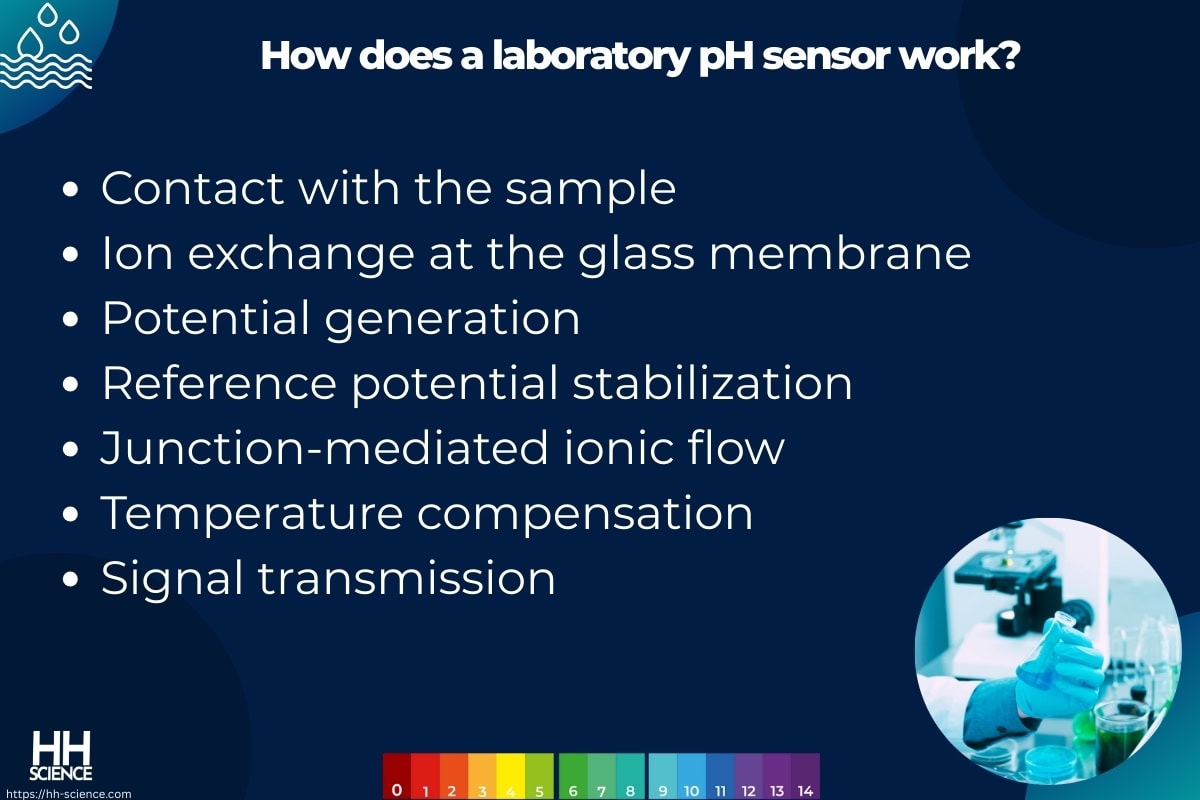
A laboratory pH sensor works by following a precise electrochemical sequence that includes contact with the sample, ion exchange at the pH-sensitive glass membrane, potential generation inside the measuring electrode, reference potential stabilization through the electrolyte and junction, temperature compensation, and signal transmission to the pH meter, because each step converts hydrogen ion activity into a stable millivolt signal that the meter translates into an accurate pH value. This mechanism depends on the cooperation of the measuring electrode, reference electrode, internal Ag/AgCl element, electrolyte, junction, temperature compensator, cable, and connector.
- Contact with the sample: The glass membrane and junction make contact with the solution, allowing hydrogen ions to interact with the membrane’s hydrated layer.
- Ion exchange at the glass membrane: Hydrogen ions replace alkali ions in the glass surface, creating a potential according to the Nernst equation.
- Potential generation: The measuring electrode’s internal Ag/AgCl system develops a voltage based on hydrogen ion activity, forming the half-cell potential.
- Reference potential stabilization: The reference electrode maintains a constant baseline through its Ag/AgCl element and electrolyte, providing a stable comparison point.
- Junction-mediated ionic flow: The junction allows controlled electrolyte flow, completing the circuit and enabling consistent electrochemical contact with the sample.
- Temperature compensation: The built-in NTC or PT1000 element measures sample temperature so the meter can correct the electrode’s slope automatically.
- Signal transmission: The millivolt signal travels through the shielded electrode cable and connector (usually BNC) to the pH meter, where it is converted into an accurate pH reading.
What are the types of laboratory pH sensors?
The types of laboratory pH sensor include performance-level categories, electrode shape/body style variants, junction design types, reference electrolyte formats, temperature compensation versions, and sample-specific compatibility designs, because laboratory applications range from routine testing to advanced research and require different sensing geometries, junction flows, electrolyte systems, thermal responses, and chemical tolerances to achieve accurate and reliable measurements across diverse sample conditions.
Laboratory pH sensor types by performance level
Laboratory pH sensor types by performance level include basic, advanced, and research-grade sensors, because laboratory work ranges from simple routine testing to highly precise analytical measurements, and each performance level is designed to match the accuracy, durability, response time, and sample compatibility required for a specific type of laboratory workflow.
- Basic: Designed for routine classroom, educational, and general-purpose lab work, offering adequate accuracy with low-maintenance sealed references and robust bodies.
- Advanced: Built for professional laboratory use with improved junctions, faster response, better chemical resistance, and optional refillable references for higher stability.
- Research-grade: Engineered for maximal precision with low-noise glass bodies, refillable electrolytes, high-end junctions, superior temperature compensation, and optimized performance for challenging samples such as low ionic strength or protein-rich solutions.
Laboratory pH sensor types by electrode shape/body style
Laboratory pH sensor types by electrode shape and body style include bulb, spear, flat, micro, narrow-body, and semi-micro designs, because different laboratory samples—such as aqueous solutions, food pastes, biological materials, micro-volumes, and samples in narrow vessels—require specialized membrane geometries and body dimensions to ensure proper contact, fast response, and accurate pH measurement.
- Bulb: The standard spherical membrane used for general aqueous samples, offering the fastest response and highest measurement stability.
- Spear: A pointed tip designed for semi-solid and food samples, allowing penetration and reliable pH measurement inside soft or fibrous materials.
- Flat: Features a smooth, flush membrane ideal for surface measurements or viscous samples where buildup around a bulb would cause errors.
- Micro: A very small-diameter electrode made for tiny sample volumes, cuvettes, NMR tubes, or precious biological/chemical materials.
- Narrow-body: Slim electrodes created for test tubes and small vessels where standard electrodes cannot fit or make proper contact.
- Semi-micro: A reduced-size bulb and body optimized for small but not ultra-miniature sample volumes, balancing precision with versatility.
Laboratory pH sensor types by junction design
Laboratory pH sensor types by junction design include ceramic, PTFE, annular, and open junctions, because different laboratory samples vary in ionic strength, viscosity, protein content, and contamination risk—requiring specific junction materials and flow characteristics to maintain stable reference potential, prevent clogging, and ensure fast, accurate measurements. Each junction type is engineered to optimize performance for particular sample chemistries and laboratory workflows.
- Ceramic junction: Provides steady electrolyte flow and low resistance, making it ideal for general aqueous solutions and routine laboratory measurements.
- PTFE junction: Offers non-stick, protein-resistant performance suited for biological samples, protein-rich buffers, and viscous materials that would clog ceramic junctions.
- Annular junction: Features a high-flow ring-shaped interface that improves stability and response time in low ionic strength or chemically demanding samples.
- Open junction: Eliminates traditional porous materials to prevent clogging, making it suitable for slurries, gels, emulsions, and food pastes commonly encountered in applied laboratory testing.
Laboratory pH sensor types by reference electrolyte
Laboratory pH sensor types by reference electrolyte include sealed, refillable, and gel-filled designs, because different laboratory applications demand varying levels of maintenance, stability, longevity, and performance—especially when dealing with low ionic strength samples, high-precision analytical work, or routine measurements where convenience is essential. Each electrolyte type influences reference stability, junction flow, lifetime, and overall measurement accuracy.
- Sealed: A maintenance-free reference system ideal for routine or educational lab work, where convenience and simplicity outweigh the need for maximum precision.
- Refillable: A high-performance liquid-electrolyte system that offers the most stable reference potential, making it the preferred choice for research-grade or low ionic strength measurements.
- Gel-filled: A semi-sealed design that provides good stability with reduced maintenance, suitable for general laboratory use and moderate-precision applications.
Laboratory pH sensor types by temperature compensation
Laboratory pH sensor types by temperature compensation include NTC 10K, PT1000, and manual temperature entry designs, because different laboratory meters and applications require varying levels of temperature accuracy, automation, and compatibility to ensure correct slope adjustment based on the Nernst equation. Each type supports a specific workflow, from routine classroom testing to high-precision research measurements.
- NTC 10K: A common thermistor-based temperature sensor that provides fast, accurate compensation for general laboratory meters.
- PT1000: A high-precision platinum temperature element used in advanced or research-grade sensors for superior accuracy and long-term stability.
- Manual temperature entry: Used when no built-in temperature sensor is present, requiring the user to input sample temperature manually, suitable for simple or budget laboratory setups.
Laboratory pH sensor types by sample compatibility
Laboratory pH sensor types by sample compatibility include general aqueous, low ionic strength, TRIS-buffer compatible, protein-rich sample electrodes, and food/semi-solid sample designs, because different laboratory samples vary widely in ionic content, viscosity, buffer chemistry, and matrix interference, requiring specialized junctions, glass formulations, and reference systems to ensure accurate, stable, and reproducible pH measurements under specific conditions.
- General aqueous: Standard laboratory electrodes optimized for typical water-based samples, offering fast response and stable readings in most routine solutions.
- Low ionic strength: Specialized sensors with high-flow or annular junctions that prevent drift and instability in ultrapure water, deionized water, or dilute buffers.
- TRIS-buffer compatible: Electrodes with modified reference systems that resist junction potential errors caused by TRIS and other amine-based buffers commonly used in biological labs.
- Protein-rich samples: Sensors with PTFE or open junctions designed to resist clogging and maintain stability when measuring samples containing proteins, enzymes, or organic matter.
- Food/semi-solid samples: Spear-tip, flat, or open-junction electrodes built to penetrate or contact thick, viscous, or particulate-rich materials such as dairy products, gels, meats, and fruit pulps.
What are the benefits of a laboratory pH sensor?
The main benefits of a laboratory pH sensor include high measurement accuracy, fast response time, excellent repeatability, compatibility with delicate or specialized samples, ease of calibration, broad design options for different lab applications, and stable performance under controlled conditions, because laboratory sensors are engineered with refined glass formulations, high-quality junctions, precise reference systems, and optimized temperature compensation to deliver reliable analytical results across a wide range of scientific workflows. These advantages are based on the sensor’s electrochemical design, careful material selection, and strict manufacturing standards required for laboratory-grade precision.
- High measurement accuracy: Provides precise pH readings due to high-quality glass membranes, stable reference systems, and optimized junction designs.
- Fast response time: Quickly stabilizes in new samples, improving workflow efficiency during titrations, kinetics studies, and repetitive measurements.
- Excellent repeatability: Produces consistent results across multiple trials thanks to tightly controlled construction and stable internal Ag/AgCl reference elements.
- Compatible with delicate samples: Specialized junctions and glass formulations allow accurate measurement of low ionic strength, protein-rich, or micro-volume samples.
- Easy to calibrate: Supports precise one-, two-, or three-point calibration, enabling high accuracy in analytical and research applications.
- Wide range of designs: Available in bulb, spear, flat, micro, and narrow-body forms, ensuring optimal performance across diverse scientific sample types.
- Stable in controlled environments: Performs reliably under laboratory conditions where temperature, contamination, and sample variability are minimized.

What are the disadvantages of a laboratory pH sensor?
The main disadvantages of a laboratory pH sensor include fragility, sensitivity to contamination, limited suitability for harsh or dirty samples, shorter lifespan under non-laboratory conditions, dependence on proper storage, frequent calibration needs, and vulnerability to temperature or ionic strength fluctuations, because laboratory electrodes are designed for precision in clean, controlled environments and rely on delicate glass membranes, porous junctions, and open reference systems that can easily degrade outside ideal conditions. These limitations arise from the sensor’s construction, material properties, and the strict electrochemical requirements needed for high-accuracy laboratory measurement.
- Fragility: The thin glass membrane and glass-bodied designs can break easily, requiring careful handling and limiting use in rugged environments.
- Sensitive to contamination: Junctio ns can clog quickly when exposed to oils, proteins, or solids, causing drift and slow response.
- Not suitable for harsh samples: Laboratory electrodes degrade rapidly in high-solid, sulfide-rich, or highly contaminated industrial media.
- Shorter lifespan outside controlled environments: Performance declines quickly if used in field or industrial settings with temperature swings or mechanical stress.
- Requires proper storage: Must remain hydrated in KCl solution; drying out leads to slow response and potential permanent damage.
- Frequent calibration needed: High-precision work requires regular one-, two-, or three-point calibration to maintain accuracy.
- Sensitive to temperature or ionic strength changes: Readings can drift significantly in low ionic strength water or samples with rapidly fluctuating temperature unless properly compensated.

What are the differences between a laboratory and a combination pH sensor?
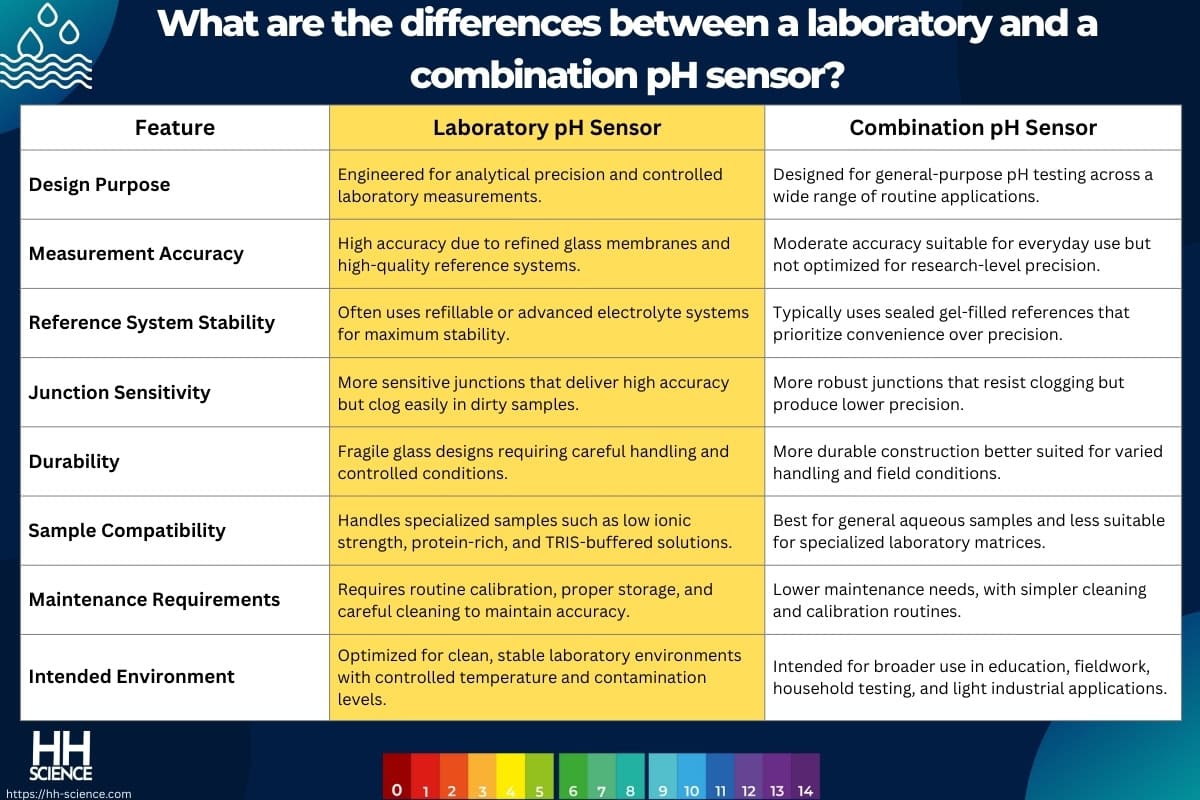
The main differences between a laboratory pH sensor and a combination pH sensor involve their design purpose, measurement accuracy, reference system stability, junction sensitivity, durability, sample compatibility, maintenance needs, and intended application environment, because laboratory sensors are engineered for precision in clean, controlled settings, while combination sensors are general-purpose electrodes made for routine measurements across a wider range of everyday applications. These distinctions come from differences in construction materials, junction design, reference electrolyte, membrane shape, and the level of precision required for laboratory vs. field or industrial use.
- Design purpose: Laboratory sensors are optimized for analytical accuracy, while combination sensors are built for general-purpose pH testing.
- Measurement accuracy: Laboratory sensors offer higher precision due to refined glass formulations and superior reference systems; combination sensors provide acceptable accuracy for routine work.
- Reference system stability: Laboratory electrodes often use refillable or high-performance references, whereas combination sensors typically use sealed, simpler reference chambers.
- Junction sensitivity: Laboratory junctions are more sensitive and prone to clogging in dirty samples, while combination sensors use more robust but less precise junctions.
- Durability: Laboratory sensors are fragile because of thin glass and delicate construction, whereas combination sensors are more robust and suitable for wider handling conditions.
- Sample compatibility: Laboratory sensors support specialized samples (low ionic strength, proteins, TRIS buffers), while combination sensors work best with general aqueous solutions.
- Maintenance needs: Laboratory sensors require frequent calibration, proper storage, and careful cleaning; combination sensors need less maintenance overall.
- Intended environment: Laboratory sensors are meant for controlled indoor lab environments, while combination sensors can be used in education, fieldwork, hobby testing, and basic industrial applications.
| Feature | Laboratory pH Sensor | Combination pH Sensor |
| Design Purpose | Engineered for analytical precision and controlled laboratory measurements. | Designed for general-purpose pH testing across a wide range of routine applications. |
| Measurement Accuracy | High accuracy due to refined glass membranes and high-quality reference systems. | Moderate accuracy suitable for everyday use but not optimized for research-level precision. |
| Reference System Stability | Often uses refillable or advanced electrolyte systems for maximum stability. | Typically uses sealed gel-filled references that prioritize convenience over precision. |
| Junction Sensitivity | More sensitive junctions that deliver high accuracy but clog easily in dirty samples. | More robust junctions that resist clogging but produce lower precision. |
| Durability | Fragile glass designs requiring careful handling and controlled conditions. | More durable construction better suited for varied handling and field conditions. |
| Sample Compatibility | Handles specialized samples such as low ionic strength, protein-rich, and TRIS-buffered solutions. | Best for general aqueous samples and less suitable for specialized laboratory matrices. |
| Maintenance Requirements | Requires routine calibration, proper storage, and careful cleaning to maintain accuracy. | Lower maintenance needs, with simpler cleaning and calibration routines. |
| Intended Environment | Optimized for clean, stable laboratory environments with controlled temperature and contamination levels. | Intended for broader use in education, fieldwork, household testing, and light industrial applications. |
What are the differences between a laboratory and a differential pH sensor?
The main differences between a laboratory pH sensor and a differential pH sensor involve their electrode architecture, reference system design, resistance to contamination, durability, noise immunity, maintenance requirements, sample suitability, and intended application environment, because laboratory sensors prioritize high analytical accuracy in clean, controlled settings, while differential sensors are engineered for harsh, dirty, and electrically noisy industrial processes where long-term stability is more important than fine precision. These differences arise from how each sensor is constructed, the materials used, and the measurement challenges they are designed to overcome.
- Electrode architecture: Laboratory sensors use a two-electrode combination design, while differential sensors use a three-electrode system with a process electrode, reference electrode, and solution ground for enhanced stability.
- Reference system design: Laboratory sensors typically use sealed or refillable Ag/AgCl references, whereas differential sensors use isolated, protected reference chambers with replaceable salt bridges.
- Resistance to contamination: Laboratory electrodes clog easily in dirty media, but differential sensors resist fouling due to their isolated reference and high-tolerance junctions.
- Durability: Laboratory sensors are fragile and made primarily of thin glass, while differential sensors are rugged, often built with PVDF, PEEK, or stainless steel for industrial use.
- Electrical noise immunity: Laboratory sensors are sensitive to pump and motor interference, whereas differential sensors cancel noise using a dedicated solution ground electrode.
- Maintenance requirements: Laboratory sensors need frequent calibration and proper storage, while differential sensors require less maintenance due to their protected reference system.
- Sample suitability: Laboratory sensors excel with clean aqueous, biological, and chemical samples, whereas differential sensors handle high solids, sulfides, slurries, and industrial wastewater.
- Intended environment: Laboratory sensors are meant for controlled indoor lab use, while differential sensors are designed for heavy industrial environments such as pulp & paper, wastewater, and cooling towers.
| Feature | Laboratory pH Sensor | Differential pH Sensor |
| Electrode Architecture | Two-electrode combination design (measuring + reference) for analytical precision. | Three-electrode system (process, reference, solution ground) for industrial stability. |
| Reference System Design | Uses sealed or refillable Ag/AgCl reference optimized for clean samples. | Uses isolated reference chamber with replaceable salt bridge to prevent contamination. |
| Resistance to Contamination | Junction easily clogs in dirty, oily, or high-solid samples. | Highly resistant to fouling, poisoning, and solids due to protected reference and design. |
| Durability | Fragile glass construction not suitable for harsh or abrasive environments. | Rugged construction (PVDF, PEEK, stainless steel) for industrial use. |
| Electrical Noise Immunity | Sensitive to interference from pumps, motors, and VFDs. | Excellent noise rejection via solution ground electrode and differential measurement. |
| Maintenance Requirements | Requires frequent calibration, cleaning, hydration, and proper storage. | Lower maintenance due to isolated reference and anti-fouling architecture. |
| Sample Suitability | Ideal for clean aqueous, biological, and chemical samples. | Handles harsh media such as wastewater, slurries, sulfides, pulp, and plating baths. |
| Intended Environment | Designed for controlled laboratory settings with minimal contamination. | Designed for heavy industrial environments requiring long-term continuous monitoring. |

What are the differences between a laboratory and an industrial pH sensor?
The main differences between a laboratory pH sensor and an industrial pH sensor involve their construction materials, durability, junction design, reference system, temperature/pressure tolerance, sample compatibility, maintenance expectations, installation style, and intended application environments, because laboratory sensors are optimized for precision in clean, controlled settings, while industrial sensors are engineered to withstand harsh conditions such as high solids, chemicals, abrasion, pressure, and electrical noise. These distinctions come from how each sensor is built, the environments they operate in, and the performance requirements they must meet.
- Construction materials: Laboratory sensors use delicate glass bodies for high accuracy, while industrial sensors use durable PVDF, PEEK, epoxy, or stainless steel housings to withstand harsh processes.
- Durability: Laboratory sensors are fragile and not suited for heavy handling, whereas industrial sensors are rugged and built for long-term continuous operation.
- Junction design: Lab electrodes use sensitive ceramic or specialty junctions, but industrial sensors use open, annular, or PTFE junctions that resist clogging in dirty media.
- Reference system: Laboratory sensors often use sealed or refillable references for precision, while industrial sensors use reinforced gel, polymer, or pressurized references to prevent contamination.
- Temperature and pressure tolerance: Laboratory sensors work at moderate temperatures and atmospheric pressure, whereas industrial sensors handle high temperatures, pressure, and aggressive chemicals.
- Sample compatibility: Laboratory sensors excel with clean aqueous, biological, or chemical samples, but industrial sensors are built for slurries, wastewater, plating baths, and corrosive streams.
- Maintenance expectations: Laboratory sensors require careful storage, frequent calibration, and gentle cleaning; industrial sensors are designed for less frequent maintenance and easier handling.
- Installation style: Laboratory sensors are handheld or used in beakers, while industrial sensors are installed inline, in submersion assemblies, or in retractable housings.
- Intended environment: Laboratory pH sensors are meant for clean bench-top work, whereas industrial sensors perform in severe environments such as pulp & paper, mining, chemical processing, and wastewater plants.
| Feature | Laboratory pH Sensor | Industrial pH Sensor |
| Construction Materials | Primarily thin glass bodies designed for precision and chemical purity. | Rugged PVDF, PEEK, epoxy, or stainless steel housings built for harsh environments. |
| Durability | Fragile and sensitive to mechanical shock. | Highly durable and resistant to abrasion, impact, and environmental stress. |
| Junction Design | Sensitive ceramic or specialty junctions optimized for clean samples. | Open, annular, or PTFE junctions that resist clogging in dirty or high-solid media. |
| Reference System | Sealed or refillable reference optimized for analytical accuracy. | Reinforced gel, polymer, or pressurized reference systems for contamination resistance. |
| Temperature & Pressure Tolerance | Designed for moderate temperatures and atmospheric pressure. | Handles high temperature, high pressure, and chemically aggressive processes. |
| Sample Compatibility | Ideal for clean aqueous, biological, and chemical laboratory samples. | Suited for slurries, wastewater, plating baths, pulp, mining slurries, and corrosive streams. |
| Maintenance Expectations | Requires frequent calibration, hydration, and careful cleaning and storage. | Designed for minimal maintenance, extended intervals, and easy cleaning. |
| Installation Style | Handheld or used in beakers, test tubes, flasks, and controlled lab vessels. | Installed inline, in submersion assemblies, or in retractable industrial housings. |
| Intended Environment | Clean, controlled laboratory conditions with stable temperature and contamination levels. | Severe industrial environments such as wastewater treatment, pulp & paper, chemical plants, and mining. |

What are the differences between a laboratory and a process pH sensor?
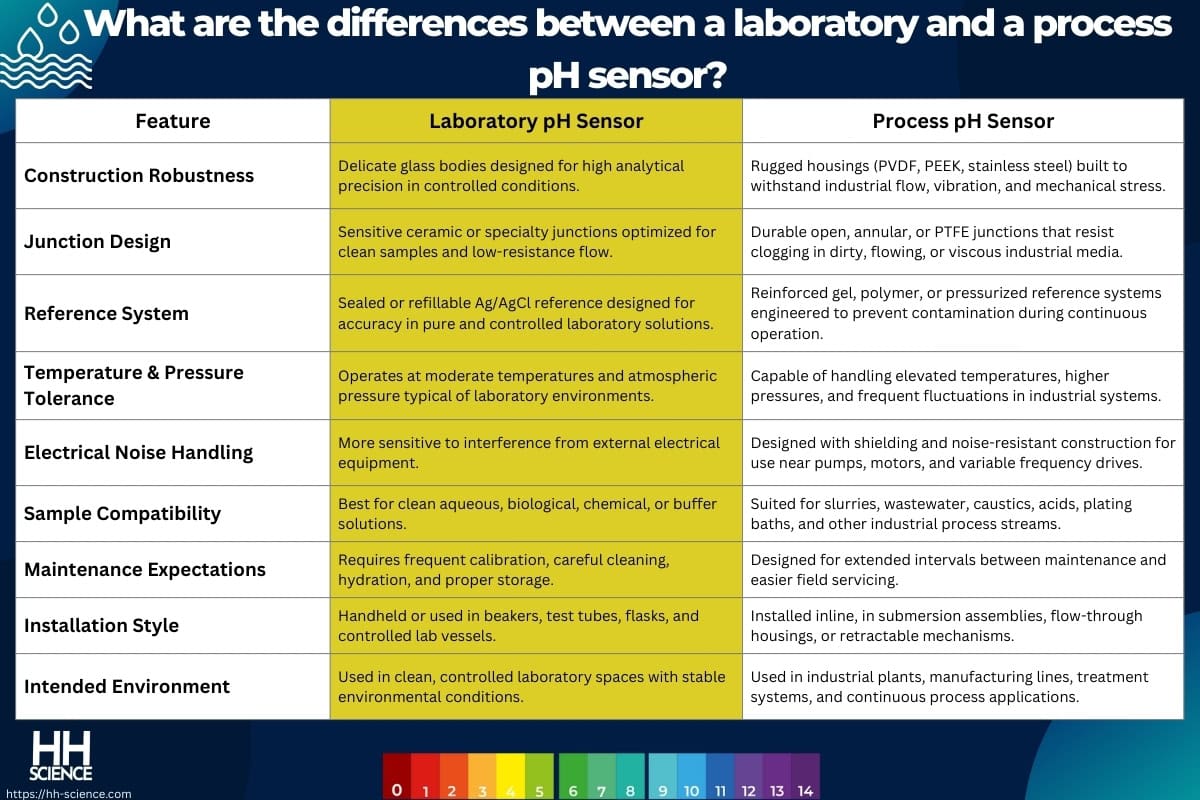
The main differences between a laboratory pH sensor and a process pH sensor involve their construction robustness, junction design, reference system, temperature and pressure tolerance, electrical noise handling, sample compatibility, maintenance expectations, installation style, and intended application environment, because laboratory sensors are optimized for high precision in clean, controlled conditions, while process sensors are engineered for continuous monitoring in industrial pipelines, tanks, and production systems where contamination, flow, pressure, and electrical interference are common. These functional differences come from the materials used, the way the electrodes are designed, and the operational demands of laboratory versus industrial process environments.
- Construction robustness: Laboratory sensors use delicate glass bodies for analytical precision, while process sensors use rugged housings like PVDF, PEEK, or stainless steel to withstand mechanical stress.
- Junction design: Laboratory sensors feature sensitive ceramic or specialty junctions, whereas process sensors use durable open, annular, or PTFE junctions designed to resist clogging in flowing or dirty media.
- Reference system: Lab sensors often rely on sealed or refillable references for accuracy, while process sensors use reinforced, polymer-filled, or pressurized references to prevent contamination in continuous operation.
- Temperature and pressure tolerance: Laboratory sensors operate at moderate temperature and atmospheric pressure, but process sensors are built to handle elevated temperatures, high pressure, and rapid fluctuations.
- Electrical noise handling: Laboratory sensors are sensitive to electrical interference, whereas process sensors include shielding and noise-resistant designs for use near pumps, motors, and VFDs.
- Sample compatibility: Lab sensors excel with clean aqueous, biological, or chemical samples, while process sensors handle slurries, wastewater, caustics, acids, and other industrial fluids.
- Maintenance expectations: Laboratory sensors need careful cleaning, frequent calibration, and proper storage, whereas process sensors are designed for longer intervals between maintenance.
- Installation style: Laboratory sensors are handheld or used in containers like beakers or test tubes, but process sensors are installed inline, submersible, or in retractable assemblies.
- Intended environment: Laboratory sensors are intended for bench-top analytical work, while process sensors are meant for continuous monitoring in industrial plants, manufacturing lines, and treatment systems.
| Feature | Laboratory pH Sensor | Process pH Sensor |
| Construction Robustness | Delicate glass bodies designed for high analytical precision in controlled conditions. | Rugged housings (PVDF, PEEK, stainless steel) built to withstand industrial flow, vibration, and mechanical stress. |
| Junction Design | Sensitive ceramic or specialty junctions optimized for clean samples and low-resistance flow. | Durable open, annular, or PTFE junctions that resist clogging in dirty, flowing, or viscous industrial media. |
| Reference System | Sealed or refillable Ag/AgCl reference designed for accuracy in pure and controlled laboratory solutions. | Reinforced gel, polymer, or pressurized reference systems engineered to prevent contamination during continuous operation. |
| Temperature & Pressure Tolerance | Operates at moderate temperatures and atmospheric pressure typical of laboratory environments. | Capable of handling elevated temperatures, higher pressures, and frequent fluctuations in industrial systems. |
| Electrical Noise Handling | More sensitive to interference from external electrical equipment. | Designed with shielding and noise-resistant construction for use near pumps, motors, and variable frequency drives. |
| Sample Compatibility | Best for clean aqueous, biological, chemical, or buffer solutions. | Suited for slurries, wastewater, caustics, acids, plating baths, and other industrial process streams. |
| Maintenance Expectations | Requires frequent calibration, careful cleaning, hydration, and proper storage. | Designed for extended intervals between maintenance and easier field servicing. |
| Installation Style | Handheld or used in beakers, test tubes, flasks, and controlled lab vessels. | Installed inline, in submersion assemblies, flow-through housings, or retractable mechanisms. |
| Intended Environment | Used in clean, controlled laboratory spaces with stable environmental conditions. | Used in industrial plants, manufacturing lines, treatment systems, and continuous process applications. |
What are the applications of a laboratory pH sensor?
A laboratory pH sensor is used in analytical chemistry, biological research, environmental testing, food science, pharmaceuticals, education, quality control, and water analysis, because its high accuracy, sensitive junctions, and specialized glass membranes are designed for clean, controlled conditions where precise pH measurement is essential for research validity, product quality, and regulatory compliance. These applications demand the fine resolution, repeatability, and sample-specific compatibility that laboratory electrodes uniquely provide.
- Analytical chemistry: Ensures accurate pH control in titrations, buffer preparation, and reaction monitoring.
- Biological research: Maintains precise pH conditions for cell culture, enzyme reactions, and biochemical assays.
- Environmental testing: Measures pH of groundwater, drinking water, and surface water for compliance and ecological studies.
- Food science: Analyzes pH in dairy, beverages, fermentation, and processed foods to ensure safety and taste consistency.
- Pharmaceuticals: Supports formulation development, stability testing, and GMP-quality pH verification.
- Education and teaching labs: Provides reliable, easy-to-use pH measurement for students learning chemistry and biology.
- Quality control laboratories: Ensures product consistency and regulatory compliance in manufacturing workflows.
- Water analysis: Verifies pH in purified water, laboratory-grade DI water, and low ionic strength samples used in experiments.

When to choose laboratory over combination, differential, or process types?
You should choose a laboratory pH sensor when your priority is high accuracy, fast response, and reliable measurement in clean, controlled conditions, because laboratory sensors are engineered with refined glass membranes, sensitive junctions, high-stability reference systems, and precision temperature compensation designed for analytical and research environments. They outperform other pH sensor types when working with small volumes, delicate samples, low ionic strength water, TRIS buffers, biological solutions, or any application requiring repeatable and traceable pH results.
You should not use a laboratory sensor in dirty, abrasive, high-solid, chemically aggressive, or electrically noisy environments, because its delicate construction and sensitive junction will quickly clog, drift, or be damaged. In those cases, industrial types (process or differential) are superior due to their rugged construction, noise immunity, and contamination resistance.
| Condition / Requirement | Laboratory pH Sensor | Combination pH Sensor | Differential pH Sensor | Process pH Sensor |
| Measurement Accuracy Needed | Best choice for high analytical accuracy in clean samples. | Moderate accuracy for general-purpose testing. | Good stability but not optimized for fine analytical precision. | Industrial accuracy suitable for process control. |
| Sample Cleanliness | Best for clean, controlled lab samples. | Good for clean to moderately clean samples. | Best for dirty, oily, or high-solid samples. | Good for moderately dirty industrial samples. |
| Resistance to Contamination | Poor — junction clogs easily. | Moderate — junction clogs over time. | Excellent — isolated reference prevents contamination. | Good — robust junction designs resist fouling. |
| Durability | Fragile — thin glass and delicate body. | Moderate — more robust than lab sensors. | Very rugged — built for harsh environments. | Rugged — designed for pipelines and industrial systems. |
| Electrical Noise Environment | Poor — sensitive to pumps, motors, and VFDs. | Moderate sensitivity. | Excellent — solution ground cancels noise. | Good — designed for industrial electrical noise. |
| Maintenance Requirements | High — frequent calibration and careful cleaning. | Moderate — routine but simpler maintenance. | Low — protected reference minimizes service. | Moderate — depends on process severity. |
| Sample Volume | Best — micro and semi-micro designs available. | Limited — standard sample sizes only. | Not suitable — designed for flow systems. | Not suitable — requires process installation. |
| Chemical Compatibility | Excellent for buffers, pure water, biological samples. | General-purpose compatibility. | Excellent for aggressive industrial chemicals. | Good for industrial acids, bases, and plating chemicals. |
| Installation Method | Handheld/beaker use only. | Portable or benchtop use. | Inline, submersion, or retractable assemblies. | Inline, submersion, or sanitary process systems. |
| Ideal Use Case | Research, analytical chemistry, biology, QC labs. | Education, simple lab tests, routine sampling. | Wastewater, pulp & paper, cooling towers. | Pipelines, tanks, industrial process control. |

How is the compatibility of a laboratory pH sensor with the transmitter and pH meters?
The compatibility of a laboratory pH sensor with transmitters and pH meters depends on its standard BNC connector, its high-impedance millivolt output from the glass measuring electrode, and the temperature compensation element (such as NTC 10K or PT1000), all of which must match the meter’s input specifications to ensure accurate readings. Because laboratory sensors use an Ag/AgCl reference, Nernst-based output (~59 mV/pH at 25°C), and require a meter with very high input impedance (≥10¹² Ω), they are broadly compatible with most benchtop laboratory meters designed for precision analytical work, as long as the ATC element and connector type align with the meter’s circuitry.
How to maintain the laboratory pH sensor?
Proper maintenance of a laboratory pH sensor involves regular cleaning, correct storage, proper hydration of the glass membrane, routine calibration, junction unclogging when needed, inspection of the reference system, and protection from physical shock, because these steps preserve the sensor’s electrochemical stability, maintain fast response time, prevent drift, and extend the lifespan of the delicate glass and reference components used in laboratory-grade electrodes.
- Regular cleaning: Removes residues, proteins, or chemical films that can slow the response or distort readings.
- Correct storage: Keeps the glass membrane hydrated in KCl solution to prevent drying and loss of sensitivity.
- Proper hydration: Rehydrates the sensing membrane and junction after dry-out, restoring ion exchange capability.
- Routine calibration: Adjusts slope and offset to maintain analytical accuracy in changing laboratory conditions.
- Junction unclogging: Clears ceramic or specialty junctions when clogged by proteins, buffers, or sample debris, preventing drift.
- Reference system inspection: Ensures the electrolyte level and clarity (for refillable types) remain stable for a consistent reference potential.
- Protection from physical shock: Prevents cracks or fractures in the thin glass membrane that would permanently damage the sensor.
How to calibrate the laboratory pH sensor?
Calibrating a laboratory pH sensor involves selecting fresh buffers, rinsing between steps, performing at least a two-point calibration, allowing stable readings before confirming each point, adjusting slope and offset, and verifying the calibration afterward, because these steps ensure the sensor correctly aligns with the Nernst equation, compensates for glass aging, and delivers accurate, reproducible measurements across the working pH range.
- Selecting fresh buffers: Ensures the calibration uses stable reference points, preventing errors from contaminated or expired solutions.
- Rinsing between steps: Avoids cross-contamination that would alter the true pH of each calibration buffer.
- Performing a two-point calibration: Anchors both the slope and offset for accurate readings across the entire measurement range.
- Allowing stable readings before confirming: Gives the glass membrane and junction time to equilibrate for a precise calibration point.
- Adjusting slope and offset: Aligns the sensor’s millivolt response with the ideal Nernst slope for accurate measurement.
- Verifying the calibration afterward: Confirms correct sensor behavior by checking against a third buffer or rechecking one of the calibration points.
What are the common troubleshooting issues with laboratory pH sensors?
Common troubleshooting issues with laboratory pH sensors include slow response, drifting readings, unstable calibration, junction clogging, dried-out glass membranes, temperature compensation errors, cable/connector problems, and contamination of the reference system, because laboratory electrodes rely on delicate electrochemical components that are highly sensitive to hydration, ionic flow, electrical noise, and sample purity. Each issue affects the stability of the millivolt signal or the reference potential, leading to inaccurate pH readings.
- Slow response: Usually caused by a dehydrated glass membrane or buildup on the sensing surface, reducing ion exchange efficiency.
- Drifting readings: Often results from a clogged junction or unstable reference electrolyte, causing inconsistent reference potential.
- Unstable calibration: Indicates aging glass, contaminated buffers, or incorrect temperature compensation, preventing proper slope adjustment.
- Junction clogging: Happens when proteins, oils, or particulates block the porous junction, restricting electrolyte flow.
- Dried-out glass membrane: Leads to weak signal output and slow stabilization because the hydrated gel layer is missing.
- Temperature compensation errors: Occur when the ATC element (NTC 10K/PT1000) does not match the meter or fails electrically.
- Cable or connector problems: BNC corrosion or cable damage introduces electrical noise or intermittent signal loss.
- Contaminated reference system: Happens when the electrolyte becomes diluted or compromised, causing offset drift and erratic readings.
What are the laboratory pH sensor lifespan and replacement indicators?
The lifespan of a laboratory pH sensor and its replacement indicators are determined by loss of slope, excessive drift, slow response time, physical damage, unstable calibration, junction clogging, and reference electrolyte deterioration, because glass electrodes naturally age, junctions accumulate contamination, and reference systems lose stability over time—each reducing the sensor’s ability to generate a consistent millivolt signal and maintain accurate pH readings. These indicators reveal when the electrode can no longer meet analytical requirements and must be replaced.
- Loss of slope: When the electrode’s slope drops below ~90% of the theoretical Nernst value, it can no longer produce accurate results.
- Excessive drift: Readings that continuously shift indicate an unstable reference system or worn sensing membrane.
- Slow response time: Aging glass or a dehydrated membrane causes long stabilization times, signaling end-of-life.
- Physical damage: Cracks, chips, or scratches on the glass membrane permanently impair ion exchange.
- Unstable calibration: Frequent recalibration or failure to reach stable points shows deterioration in glass or reference components.
- Junction clogging: Persistent clogging that cannot be restored by cleaning indicates the junction structure has degraded.
- Reference electrolyte deterioration: Cloudy, depleted, or contaminated electrolyte (refillable types) prevents stable reference potential, requiring electrode replacement.
What are the laboratory pH sensor installation methods?
Laboratory pH sensor installation methods include handheld immersion, beaker immersion with electrode stands, test-tube or narrow-vessel insertion, flow-cell installation, and micro-sample insertion, because laboratory electrodes must be positioned so the glass membrane, junction, and temperature element are fully submerged and properly exposed to the sample to ensure accurate, stable, and reproducible pH readings across different laboratory workflows and sample volumes.
- Handheld immersion: The sensor is manually dipped into beakers or cups for quick measurements during routine lab testing.
- Beaker immersion with electrode stand: The sensor is mounted on a holder to maintain a stable position for titrations, buffered calibrations, or long measurement periods.
- Test-tube or narrow-vessel insertion: Narrow-body or semi-micro electrodes are inserted into tubes or flasks for measurements in small or limited-volume samples.
- Flow-cell installation: The sensor is placed inside a flow cell connected to a pump or tubing system for continuous or automated laboratory monitoring.
- Micro-sample insertion: Micro or ultra-micro electrodes are used in cuvettes, microtubes, or NMR tubes where sample volume is extremely small.
What are the laboratory pH sensor accessories used with laboratory sensors?
Laboratory pH sensor accessories include electrode stands, storage solutions, cleaning solutions, calibration buffer sets, junction cleaning tools, refill electrolyte, temperature probes, protective caps, and BNC extension cables, because these accessories support proper maintenance, accurate calibration, stable storage, improved measurement consistency, and extended lifespan of laboratory electrodes that rely on sensitive glass membranes, porous junctions, and high-impedance signal paths.
- Electrode stands: Keep the sensor stable and fully immersed during titrations or long measurements.
- Storage solutions: Maintain hydration of the glass membrane and reference junction when the sensor is not in use.
- Cleaning solutions: Remove protein, oil, or salt buildup to restore fast response and accurate readings.
- Calibration buffer sets: Provide precise reference points for one-, two-, or three-point calibration.
- Junction cleaning tools: Help clear clogged ceramic or PTFE junctions for stable electrolyte flow.
- Refill electrolyte: Replenishes KCl solution in refillable electrodes, ensuring stable reference potential.
- Temperature probes: Provide accurate temperature input when the pH electrode lacks built-in ATC.
- Protective caps: Shield the glass membrane from physical damage during storage or transport.
- BNC extension cables: Allow flexible connection to benchtop meters without degrading the high-impedance signal.


