
Why pH matters in chemical manufacturing?
pH matters in chemical manufacturing because it directly influences reaction kinetics, catalyst performance, product yield and purity, chemical stability, corrosion behavior of equipment, separation and purification efficiency, process safety, and wastewater treatment effectiveness across a wide range of industrial processes including acid–base reactions, neutralization, polymerization, hydrolysis, crystallization, and effluent treatment.
- Reaction kinetics control: pH affects the rate of chemical reactions by influencing proton concentration (H⁺ activity), which determines how quickly acid–base or catalytic reactions proceed in reactors.
- Catalyst performance: Many catalysts operate efficiently only within specific pH ranges, and deviations can deactivate catalysts or reduce reaction efficiency.
- Product yield optimization: Maintaining the correct pH helps ensure that the desired chemical reaction pathway dominates, maximizing product yield.
- Product purity and quality: Incorrect pH can lead to unwanted side reactions or impurity formation, reducing the purity of the final product.
- Chemical stability: Some chemicals are stable only within defined pH ranges and may degrade or react further if the environment becomes too acidic or alkaline.
- Equipment corrosion control: Highly acidic or alkaline conditions can accelerate corrosion of reactors, pipelines, and storage tanks, affecting equipment lifespan.
- Separation and purification processes: Processes such as precipitation, crystallization, and solvent extraction depend on specific pH conditions to separate chemicals efficiently.
- Process safety management: Proper pH control prevents uncontrolled chemical reactions, excessive heat generation, or hazardous gas formation during manufacturing operations.
- Wastewater treatment performance: Final effluent treatment requires controlled pH (commonly 6.0–9.0) to neutralize acids or bases and remove dissolved contaminants before environmental discharge.
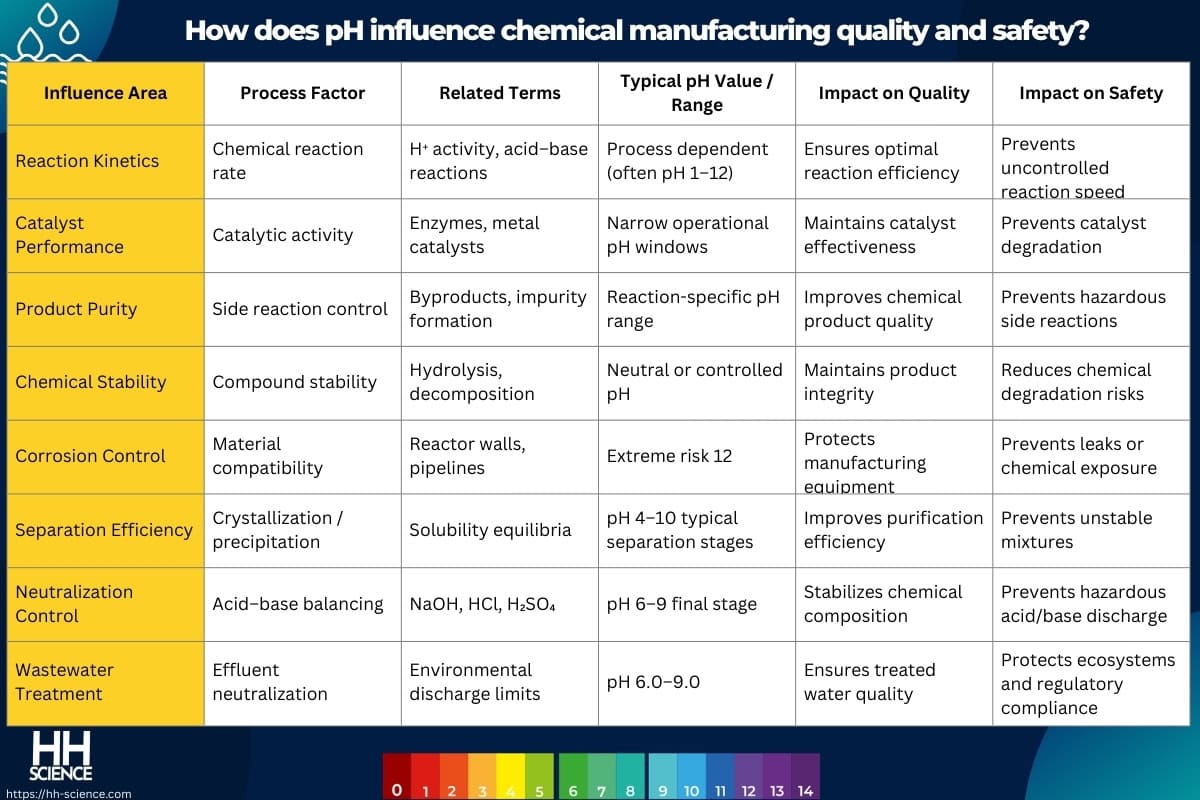
How does pH influence chemical manufacturing quality and safety?
pH influences chemical manufacturing quality and safety because hydrogen ion concentration (H⁺ activity) directly controls reaction pathways, catalyst stability, chemical solubility, corrosion behavior, reaction heat generation, and wastewater neutralization performance across many industrial processes such as acid–base reactions, polymerization, hydrolysis, crystallization, and effluent treatment. Maintaining controlled pH ranges—often strongly acidic conditions (pH <1–2) for mineral acid reactions, neutral ranges (pH 6–8) for product stability, or alkaline environments (pH 9–12) for neutralization and precipitation—ensures stable reaction kinetics, consistent product purity, safe chemical handling, and compliance with environmental discharge limits (typically pH 6.0–9.0).
| Influence Area | Process Factor | Related Terms | Typical pH Value / Range | Impact on Quality | Impact on Safety |
| Reaction Kinetics | Chemical reaction rate | H⁺ activity, acid–base reactions | Process dependent (often pH 1–12) | Ensures optimal reaction efficiency | Prevents uncontrolled reaction speed |
| Catalyst Performance | Catalytic activity | Enzymes, metal catalysts | Narrow operational pH windows | Maintains catalyst effectiveness | Prevents catalyst degradation |
| Product Purity | Side reaction control | Byproducts, impurity formation | Reaction-specific pH range | Improves chemical product quality | Prevents hazardous side reactions |
| Chemical Stability | Compound stability | Hydrolysis, decomposition | Neutral or controlled pH | Maintains product integrity | Reduces chemical degradation risks |
| Corrosion Control | Material compatibility | Reactor walls, pipelines | Extreme risk 12 | Protects manufacturing equipment | Prevents leaks or chemical exposure |
| Separation Efficiency | Crystallization / precipitation | Solubility equilibria | pH 4–10 typical separation stages | Improves purification efficiency | Prevents unstable mixtures |
| Neutralization Control | Acid–base balancing | NaOH, HCl, H₂SO₄ | pH 6–9 final stage | Stabilizes chemical composition | Prevents hazardous acid/base discharge |
| Wastewater Treatment | Effluent neutralization | Environmental discharge limits | pH 6.0–9.0 | Ensures treated water quality | Protects ecosystems and regulatory compliance |
Why is the chemical manufacturing process sensitive to pH deviations?
Chemical manufacturing processes are highly sensitive to pH deviations because hydrogen ion concentration (H⁺ activity) directly affects reaction kinetics, equilibrium constants, catalyst activity, chemical solubility, and corrosion behavior in industrial reactors, meaning even small changes (often ±0.1–0.3 pH) can significantly alter reaction pathways and process outcomes. Many chemical reactions operate within tightly controlled pH windows—such as strongly acidic conditions for mineral acid reactions (often pH <1–2), neutral ranges for product stability (pH ~6–8), or alkaline environments for neutralization and precipitation (pH 9–12)—so deviations can quickly disrupt process balance.
If pH is not correctly controlled, reaction kinetics may change because proton concentration directly influences reaction rates in acid–base catalyzed reactions, leading to incomplete conversion or excessive side reactions. Catalyst activity can decline if pH moves outside its stability range, potentially deactivating catalysts or reducing process efficiency. Product purity may decrease because incorrect pH conditions can promote unwanted byproducts or impurity formation during synthesis or polymerization reactions. Chemical stability can also be affected, as some compounds undergo hydrolysis or degradation when exposed to excessively acidic or alkaline conditions. In addition, extreme pH levels (commonly below pH 2 or above pH 12) can accelerate corrosion of reactors, pipelines, and heat exchangers, increasing equipment failure risk and maintenance costs. Finally, improper pH control in downstream neutralization or wastewater treatment stages can lead to regulatory violations if effluent pH falls outside typical environmental discharge limits (commonly pH 6.0–9.0).
Typical pH ranges and control targets in chemical manufacturing
Typical pH ranges and control targets in chemical manufacturing vary widely depending on the specific reaction chemistry, process stage, and desired product properties, with different operations requiring strongly acidic conditions (often pH <1–2 for mineral acid reactions), neutral environments (pH 6–8 for stability and purification steps), or alkaline conditions (pH 9–12 for neutralization, hydrolysis, or precipitation processes). Understanding these target ranges, allowable control tolerances (often ±0.05–0.10 pH in tightly controlled reactors), and the influence of related factors such as temperature, catalyst activity, solubility equilibria, and corrosion risk is essential for maintaining stable reaction conditions, consistent product quality, and safe industrial operations.
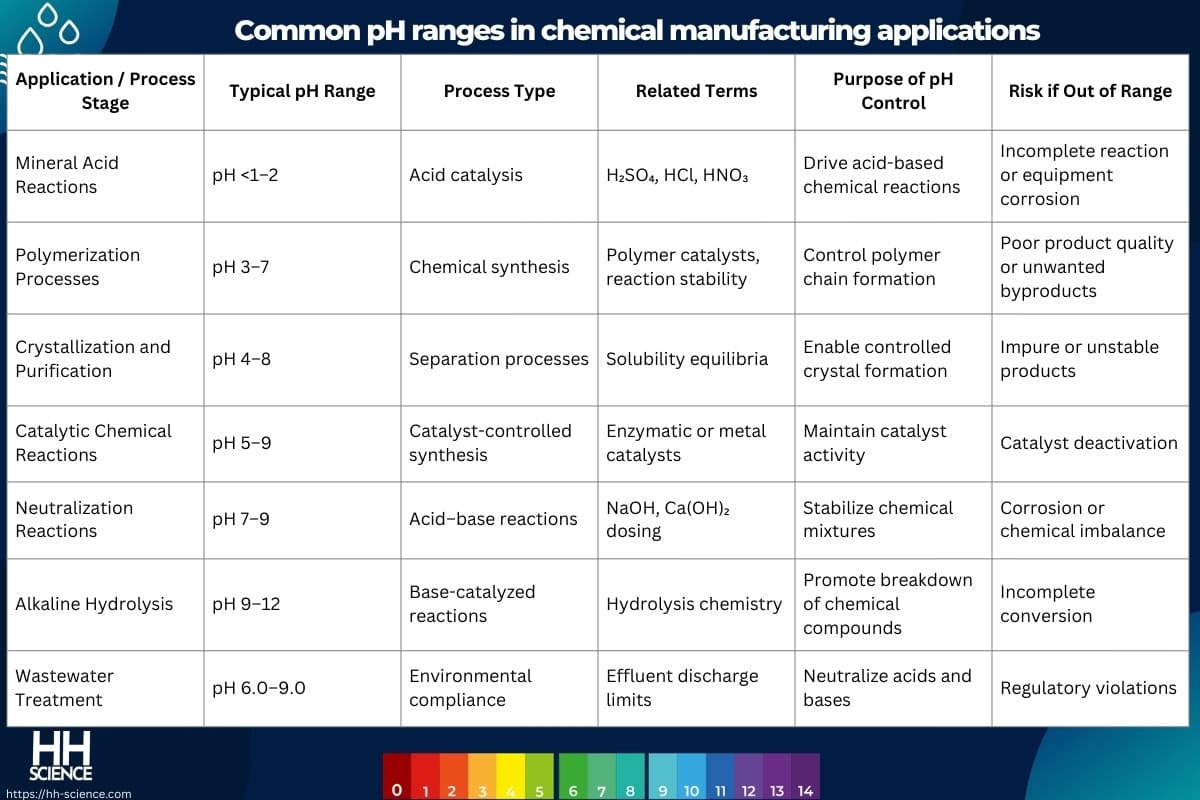
Common pH ranges in chemical manufacturing applications
Common pH ranges in chemical manufacturing applications span from strongly acidic environments (pH <1–2) used in mineral acid reactions and catalytic processes to strongly alkaline conditions (pH 10–12 or higher) used in neutralization, hydrolysis, and precipitation reactions, with intermediate ranges applied for reaction stability, product purification, crystallization, and wastewater treatment. These ranges are determined by reaction kinetics, catalyst activity, solubility equilibria, corrosion limits of process equipment, and environmental discharge regulations (commonly pH 6.0–9.0).
| Application / Process Stage | Typical pH Range | Process Type | Related Terms | Purpose of pH Control | Risk if Out of Range |
| Mineral Acid Reactions | pH <1–2 | Acid catalysis | H₂SO₄, HCl, HNO₃ | Drive acid-based chemical reactions | Incomplete reaction or equipment corrosion |
| Polymerization Processes | pH 3–7 | Chemical synthesis | Polymer catalysts, reaction stability | Control polymer chain formation | Poor product quality or unwanted byproducts |
| Crystallization and Purification | pH 4–8 | Separation processes | Solubility equilibria | Enable controlled crystal formation | Impure or unstable products |
| Catalytic Chemical Reactions | pH 5–9 | Catalyst-controlled synthesis | Enzymatic or metal catalysts | Maintain catalyst activity | Catalyst deactivation |
| Neutralization Reactions | pH 7–9 | Acid–base reactions | NaOH, Ca(OH)₂ dosing | Stabilize chemical mixtures | Corrosion or chemical imbalance |
| Alkaline Hydrolysis | pH 9–12 | Base-catalyzed reactions | Hydrolysis chemistry | Promote breakdown of chemical compounds | Incomplete conversion |
| Wastewater Treatment | pH 6.0–9.0 | Environmental compliance | Effluent discharge limits | Neutralize acids and bases | Regulatory violations |
Factors that define pH control targets
pH control targets in chemical manufacturing are defined by reaction kinetics, catalyst stability, chemical equilibrium and solubility behavior, product yield and purity requirements, raw material composition, corrosion limits of process equipment, temperature and pressure conditions, reaction safety constraints, downstream separation or purification requirements, process control dynamics, and environmental discharge regulations (commonly pH 6.0–9.0 for wastewater). These factors determine the optimal hydrogen ion concentration (H⁺ activity) required to maintain stable chemical reactions, protect equipment, and ensure consistent industrial production quality.
- Reaction kinetics: The rate of many chemical reactions depends directly on proton concentration, meaning the correct pH must be maintained to achieve the desired reaction speed and conversion efficiency.
- Catalyst stability: Catalysts such as metal catalysts, enzymes, or acid catalysts often function only within specific pH ranges, and deviations can reduce catalytic activity or cause deactivation.
- Chemical equilibrium and solubility: pH affects equilibrium constants and solubility of compounds, determining whether chemicals remain dissolved or precipitate during synthesis or purification.
- Product yield optimization: Maintaining the correct pH helps ensure the desired reaction pathway dominates, maximizing production efficiency and minimizing waste.
- Product purity and impurity control: Incorrect pH conditions can promote unwanted side reactions that generate impurities or byproducts in chemical manufacturing.
- Raw material composition: The acidity or alkalinity of feedstocks influences the starting reaction environment and may require pH adjustment to maintain process stability.
- Equipment corrosion limits: Extremely acidic (below pH 2) or alkaline conditions (above pH 12) can accelerate corrosion or material degradation in reactors, pipelines, and storage vessels.
- Temperature and pressure conditions: Changes in temperature or pressure can alter chemical equilibria and reaction kinetics, which in turn affect the optimal pH operating window.
- Reaction safety constraints: Some chemical reactions become unstable or generate excessive heat or gas if pH moves outside the controlled range.
- Downstream separation processes: Operations such as crystallization, extraction, or precipitation often require specific pH conditions to achieve efficient product recovery.
- Process control dynamics: Automated dosing systems and control loops require stable pH targets and tolerances (often ±0.05–0.10 pH) to maintain consistent production conditions.
- Environmental discharge regulations: Wastewater leaving chemical plants must typically meet regulatory limits (commonly pH 6.0–9.0) to protect receiving ecosystems and comply with environmental standards.
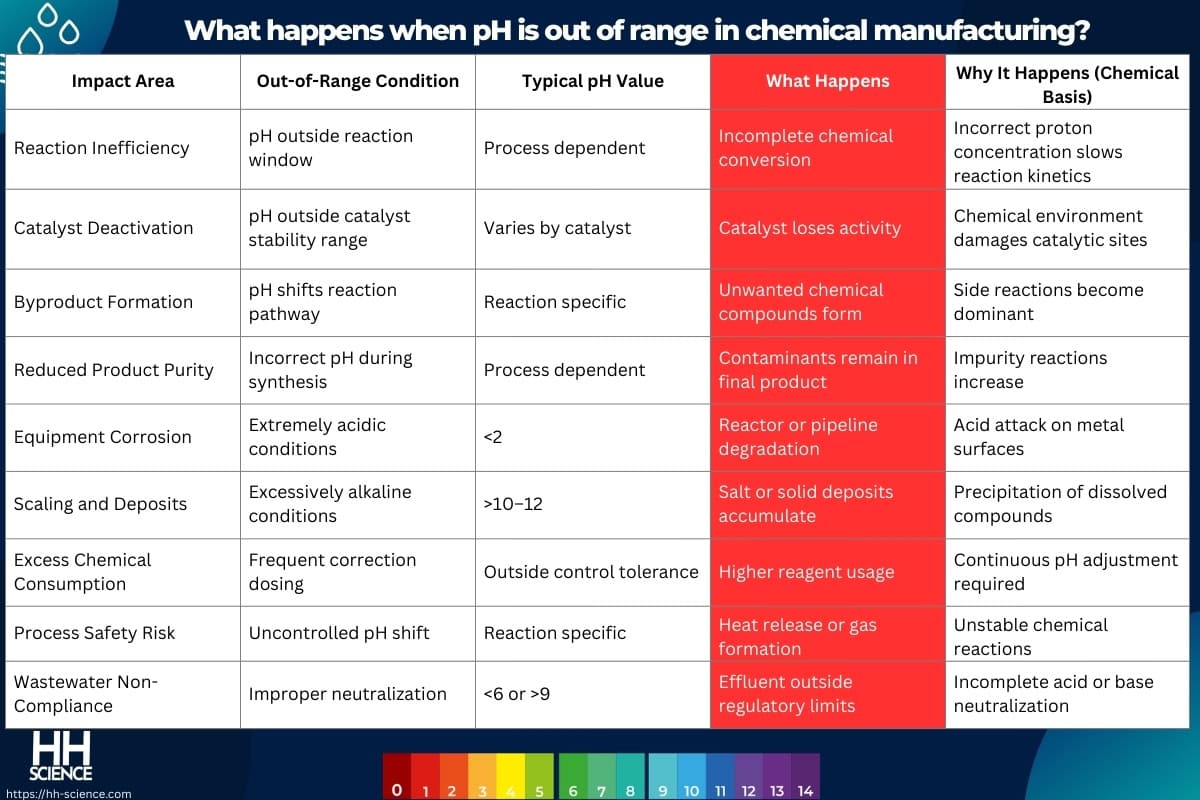
What happens when pH is out of range in chemical manufacturing?
When pH is out of range in chemical manufacturing, it can cause reaction inefficiency, catalyst deactivation, formation of unwanted byproducts, reduced product purity, unstable chemical reactions, equipment corrosion or scaling, excessive chemical consumption, process safety risks, and wastewater discharge violations because hydrogen ion concentration (H⁺ activity) directly controls reaction kinetics, chemical equilibria, catalyst activity, solubility behavior, and neutralization reactions across industrial chemical processes.
| Impact Area | Out-of-Range Condition | Typical pH Value | What Happens | Why It Happens (Chemical Basis) |
| Reaction Inefficiency | pH outside reaction window | Process dependent | Incomplete chemical conversion | Incorrect proton concentration slows reaction kinetics |
| Catalyst Deactivation | pH outside catalyst stability range | Varies by catalyst | Catalyst loses activity | Chemical environment damages catalytic sites |
| Byproduct Formation | pH shifts reaction pathway | Reaction specific | Unwanted chemical compounds form | Side reactions become dominant |
| Reduced Product Purity | Incorrect pH during synthesis | Process dependent | Contaminants remain in final product | Impurity reactions increase |
| Equipment Corrosion | Extremely acidic conditions | <2 | Reactor or pipeline degradation | Acid attack on metal surfaces |
| Scaling and Deposits | Excessively alkaline conditions | >10–12 | Salt or solid deposits accumulate | Precipitation of dissolved compounds |
| Excess Chemical Consumption | Frequent correction dosing | Outside control tolerance | Higher reagent usage | Continuous pH adjustment required |
| Process Safety Risk | Uncontrolled pH shift | Reaction specific | Heat release or gas formation | Unstable chemical reactions |
| Wastewater Non-Compliance | Improper neutralization | <6 or >9 | Effluent outside regulatory limits | Incomplete acid or base neutralization |
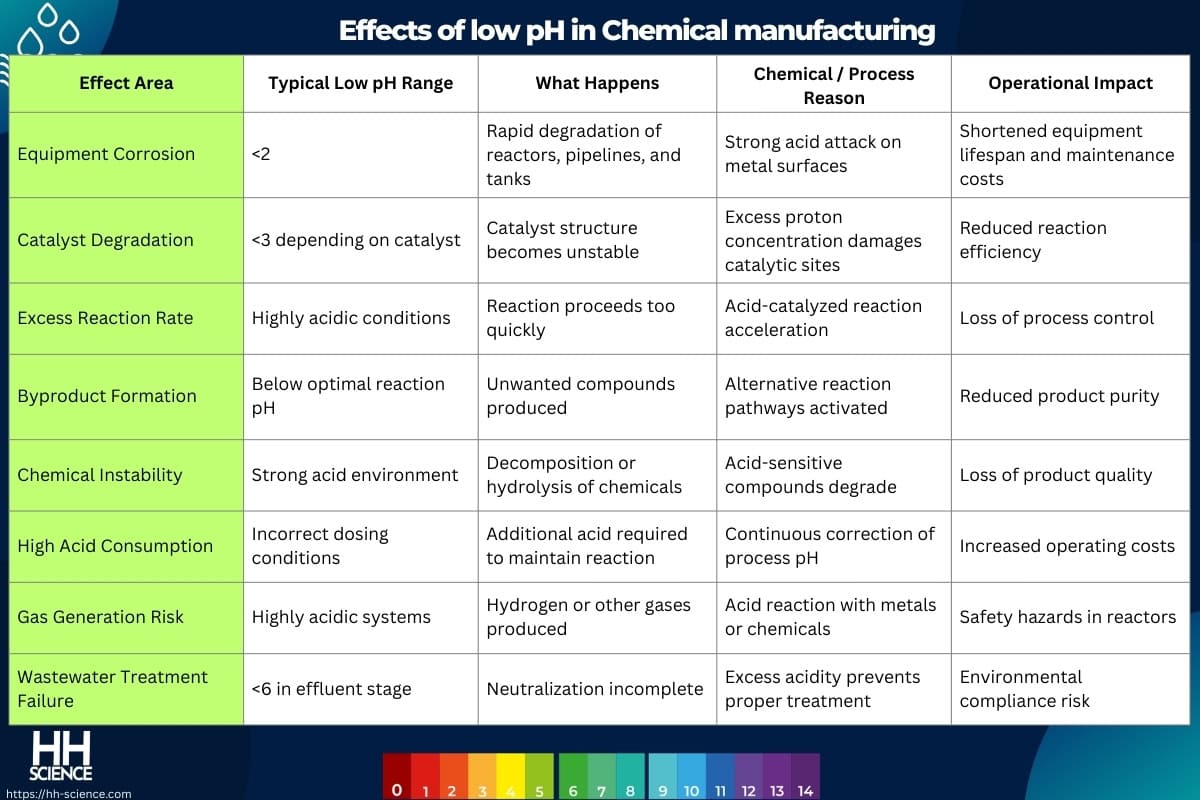
Effects of low pH in Chemical manufacturing
Low pH in chemical manufacturing processes can cause accelerated equipment corrosion, catalyst degradation, excessive reaction rates, formation of unwanted byproducts, instability of chemical compounds, increased acid consumption, safety risks from gas generation, and disruption of downstream separation or wastewater treatment processes because high hydrogen ion concentration (H⁺ activity) increases chemical reactivity, enhances acid attack on materials, and shifts reaction equilibria toward acid-catalyzed pathways.
| Effect Area | Typical Low pH Range | What Happens | Chemical / Process Reason | Operational Impact |
| Equipment Corrosion | <2 | Rapid degradation of reactors, pipelines, and tanks | Strong acid attack on metal surfaces | Shortened equipment lifespan and maintenance costs |
| Catalyst Degradation | <3 depending on catalyst | Catalyst structure becomes unstable | Excess proton concentration damages catalytic sites | Reduced reaction efficiency |
| Excess Reaction Rate | Highly acidic conditions | Reaction proceeds too quickly | Acid-catalyzed reaction acceleration | Loss of process control |
| Byproduct Formation | Below optimal reaction pH | Unwanted compounds produced | Alternative reaction pathways activated | Reduced product purity |
| Chemical Instability | Strong acid environment | Decomposition or hydrolysis of chemicals | Acid-sensitive compounds degrade | Loss of product quality |
| High Acid Consumption | Incorrect dosing conditions | Additional acid required to maintain reaction | Continuous correction of process pH | Increased operating costs |
| Gas Generation Risk | Highly acidic systems | Hydrogen or other gases produced | Acid reaction with metals or chemicals | Safety hazards in reactors |
| Wastewater Treatment Failure | <6 in effluent stage | Neutralization incomplete | Excess acidity prevents proper treatment | Environmental compliance risk |
Effects of high pH in Chemical manufacturing
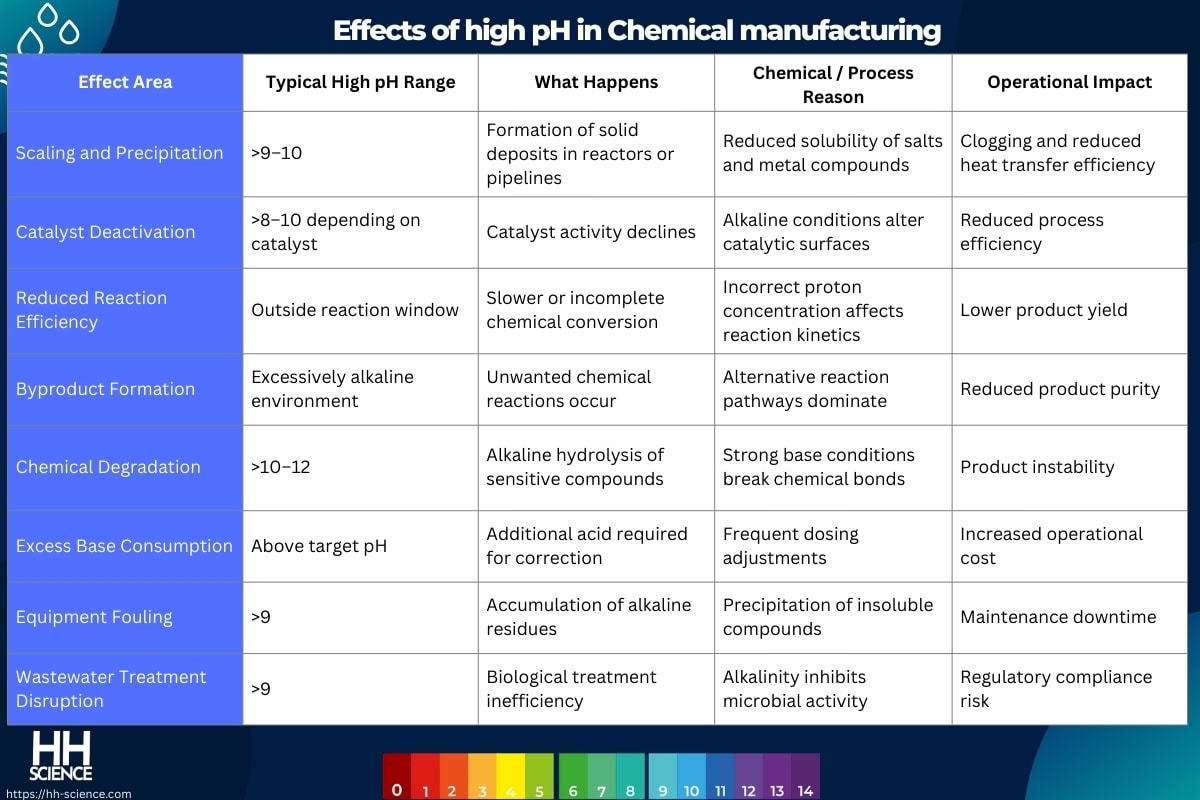
High pH in chemical manufacturing processes can cause unwanted precipitation and scaling, catalyst deactivation, reduced reaction efficiency, formation of byproducts, degradation of sensitive chemicals, increased base consumption, equipment fouling, and disruption of wastewater treatment systems because high hydroxide ion concentration (OH⁻ activity) shifts chemical equilibria toward alkaline reaction pathways, decreases solubility of many compounds, and alters catalyst or reaction stability.
| Effect Area | Typical High pH Range | What Happens | Chemical / Process Reason | Operational Impact |
| Scaling and Precipitation | >9–10 | Formation of solid deposits in reactors or pipelines | Reduced solubility of salts and metal compounds | Clogging and reduced heat transfer efficiency |
| Catalyst Deactivation | >8–10 depending on catalyst | Catalyst activity declines | Alkaline conditions alter catalytic surfaces | Reduced process efficiency |
| Reduced Reaction Efficiency | Outside reaction window | Slower or incomplete chemical conversion | Incorrect proton concentration affects reaction kinetics | Lower product yield |
| Byproduct Formation | Excessively alkaline environment | Unwanted chemical reactions occur | Alternative reaction pathways dominate | Reduced product purity |
| Chemical Degradation | >10–12 | Alkaline hydrolysis of sensitive compounds | Strong base conditions break chemical bonds | Product instability |
| Excess Base Consumption | Above target pH | Additional acid required for correction | Frequent dosing adjustments | Increased operational cost |
| Equipment Fouling | >9 | Accumulation of alkaline residues | Precipitation of insoluble compounds | Maintenance downtime |
| Wastewater Treatment Disruption | >9 | Biological treatment inefficiency | Alkalinity inhibits microbial activity | Regulatory compliance risk |
Operational, quality, and compliance risks
When pH is out of range in chemical manufacturing, operational stability, product quality, and regulatory compliance can be significantly affected because hydrogen ion concentration (H⁺ activity) directly controls reaction kinetics, catalyst activity, solubility equilibria, and neutralization reactions across synthesis, purification, and wastewater treatment processes.
- Operational risks: Process control becomes unstable when reaction environments move outside their required pH windows (often pH <1–2 for acid reactions or pH 9–12 for alkaline reactions), leading to incomplete conversion, uncontrolled reaction rates, equipment corrosion (<pH 2), scaling or precipitation (>pH 9–10), and increased chemical dosing requirements.
- Quality risks: Incorrect pH conditions can cause catalyst deactivation, formation of unwanted byproducts, reduced product yield, and impurity contamination in chemical products because reaction pathways shift away from the intended synthesis route.
- Compliance risks: Environmental and safety compliance issues arise when wastewater neutralization fails to maintain discharge limits (commonly pH 6.0–9.0), potentially releasing acidic or alkaline effluents that violate environmental regulations and threaten surrounding ecosystems.
pH measurement challenges in chemical manufacturing
pH measurement in chemical manufacturing presents significant challenges because sensors must operate in aggressive chemical environments that may include strong acids or bases (often pH <1–2 or >12), high temperatures (30–120 °C), pressurized reactors, organic solvents, catalyst residues, and solid byproducts generated during synthesis or purification stages. These conditions can affect glass electrode stability, reference junction performance, membrane response, and signal accuracy—often requiring measurement tolerances of ±0.05–0.10 pH for controlled reactions—making robust sensor materials, proper installation design, and reliable temperature compensation essential for maintaining stable and accurate process monitoring.
Temperature effects
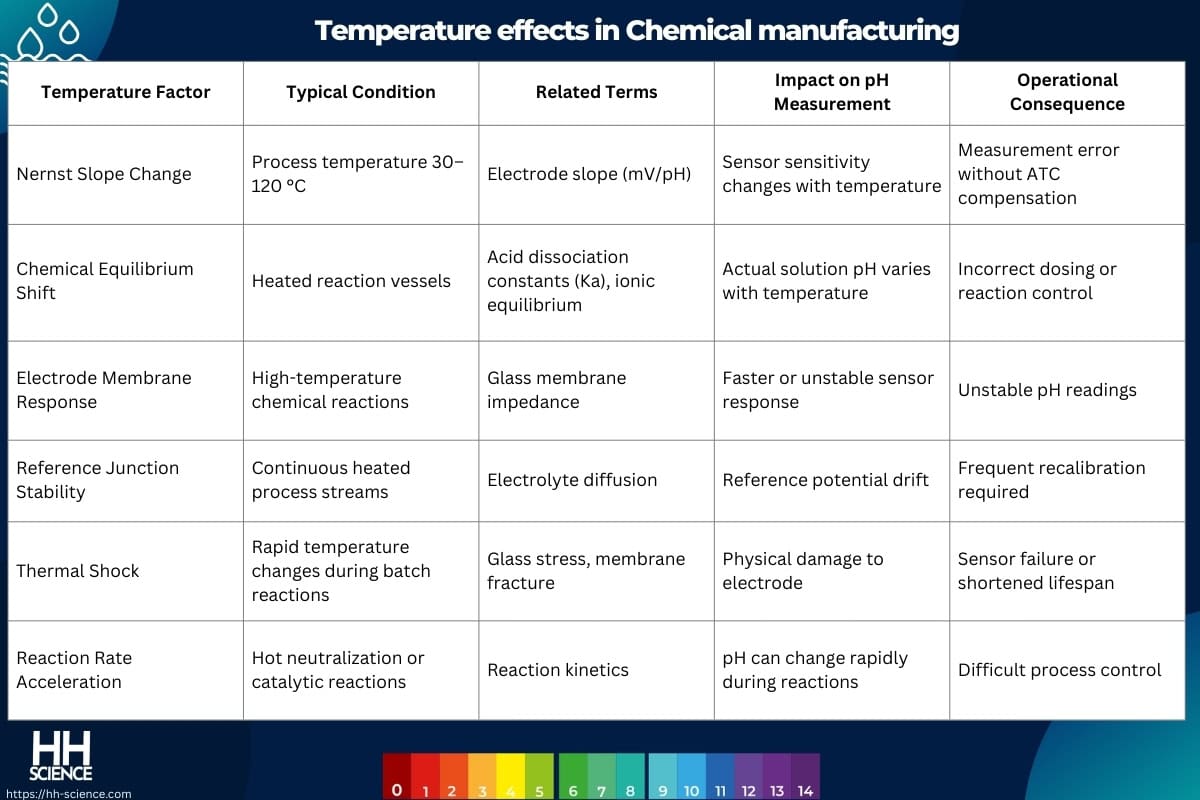
Temperature effects create major pH measurement challenges in chemical manufacturing because many industrial reactions occur in heated reactors, distillation columns, or catalytic systems where temperatures commonly range from 30–120 °C or higher, and temperature directly influences both the chemical equilibrium of the solution and the electrode response behavior described by the Nernst equation (~59.16 mV/pH at 25 °C). As temperature changes, the dissociation constants of acids and bases (Ka, Kb), reaction kinetics, and ionic mobility shift, meaning the true process pH can change even if chemical composition remains constant, while the pH sensor itself may produce signal drift if automatic temperature compensation (ATC) is not applied, potentially causing dosing errors, unstable reaction control, and inaccurate process monitoring
| Temperature Factor | Typical Condition | Related Terms | Impact on pH Measurement | Operational Consequence |
| Nernst Slope Change | Process temperature 30–120 °C | Electrode slope (mV/pH) | Sensor sensitivity changes with temperature | Measurement error without ATC compensation |
| Chemical Equilibrium Shift | Heated reaction vessels | Acid dissociation constants (Ka), ionic equilibrium | Actual solution pH varies with temperature | Incorrect dosing or reaction control |
| Electrode Membrane Response | High-temperature chemical reactions | Glass membrane impedance | Faster or unstable sensor response | Unstable pH readings |
| Reference Junction Stability | Continuous heated process streams | Electrolyte diffusion | Reference potential drift | Frequent recalibration required |
| Thermal Shock | Rapid temperature changes during batch reactions | Glass stress, membrane fracture | Physical damage to electrode | Sensor failure or shortened lifespan |
| Reaction Rate Acceleration | Hot neutralization or catalytic reactions | Reaction kinetics | pH can change rapidly during reactions | Difficult process control |
Fouling and contamination
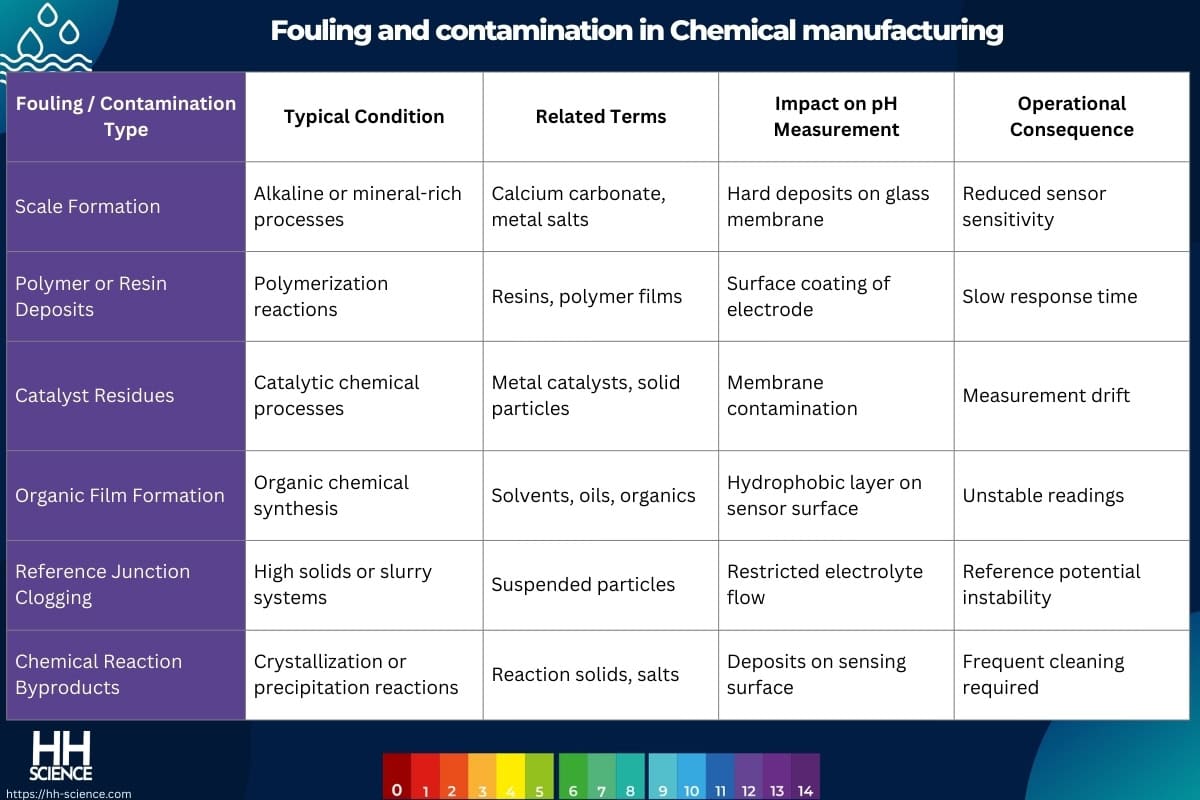
Fouling and contamination are common pH measurement challenges in chemical manufacturing because process streams often contain reaction byproducts, catalyst residues, polymer deposits, scaling salts, suspended solids, or organic films that can accumulate on the pH sensor glass membrane or block the reference junction. These deposits form insulating layers that slow hydrogen ion exchange at the electrode surface, increase membrane impedance, interfere with electrolyte diffusion, and cause measurement drift (often ±0.1–0.3 pH), which can lead to incorrect chemical dosing, unstable reaction control, and frequent recalibration or maintenance in industrial reactors, pipelines, or neutralization systems.
| Fouling / Contamination Type | Typical Condition | Related Terms | Impact on pH Measurement | Operational Consequence |
| Scale Formation | Alkaline or mineral-rich processes | Calcium carbonate, metal salts | Hard deposits on glass membrane | Reduced sensor sensitivity |
| Polymer or Resin Deposits | Polymerization reactions | Resins, polymer films | Surface coating of electrode | Slow response time |
| Catalyst Residues | Catalytic chemical processes | Metal catalysts, solid particles | Membrane contamination | Measurement drift |
| Organic Film Formation | Organic chemical synthesis | Solvents, oils, organics | Hydrophobic layer on sensor surface | Unstable readings |
| Reference Junction Clogging | High solids or slurry systems | Suspended particles | Restricted electrolyte flow | Reference potential instability |
| Chemical Reaction Byproducts | Crystallization or precipitation reactions | Reaction solids, salts | Deposits on sensing surface | Frequent cleaning required |
Pressure and flow conditions
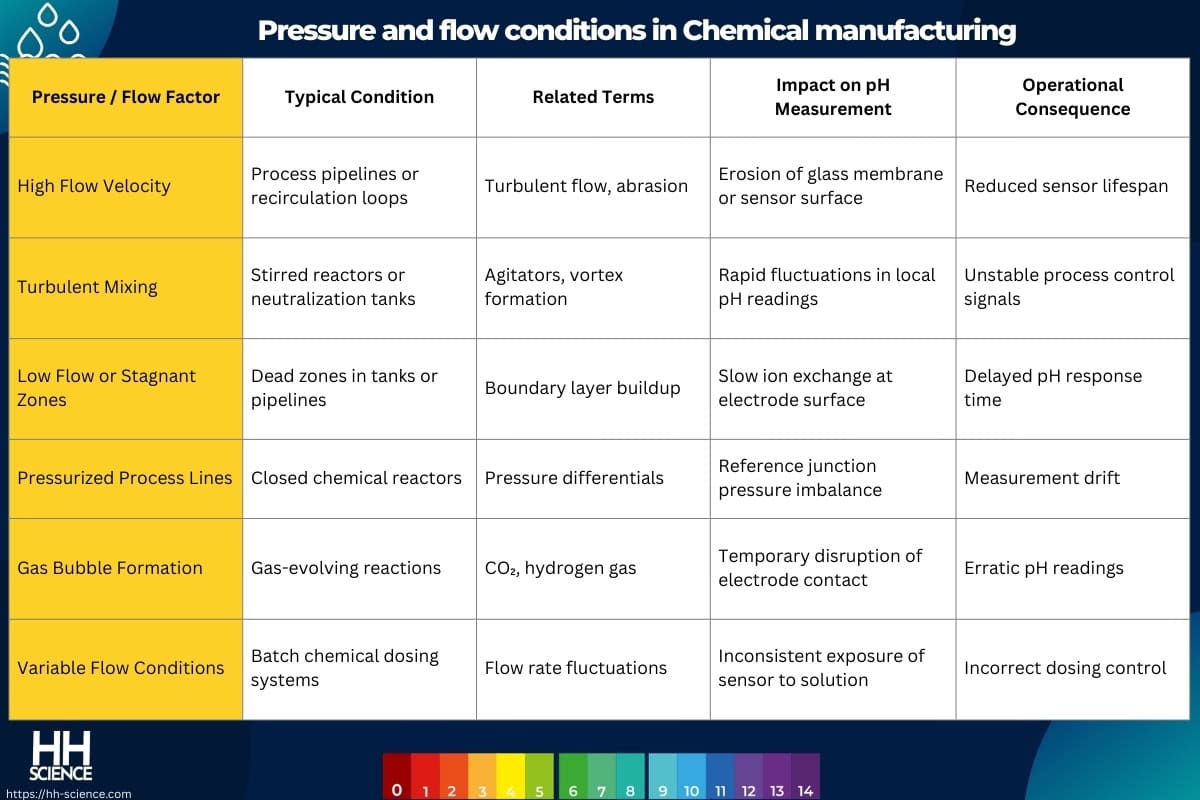
Pressure and flow conditions create significant pH measurement challenges in chemical manufacturing because many industrial reactions occur in pressurized reactors, high-velocity pipelines, stirred vessels, and multiphase process streams where turbulence, pressure differentials, gas formation, and abrasive particles can mechanically stress pH electrodes and destabilize the reference junction. These hydraulic conditions influence the diffusion layer around the electrode surface, the reference electrolyte equilibrium, and the sensor response time, which can cause measurement fluctuations (often ±0.1–0.3 pH), delayed readings, or accelerated sensor wear if the installation location and probe design are not properly matched to the process.
| Pressure / Flow Factor | Typical Condition | Related Terms | Impact on pH Measurement | Operational Consequence |
| High Flow Velocity | Process pipelines or recirculation loops | Turbulent flow, abrasion | Erosion of glass membrane or sensor surface | Reduced sensor lifespan |
| Turbulent Mixing | Stirred reactors or neutralization tanks | Agitators, vortex formation | Rapid fluctuations in local pH readings | Unstable process control signals |
| Low Flow or Stagnant Zones | Dead zones in tanks or pipelines | Boundary layer buildup | Slow ion exchange at electrode surface | Delayed pH response time |
| Pressurized Process Lines | Closed chemical reactors | Pressure differentials | Reference junction pressure imbalance | Measurement drift |
| Gas Bubble Formation | Gas-evolving reactions | CO₂, hydrogen gas | Temporary disruption of electrode contact | Erratic pH readings |
| Variable Flow Conditions | Batch chemical dosing systems | Flow rate fluctuations | Inconsistent exposure of sensor to solution | Incorrect dosing control |
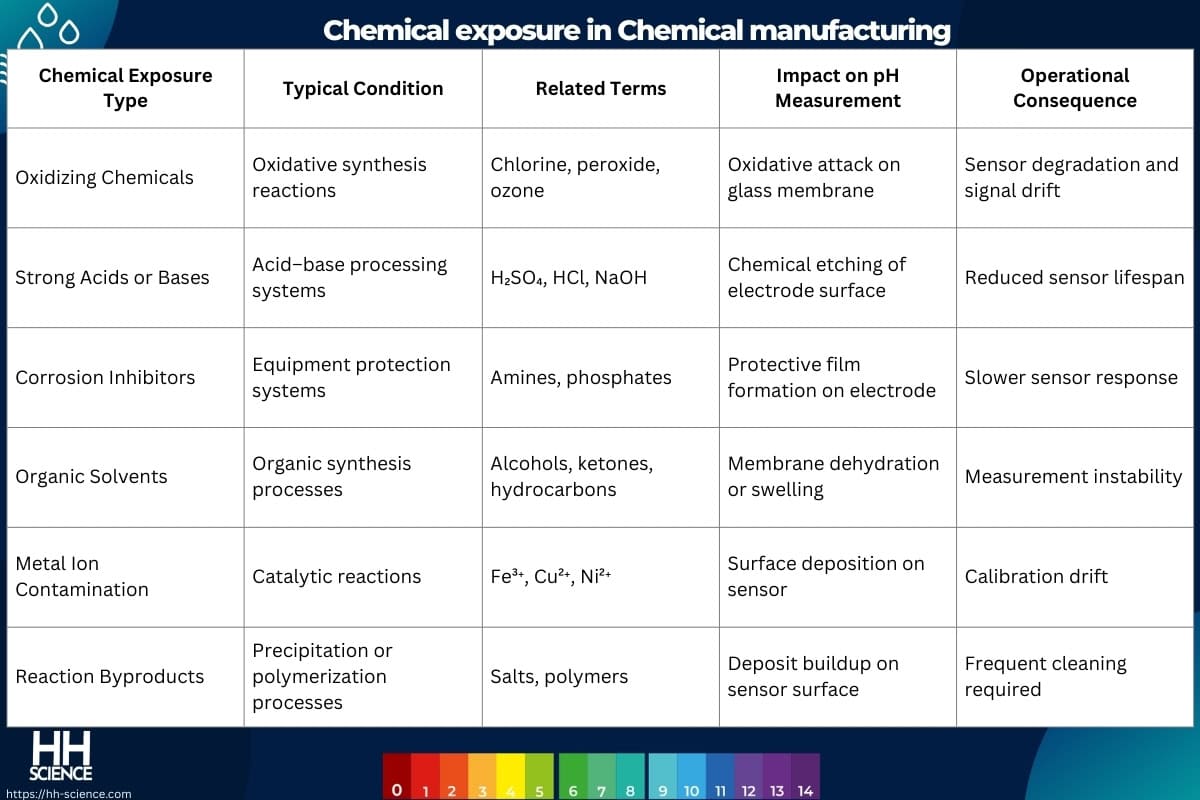
Chemical exposure
Chemical exposure presents a significant pH measurement challenge in chemical manufacturing because process streams often contain aggressive chemicals such as oxidizing agents, disinfectants, corrosion inhibitors, solvents, and reaction intermediates that can chemically interact with the pH sensor glass membrane or reference junction. These chemicals may oxidize or etch the sensing surface, form protective or insulating films, contaminate the reference electrolyte, or alter electrode slope (ideally ~59.16 mV/pH at 25 °C), leading to signal drift (often ±0.1–0.3 pH), slower response time, reduced sensor lifespan, and inaccurate process control in reactors, pipelines, or neutralization systems.
| Chemical Exposure Type | Typical Condition | Related Terms | Impact on pH Measurement | Operational Consequence |
| Oxidizing Chemicals | Oxidative synthesis reactions | Chlorine, peroxide, ozone | Oxidative attack on glass membrane | Sensor degradation and signal drift |
| Strong Acids or Bases | Acid–base processing systems | H₂SO₄, HCl, NaOH | Chemical etching of electrode surface | Reduced sensor lifespan |
| Corrosion Inhibitors | Equipment protection systems | Amines, phosphates | Protective film formation on electrode | Slower sensor response |
| Organic Solvents | Organic synthesis processes | Alcohols, ketones, hydrocarbons | Membrane dehydration or swelling | Measurement instability |
| Metal Ion Contamination | Catalytic reactions | Fe³⁺, Cu²⁺, Ni²⁺ | Surface deposition on sensor | Calibration drift |
| Reaction Byproducts | Precipitation or polymerization processes | Salts, polymers | Deposit buildup on sensor surface | Frequent cleaning required |
Bio-load or process residues
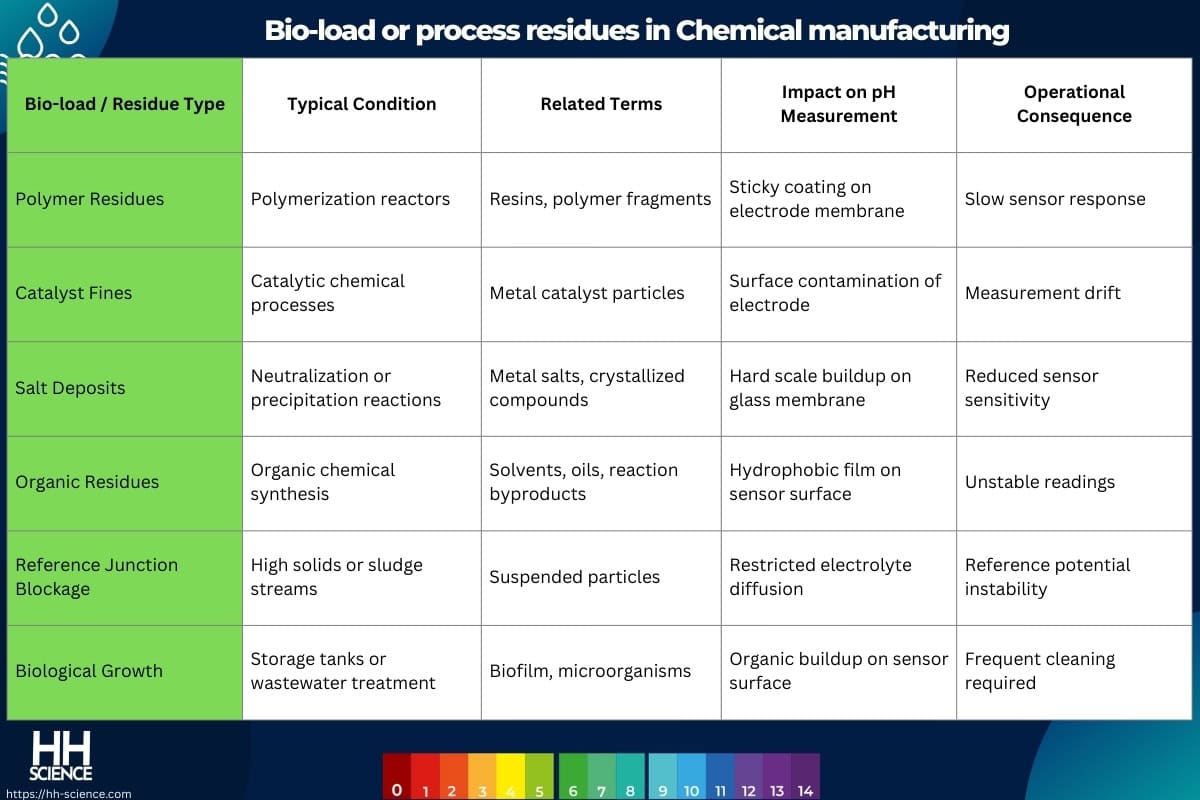
Bio-load or process residues create pH measurement challenges in chemical manufacturing because reaction systems often contain process residues such as polymer fragments, catalyst fines, organic compounds, precipitated salts, microbial growth in storage systems, or sludge from neutralization and wastewater treatment that can accumulate on the pH electrode surface or block the reference junction. These deposits form insulating or sticky layers on the glass membrane, increase electrode impedance, disrupt hydrogen ion exchange, and restrict reference electrolyte diffusion, which can produce slow sensor response, unstable readings, and measurement drift (often ±0.1–0.3 pH), ultimately affecting dosing control, reaction stability, and regulatory monitoring.
| Bio-load / Residue Type | Typical Condition | Related Terms | Impact on pH Measurement | Operational Consequence |
| Polymer Residues | Polymerization reactors | Resins, polymer fragments | Sticky coating on electrode membrane | Slow sensor response |
| Catalyst Fines | Catalytic chemical processes | Metal catalyst particles | Surface contamination of electrode | Measurement drift |
| Salt Deposits | Neutralization or precipitation reactions | Metal salts, crystallized compounds | Hard scale buildup on glass membrane | Reduced sensor sensitivity |
| Organic Residues | Organic chemical synthesis | Solvents, oils, reaction byproducts | Hydrophobic film on sensor surface | Unstable readings |
| Reference Junction Blockage | High solids or sludge streams | Suspended particles | Restricted electrolyte diffusion | Reference potential instability |
| Biological Growth | Storage tanks or wastewater treatment | Biofilm, microorganisms | Organic buildup on sensor surface | Frequent cleaning required |
Common pH sensor types used in chemical manufacturing
Common pH sensor types used in chemical manufacturing include combination glass electrodes, differential pH sensors, double- or triple-junction reference electrodes, flat-surface or anti-fouling electrodes, solid-state ISFET sensors, high-temperature or high-pressure industrial probes, and digital or smart pH sensors integrated with process transmitters. These sensor types are selected to withstand aggressive chemical environments such as strong acids or bases (often pH <1–2 or >12), elevated process temperatures (30–120 °C), pressurized reactors, organic solvents, catalyst residues, and suspended solids while maintaining reliable measurement accuracy (often ±0.05–0.10 pH) and compatibility with automated process control systems such as PLC or DCS platforms.
Combination pH sensors
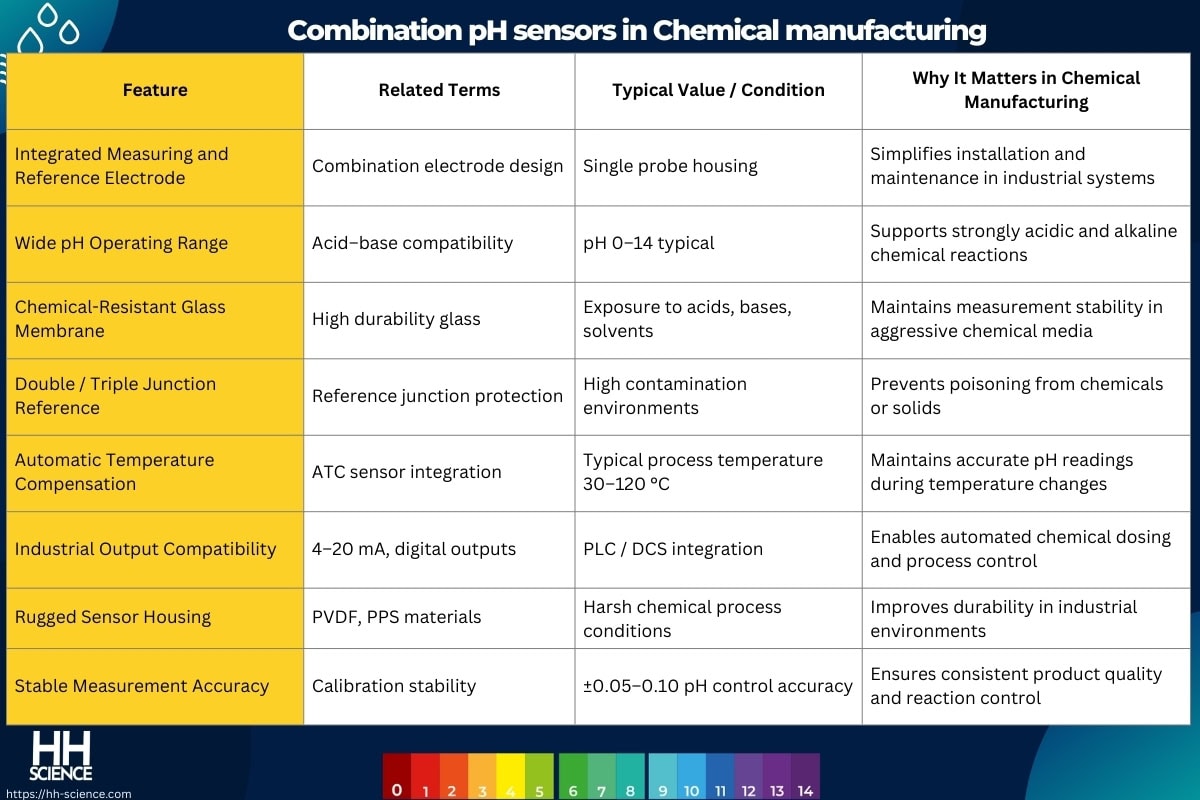
Combination pH sensors are widely used in chemical manufacturing because they integrate the measuring glass electrode and the reference electrode into a single probe, making them practical for continuous monitoring in industrial reactors, pipelines, neutralization systems, and wastewater treatment units. Their compact design simplifies installation while supporting essential industrial features such as chemical-resistant glass membranes, double or triple junction reference systems, automatic temperature compensation (ATC), and compatibility with strong acids or bases (often pH <1–2 or >12), allowing stable measurement accuracy (typically ±0.05–0.10 pH) even in demanding chemical processing environments.
| Feature | Related Terms | Typical Value / Condition | Why It Matters in Chemical Manufacturing |
| Integrated Measuring and Reference Electrode | Combination electrode design | Single probe housing | Simplifies installation and maintenance in industrial systems |
| Wide pH Operating Range | Acid–base compatibility | pH 0–14 typical | Supports strongly acidic and alkaline chemical reactions |
| Chemical-Resistant Glass Membrane | High durability glass | Exposure to acids, bases, solvents | Maintains measurement stability in aggressive chemical media |
| Double / Triple Junction Reference | Reference junction protection | High contamination environments | Prevents poisoning from chemicals or solids |
| Automatic Temperature Compensation | ATC sensor integration | Typical process temperature 30–120 °C | Maintains accurate pH readings during temperature changes |
| Industrial Output Compatibility | 4–20 mA, digital outputs | PLC / DCS integration | Enables automated chemical dosing and process control |
| Rugged Sensor Housing | PVDF, PPS materials | Harsh chemical process conditions | Improves durability in industrial environments |
| Stable Measurement Accuracy | Calibration stability | ±0.05–0.10 pH control accuracy | Ensures consistent product quality and reaction control |
Differential pH sensors
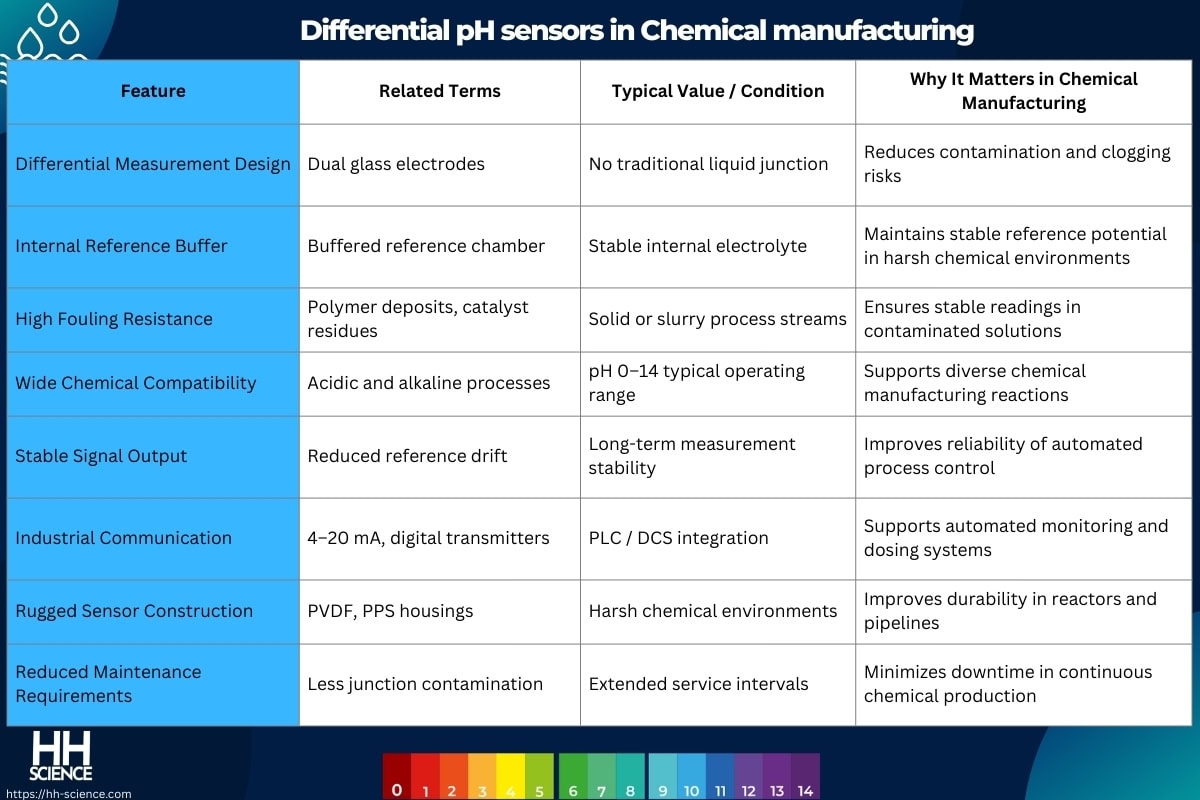
Differential pH sensors are commonly used in chemical manufacturing because they provide stable measurements in harsh process environments where conventional reference junctions may become contaminated by chemical residues, suspended solids, polymer deposits, or catalyst particles present in reactors and pipelines. Instead of relying on a traditional liquid reference junction, differential sensors use two measuring electrodes and an internal buffered reference system, which reduces junction poisoning, improves measurement stability in aggressive chemical streams (often pH <1–2 or >12), and supports reliable process control where fouling, pressure fluctuations, and chemical exposure are common.
| Feature | Related Terms | Typical Value / Condition | Why It Matters in Chemical Manufacturing |
| Differential Measurement Design | Dual glass electrodes | No traditional liquid junction | Reduces contamination and clogging risks |
| Internal Reference Buffer | Buffered reference chamber | Stable internal electrolyte | Maintains stable reference potential in harsh chemical environments |
| High Fouling Resistance | Polymer deposits, catalyst residues | Solid or slurry process streams | Ensures stable readings in contaminated solutions |
| Wide Chemical Compatibility | Acidic and alkaline processes | pH 0–14 typical operating range | Supports diverse chemical manufacturing reactions |
| Stable Signal Output | Reduced reference drift | Long-term measurement stability | Improves reliability of automated process control |
| Industrial Communication | 4–20 mA, digital transmitters | PLC / DCS integration | Supports automated monitoring and dosing systems |
| Rugged Sensor Construction | PVDF, PPS housings | Harsh chemical environments | Improves durability in reactors and pipelines |
| Reduced Maintenance Requirements | Less junction contamination | Extended service intervals | Minimizes downtime in continuous chemical production |
Digital or smart pH sensors
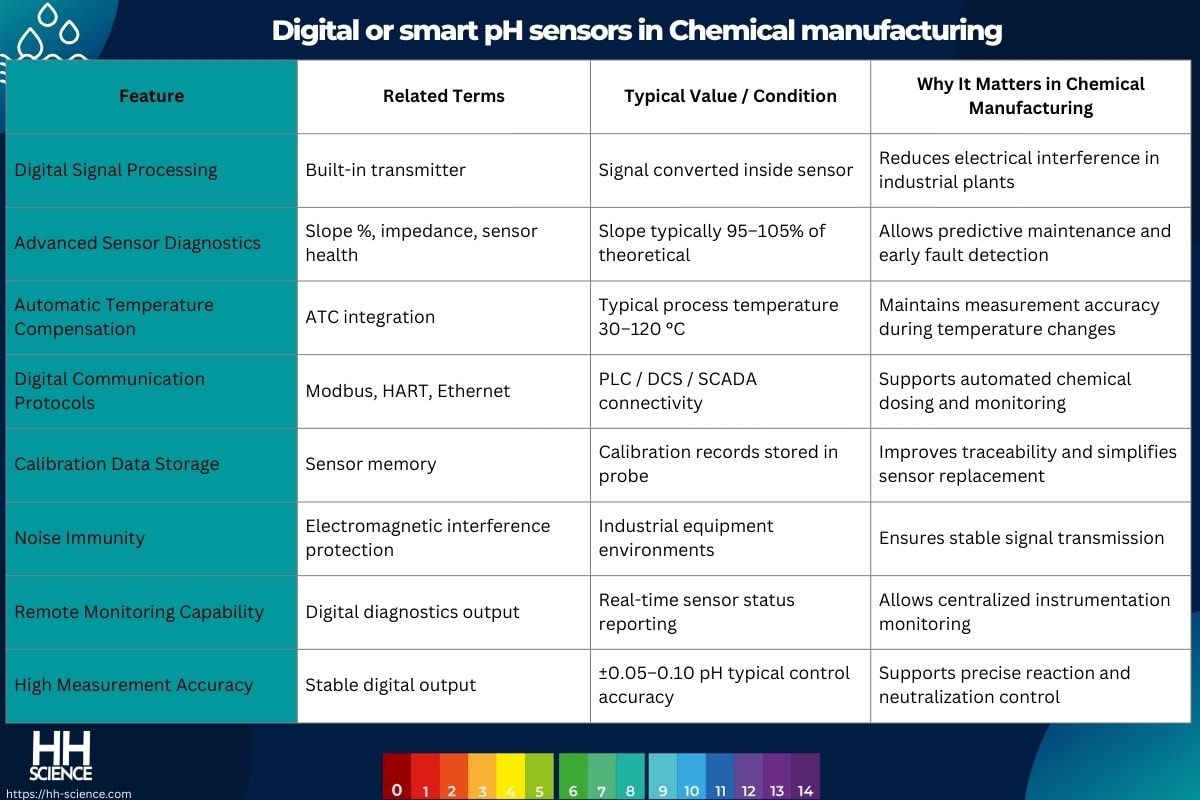
Digital or smart pH sensors are increasingly used in chemical manufacturing because they improve signal stability, diagnostic capability, and integration with automated control systems in complex industrial environments where electrical noise, harsh chemicals, and high temperatures can affect conventional analog sensors. By converting the electrode signal to a digital format inside the sensor head, these probes reduce interference from motors or process equipment, enable advanced diagnostics such as slope monitoring, impedance tracking, and calibration history, support automatic temperature compensation (ATC) for reactors operating around 30–120 °C, and communicate directly with plant control platforms (PLC, DCS, or SCADA) to maintain reliable pH control (typically ±0.05–0.10 pH accuracy) in critical chemical processes.
| Feature | Related Terms | Typical Value / Condition | Why It Matters in Chemical Manufacturing |
| Digital Signal Processing | Built-in transmitter | Signal converted inside sensor | Reduces electrical interference in industrial plants |
| Advanced Sensor Diagnostics | Slope %, impedance, sensor health | Slope typically 95–105% of theoretical | Allows predictive maintenance and early fault detection |
| Automatic Temperature Compensation | ATC integration | Typical process temperature 30–120 °C | Maintains measurement accuracy during temperature changes |
| Digital Communication Protocols | Modbus, HART, Ethernet | PLC / DCS / SCADA connectivity | Supports automated chemical dosing and monitoring |
| Calibration Data Storage | Sensor memory | Calibration records stored in probe | Improves traceability and simplifies sensor replacement |
| Noise Immunity | Electromagnetic interference protection | Industrial equipment environments | Ensures stable signal transmission |
| Remote Monitoring Capability | Digital diagnostics output | Real-time sensor status reporting | Allows centralized instrumentation monitoring |
| High Measurement Accuracy | Stable digital output | ±0.05–0.10 pH typical control accuracy | Supports precise reaction and neutralization control |
Inline, immersion, or portable configurations
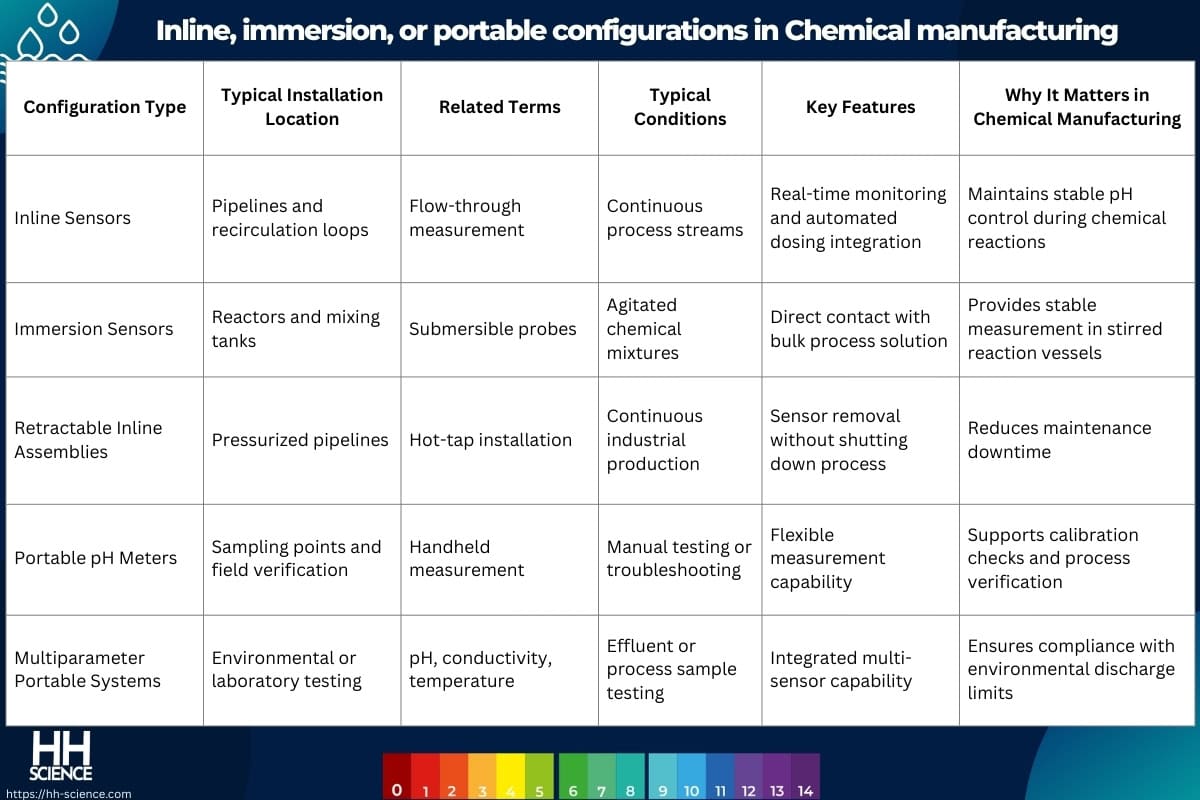
Inline, immersion, and portable pH sensor configurations are used in chemical manufacturing because different process environments—such as pressurized pipelines, stirred reactors, batch tanks, and laboratory sampling points—require different measurement approaches depending on flow conditions, accessibility, maintenance requirements, and process control strategy. Inline sensors provide continuous monitoring in flowing process streams for automated dosing control, immersion probes allow stable measurement in reactors or tanks with mixing and suspended solids, while portable meters enable field verification, calibration checks, and troubleshooting to maintain measurement accuracy (typically ±0.05–0.10 pH) across complex industrial chemical operations.
| Configuration Type | Typical Installation Location | Related Terms | Typical Conditions | Key Features | Why It Matters in Chemical Manufacturing |
| Inline Sensors | Pipelines and recirculation loops | Flow-through measurement | Continuous process streams | Real-time monitoring and automated dosing integration | Maintains stable pH control during chemical reactions |
| Immersion Sensors | Reactors and mixing tanks | Submersible probes | Agitated chemical mixtures | Direct contact with bulk process solution | Provides stable measurement in stirred reaction vessels |
| Retractable Inline Assemblies | Pressurized pipelines | Hot-tap installation | Continuous industrial production | Sensor removal without shutting down process | Reduces maintenance downtime |
| Portable pH Meters | Sampling points and field verification | Handheld measurement | Manual testing or troubleshooting | Flexible measurement capability | Supports calibration checks and process verification |
| Multiparameter Portable Systems | Environmental or laboratory testing | pH, conductivity, temperature | Effluent or process sample testing | Integrated multi-sensor capability | Ensures compliance with environmental discharge limits |
Installation and maintenance considerations in chemical manufacturing
Installation and maintenance considerations in chemical manufacturing are critical because pH sensors often operate in aggressive environments involving strong acids or bases (often pH <1–2 or >12), elevated temperatures (30–120 °C), pressurized reactors, organic solvents, catalyst residues, and suspended solids that can damage glass membranes or contaminate reference junctions. Proper installation at representative process points (reactors, pipelines, or neutralization tanks), the use of suitable mounting assemblies (inline, immersion, or retractable holders), routine calibration with certified buffer standards (pH 4.01, 7.00, 10.01), and scheduled cleaning to remove deposits or chemical films are essential to maintain measurement accuracy (typically ±0.05–0.10 pH), ensure stable dosing control, and support reliable chemical manufacturing operations.
Typical installation locations
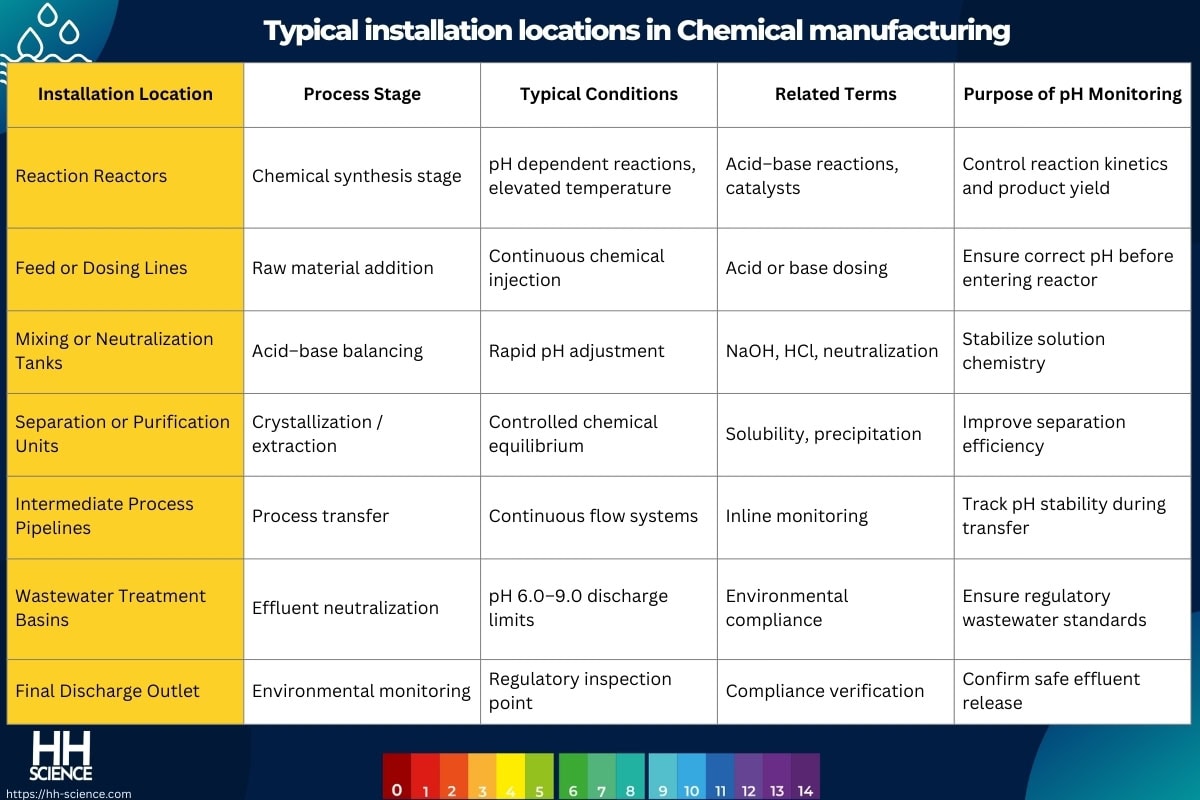
Typical pH sensor installation locations in chemical manufacturing are selected at key process points where hydrogen ion concentration (H⁺ activity) directly affects reaction performance, product quality, and safety, including reactors, feed lines, mixing tanks, neutralization systems, separation units, and wastewater treatment stages. Sensors are typically installed at representative high-flow or well-mixed points in pipelines, vessels, or effluent outlets where conditions such as chemical dosing reactions, temperature variations (30–120 °C), pressure changes, and suspended solids can influence process pH and require continuous monitoring.
| Installation Location | Process Stage | Typical Conditions | Related Terms | Purpose of pH Monitoring |
| Reaction Reactors | Chemical synthesis stage | pH dependent reactions, elevated temperature | Acid–base reactions, catalysts | Control reaction kinetics and product yield |
| Feed or Dosing Lines | Raw material addition | Continuous chemical injection | Acid or base dosing | Ensure correct pH before entering reactor |
| Mixing or Neutralization Tanks | Acid–base balancing | Rapid pH adjustment | NaOH, HCl, neutralization | Stabilize solution chemistry |
| Separation or Purification Units | Crystallization / extraction | Controlled chemical equilibrium | Solubility, precipitation | Improve separation efficiency |
| Intermediate Process Pipelines | Process transfer | Continuous flow systems | Inline monitoring | Track pH stability during transfer |
| Wastewater Treatment Basins | Effluent neutralization | pH 6.0–9.0 discharge limits | Environmental compliance | Ensure regulatory wastewater standards |
| Final Discharge Outlet | Environmental monitoring | Regulatory inspection point | Compliance verification | Confirm safe effluent release |
Calibration and cleaning frequency
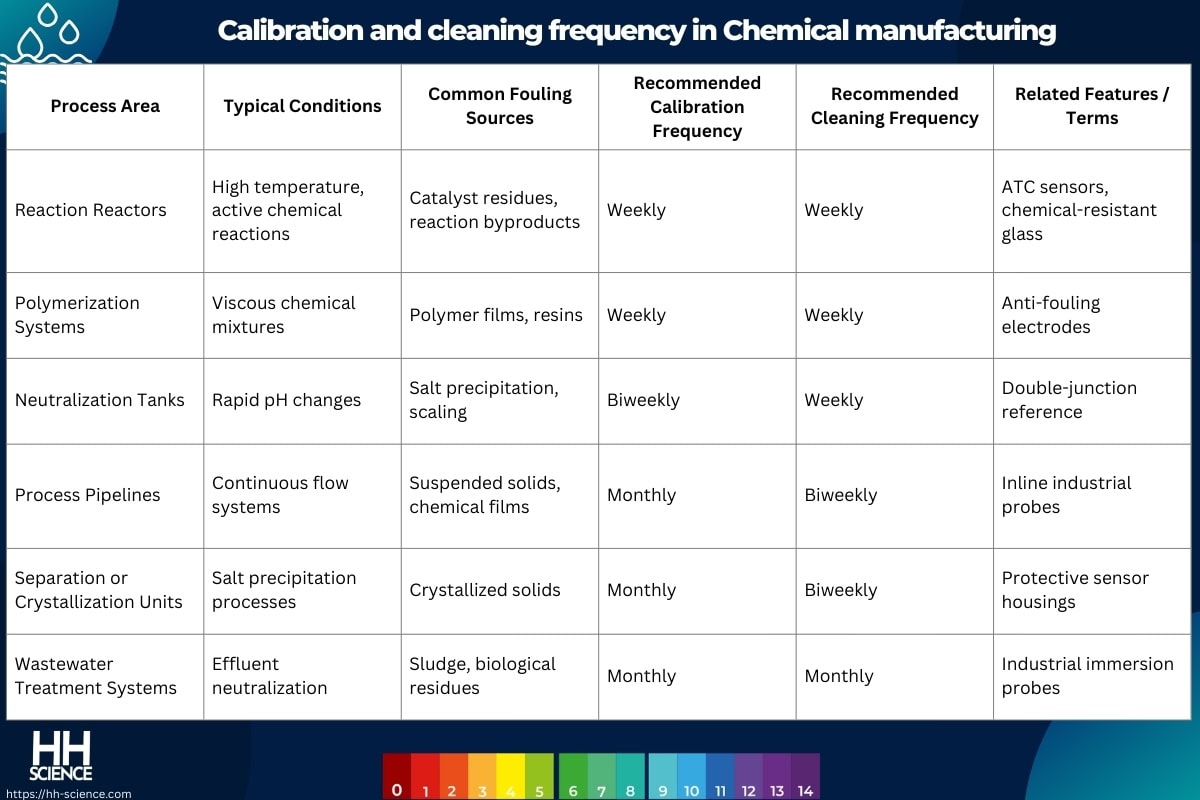
Calibration and cleaning frequency in chemical manufacturing depend on factors such as aggressive chemical exposure (often pH <1–2 or >12), high temperatures (30–120 °C), catalyst residues, organic solvents, scaling salts, and suspended solids generated during synthesis, neutralization, or purification stages. Because these conditions can foul the glass membrane, poison the reference junction, or alter electrode slope (ideally 95–105% of the theoretical 59.16 mV/pH response at 25 °C), routine calibration with certified buffers (pH 4.01, 7.00, 10.01) and scheduled cleaning procedures are required to maintain stable measurement accuracy (typically ±0.05–0.10 pH) and reliable process control.
| Process Area | Typical Conditions | Common Fouling Sources | Recommended Calibration Frequency | Recommended Cleaning Frequency | Related Features / Terms |
| Reaction Reactors | High temperature, active chemical reactions | Catalyst residues, reaction byproducts | Weekly | Weekly | ATC sensors, chemical-resistant glass |
| Polymerization Systems | Viscous chemical mixtures | Polymer films, resins | Weekly | Weekly | Anti-fouling electrodes |
| Neutralization Tanks | Rapid pH changes | Salt precipitation, scaling | Biweekly | Weekly | Double-junction reference |
| Process Pipelines | Continuous flow systems | Suspended solids, chemical films | Monthly | Biweekly | Inline industrial probes |
| Separation or Crystallization Units | Salt precipitation processes | Crystallized solids | Monthly | Biweekly | Protective sensor housings |
| Wastewater Treatment Systems | Effluent neutralization | Sludge, biological residues | Monthly | Monthly | Industrial immersion probes |
Expected sensor lifespan
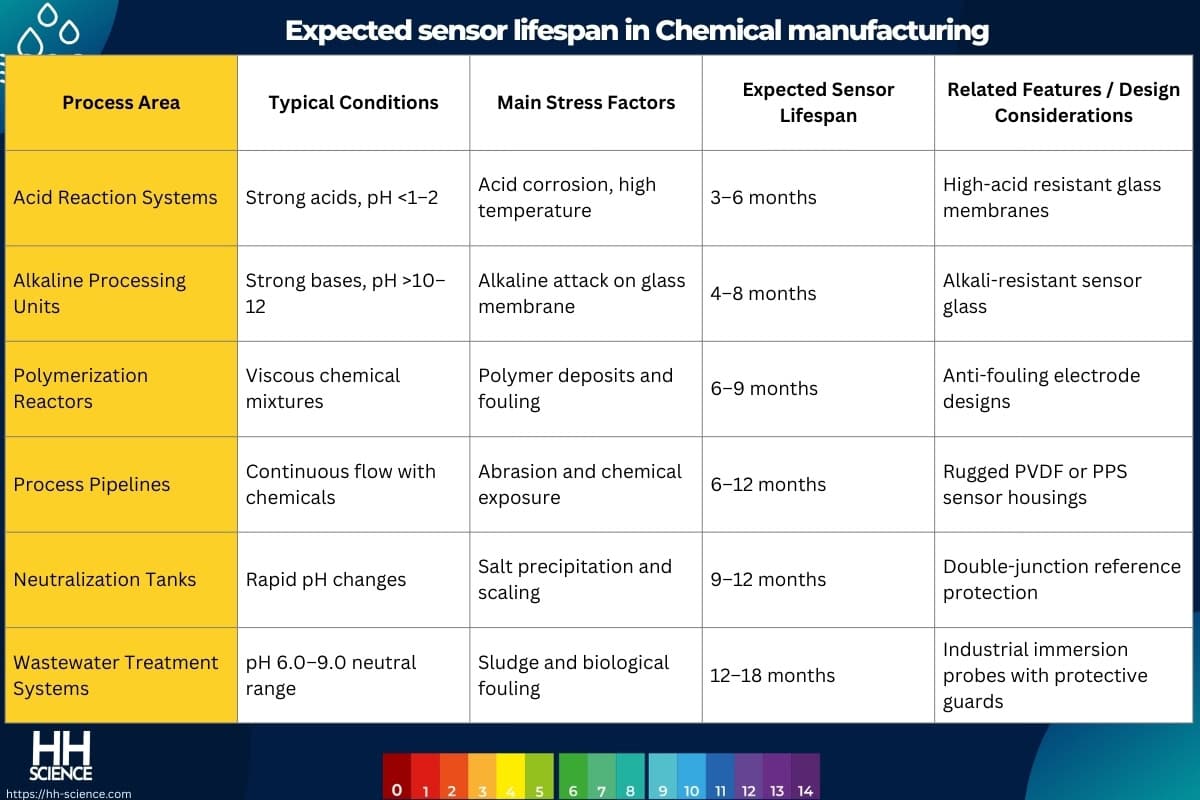
Expected pH sensor lifespan in chemical manufacturing depends on exposure to aggressive chemicals (often pH <1–2 strong acids or >12 strong bases), elevated process temperatures (30–120 °C), pressurized reactors, organic solvents, catalyst residues, and suspended solids that can degrade the glass membrane or contaminate the reference junction. These factors gradually reduce electrode slope (ideally 95–105% of the theoretical 59.16 mV/pH at 25 °C), increase membrane impedance, and affect measurement stability, meaning industrial pH sensors typically operate from several months to over a year depending on chemical severity, maintenance frequency, and protective design features such as chemical-resistant glass, double-junction references, and rugged PVDF or PPS housings.
| Process Area | Typical Conditions | Main Stress Factors | Expected Sensor Lifespan | Related Features / Design Considerations |
| Acid Reaction Systems | Strong acids, pH <1–2 | Acid corrosion, high temperature | 3–6 months | High-acid resistant glass membranes |
| Alkaline Processing Units | Strong bases, pH >10–12 | Alkaline attack on glass membrane | 4–8 months | Alkali-resistant sensor glass |
| Polymerization Reactors | Viscous chemical mixtures | Polymer deposits and fouling | 6–9 months | Anti-fouling electrode designs |
| Process Pipelines | Continuous flow with chemicals | Abrasion and chemical exposure | 6–12 months | Rugged PVDF or PPS sensor housings |
| Neutralization Tanks | Rapid pH changes | Salt precipitation and scaling | 9–12 months | Double-junction reference protection |
| Wastewater Treatment Systems | pH 6.0–9.0 neutral range | Sludge and biological fouling | 12–18 months | Industrial immersion probes with protective guards |
Trade-offs between accuracy, maintenance, and durability
In chemical manufacturing, trade-offs between accuracy, maintenance, and durability arise because pH sensors must operate in harsh industrial conditions such as strong acids or bases (pH <1–2 or >12), elevated temperatures (30–120 °C), pressurized reactors, and process streams containing catalyst residues, solvents, or solids that can damage sensitive electrode components.
- Accuracy: High-precision measurement (typically ±0.05–0.10 pH in controlled reactors or dosing loops) requires sensitive glass membranes and stable reference systems, but these components are more susceptible to chemical attack, fouling, and calibration drift.
- Maintenance: Sensors designed to resist contamination—such as double-junction references, differential electrodes, or anti-fouling membranes—can extend service intervals but often require periodic cleaning and recalibration to maintain reliable performance.
- Durability: Rugged industrial probes with chemical-resistant glass, reinforced housings (PVDF or PPS), and protective guards provide longer operational life in aggressive chemical environments, but these robust designs may reduce response speed or fine-resolution sensitivity compared with highly responsive laboratory-style electrodes.
Regulatory or quality considerations in chemical manufacturing
Regulatory and quality considerations in chemical manufacturing are closely linked to pH because it influences reaction control, product purity, corrosion protection, chemical stability, and wastewater neutralization across industrial processes such as acid–base synthesis, polymerization, hydrolysis, crystallization, and effluent treatment. Maintaining calibrated and traceable pH measurements (often ±0.05–0.10 pH in controlled reactors), documented calibration procedures using certified buffers (pH 4.01, 7.00, 10.01), and continuous monitoring to maintain discharge limits (typically pH 6.0–9.0 for wastewater) ensures consistent product quality, safe chemical handling, protection of process equipment operating under harsh conditions (pH <1–2 or >12, 30–120 °C), and compliance with environmental, safety, and industrial quality management standards.
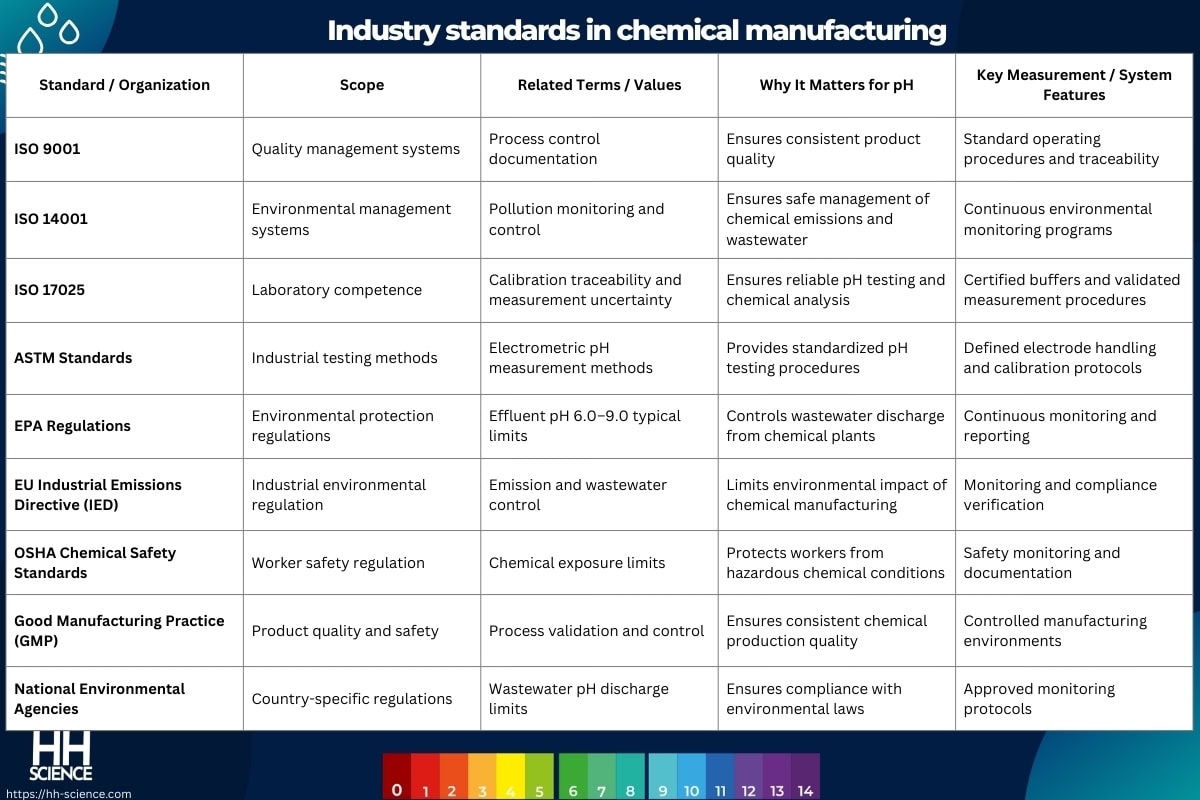
Industry standards in chemical manufacturing
Industry standards in chemical manufacturing define how chemical processes must be controlled, monitored, documented, and audited to ensure consistent product quality, safe handling of hazardous substances, environmental protection, and regulatory compliance. Because many industrial chemical processes operate in extreme environments (often pH <1–2 strong acids or >12 strong bases, temperatures 30–120 °C, and hazardous reagents), standards establish requirements for analytical methods, calibration traceability, environmental discharge monitoring (typically pH 6.0–9.0), laboratory competence, and plant quality management systems.
| Standard / Organization | Scope | Related Terms / Values | Why It Matters for pH | Key Measurement / System Features |
| ISO 9001 | Quality management systems | Process control documentation | Ensures consistent product quality | Standard operating procedures and traceability |
| ISO 14001 | Environmental management systems | Pollution monitoring and control | Ensures safe management of chemical emissions and wastewater | Continuous environmental monitoring programs |
| ISO 17025 | Laboratory competence | Calibration traceability and measurement uncertainty | Ensures reliable pH testing and chemical analysis | Certified buffers and validated measurement procedures |
| ASTM Standards | Industrial testing methods | Electrometric pH measurement methods | Provides standardized pH testing procedures | Defined electrode handling and calibration protocols |
| EPA Regulations | Environmental protection regulations | Effluent pH 6.0–9.0 typical limits | Controls wastewater discharge from chemical plants | Continuous monitoring and reporting |
| EU Industrial Emissions Directive (IED) | Industrial environmental regulation | Emission and wastewater control | Limits environmental impact of chemical manufacturing | Monitoring and compliance verification |
| OSHA Chemical Safety Standards | Worker safety regulation | Chemical exposure limits | Protects workers from hazardous chemical conditions | Safety monitoring and documentation |
| Good Manufacturing Practice (GMP) | Product quality and safety | Process validation and control | Ensures consistent chemical production quality | Controlled manufacturing environments |
| National Environmental Agencies | Country-specific regulations | Wastewater pH discharge limits | Ensures compliance with environmental laws | Approved monitoring protocols |
Internal process and quality requirements in Chemical manufacturing
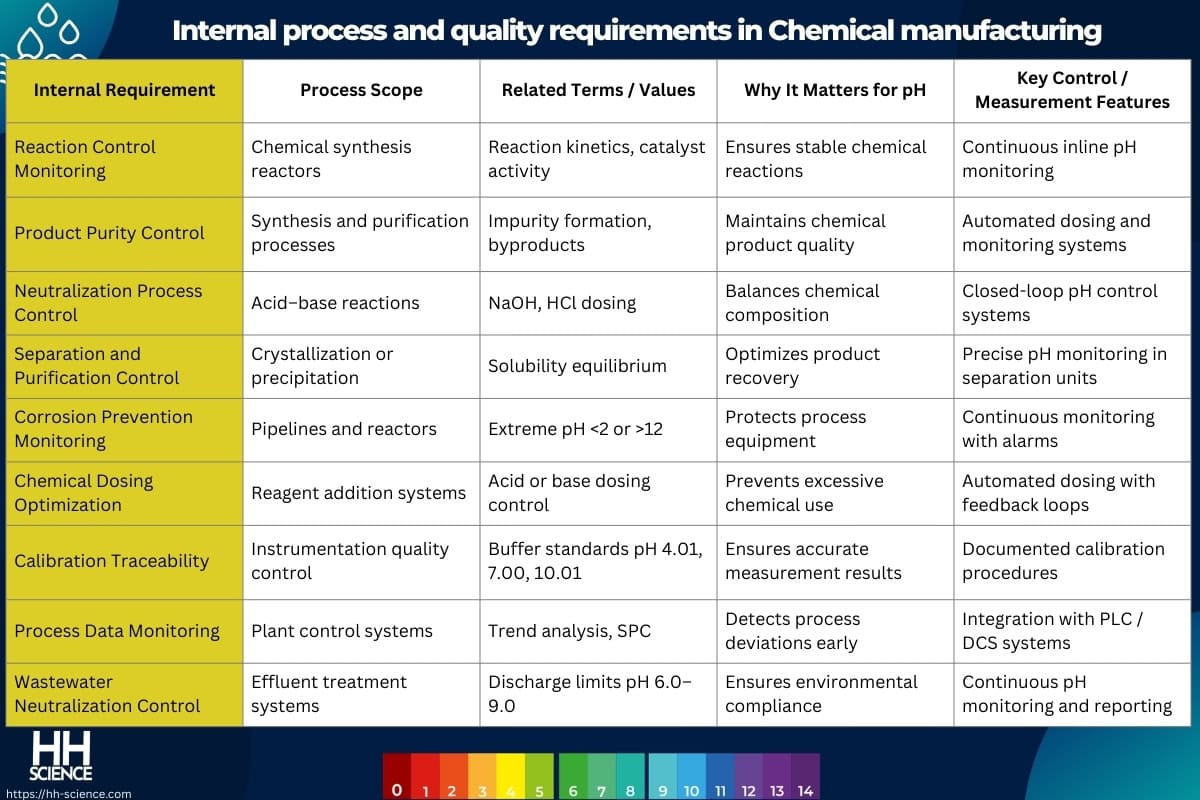
Internal process and quality requirements in chemical manufacturing define how pH must be monitored, controlled, calibrated, and documented throughout production stages such as chemical synthesis, neutralization, polymerization, crystallization, and wastewater treatment. Because reaction kinetics, catalyst activity, chemical solubility, corrosion behavior, and product purity depend strongly on hydrogen ion concentration (H⁺ activity), manufacturers establish internal control tolerances (often ±0.05–0.10 pH in controlled reactors), calibration traceability using certified buffers (pH 4.01, 7.00, 10.01), automated dosing feedback systems, and process monitoring procedures to maintain stable reactions, consistent product quality, and safe plant operation.
| Internal Requirement | Process Scope | Related Terms / Values | Why It Matters for pH | Key Control / Measurement Features |
| Reaction Control Monitoring | Chemical synthesis reactors | Reaction kinetics, catalyst activity | Ensures stable chemical reactions | Continuous inline pH monitoring |
| Product Purity Control | Synthesis and purification processes | Impurity formation, byproducts | Maintains chemical product quality | Automated dosing and monitoring systems |
| Neutralization Process Control | Acid–base reactions | NaOH, HCl dosing | Balances chemical composition | Closed-loop pH control systems |
| Separation and Purification Control | Crystallization or precipitation | Solubility equilibrium | Optimizes product recovery | Precise pH monitoring in separation units |
| Corrosion Prevention Monitoring | Pipelines and reactors | Extreme pH <2 or >12 | Protects process equipment | Continuous monitoring with alarms |
| Chemical Dosing Optimization | Reagent addition systems | Acid or base dosing control | Prevents excessive chemical use | Automated dosing with feedback loops |
| Calibration Traceability | Instrumentation quality control | Buffer standards pH 4.01, 7.00, 10.01 | Ensures accurate measurement results | Documented calibration procedures |
| Process Data Monitoring | Plant control systems | Trend analysis, SPC | Detects process deviations early | Integration with PLC / DCS systems |
| Wastewater Neutralization Control | Effluent treatment systems | Discharge limits pH 6.0–9.0 | Ensures environmental compliance | Continuous pH monitoring and reporting |
Compliance-driven monitoring needs in Chemical manufacturing
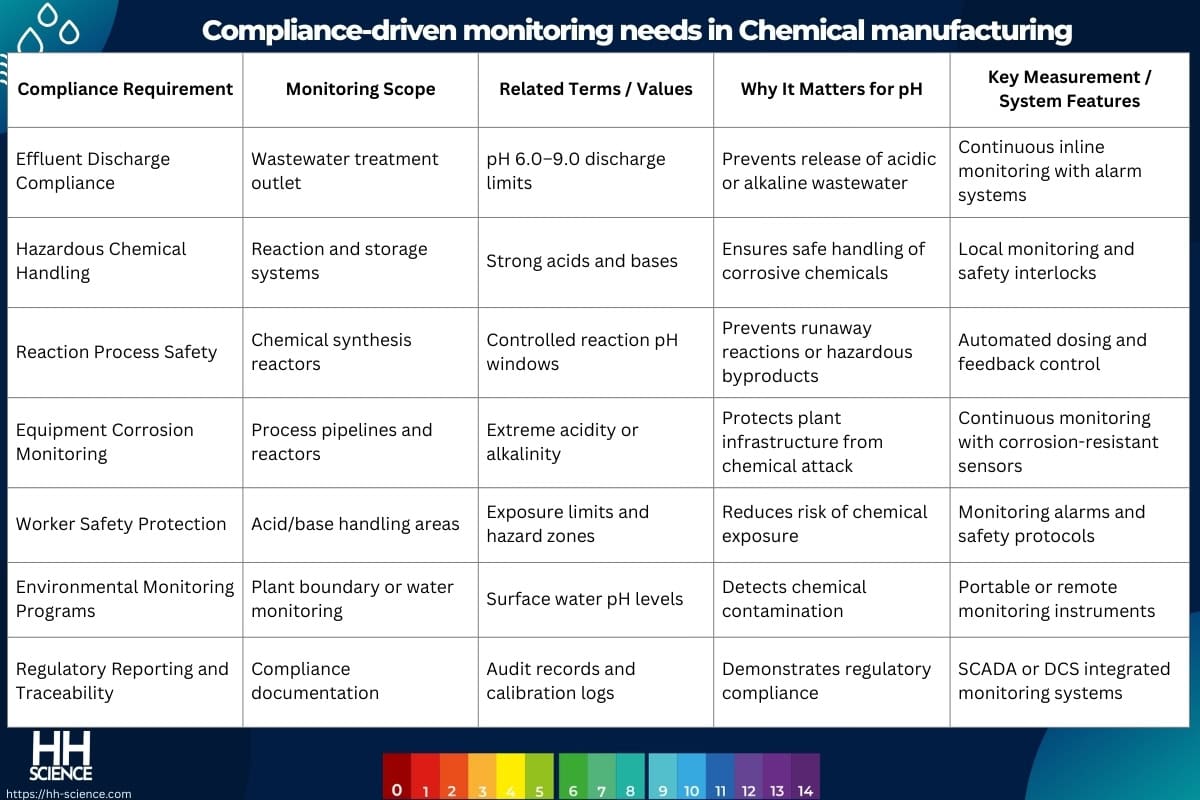
Compliance-driven monitoring needs in chemical manufacturing arise because facilities handle hazardous chemicals, extreme pH environments (often pH <1–2 strong acids or >12 strong bases), reactive intermediates, and wastewater streams that must meet environmental discharge regulations (typically pH 6.0–9.0). Continuous monitoring, documented calibration traceability, and automated process control are required to ensure safe chemical reactions, protect workers and equipment, prevent environmental contamination, and maintain compliance with environmental, safety, and quality regulations governing industrial chemical production.
| Compliance Requirement | Monitoring Scope | Related Terms / Values | Why It Matters for pH | Key Measurement / System Features |
| Effluent Discharge Compliance | Wastewater treatment outlet | pH 6.0–9.0 discharge limits | Prevents release of acidic or alkaline wastewater | Continuous inline monitoring with alarm systems |
| Hazardous Chemical Handling | Reaction and storage systems | Strong acids and bases | Ensures safe handling of corrosive chemicals | Local monitoring and safety interlocks |
| Reaction Process Safety | Chemical synthesis reactors | Controlled reaction pH windows | Prevents runaway reactions or hazardous byproducts | Automated dosing and feedback control |
| Equipment Corrosion Monitoring | Process pipelines and reactors | Extreme acidity or alkalinity | Protects plant infrastructure from chemical attack | Continuous monitoring with corrosion-resistant sensors |
| Worker Safety Protection | Acid/base handling areas | Exposure limits and hazard zones | Reduces risk of chemical exposure | Monitoring alarms and safety protocols |
| Environmental Monitoring Programs | Plant boundary or water monitoring | Surface water pH levels | Detects chemical contamination | Portable or remote monitoring instruments |
| Regulatory Reporting and Traceability | Compliance documentation | Audit records and calibration logs | Demonstrates regulatory compliance | SCADA or DCS integrated monitoring systems |
Selecting the right pH measurement approach in chemical manufacturing
Selecting the right pH measurement approach in chemical manufacturing is essential because industrial processes such as acid–base synthesis, catalytic reactions, polymerization, hydrolysis, crystallization, and wastewater neutralization operate under demanding conditions including extreme pH environments (often pH <1–2 or >12), elevated temperatures (30–120 °C), pressurized reactors, organic solvents, catalyst residues, and suspended solids. The appropriate solution—such as combination or differential sensors, digital smart probes, chemical-resistant glass membranes, double-junction reference systems, automatic temperature compensation (ATC), and inline or immersion installations integrated with PLC/DCS control systems—must match process chemistry, fouling risks, pressure and flow conditions, and required measurement accuracy (typically ±0.05–0.10 pH) to maintain stable reactions, consistent product quality, and safe industrial operation.
Decision support for Chemical manufacturing
Decision support in chemical manufacturing evaluates process conditions such as reaction stage requirements (strong acid systems pH <1–2, neutral reaction windows pH 6–8, alkaline processes pH 9–12), temperature ranges (30–120 °C), pressure conditions in reactors, catalyst presence, solvent exposure, and solids or residue formation. By analyzing these parameters together with measurement tolerance requirements (often ±0.05–0.10 pH for controlled reactions), engineers can determine appropriate sensor materials, installation methods, and maintenance intervals to ensure reliable pH monitoring and stable process control.
Application-driven measurement strategies
Application-driven measurement strategies align pH monitoring with specific chemical manufacturing processes such as acid–base reactions, catalytic synthesis, polymerization, hydrolysis, crystallization, and neutralization systems. These strategies define target pH windows, required response times, temperature compensation needs, fouling resistance, and process sampling conditions so that sensors can provide accurate and stable measurements that support consistent reaction performance and product quality.
Linking Chemical manufacturing to sensor selection and OEM solutions
Linking chemical manufacturing requirements to sensor selection and OEM solutions ensures that instrumentation is designed for harsh industrial environments including strong acids or bases, high temperatures, pressurized vessels, organic solvents, and process residues. By selecting appropriate technologies—such as combination, differential, or digital pH sensors, corrosion-resistant materials (PVDF, PPS, specialized glass), protected reference junctions, and industrial communication interfaces (4–20 mA, Modbus, or Ethernet) integrated with plant automation systems, OEM solutions enable durable, low-maintenance pH monitoring systems that support efficient chemical production, process safety, and regulatory compliance.


