Why pH matters in laboratory analysis?
pH matters in laboratory analysis because it directly affects analytical accuracy, sample stability, reaction kinetics, solubility, ionization state, buffer performance, biological activity, microbial growth, instrument calibration, method validation, quality control, and regulatory compliance.
Analytical accuracy: Correct pH ensures that test results reflect the true chemical condition of the sample rather than measurement error or uncontrolled reaction changes.
- Sample stability: Many samples degrade, precipitate, oxidize, or change composition when pH is not maintained within the required range.
- Reaction kinetics: pH controls how fast chemical reactions occur, which directly affects titration, extraction, digestion, colorimetric, and enzymatic methods.
- Solubility control: pH determines whether compounds remain dissolved or precipitate, especially metals, salts, proteins, and weak acids or bases.
- Ionization state: pH changes the charged form of analytes, affecting detection, separation, extraction, and binding behavior.
- Buffer performance: Buffers maintain stable pH during analysis and prevent small chemical additions from changing test conditions.
- Biological activity: Enzymes, cells, proteins, and microorganisms are highly pH-sensitive and require defined ranges for reliable biological testing.
- Microbial growth control: pH influences whether microorganisms survive, grow, or are inhibited in food, water, pharmaceutical, and biotechnology testing.
- Instrument calibration: Accurate pH measurement requires calibration with traceable buffers such as pH 4.01, 7.00, and 10.01.
- Method validation: Standardized pH control supports repeatability, reproducibility, uncertainty control, and defensible laboratory results.
- Quality control: Routine pH checks help verify reagent quality, sample preparation consistency, and batch-to-batch analytical reliability.
- Regulatory compliance: Many laboratory methods require documented pH control under ISO, ASTM, GLP, GMP, pharmacopeia, environmental, and accreditation requirements.
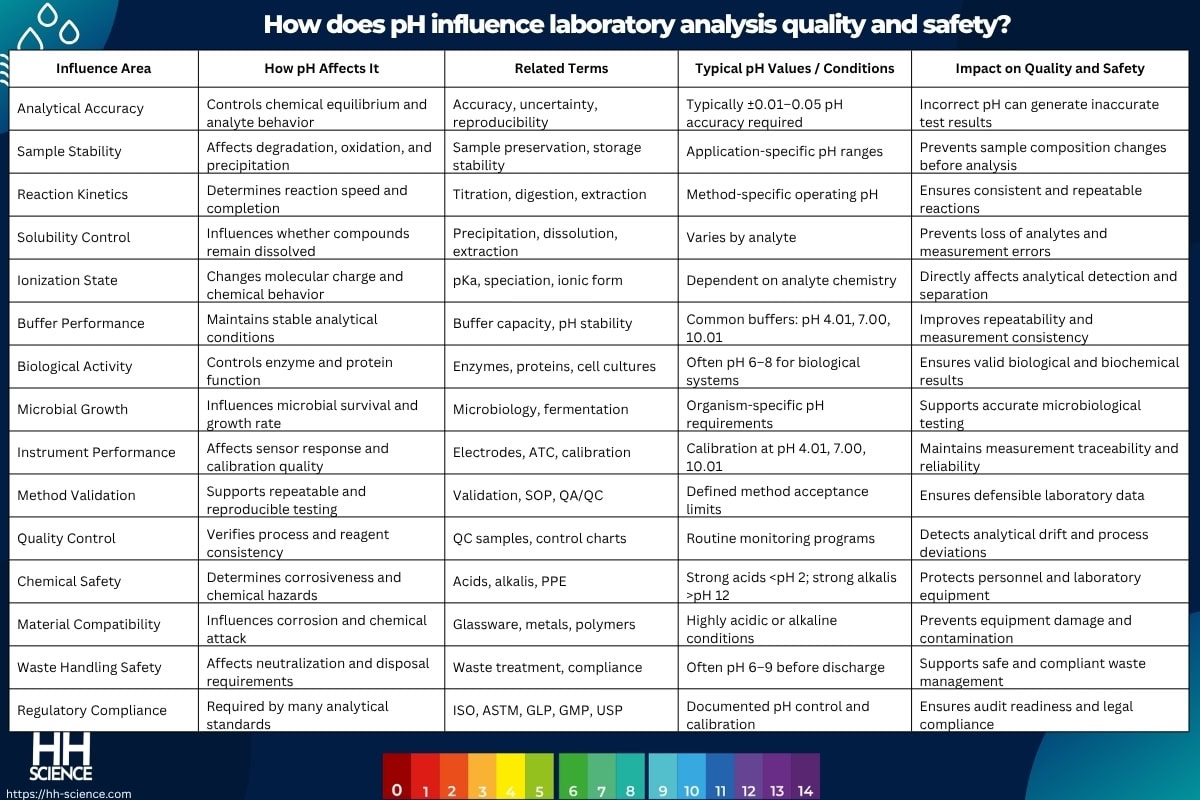
How does pH influence laboratory analysis quality and safety?
pH influences laboratory analysis quality and safety because it controls chemical reactions, sample stability, analyte solubility, ionization state, biological activity, instrument performance, reagent effectiveness, and laboratory safety conditions. Even small pH deviations can affect analytical accuracy, repeatability, method validity, sample integrity, operator safety, and regulatory compliance, making pH one of the most critical parameters monitored in laboratory testing and research environments.
| Influence Area | How pH Affects It | Related Terms | Typical pH Values / Conditions | Impact on Quality and Safety |
| Analytical Accuracy | Controls chemical equilibrium and analyte behavior | Accuracy, uncertainty, reproducibility | Typically ±0.01–0.05 pH accuracy required | Incorrect pH can generate inaccurate test results |
| Sample Stability | Affects degradation, oxidation, and precipitation | Sample preservation, storage stability | Application-specific pH ranges | Prevents sample composition changes before analysis |
| Reaction Kinetics | Determines reaction speed and completion | Titration, digestion, extraction | Method-specific operating pH | Ensures consistent and repeatable reactions |
| Solubility Control | Influences whether compounds remain dissolved | Precipitation, dissolution, extraction | Varies by analyte | Prevents loss of analytes and measurement errors |
| Ionization State | Changes molecular charge and chemical behavior | pKa, speciation, ionic form | Dependent on analyte chemistry | Directly affects analytical detection and separation |
| Buffer Performance | Maintains stable analytical conditions | Buffer capacity, pH stability | Common buffers: pH 4.01, 7.00, 10.01 | Improves repeatability and measurement consistency |
| Biological Activity | Controls enzyme and protein function | Enzymes, proteins, cell cultures | Often pH 6–8 for biological systems | Ensures valid biological and biochemical results |
| Microbial Growth | Influences microbial survival and growth rate | Microbiology, fermentation | Organism-specific pH requirements | Supports accurate microbiological testing |
| Instrument Performance | Affects sensor response and calibration quality | Electrodes, ATC, calibration | Calibration at pH 4.01, 7.00, 10.01 | Maintains measurement traceability and reliability |
| Method Validation | Supports repeatable and reproducible testing | Validation, SOP, QA/QC | Defined method acceptance limits | Ensures defensible laboratory data |
| Quality Control | Verifies process and reagent consistency | QC samples, control charts | Routine monitoring programs | Detects analytical drift and process deviations |
| Chemical Safety | Determines corrosiveness and chemical hazards | Acids, alkalis, PPE | Strong acids <pH 2; strong alkalis >pH 12 | Protects personnel and laboratory equipment |
| Material Compatibility | Influences corrosion and chemical attack | Glassware, metals, polymers | Highly acidic or alkaline conditions | Prevents equipment damage and contamination |
| Waste Handling Safety | Affects neutralization and disposal requirements | Waste treatment, compliance | Often pH 6–9 before discharge | Supports safe and compliant waste management |
| Regulatory Compliance | Required by many analytical standards | ISO, ASTM, GLP, GMP, USP | Documented pH control and calibration | Ensures audit readiness and legal compliance |
Why is laboratory analysis sensitive to pH deviations?
Laboratory analysis is sensitive to pH deviations because pH controls analyte chemistry, reaction equilibrium, solubility, ionization state, buffer capacity, biological activity, reagent performance, and instrument response, so even a small deviation can change how a sample behaves during preparation, measurement, and validation. If pH is not correct, results may become inaccurate or non-repeatable, samples may precipitate or degrade, titrations and colorimetric reactions may shift, enzymes or proteins may lose activity, calibration may fail, and the laboratory may generate data that does not meet SOP, ISO, ASTM, GLP, GMP, pharmacopeia, or accreditation requirements.
- Too low pH can increase acidity, dissolve metals, denature proteins, accelerate hydrolysis, change analyte speciation, damage electrodes or lab materials, and create safety risks from corrosive samples or reagents.
- Too high pH can cause alkaline degradation, precipitation of metal hydroxides, protein denaturation, buffer failure, glass electrode alkaline error, reagent instability, and inaccurate measurements in assays that require neutral or mildly acidic conditions.
- Incorrect pH can affect quantitative accuracy because analytes may change form, bind differently, extract poorly, react incompletely, or produce weaker or stronger analytical signals than expected.
- Incorrect pH can affect sample preservation because many environmental, pharmaceutical, food, biological, and chemical samples require defined pH conditions to prevent microbial growth, oxidation, precipitation, or decomposition.
- Incorrect pH can affect method validity because validated analytical methods usually define acceptable pH ranges, buffer systems, calibration procedures, and acceptance criteria that must be followed for defensible results.
- Incorrect pH can affect safety and compliance because strongly acidic samples below about pH 2 or strongly alkaline samples above about pH 12 require special handling, PPE, neutralization, waste treatment, and documentation before disposal.
Typical pH ranges and control targets in laboratory analysis
Typical pH ranges and control targets in laboratory analysis are defined by the analytical method, sample matrix, reagent chemistry, buffer system, temperature, instrument accuracy, and quality-control requirements. These targets commonly include calibration buffers such as pH 4.01, 7.00, and 10.01, measurement accuracy of about ±0.01–0.05 pH, biological testing ranges often around pH 6–8, and waste neutralization ranges commonly around pH 6–9 to ensure accurate, repeatable, safe, and compliant laboratory results.
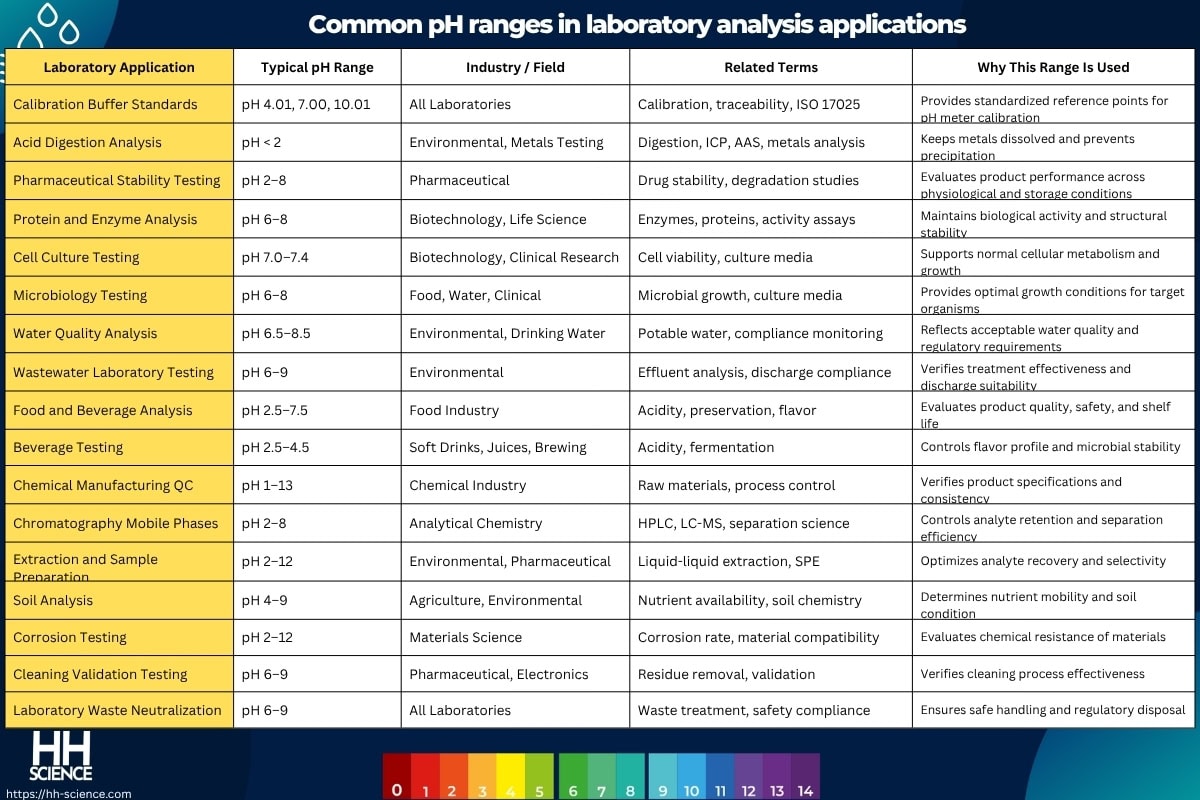
Common pH ranges in laboratory analysis applications
Common pH ranges in laboratory analysis applications span nearly the entire pH scale, from strongly acidic solutions below pH 2 to strongly alkaline solutions above pH 12, because different analytical methods, sample types, reagents, biological systems, and quality-control procedures require specific chemical conditions for accurate and repeatable results. The selected pH range influences analyte stability, reaction efficiency, microbial activity, buffer performance, extraction behavior, instrument compatibility, and regulatory compliance.
| Laboratory Application | Typical pH Range | Industry / Field | Related Terms | Why This Range Is Used |
| Calibration Buffer Standards | pH 4.01, 7.00, 10.01 | All Laboratories | Calibration, traceability, ISO 17025 | Provides standardized reference points for pH meter calibration |
| Acid Digestion Analysis | pH < 2 | Environmental, Metals Testing | Digestion, ICP, AAS, metals analysis | Keeps metals dissolved and prevents precipitation |
| Pharmaceutical Stability Testing | pH 2–8 | Pharmaceutical | Drug stability, degradation studies | Evaluates product performance across physiological and storage conditions |
| Protein and Enzyme Analysis | pH 6–8 | Biotechnology, Life Science | Enzymes, proteins, activity assays | Maintains biological activity and structural stability |
| Cell Culture Testing | pH 7.0–7.4 | Biotechnology, Clinical Research | Cell viability, culture media | Supports normal cellular metabolism and growth |
| Microbiology Testing | pH 6–8 | Food, Water, Clinical | Microbial growth, culture media | Provides optimal growth conditions for target organisms |
| Water Quality Analysis | pH 6.5–8.5 | Environmental, Drinking Water | Potable water, compliance monitoring | Reflects acceptable water quality and regulatory requirements |
| Wastewater Laboratory Testing | pH 6–9 | Environmental | Effluent analysis, discharge compliance | Verifies treatment effectiveness and discharge suitability |
| Food and Beverage Analysis | pH 2.5–7.5 | Food Industry | Acidity, preservation, flavor | Evaluates product quality, safety, and shelf life |
| Beverage Testing | pH 2.5–4.5 | Soft Drinks, Juices, Brewing | Acidity, fermentation | Controls flavor profile and microbial stability |
| Chemical Manufacturing QC | pH 1–13 | Chemical Industry | Raw materials, process control | Verifies product specifications and consistency |
| Chromatography Mobile Phases | pH 2–8 | Analytical Chemistry | HPLC, LC-MS, separation science | Controls analyte retention and separation efficiency |
| Extraction and Sample Preparation | pH 2–12 | Environmental, Pharmaceutical | Liquid-liquid extraction, SPE | Optimizes analyte recovery and selectivity |
| Soil Analysis | pH 4–9 | Agriculture, Environmental | Nutrient availability, soil chemistry | Determines nutrient mobility and soil condition |
| Corrosion Testing | pH 2–12 | Materials Science | Corrosion rate, material compatibility | Evaluates chemical resistance of materials |
| Cleaning Validation Testing | pH 6–9 | Pharmaceutical, Electronics | Residue removal, validation | Verifies cleaning process effectiveness |
| Laboratory Waste Neutralization | pH 6–9 | All Laboratories | Waste treatment, safety compliance | Ensures safe handling and regulatory disposal |
Factors that define pH control targets
pH control targets in laboratory analysis are defined by the analytical method, sample matrix, analyte chemistry, reagent formulation, buffer system, temperature, required accuracy, instrument type, sample preservation needs, biological activity, solubility behavior, ionization state, method validation criteria, quality-control limits, safety requirements, and regulatory standards. These factors define the correct pH window because laboratory results must remain accurate, repeatable, stable, safe, and defensible under documented testing conditions.
- Analytical method: Each method, such as titration, chromatography, digestion, extraction, colorimetry, or enzymatic assay, requires a defined pH range to produce valid results.
- Sample matrix: Water, soil, food, pharmaceutical, biological, chemical, and wastewater samples respond differently to pH changes because their composition and buffering capacity vary.
- Analyte chemistry: Weak acids, weak bases, metals, proteins, salts, and organic compounds change behavior depending on pH.
- Reagent formulation: Reagents often require a specific pH to maintain activity, stability, color development, or reaction efficiency.
- Buffer system: Buffers are selected to keep pH stable within the required working range and prevent method drift.
- Temperature: Temperature affects pH electrode response, chemical equilibrium, reaction rate, and buffer value.
- Required accuracy: High-precision laboratory work may require measurement accuracy around ±0.01–0.05 pH.
- Instrument type: pH meters, electrodes, titrators, chromatographs, spectrophotometers, and analyzers may each require specific pH control conditions.
- Sample preservation needs: Some samples must be acidified below pH 2 or kept near neutral to prevent degradation, precipitation, or microbial change.
- Biological activity: Enzymes, proteins, cells, and microorganisms often require controlled pH ranges such as pH 6–8 or pH 7.0–7.4.
- Solubility behavior: pH determines whether metals, salts, proteins, and other compounds remain dissolved or precipitate.
- Ionization state: pH controls molecular charge, which affects extraction, binding, separation, detection, and biological response.
- Method validation criteria: Validated SOPs define acceptable pH ranges, calibration procedures, control limits, and acceptance criteria.
- Quality-control limits: QC samples, control charts, blanks, standards, and reference materials require stable pH to detect real analytical drift.
- Safety requirements: Strong acids below about pH 2 and strong alkalis above about pH 12 require special handling, PPE, neutralization, and waste control.
- Regulatory standards: ISO, ASTM, GLP, GMP, USP, environmental methods, and accreditation programs require documented pH control and traceable calibration.
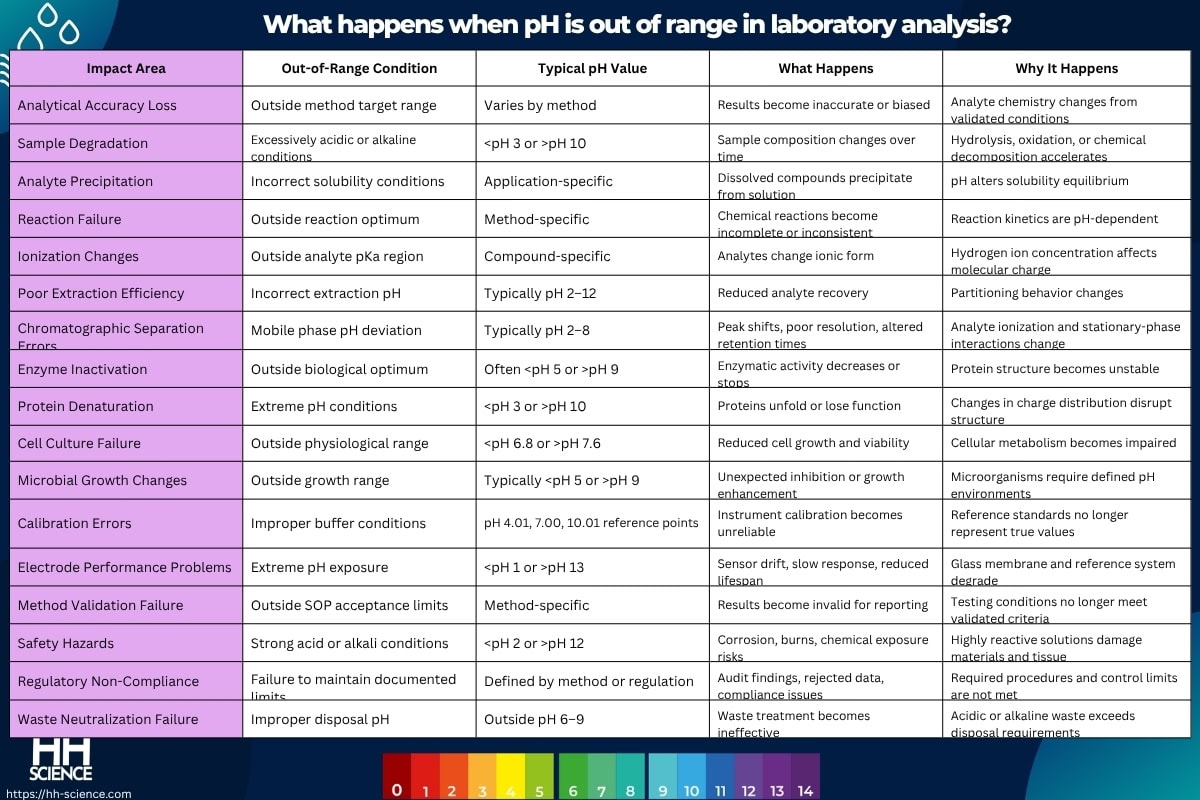
What happens when pH is out of range in laboratory analysis?
When pH is out of range in laboratory analysis, it can cause inaccurate test results, sample degradation, analyte precipitation, reaction failure, altered ionization, reduced extraction efficiency, enzyme or protein deactivation, microbial growth changes, calibration errors, instrument damage, method validation failures, safety hazards, regulatory non-compliance, and wasted laboratory resources because pH directly controls chemical equilibrium, solubility, biological activity, reaction kinetics, and measurement reliability. Even small deviations from method-specified pH targets can change analyte behavior and compromise the accuracy, repeatability, and defensibility of laboratory data.
| Impact Area | Out-of-Range Condition | Typical pH Value | What Happens | Why It Happens |
| Analytical Accuracy Loss | Outside method target range | Varies by method | Results become inaccurate or biased | Analyte chemistry changes from validated conditions |
| Sample Degradation | Excessively acidic or alkaline conditions | <pH 3 or >pH 10 | Sample composition changes over time | Hydrolysis, oxidation, or chemical decomposition accelerates |
| Analyte Precipitation | Incorrect solubility conditions | Application-specific | Dissolved compounds precipitate from solution | pH alters solubility equilibrium |
| Reaction Failure | Outside reaction optimum | Method-specific | Chemical reactions become incomplete or inconsistent | Reaction kinetics are pH-dependent |
| Ionization Changes | Outside analyte pKa region | Compound-specific | Analytes change ionic form | Hydrogen ion concentration affects molecular charge |
| Poor Extraction Efficiency | Incorrect extraction pH | Typically pH 2–12 | Reduced analyte recovery | Partitioning behavior changes |
| Chromatographic Separation Errors | Mobile phase pH deviation | Typically pH 2–8 | Peak shifts, poor resolution, altered retention times | Analyte ionization and stationary-phase interactions change |
| Enzyme Inactivation | Outside biological optimum | Often <pH 5 or >pH 9 | Enzymatic activity decreases or stops | Protein structure becomes unstable |
| Protein Denaturation | Extreme pH conditions | <pH 3 or >pH 10 | Proteins unfold or lose function | Changes in charge distribution disrupt structure |
| Cell Culture Failure | Outside physiological range | <pH 6.8 or >pH 7.6 | Reduced cell growth and viability | Cellular metabolism becomes impaired |
| Microbial Growth Changes | Outside growth range | Typically <pH 5 or >pH 9 | Unexpected inhibition or growth enhancement | Microorganisms require defined pH environments |
| Calibration Errors | Improper buffer conditions | pH 4.01, 7.00, 10.01 reference points | Instrument calibration becomes unreliable | Reference standards no longer represent true values |
| Electrode Performance Problems | Extreme pH exposure | <pH 1 or >pH 13 | Sensor drift, slow response, reduced lifespan | Glass membrane and reference system degrade |
| Method Validation Failure | Outside SOP acceptance limits | Method-specific | Results become invalid for reporting | Testing conditions no longer meet validated criteria |
| Safety Hazards | Strong acid or alkali conditions | <pH 2 or >pH 12 | Corrosion, burns, chemical exposure risks | Highly reactive solutions damage materials and tissue |
| Regulatory Non-Compliance | Failure to maintain documented limits | Defined by method or regulation | Audit findings, rejected data, compliance issues | Required procedures and control limits are not met |
| Waste Neutralization Failure | Improper disposal pH | Outside pH 6–9 | Waste treatment becomes ineffective | Acidic or alkaline waste exceeds disposal requirements |
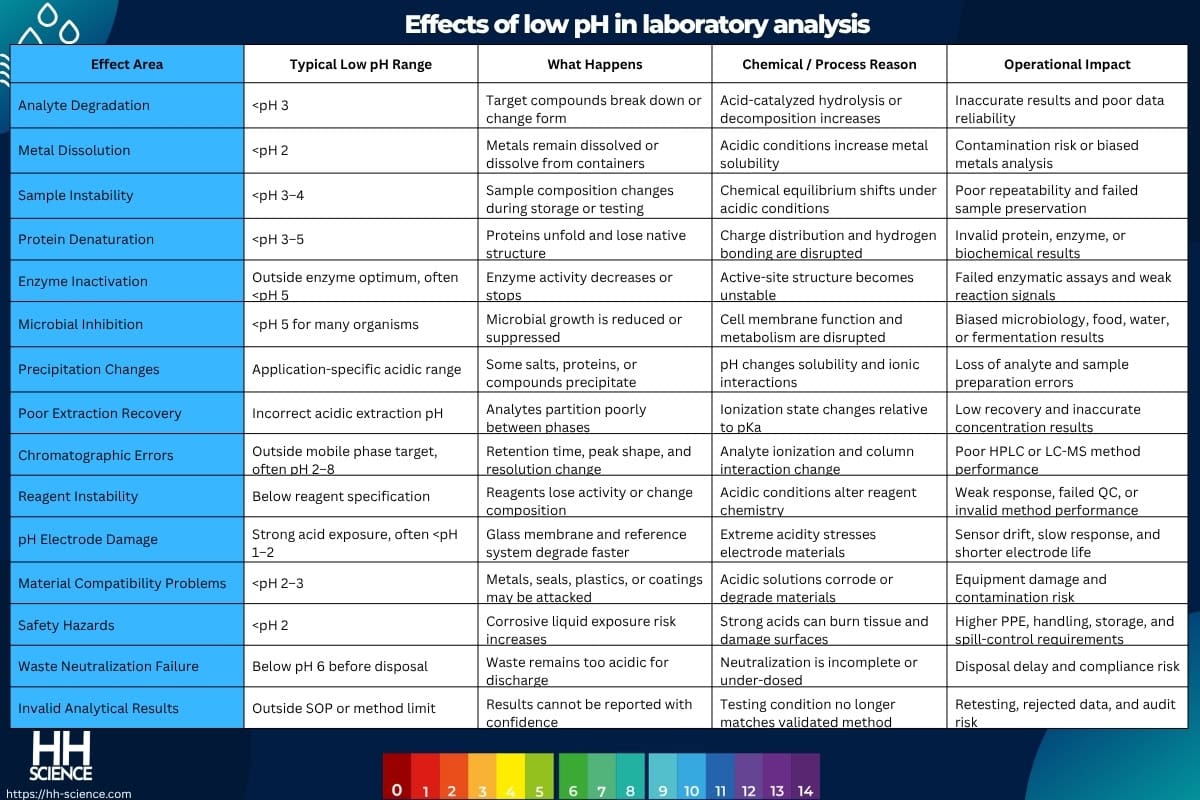
Effects of low pH in laboratory analysis
Low pH in laboratory analysis can cause analyte degradation, metal dissolution, sample instability, excessive acidity, protein denaturation, enzyme inactivation, microbial inhibition, precipitation changes, poor extraction recovery, chromatographic errors, reagent instability, electrode damage, safety hazards, waste neutralization problems, and invalid analytical results because high hydrogen ion concentration changes chemical equilibrium, solubility, ionization state, reaction kinetics, biological structure, and instrument response.
| Effect Area | Typical Low pH Range | What Happens | Chemical / Process Reason | Operational Impact |
| Analyte Degradation | <pH 3 | Target compounds break down or change form | Acid-catalyzed hydrolysis or decomposition increases | Inaccurate results and poor data reliability |
| Metal Dissolution | <pH 2 | Metals remain dissolved or dissolve from containers | Acidic conditions increase metal solubility | Contamination risk or biased metals analysis |
| Sample Instability | <pH 3–4 | Sample composition changes during storage or testing | Chemical equilibrium shifts under acidic conditions | Poor repeatability and failed sample preservation |
| Protein Denaturation | <pH 3–5 | Proteins unfold and lose native structure | Charge distribution and hydrogen bonding are disrupted | Invalid protein, enzyme, or biochemical results |
| Enzyme Inactivation | Outside enzyme optimum, often <pH 5 | Enzyme activity decreases or stops | Active-site structure becomes unstable | Failed enzymatic assays and weak reaction signals |
| Microbial Inhibition | <pH 5 for many organisms | Microbial growth is reduced or suppressed | Cell membrane function and metabolism are disrupted | Biased microbiology, food, water, or fermentation results |
| Precipitation Changes | Application-specific acidic range | Some salts, proteins, or compounds precipitate | pH changes solubility and ionic interactions | Loss of analyte and sample preparation errors |
| Poor Extraction Recovery | Incorrect acidic extraction pH | Analytes partition poorly between phases | Ionization state changes relative to pKa | Low recovery and inaccurate concentration results |
| Chromatographic Errors | Outside mobile phase target, often pH 2–8 | Retention time, peak shape, and resolution change | Analyte ionization and column interaction change | Poor HPLC or LC-MS method performance |
| Reagent Instability | Below reagent specification | Reagents lose activity or change composition | Acidic conditions alter reagent chemistry | Weak response, failed QC, or invalid method performance |
| pH Electrode Damage | Strong acid exposure, often <pH 1–2 | Glass membrane and reference system degrade faster | Extreme acidity stresses electrode materials | Sensor drift, slow response, and shorter electrode life |
| Material Compatibility Problems | <pH 2–3 | Metals, seals, plastics, or coatings may be attacked | Acidic solutions corrode or degrade materials | Equipment damage and contamination risk |
| Safety Hazards | <pH 2 | Corrosive liquid exposure risk increases | Strong acids can burn tissue and damage surfaces | Higher PPE, handling, storage, and spill-control requirements |
| Waste Neutralization Failure | Below pH 6 before disposal | Waste remains too acidic for discharge | Neutralization is incomplete or under-dosed | Disposal delay and compliance risk |
| Invalid Analytical Results | Outside SOP or method limit | Results cannot be reported with confidence | Testing condition no longer matches validated method | Retesting, rejected data, and audit risk |
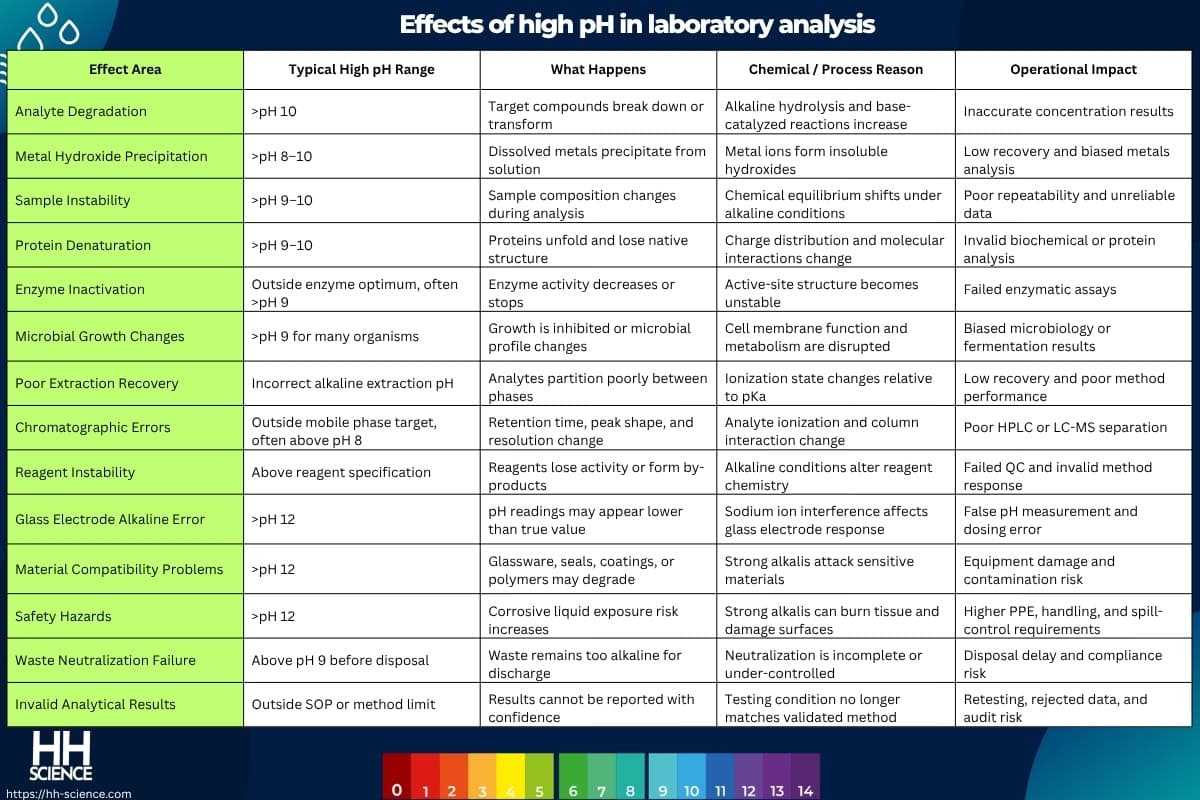
Effects of high pH in laboratory analysis
High pH in laboratory analysis can cause analyte degradation, metal hydroxide precipitation, sample instability, alkaline hydrolysis, protein denaturation, enzyme inactivation, microbial growth changes, poor extraction recovery, chromatographic errors, reagent instability, glass electrode alkaline error, material compatibility problems, safety hazards, waste neutralization problems, and invalid analytical results because excessive hydroxide ion concentration changes chemical equilibrium, solubility, ionization state, reaction kinetics, biological structure, and instrument response.
| Effect Area | Typical High pH Range | What Happens | Chemical / Process Reason | Operational Impact |
| Analyte Degradation | >pH 10 | Target compounds break down or transform | Alkaline hydrolysis and base-catalyzed reactions increase | Inaccurate concentration results |
| Metal Hydroxide Precipitation | >pH 8–10 | Dissolved metals precipitate from solution | Metal ions form insoluble hydroxides | Low recovery and biased metals analysis |
| Sample Instability | >pH 9–10 | Sample composition changes during analysis | Chemical equilibrium shifts under alkaline conditions | Poor repeatability and unreliable data |
| Protein Denaturation | >pH 9–10 | Proteins unfold and lose native structure | Charge distribution and molecular interactions change | Invalid biochemical or protein analysis |
| Enzyme Inactivation | Outside enzyme optimum, often >pH 9 | Enzyme activity decreases or stops | Active-site structure becomes unstable | Failed enzymatic assays |
| Microbial Growth Changes | >pH 9 for many organisms | Growth is inhibited or microbial profile changes | Cell membrane function and metabolism are disrupted | Biased microbiology or fermentation results |
| Poor Extraction Recovery | Incorrect alkaline extraction pH | Analytes partition poorly between phases | Ionization state changes relative to pKa | Low recovery and poor method performance |
| Chromatographic Errors | Outside mobile phase target, often above pH 8 | Retention time, peak shape, and resolution change | Analyte ionization and column interaction change | Poor HPLC or LC-MS separation |
| Reagent Instability | Above reagent specification | Reagents lose activity or form by-products | Alkaline conditions alter reagent chemistry | Failed QC and invalid method response |
| Glass Electrode Alkaline Error | >pH 12 | pH readings may appear lower than true value | Sodium ion interference affects glass electrode response | False pH measurement and dosing error |
| Material Compatibility Problems | >pH 12 | Glassware, seals, coatings, or polymers may degrade | Strong alkalis attack sensitive materials | Equipment damage and contamination risk |
| Safety Hazards | >pH 12 | Corrosive liquid exposure risk increases | Strong alkalis can burn tissue and damage surfaces | Higher PPE, handling, and spill-control requirements |
| Waste Neutralization Failure | Above pH 9 before disposal | Waste remains too alkaline for discharge | Neutralization is incomplete or under-controlled | Disposal delay and compliance risk |
| Invalid Analytical Results | Outside SOP or method limit | Results cannot be reported with confidence | Testing condition no longer matches validated method | Retesting, rejected data, and audit risk |
Operational, quality, and compliance risks
Operational, quality, and compliance risks in laboratory analysis increase when pH moves outside the required method range because sample chemistry, reagent performance, instrument response, biological activity, and waste handling all depend on stable hydrogen ion conditions. Deviations from targets such as calibration buffers at pH 4.01, 7.00, and 10.01, biological test ranges around pH 6–8, cell culture conditions around pH 7.0–7.4, chromatography mobile phases often around pH 2–8, and waste neutralization ranges around pH 6–9 can produce unreliable results, invalid methods, safety concerns, and audit findings.
- Operational risks: Incorrect pH can cause failed sample preparation, incomplete reactions, poor extraction recovery, unstable reagents, electrode drift, calibration failure, and repeated testing, increasing labor time, reagent consumption, instrument downtime, and laboratory cost.
- Quality risks: Out-of-range pH can change analyte solubility, ionization state, protein structure, enzyme activity, microbial growth, chromatographic retention, and colorimetric response, leading to inaccurate results, poor repeatability, failed QC checks, and rejected data.
- Compliance risks: Poor pH control can violate SOP limits, validated method criteria, ISO 17025 requirements, GLP or GMP documentation expectations, pharmacopeia methods, ASTM procedures, environmental testing rules, and waste disposal requirements, especially when hazardous acidic or alkaline waste is outside pH 6–9 before treatment.
pH measurement challenges in laboratory analysis
pH measurement challenges in laboratory analysis arise from factors such as temperature variation, low-conductivity samples, complex sample matrices, contamination, electrode aging, junction fouling, buffer quality, calibration errors, sample handling practices, chemical interference, and the need for high measurement accuracy often within ±0.01–0.05 pH. These challenges can affect response time, measurement stability, repeatability, traceability, and compliance across applications including environmental testing, pharmaceutical analysis, biotechnology research, food testing, water quality monitoring, chromatography, and quality-control laboratories.
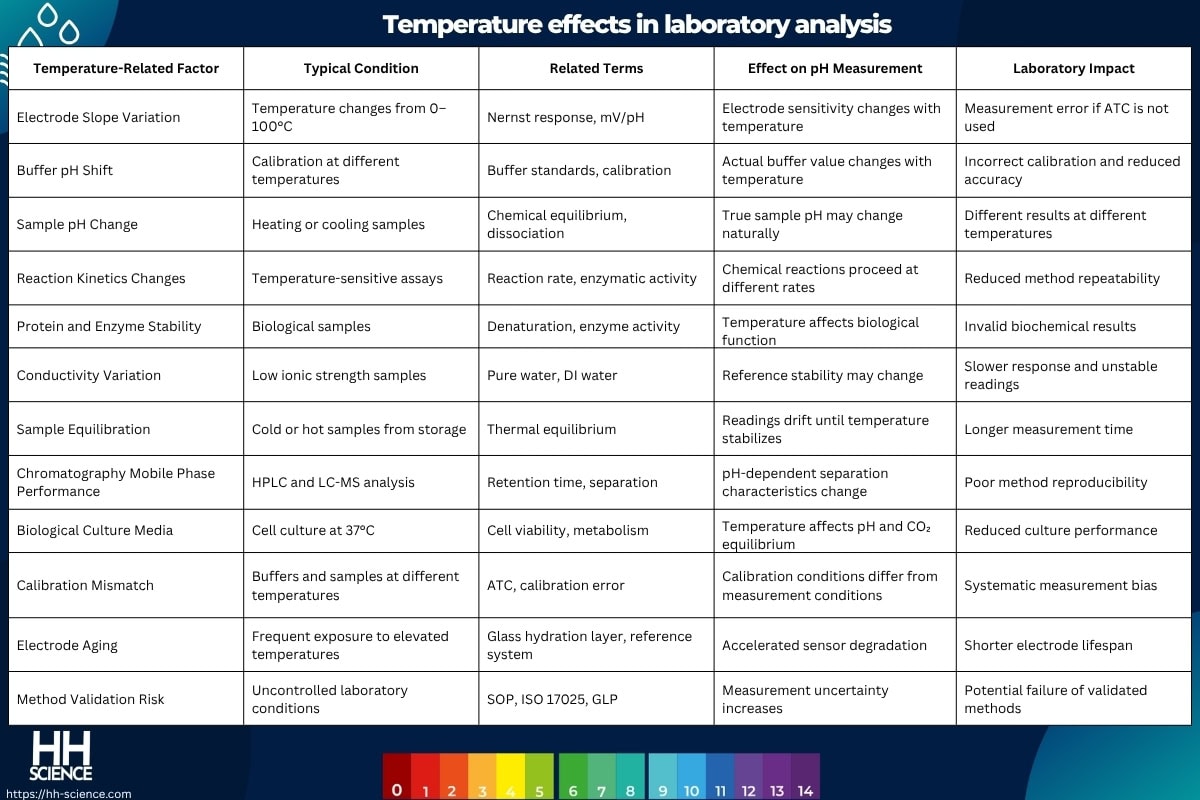
Temperature effects
Temperature is one of the most important challenges in laboratory pH measurement because it affects both the actual pH of the sample and the electrochemical response of the pH electrode. Changes in temperature can alter chemical equilibrium, dissociation constants, buffer values, reaction kinetics, sample conductivity, and electrode slope, causing measurement errors if proper temperature compensation and equilibration procedures are not used.
| Temperature-Related Factor | Typical Condition | Related Terms | Effect on pH Measurement | Laboratory Impact |
| Electrode Slope Variation | Temperature changes from 0–100°C | Nernst response, mV/pH | Electrode sensitivity changes with temperature | Measurement error if ATC is not used |
| Buffer pH Shift | Calibration at different temperatures | Buffer standards, calibration | Actual buffer value changes with temperature | Incorrect calibration and reduced accuracy |
| Sample pH Change | Heating or cooling samples | Chemical equilibrium, dissociation | True sample pH may change naturally | Different results at different temperatures |
| Reaction Kinetics Changes | Temperature-sensitive assays | Reaction rate, enzymatic activity | Chemical reactions proceed at different rates | Reduced method repeatability |
| Protein and Enzyme Stability | Biological samples | Denaturation, enzyme activity | Temperature affects biological function | Invalid biochemical results |
| Conductivity Variation | Low ionic strength samples | Pure water, DI water | Reference stability may change | Slower response and unstable readings |
| Sample Equilibration | Cold or hot samples from storage | Thermal equilibrium | Readings drift until temperature stabilizes | Longer measurement time |
| Chromatography Mobile Phase Performance | HPLC and LC-MS analysis | Retention time, separation | pH-dependent separation characteristics change | Poor method reproducibility |
| Biological Culture Media | Cell culture at 37°C | Cell viability, metabolism | Temperature affects pH and CO₂ equilibrium | Reduced culture performance |
| Calibration Mismatch | Buffers and samples at different temperatures | ATC, calibration error | Calibration conditions differ from measurement conditions | Systematic measurement bias |
| Electrode Aging | Frequent exposure to elevated temperatures | Glass hydration layer, reference system | Accelerated sensor degradation | Shorter electrode lifespan |
| Method Validation Risk | Uncontrolled laboratory conditions | SOP, ISO 17025, GLP | Measurement uncertainty increases | Potential failure of validated methods |
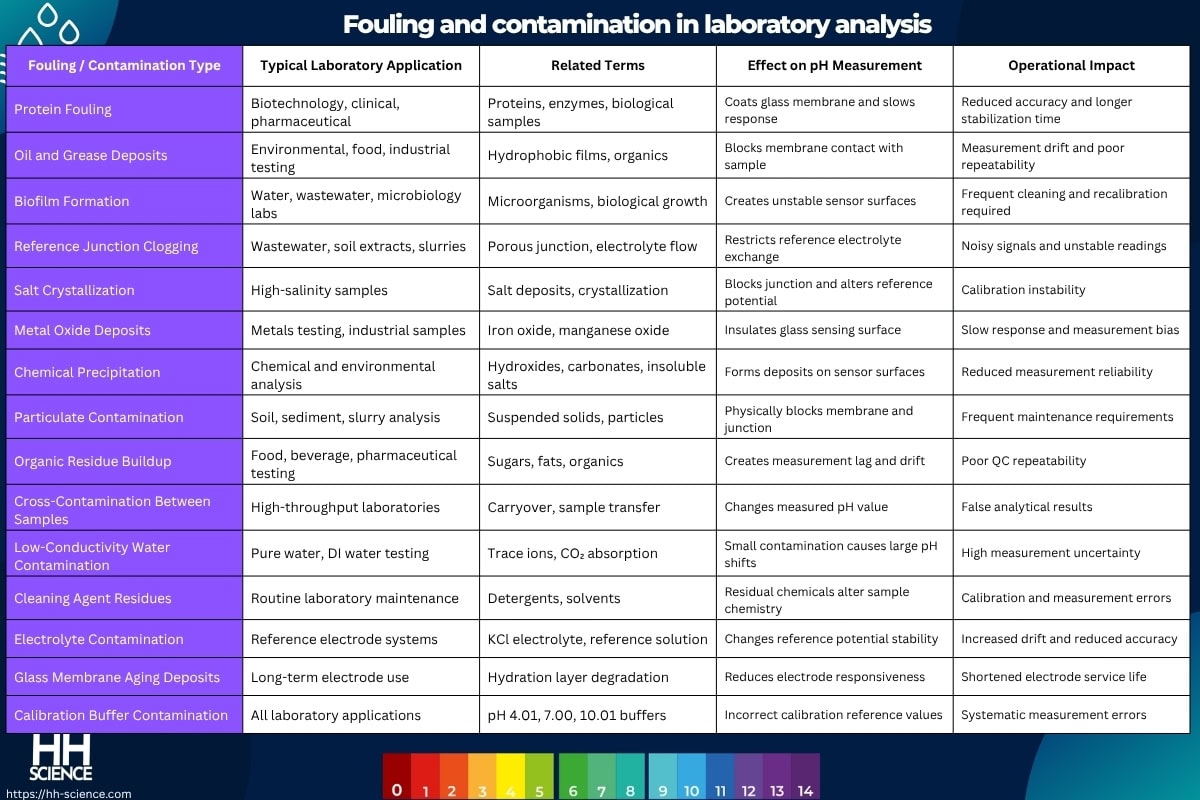
Fouling and contamination
Fouling and contamination are major pH measurement challenges in laboratory analysis because deposits on the glass membrane or reference junction can interfere with ion exchange, slow electrode response, create unstable readings, increase drift, and reduce calibration accuracy. Laboratory samples such as wastewater, biological fluids, proteins, oils, emulsions, food products, soil extracts, chemical slurries, and high-purity water can introduce contaminants that affect sensor performance, resulting in poor repeatability, increased measurement uncertainty, failed quality-control checks, and shortened electrode lifespan.
| Fouling / Contamination Type | Typical Laboratory Application | Related Terms | Effect on pH Measurement | Operational Impact |
| Protein Fouling | Biotechnology, clinical, pharmaceutical | Proteins, enzymes, biological samples | Coats glass membrane and slows response | Reduced accuracy and longer stabilization time |
| Oil and Grease Deposits | Environmental, food, industrial testing | Hydrophobic films, organics | Blocks membrane contact with sample | Measurement drift and poor repeatability |
| Biofilm Formation | Water, wastewater, microbiology labs | Microorganisms, biological growth | Creates unstable sensor surfaces | Frequent cleaning and recalibration required |
| Reference Junction Clogging | Wastewater, soil extracts, slurries | Porous junction, electrolyte flow | Restricts reference electrolyte exchange | Noisy signals and unstable readings |
| Salt Crystallization | High-salinity samples | Salt deposits, crystallization | Blocks junction and alters reference potential | Calibration instability |
| Metal Oxide Deposits | Metals testing, industrial samples | Iron oxide, manganese oxide | Insulates glass sensing surface | Slow response and measurement bias |
| Chemical Precipitation | Chemical and environmental analysis | Hydroxides, carbonates, insoluble salts | Forms deposits on sensor surfaces | Reduced measurement reliability |
| Particulate Contamination | Soil, sediment, slurry analysis | Suspended solids, particles | Physically blocks membrane and junction | Frequent maintenance requirements |
| Organic Residue Buildup | Food, beverage, pharmaceutical testing | Sugars, fats, organics | Creates measurement lag and drift | Poor QC repeatability |
| Cross-Contamination Between Samples | High-throughput laboratories | Carryover, sample transfer | Changes measured pH value | False analytical results |
| Low-Conductivity Water Contamination | Pure water, DI water testing | Trace ions, CO₂ absorption | Small contamination causes large pH shifts | High measurement uncertainty |
| Cleaning Agent Residues | Routine laboratory maintenance | Detergents, solvents | Residual chemicals alter sample chemistry | Calibration and measurement errors |
| Electrolyte Contamination | Reference electrode systems | KCl electrolyte, reference solution | Changes reference potential stability | Increased drift and reduced accuracy |
| Glass Membrane Aging Deposits | Long-term electrode use | Hydration layer degradation | Reduces electrode responsiveness | Shortened electrode service life |
| Calibration Buffer Contamination | All laboratory applications | pH 4.01, 7.00, 10.01 buffers | Incorrect calibration reference values | Systematic measurement errors |
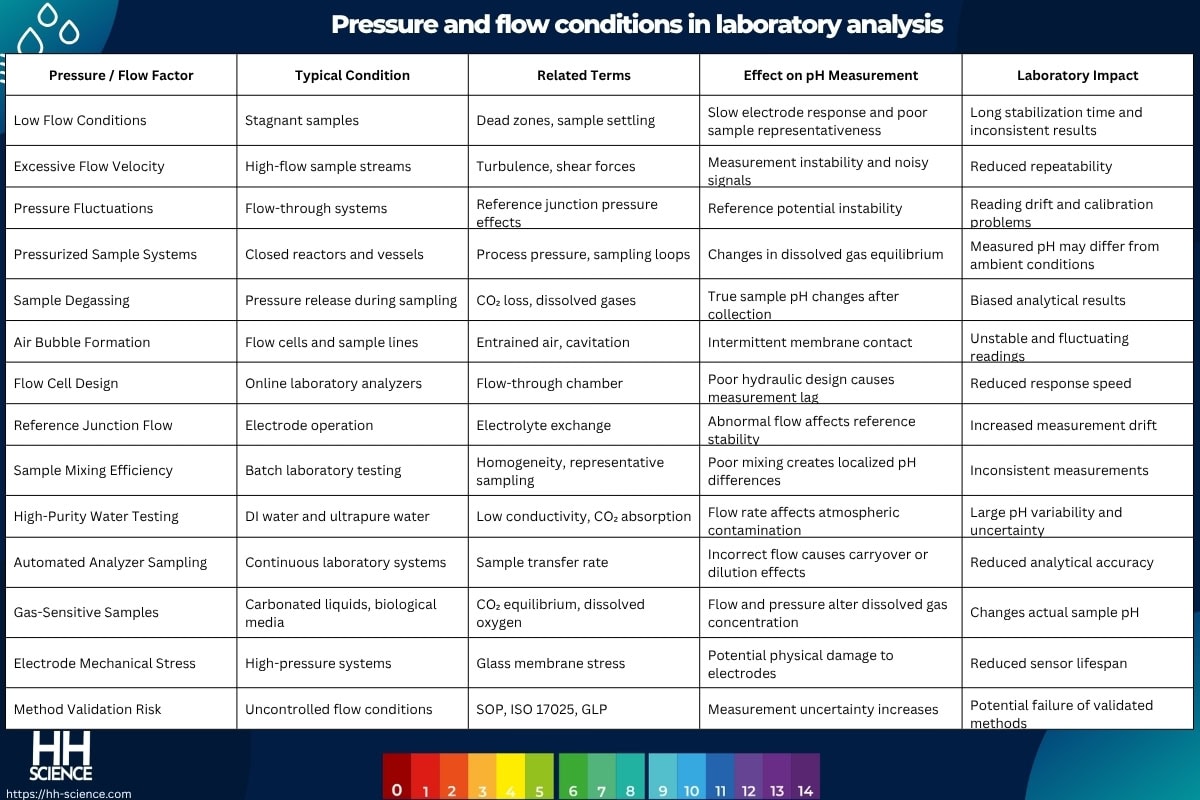
Pressure and flow conditions
Pressure and flow conditions are generally less critical in laboratory pH analysis than in industrial process measurement, but they can still significantly affect measurement stability, response time, sample integrity, gas exchange, and reference electrode performance. Problems often occur in flow-through cells, automated analyzers, online laboratory systems, sample loops, pressurized vessels, high-purity water testing, and continuous monitoring applications where excessive flow, stagnant conditions, pressure fluctuations, or air entrainment can alter the measured pH value or reduce electrode performance.
| Pressure / Flow Factor | Typical Condition | Related Terms | Effect on pH Measurement | Laboratory Impact |
| Low Flow Conditions | Stagnant samples | Dead zones, sample settling | Slow electrode response and poor sample representativeness | Long stabilization time and inconsistent results |
| Excessive Flow Velocity | High-flow sample streams | Turbulence, shear forces | Measurement instability and noisy signals | Reduced repeatability |
| Pressure Fluctuations | Flow-through systems | Reference junction pressure effects | Reference potential instability | Reading drift and calibration problems |
| Pressurized Sample Systems | Closed reactors and vessels | Process pressure, sampling loops | Changes in dissolved gas equilibrium | Measured pH may differ from ambient conditions |
| Sample Degassing | Pressure release during sampling | CO₂ loss, dissolved gases | True sample pH changes after collection | Biased analytical results |
| Air Bubble Formation | Flow cells and sample lines | Entrained air, cavitation | Intermittent membrane contact | Unstable and fluctuating readings |
| Flow Cell Design | Online laboratory analyzers | Flow-through chamber | Poor hydraulic design causes measurement lag | Reduced response speed |
| Reference Junction Flow | Electrode operation | Electrolyte exchange | Abnormal flow affects reference stability | Increased measurement drift |
| Sample Mixing Efficiency | Batch laboratory testing | Homogeneity, representative sampling | Poor mixing creates localized pH differences | Inconsistent measurements |
| High-Purity Water Testing | DI water and ultrapure water | Low conductivity, CO₂ absorption | Flow rate affects atmospheric contamination | Large pH variability and uncertainty |
| Automated Analyzer Sampling | Continuous laboratory systems | Sample transfer rate | Incorrect flow causes carryover or dilution effects | Reduced analytical accuracy |
| Gas-Sensitive Samples | Carbonated liquids, biological media | CO₂ equilibrium, dissolved oxygen | Flow and pressure alter dissolved gas concentration | Changes actual sample pH |
| Electrode Mechanical Stress | High-pressure systems | Glass membrane stress | Potential physical damage to electrodes | Reduced sensor lifespan |
| Method Validation Risk | Uncontrolled flow conditions | SOP, ISO 17025, GLP | Measurement uncertainty increases | Potential failure of validated methods |
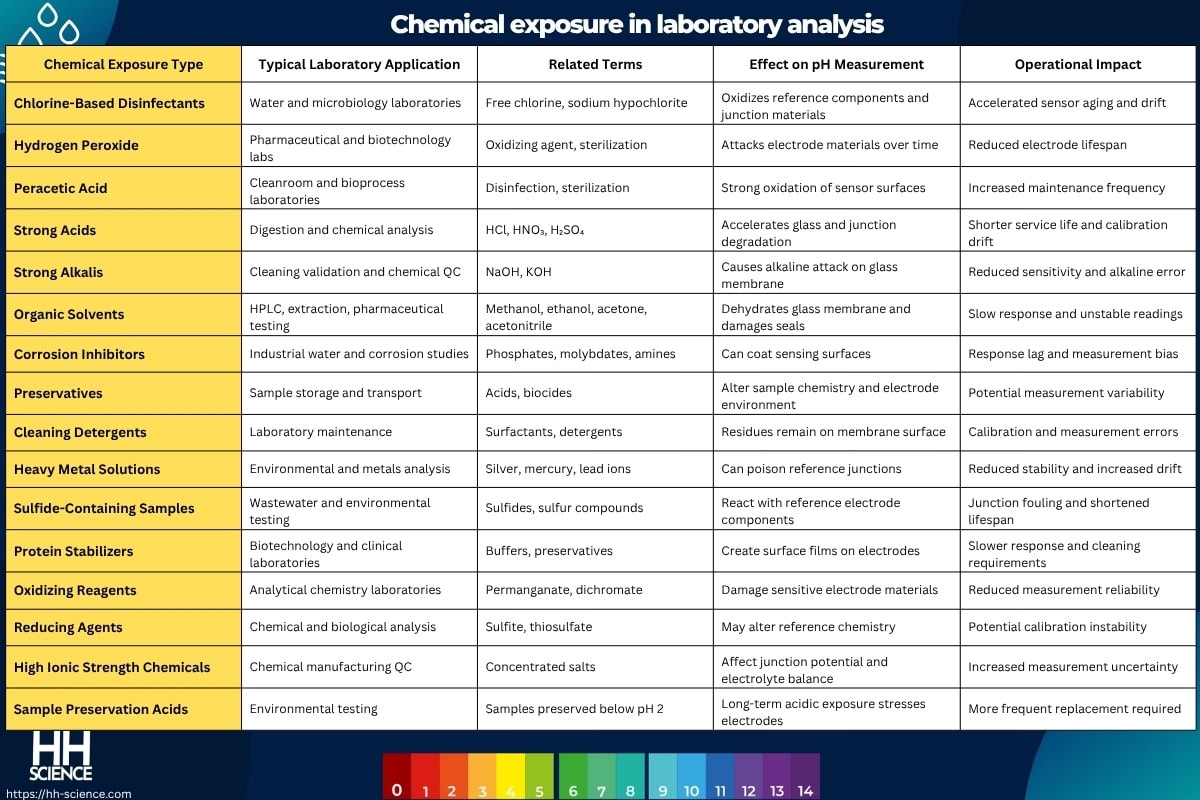
Chemical exposure
Chemical exposure is a significant pH measurement challenge in laboratory analysis because aggressive chemicals, disinfectants, preservatives, cleaning agents, oxidizers, solvents, corrosion inhibitors, acids, alkalis, and sample-treatment reagents can attack the pH electrode glass membrane, poison the reference junction, contaminate electrolytes, or alter sample chemistry. Repeated exposure to these substances can cause sensor drift, slower response, shortened electrode lifespan, calibration instability, and inaccurate measurements, particularly in pharmaceutical, environmental, water quality, microbiology, biotechnology, chemical, and quality-control laboratories.
| Chemical Exposure Type | Typical Laboratory Application | Related Terms | Effect on pH Measurement | Operational Impact |
| Chlorine-Based Disinfectants | Water and microbiology laboratories | Free chlorine, sodium hypochlorite | Oxidizes reference components and junction materials | Accelerated sensor aging and drift |
| Hydrogen Peroxide | Pharmaceutical and biotechnology labs | Oxidizing agent, sterilization | Attacks electrode materials over time | Reduced electrode lifespan |
| Peracetic Acid | Cleanroom and bioprocess laboratories | Disinfection, sterilization | Strong oxidation of sensor surfaces | Increased maintenance frequency |
| Strong Acids | Digestion and chemical analysis | HCl, HNO₃, H₂SO₄ | Accelerates glass and junction degradation | Shorter service life and calibration drift |
| Strong Alkalis | Cleaning validation and chemical QC | NaOH, KOH | Causes alkaline attack on glass membrane | Reduced sensitivity and alkaline error |
| Organic Solvents | HPLC, extraction, pharmaceutical testing | Methanol, ethanol, acetone, acetonitrile | Dehydrates glass membrane and damages seals | Slow response and unstable readings |
| Corrosion Inhibitors | Industrial water and corrosion studies | Phosphates, molybdates, amines | Can coat sensing surfaces | Response lag and measurement bias |
| Preservatives | Sample storage and transport | Acids, biocides | Alter sample chemistry and electrode environment | Potential measurement variability |
| Cleaning Detergents | Laboratory maintenance | Surfactants, detergents | Residues remain on membrane surface | Calibration and measurement errors |
| Heavy Metal Solutions | Environmental and metals analysis | Silver, mercury, lead ions | Can poison reference junctions | Reduced stability and increased drift |
| Sulfide-Containing Samples | Wastewater and environmental testing | Sulfides, sulfur compounds | React with reference electrode components | Junction fouling and shortened lifespan |
| Protein Stabilizers | Biotechnology and clinical laboratories | Buffers, preservatives | Create surface films on electrodes | Slower response and cleaning requirements |
| Oxidizing Reagents | Analytical chemistry laboratories | Permanganate, dichromate | Damage sensitive electrode materials | Reduced measurement reliability |
| Reducing Agents | Chemical and biological analysis | Sulfite, thiosulfate | May alter reference chemistry | Potential calibration instability |
| High Ionic Strength Chemicals | Chemical manufacturing QC | Concentrated salts | Affect junction potential and electrolyte balance | Increased measurement uncertainty |
| Sample Preservation Acids | Environmental testing | Samples preserved below pH 2 | Long-term acidic exposure stresses electrodes | More frequent replacement required |
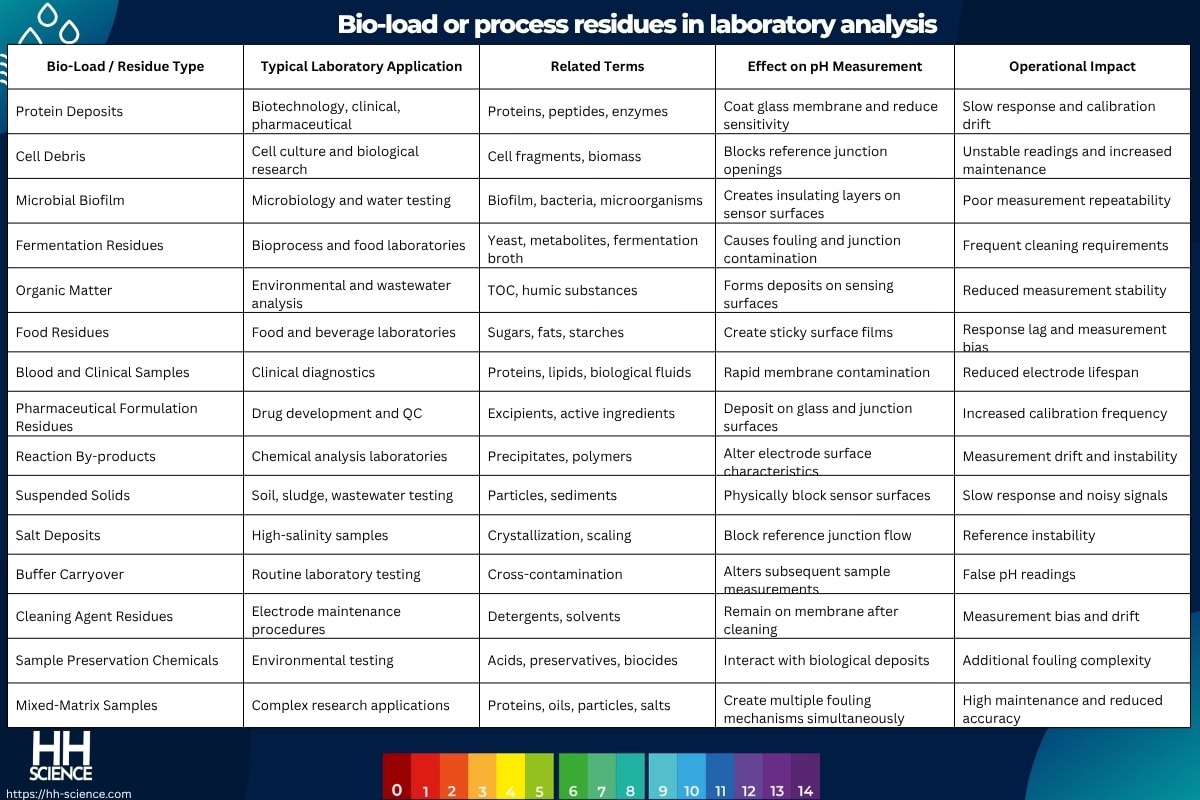
Bio-load or process residues
Bio-load and process residues are important pH measurement challenges in laboratory analysis because biological materials, microbial growth, proteins, cell debris, organic matter, chemical residues, reaction by-products, and sample matrix deposits can accumulate on the pH electrode glass membrane and reference junction. These materials can interfere with hydrogen ion exchange, block electrolyte flow, create unstable junction potentials, slow sensor response, increase calibration drift, and reduce measurement accuracy, particularly in biotechnology, pharmaceutical, environmental, food, clinical, microbiology, and wastewater laboratories.
| Bio-Load / Residue Type | Typical Laboratory Application | Related Terms | Effect on pH Measurement | Operational Impact |
| Protein Deposits | Biotechnology, clinical, pharmaceutical | Proteins, peptides, enzymes | Coat glass membrane and reduce sensitivity | Slow response and calibration drift |
| Cell Debris | Cell culture and biological research | Cell fragments, biomass | Blocks reference junction openings | Unstable readings and increased maintenance |
| Microbial Biofilm | Microbiology and water testing | Biofilm, bacteria, microorganisms | Creates insulating layers on sensor surfaces | Poor measurement repeatability |
| Fermentation Residues | Bioprocess and food laboratories | Yeast, metabolites, fermentation broth | Causes fouling and junction contamination | Frequent cleaning requirements |
| Organic Matter | Environmental and wastewater analysis | TOC, humic substances | Forms deposits on sensing surfaces | Reduced measurement stability |
| Food Residues | Food and beverage laboratories | Sugars, fats, starches | Create sticky surface films | Response lag and measurement bias |
| Blood and Clinical Samples | Clinical diagnostics | Proteins, lipids, biological fluids | Rapid membrane contamination | Reduced electrode lifespan |
| Pharmaceutical Formulation Residues | Drug development and QC | Excipients, active ingredients | Deposit on glass and junction surfaces | Increased calibration frequency |
| Reaction By-products | Chemical analysis laboratories | Precipitates, polymers | Alter electrode surface characteristics | Measurement drift and instability |
| Suspended Solids | Soil, sludge, wastewater testing | Particles, sediments | Physically block sensor surfaces | Slow response and noisy signals |
| Salt Deposits | High-salinity samples | Crystallization, scaling | Block reference junction flow | Reference instability |
| Buffer Carryover | Routine laboratory testing | Cross-contamination | Alters subsequent sample measurements | False pH readings |
| Cleaning Agent Residues | Electrode maintenance procedures | Detergents, solvents | Remain on membrane after cleaning | Measurement bias and drift |
| Sample Preservation Chemicals | Environmental testing | Acids, preservatives, biocides | Interact with biological deposits | Additional fouling complexity |
| Mixed-Matrix Samples | Complex research applications | Proteins, oils, particles, salts | Create multiple fouling mechanisms simultaneously | High maintenance and reduced accuracy |
Common pH sensor types used in laboratory analysis
Common pH sensor types used in laboratory analysis include combination glass pH electrodes, refillable pH electrodes, gel-filled maintenance-free electrodes, double-junction electrodes, micro pH electrodes, flat-surface pH electrodes, spear-tip electrodes, low-ionic-strength electrodes, high-temperature electrodes, non-aqueous pH electrodes, ISFET or solid-state pH sensors, digital smart electrodes, and portable pH probes. These sensor types are selected based on sample volume, sample matrix, conductivity, temperature, contamination risk, required accuracy, and application needs such as water testing, pharmaceutical QC, biotechnology, food analysis, soil extracts, wastewater testing, chromatography, and high-precision laboratory measurement requiring about ±0.01–0.05 pH accuracy with calibration buffers such as pH 4.01, 7.00, and 10.01.
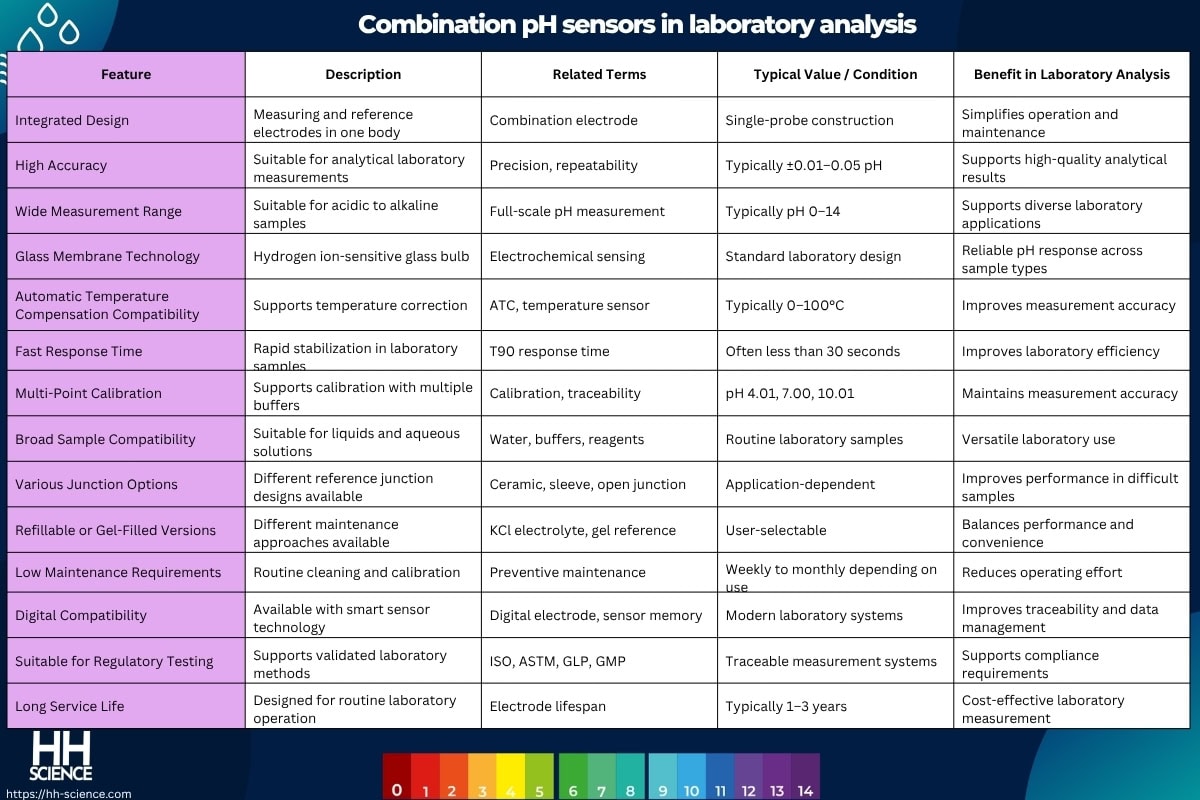
Combination pH sensors
Combination pH sensors are the most widely used pH sensors in laboratory analysis because they integrate the glass measuring electrode and reference electrode into a single probe, providing accurate, convenient, and repeatable measurements across a wide range of laboratory applications. They are commonly used in environmental testing, water analysis, food and beverage laboratories, pharmaceutical QC, biotechnology, chemical analysis, academic research, and routine quality-control testing because they offer good measurement accuracy, simple calibration, broad sample compatibility, and support for standard laboratory methods requiring accuracy typically around ±0.01–0.05 pH.
| Feature | Description | Related Terms | Typical Value / Condition | Benefit in Laboratory Analysis |
| Integrated Design | Measuring and reference electrodes in one body | Combination electrode | Single-probe construction | Simplifies operation and maintenance |
| High Accuracy | Suitable for analytical laboratory measurements | Precision, repeatability | Typically ±0.01–0.05 pH | Supports high-quality analytical results |
| Wide Measurement Range | Suitable for acidic to alkaline samples | Full-scale pH measurement | Typically pH 0–14 | Supports diverse laboratory applications |
| Glass Membrane Technology | Hydrogen ion-sensitive glass bulb | Electrochemical sensing | Standard laboratory design | Reliable pH response across sample types |
| Automatic Temperature Compensation Compatibility | Supports temperature correction | ATC, temperature sensor | Typically 0–100°C | Improves measurement accuracy |
| Fast Response Time | Rapid stabilization in laboratory samples | T90 response time | Often less than 30 seconds | Improves laboratory efficiency |
| Multi-Point Calibration | Supports calibration with multiple buffers | Calibration, traceability | pH 4.01, 7.00, 10.01 | Maintains measurement accuracy |
| Broad Sample Compatibility | Suitable for liquids and aqueous solutions | Water, buffers, reagents | Routine laboratory samples | Versatile laboratory use |
| Various Junction Options | Different reference junction designs available | Ceramic, sleeve, open junction | Application-dependent | Improves performance in difficult samples |
| Refillable or Gel-Filled Versions | Different maintenance approaches available | KCl electrolyte, gel reference | User-selectable | Balances performance and convenience |
| Low Maintenance Requirements | Routine cleaning and calibration | Preventive maintenance | Weekly to monthly depending on use | Reduces operating effort |
| Digital Compatibility | Available with smart sensor technology | Digital electrode, sensor memory | Modern laboratory systems | Improves traceability and data management |
| Suitable for Regulatory Testing | Supports validated laboratory methods | ISO, ASTM, GLP, GMP | Traceable measurement systems | Supports compliance requirements |
| Long Service Life | Designed for routine laboratory operation | Electrode lifespan | Typically 1–3 years | Cost-effective laboratory measurement |
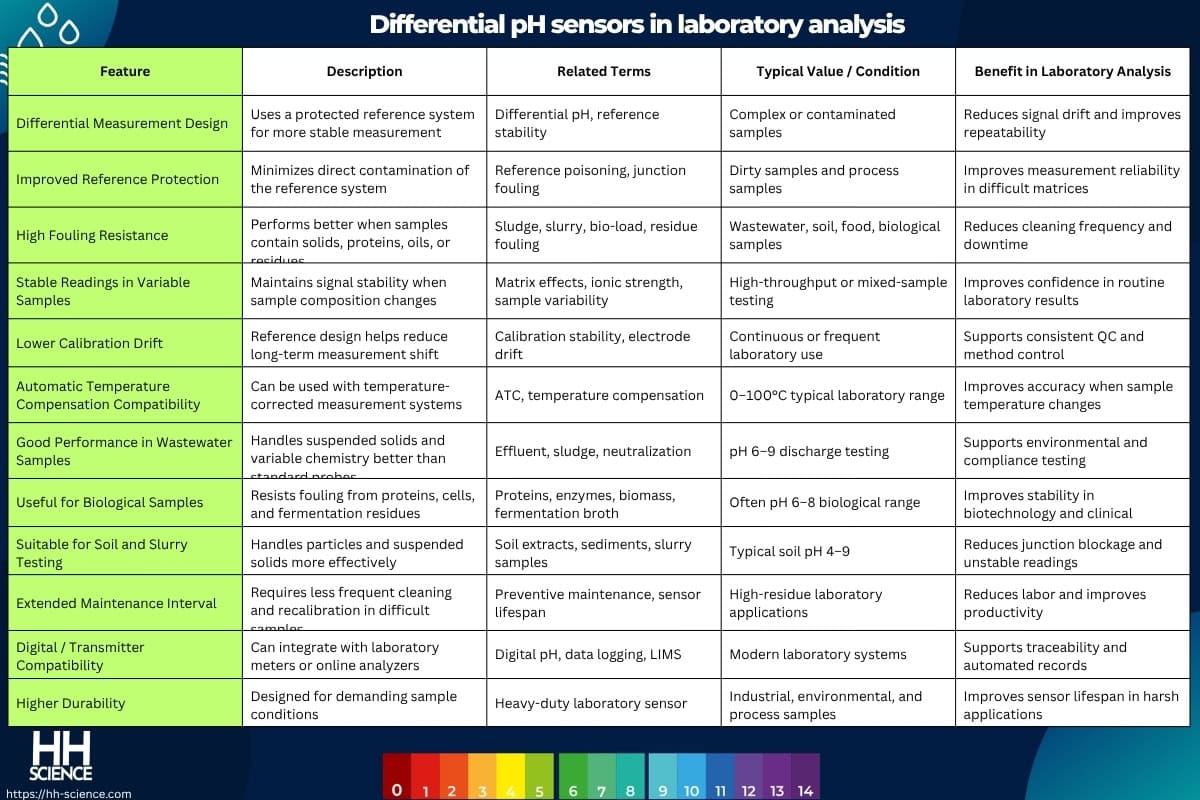
Differential pH sensors
Differential pH sensors are useful in laboratory analysis when samples are difficult, dirty, chemically complex, or likely to foul conventional reference junctions, such as wastewater, soil extracts, slurries, biological fluids, fermentation broths, protein samples, high-salt solutions, and industrial process samples. By using a protected differential measurement design with improved reference stability, these sensors reduce drift, improve repeatability, extend maintenance intervals, and support more reliable pH measurement when laboratories need stable results within about ±0.01–0.05 pH under challenging sample conditions.
| Feature | Description | Related Terms | Typical Value / Condition | Benefit in Laboratory Analysis |
| Differential Measurement Design | Uses a protected reference system for more stable measurement | Differential pH, reference stability | Complex or contaminated samples | Reduces signal drift and improves repeatability |
| Improved Reference Protection | Minimizes direct contamination of the reference system | Reference poisoning, junction fouling | Dirty samples and process samples | Improves measurement reliability in difficult matrices |
| High Fouling Resistance | Performs better when samples contain solids, proteins, oils, or residues | Sludge, slurry, bio-load, residue fouling | Wastewater, soil, food, biological samples | Reduces cleaning frequency and downtime |
| Stable Readings in Variable Samples | Maintains signal stability when sample composition changes | Matrix effects, ionic strength, sample variability | High-throughput or mixed-sample testing | Improves confidence in routine laboratory results |
| Lower Calibration Drift | Reference design helps reduce long-term measurement shift | Calibration stability, electrode drift | Continuous or frequent laboratory use | Supports consistent QC and method control |
| Automatic Temperature Compensation Compatibility | Can be used with temperature-corrected measurement systems | ATC, temperature compensation | 0–100°C typical laboratory range | Improves accuracy when sample temperature changes |
| Good Performance in Wastewater Samples | Handles suspended solids and variable chemistry better than standard probes | Effluent, sludge, neutralization | pH 6–9 discharge testing | Supports environmental and compliance testing |
| Useful for Biological Samples | Resists fouling from proteins, cells, and fermentation residues | Proteins, enzymes, biomass, fermentation broth | Often pH 6–8 biological range | Improves stability in biotechnology and clinical analysis |
| Suitable for Soil and Slurry Testing | Handles particles and suspended solids more effectively | Soil extracts, sediments, slurry samples | Typical soil pH 4–9 | Reduces junction blockage and unstable readings |
| Extended Maintenance Interval | Requires less frequent cleaning and recalibration in difficult samples | Preventive maintenance, sensor lifespan | High-residue laboratory applications | Reduces labor and improves productivity |
| Digital / Transmitter Compatibility | Can integrate with laboratory meters or online analyzers | Digital pH, data logging, LIMS | Modern laboratory systems | Supports traceability and automated records |
| Higher Durability | Designed for demanding sample conditions | Heavy-duty laboratory sensor | Industrial, environmental, and process samples | Improves sensor lifespan in harsh applications |
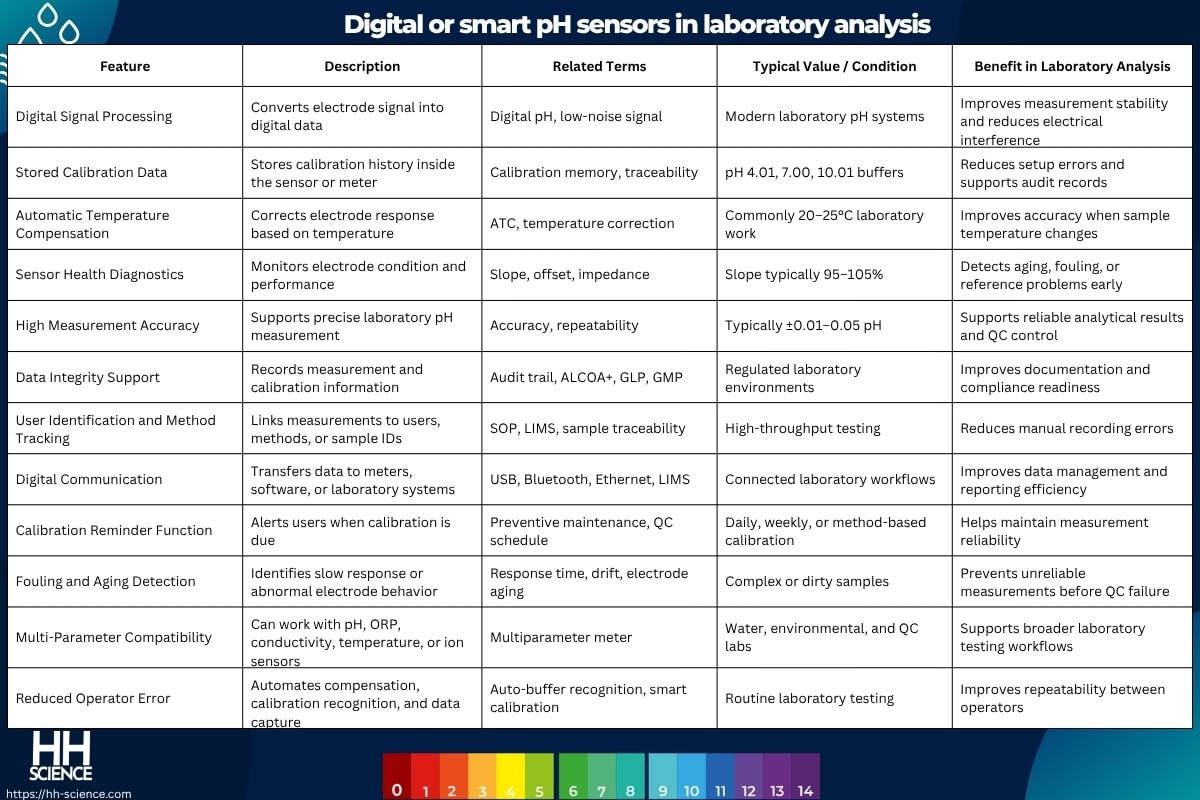
Digital or smart pH sensors
Digital or smart pH sensors are useful in laboratory analysis because they combine pH measurement with built-in diagnostics, stored calibration data, temperature compensation, and digital signal transmission, helping laboratories improve accuracy, traceability, repeatability, and data integrity. They are especially valuable in ISO 17025, GLP, GMP, pharmaceutical QC, environmental testing, biotechnology, food analysis, and high-throughput laboratories where measurement accuracy around ±0.01–0.05 pH, calibration with pH 4.01, 7.00, and 10.01 buffers, audit-ready records, and reduced operator error are important.
| Feature | Description | Related Terms | Typical Value / Condition | Benefit in Laboratory Analysis |
| Digital Signal Processing | Converts electrode signal into digital data | Digital pH, low-noise signal | Modern laboratory pH systems | Improves measurement stability and reduces electrical interference |
| Stored Calibration Data | Stores calibration history inside the sensor or meter | Calibration memory, traceability | pH 4.01, 7.00, 10.01 buffers | Reduces setup errors and supports audit records |
| Automatic Temperature Compensation | Corrects electrode response based on temperature | ATC, temperature correction | Commonly 20–25°C laboratory work | Improves accuracy when sample temperature changes |
| Sensor Health Diagnostics | Monitors electrode condition and performance | Slope, offset, impedance | Slope typically 95–105% | Detects aging, fouling, or reference problems early |
| High Measurement Accuracy | Supports precise laboratory pH measurement | Accuracy, repeatability | Typically ±0.01–0.05 pH | Supports reliable analytical results and QC control |
| Data Integrity Support | Records measurement and calibration information | Audit trail, ALCOA+, GLP, GMP | Regulated laboratory environments | Improves documentation and compliance readiness |
| User Identification and Method Tracking | Links measurements to users, methods, or sample IDs | SOP, LIMS, sample traceability | High-throughput testing | Reduces manual recording errors |
| Digital Communication | Transfers data to meters, software, or laboratory systems | USB, Bluetooth, Ethernet, LIMS | Connected laboratory workflows | Improves data management and reporting efficiency |
| Calibration Reminder Function | Alerts users when calibration is due | Preventive maintenance, QC schedule | Daily, weekly, or method-based calibration | Helps maintain measurement reliability |
| Fouling and Aging Detection | Identifies slow response or abnormal electrode behavior | Response time, drift, electrode aging | Complex or dirty samples | Prevents unreliable measurements before QC failure |
| Multi-Parameter Compatibility | Can work with pH, ORP, conductivity, temperature, or ion sensors | Multiparameter meter | Water, environmental, and QC labs | Supports broader laboratory testing workflows |
| Reduced Operator Error | Automates compensation, calibration recognition, and data capture | Auto-buffer recognition, smart calibration | Routine laboratory testing | Improves repeatability between operators |
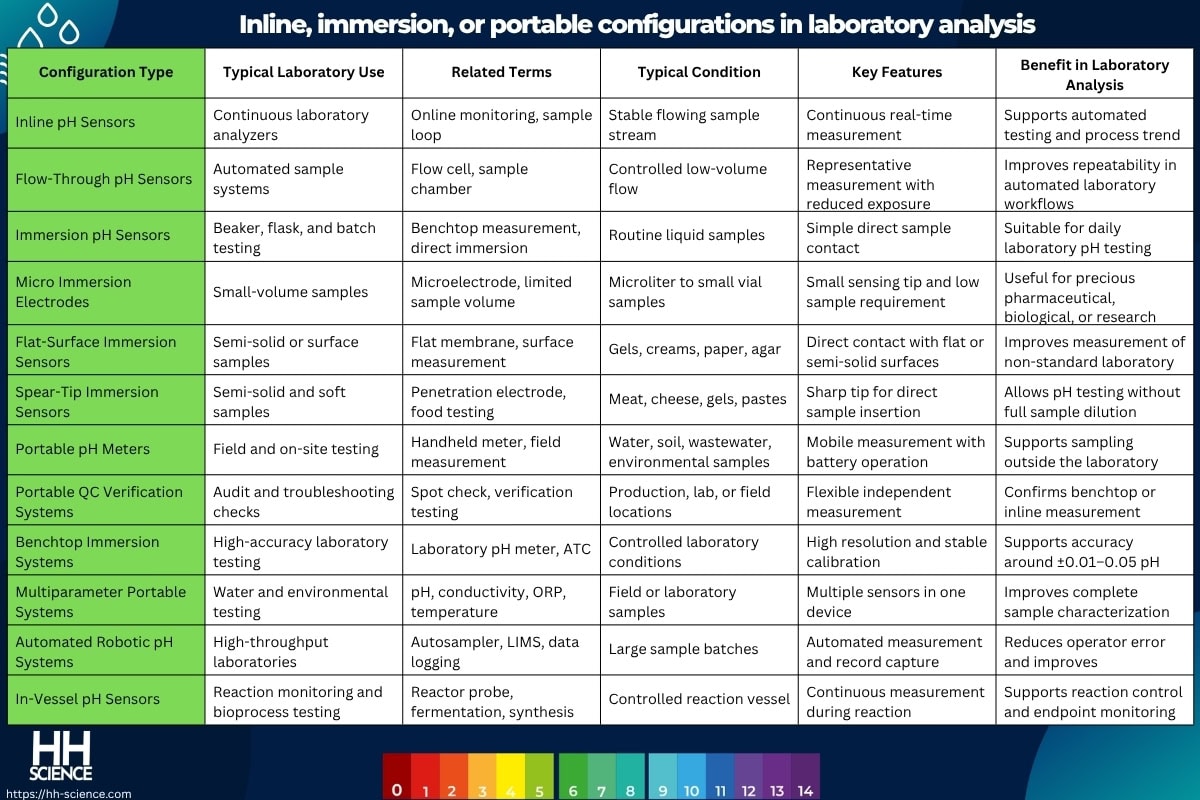
Inline, immersion, or portable configurations
Inline, immersion, and portable pH configurations are all used in laboratory analysis because different testing workflows require different measurement formats depending on sample volume, sample matrix, throughput, automation level, contamination risk, and documentation needs. Inline or flow-through sensors support continuous laboratory analyzers and sample loops, immersion sensors are used for beakers, tanks, reactors, and batch samples, while portable pH meters support field sampling, spot checks, troubleshooting, and QC verification with typical accuracy around ±0.01–0.05 pH.
| Configuration Type | Typical Laboratory Use | Related Terms | Typical Condition | Key Features | Benefit in Laboratory Analysis |
| Inline pH Sensors | Continuous laboratory analyzers | Online monitoring, sample loop | Stable flowing sample stream | Continuous real-time measurement | Supports automated testing and process trend monitoring |
| Flow-Through pH Sensors | Automated sample systems | Flow cell, sample chamber | Controlled low-volume flow | Representative measurement with reduced exposure | Improves repeatability in automated laboratory workflows |
| Immersion pH Sensors | Beaker, flask, and batch testing | Benchtop measurement, direct immersion | Routine liquid samples | Simple direct sample contact | Suitable for daily laboratory pH testing |
| Micro Immersion Electrodes | Small-volume samples | Microelectrode, limited sample volume | Microliter to small vial samples | Small sensing tip and low sample requirement | Useful for precious pharmaceutical, biological, or research samples |
| Flat-Surface Immersion Sensors | Semi-solid or surface samples | Flat membrane, surface measurement | Gels, creams, paper, agar | Direct contact with flat or semi-solid surfaces | Improves measurement of non-standard laboratory samples |
| Spear-Tip Immersion Sensors | Semi-solid and soft samples | Penetration electrode, food testing | Meat, cheese, gels, pastes | Sharp tip for direct sample insertion | Allows pH testing without full sample dilution |
| Portable pH Meters | Field and on-site testing | Handheld meter, field measurement | Water, soil, wastewater, environmental samples | Mobile measurement with battery operation | Supports sampling outside the laboratory |
| Portable QC Verification Systems | Audit and troubleshooting checks | Spot check, verification testing | Production, lab, or field locations | Flexible independent measurement | Confirms benchtop or inline measurement reliability |
| Benchtop Immersion Systems | High-accuracy laboratory testing | Laboratory pH meter, ATC | Controlled laboratory conditions | High resolution and stable calibration | Supports accuracy around ±0.01–0.05 pH |
| Multiparameter Portable Systems | Water and environmental testing | pH, conductivity, ORP, temperature | Field or laboratory samples | Multiple sensors in one device | Improves complete sample characterization |
| Automated Robotic pH Systems | High-throughput laboratories | Autosampler, LIMS, data logging | Large sample batches | Automated measurement and record capture | Reduces operator error and improves productivity |
| In-Vessel pH Sensors | Reaction monitoring and bioprocess testing | Reactor probe, fermentation, synthesis | Controlled reaction vessel | Continuous measurement during reaction | Supports reaction control and endpoint monitoring |
Installation and maintenance considerations in laboratory analysis
Installation and maintenance considerations in laboratory analysis are critical because pH electrodes must deliver stable, traceable, and repeatable measurements across diverse samples such as water, wastewater, buffers, food products, biological fluids, pharmaceutical formulations, soil extracts, and chemical reagents, often requiring accuracy around ±0.01–0.05 pH. Proper electrode selection, sample immersion depth, gentle stirring, temperature compensation, calibration with pH 4.01, 7.00, and 10.01 buffers, correct storage in electrode storage solution, routine cleaning of proteins, oils, salts, solids, and residues, and monitoring of slope, offset, response time, and junction condition help maintain analytical accuracy, reduce drift, extend electrode lifespan, and support ISO, ASTM, GLP, GMP, and laboratory QA/QC compliance.
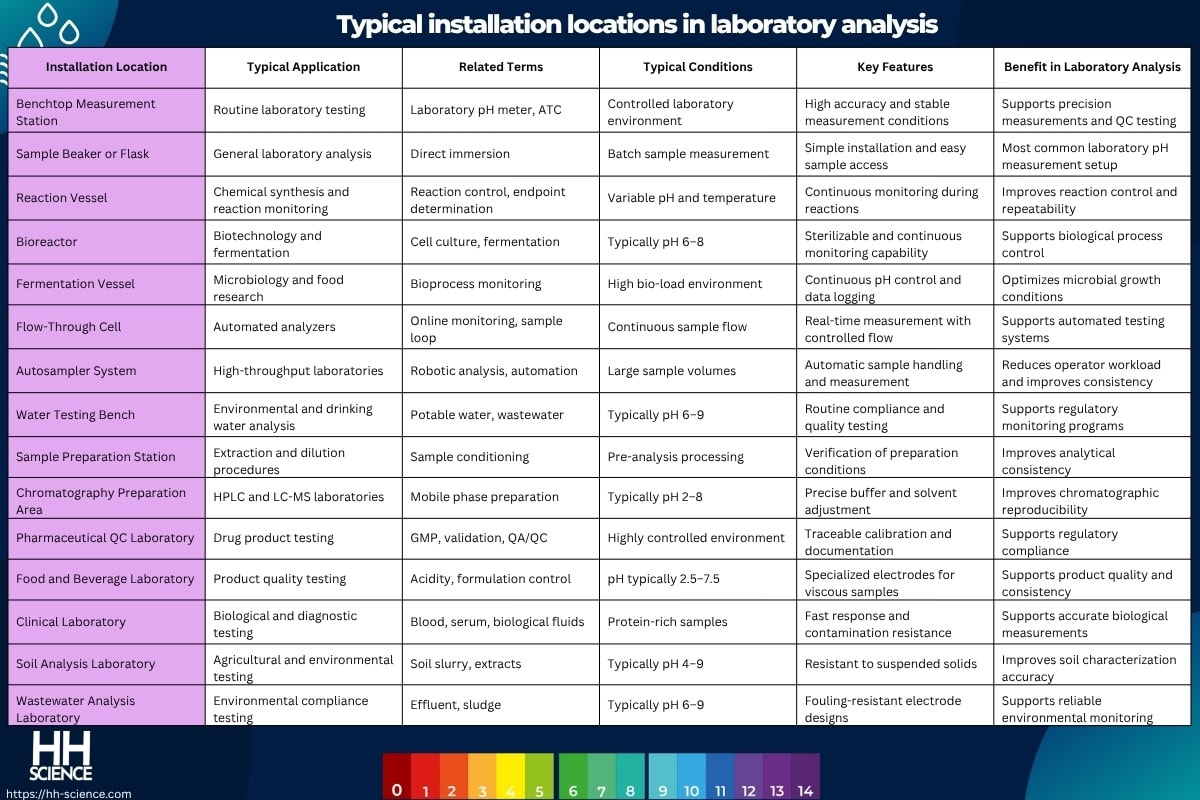
Typical installation locations
Typical pH sensor installation locations in laboratory analysis depend on the testing workflow, sample type, automation level, and measurement objective. Sensors may be installed in benchtop measurement stations, sample beakers, reaction vessels, bioreactors, flow-through cells, automated analyzers, water testing systems, chromatography preparation stations, and quality-control laboratories, with each location requiring specific considerations for sample contact, temperature stability, contamination control, cleaning access, and calibration accuracy.
| Installation Location | Typical Application | Related Terms | Typical Conditions | Key Features | Benefit in Laboratory Analysis |
| Benchtop Measurement Station | Routine laboratory testing | Laboratory pH meter, ATC | Controlled laboratory environment | High accuracy and stable measurement conditions | Supports precision measurements and QC testing |
| Sample Beaker or Flask | General laboratory analysis | Direct immersion | Batch sample measurement | Simple installation and easy sample access | Most common laboratory pH measurement setup |
| Reaction Vessel | Chemical synthesis and reaction monitoring | Reaction control, endpoint determination | Variable pH and temperature | Continuous monitoring during reactions | Improves reaction control and repeatability |
| Bioreactor | Biotechnology and fermentation | Cell culture, fermentation | Typically pH 6–8 | Sterilizable and continuous monitoring capability | Supports biological process control |
| Fermentation Vessel | Microbiology and food research | Bioprocess monitoring | High bio-load environment | Continuous pH control and data logging | Optimizes microbial growth conditions |
| Flow-Through Cell | Automated analyzers | Online monitoring, sample loop | Continuous sample flow | Real-time measurement with controlled flow | Supports automated testing systems |
| Autosampler System | High-throughput laboratories | Robotic analysis, automation | Large sample volumes | Automatic sample handling and measurement | Reduces operator workload and improves consistency |
| Water Testing Bench | Environmental and drinking water analysis | Potable water, wastewater | Typically pH 6–9 | Routine compliance and quality testing | Supports regulatory monitoring programs |
| Sample Preparation Station | Extraction and dilution procedures | Sample conditioning | Pre-analysis processing | Verification of preparation conditions | Improves analytical consistency |
| Chromatography Preparation Area | HPLC and LC-MS laboratories | Mobile phase preparation | Typically pH 2–8 | Precise buffer and solvent adjustment | Improves chromatographic reproducibility |
| Pharmaceutical QC Laboratory | Drug product testing | GMP, validation, QA/QC | Highly controlled environment | Traceable calibration and documentation | Supports regulatory compliance |
| Food and Beverage Laboratory | Product quality testing | Acidity, formulation control | pH typically 2.5–7.5 | Specialized electrodes for viscous samples | Supports product quality and consistency |
| Clinical Laboratory | Biological and diagnostic testing | Blood, serum, biological fluids | Protein-rich samples | Fast response and contamination resistance | Supports accurate biological measurements |
| Soil Analysis Laboratory | Agricultural and environmental testing | Soil slurry, extracts | Typically pH 4–9 | Resistant to suspended solids | Improves soil characterization accuracy |
| Wastewater Analysis Laboratory | Environmental compliance testing | Effluent, sludge | Typically pH 6–9 | Fouling-resistant electrode designs | Supports reliable environmental monitoring |
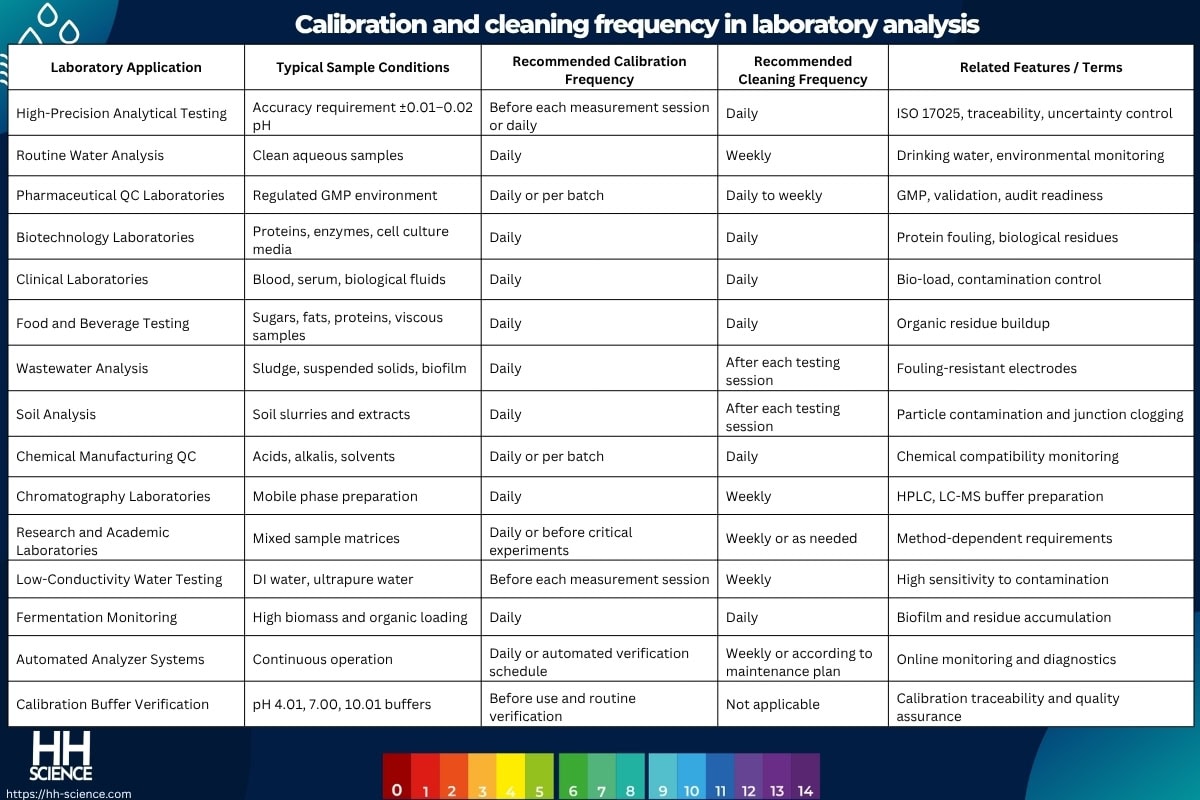
Calibration and cleaning frequency
Calibration and cleaning frequency in laboratory analysis depend on required measurement accuracy, sample type, contamination level, regulatory requirements, electrode design, and testing frequency. Laboratories performing high-precision measurements with accuracy targets of ±0.01–0.05 pH, regulated testing under ISO 17025, GLP, or GMP, and measurements involving proteins, oils, wastewater, soil extracts, biological samples, or aggressive chemicals generally require more frequent calibration and cleaning than routine water or buffer measurements.
| Laboratory Application | Typical Sample Conditions | Recommended Calibration Frequency | Recommended Cleaning Frequency | Related Features / Terms |
| High-Precision Analytical Testing | Accuracy requirement ±0.01–0.02 pH | Before each measurement session or daily | Daily | ISO 17025, traceability, uncertainty control |
| Routine Water Analysis | Clean aqueous samples | Daily | Weekly | Drinking water, environmental monitoring |
| Pharmaceutical QC Laboratories | Regulated GMP environment | Daily or per batch | Daily to weekly | GMP, validation, audit readiness |
| Biotechnology Laboratories | Proteins, enzymes, cell culture media | Daily | Daily | Protein fouling, biological residues |
| Clinical Laboratories | Blood, serum, biological fluids | Daily | Daily | Bio-load, contamination control |
| Food and Beverage Testing | Sugars, fats, proteins, viscous samples | Daily | Daily | Organic residue buildup |
| Wastewater Analysis | Sludge, suspended solids, biofilm | Daily | After each testing session | Fouling-resistant electrodes |
| Soil Analysis | Soil slurries and extracts | Daily | After each testing session | Particle contamination and junction clogging |
| Chemical Manufacturing QC | Acids, alkalis, solvents | Daily or per batch | Daily | Chemical compatibility monitoring |
| Chromatography Laboratories | Mobile phase preparation | Daily | Weekly | HPLC, LC-MS buffer preparation |
| Research and Academic Laboratories | Mixed sample matrices | Daily or before critical experiments | Weekly or as needed | Method-dependent requirements |
| Low-Conductivity Water Testing | DI water, ultrapure water | Before each measurement session | Weekly | High sensitivity to contamination |
| Fermentation Monitoring | High biomass and organic loading | Daily | Daily | Biofilm and residue accumulation |
| Automated Analyzer Systems | Continuous operation | Daily or automated verification schedule | Weekly or according to maintenance plan | Online monitoring and diagnostics |
| Calibration Buffer Verification | pH 4.01, 7.00, 10.01 buffers | Before use and routine verification | Not applicable | Calibration traceability and quality assurance |
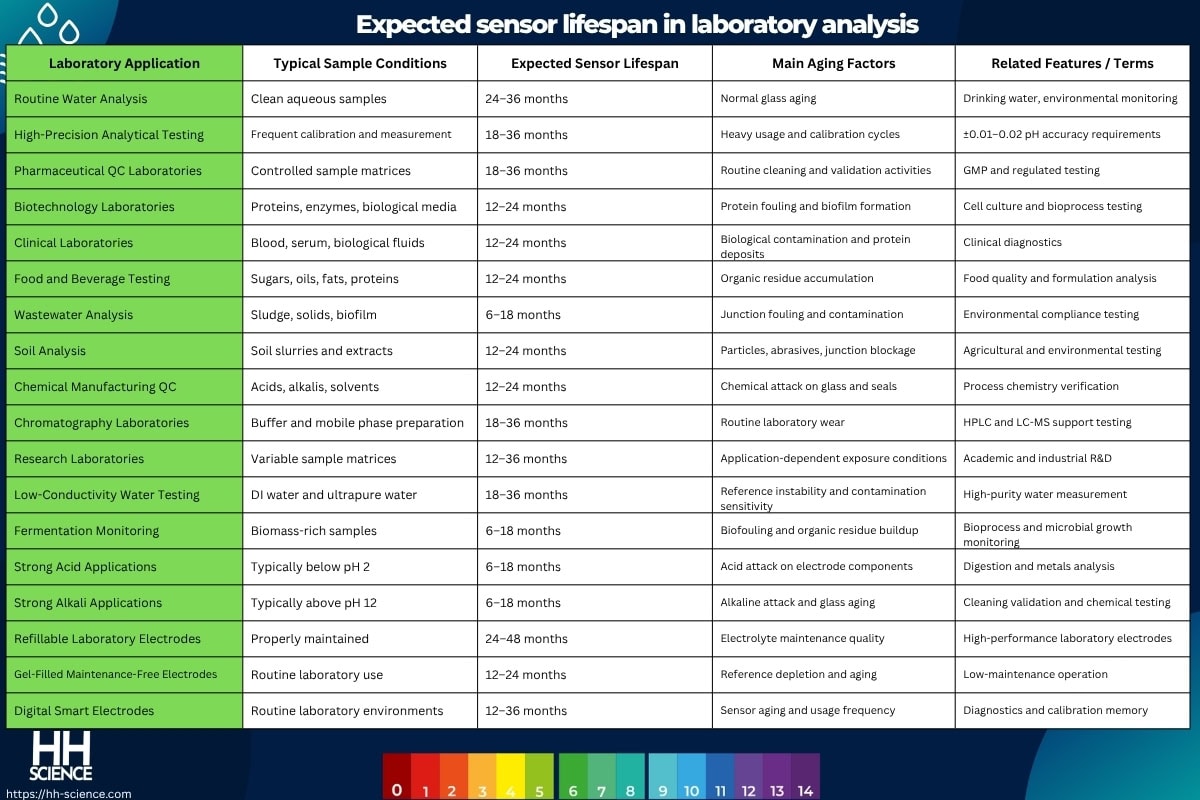
Expected sensor lifespan
Expected pH sensor lifespan in laboratory analysis depends on sample chemistry, measurement frequency, cleaning practices, calibration frequency, storage conditions, temperature exposure, contamination level, and electrode design. Sensors used in clean aqueous samples and controlled laboratory environments typically last longer, while electrodes exposed to proteins, biological fluids, wastewater, soil slurries, solvents, strong acids, strong alkalis, and aggressive chemicals generally experience faster glass aging, junction fouling, electrolyte depletion, and reference degradation.
| Laboratory Application | Typical Sample Conditions | Expected Sensor Lifespan | Main Aging Factors | Related Features / Terms |
| Routine Water Analysis | Clean aqueous samples | 24–36 months | Normal glass aging | Drinking water, environmental monitoring |
| High-Precision Analytical Testing | Frequent calibration and measurement | 18–36 months | Heavy usage and calibration cycles | ±0.01–0.02 pH accuracy requirements |
| Pharmaceutical QC Laboratories | Controlled sample matrices | 18–36 months | Routine cleaning and validation activities | GMP and regulated testing |
| Biotechnology Laboratories | Proteins, enzymes, biological media | 12–24 months | Protein fouling and biofilm formation | Cell culture and bioprocess testing |
| Clinical Laboratories | Blood, serum, biological fluids | 12–24 months | Biological contamination and protein deposits | Clinical diagnostics |
| Food and Beverage Testing | Sugars, oils, fats, proteins | 12–24 months | Organic residue accumulation | Food quality and formulation analysis |
| Wastewater Analysis | Sludge, solids, biofilm | 6–18 months | Junction fouling and contamination | Environmental compliance testing |
| Soil Analysis | Soil slurries and extracts | 12–24 months | Particles, abrasives, junction blockage | Agricultural and environmental testing |
| Chemical Manufacturing QC | Acids, alkalis, solvents | 12–24 months | Chemical attack on glass and seals | Process chemistry verification |
| Chromatography Laboratories | Buffer and mobile phase preparation | 18–36 months | Routine laboratory wear | HPLC and LC-MS support testing |
| Research Laboratories | Variable sample matrices | 12–36 months | Application-dependent exposure conditions | Academic and industrial R&D |
| Low-Conductivity Water Testing | DI water and ultrapure water | 18–36 months | Reference instability and contamination sensitivity | High-purity water measurement |
| Fermentation Monitoring | Biomass-rich samples | 6–18 months | Biofouling and organic residue buildup | Bioprocess and microbial growth monitoring |
| Strong Acid Applications | Typically below pH 2 | 6–18 months | Acid attack on electrode components | Digestion and metals analysis |
| Strong Alkali Applications | Typically above pH 12 | 6–18 months | Alkaline attack and glass aging | Cleaning validation and chemical testing |
| Refillable Laboratory Electrodes | Properly maintained | 24–48 months | Electrolyte maintenance quality | High-performance laboratory electrodes |
| Gel-Filled Maintenance-Free Electrodes | Routine laboratory use | 12–24 months | Reference depletion and aging | Low-maintenance operation |
| Digital Smart Electrodes | Routine laboratory environments | 12–36 months | Sensor aging and usage frequency | Diagnostics and calibration memory |
Trade-offs between accuracy, maintenance, and durability
In laboratory analysis, the trade-off between accuracy, maintenance, and durability arises because pH sensors must balance high analytical performance with resistance to contamination, chemical exposure, and long-term use across applications ranging from ultrapure water testing and pharmaceutical QC to wastewater analysis, biotechnology, food testing, and chemical research. Sensors designed for maximum accuracy, often achieving ±0.01–0.02 pH precision, typically use highly responsive glass membranes, low-drift reference systems, refillable electrolytes, and advanced temperature compensation, but they generally require more frequent calibration with pH 4.01, 7.00, and 10.01 buffers, regular cleaning, careful storage, and closer maintenance control.
- Accuracy-focused sensors: Provide the fastest response, highest sensitivity, and best repeatability for analytical, pharmaceutical, and research laboratories, but usually require more frequent calibration, cleaning, and operator attention.
- Maintenance-focused sensors: Use gel-filled references, maintenance-free designs, and simplified calibration procedures to reduce workload, but may have slightly slower response times and lower long-term stability than premium analytical electrodes.
- Durability-focused sensors: Use reinforced glass, double-junction references, anti-fouling designs, and chemically resistant materials to withstand proteins, wastewater, soil slurries, solvents, acids, and alkalis, but may sacrifice some response speed and ultra-high precision.
- Refillable electrodes: Often provide longer lifespan and superior measurement stability, commonly 24–48 months, but require periodic electrolyte replenishment and more maintenance.
- Gel-filled electrodes: Reduce maintenance requirements and simplify operation, but generally have shorter service lives, often 12–24 months, and limited electrolyte renewal capability.
- Differential and fouling-resistant sensors: Improve performance in dirty or complex samples while extending maintenance intervals, but typically have higher purchase costs and may not be necessary for clean laboratory samples.
- The optimal choice depends on whether the laboratory prioritizes maximum analytical accuracy, minimal maintenance effort, longest sensor lifespan, regulatory compliance, sample throughput, or total lifecycle cost.
Regulatory or quality considerations in laboratory analysis
Regulatory and quality considerations in laboratory analysis are critical because pH measurement affects analytical accuracy, sample integrity, reagent performance, method validation, uncertainty control, traceability, and the defensibility of reported results under ISO, ASTM, GLP, GMP, USP, EP, environmental testing, pharmaceutical QC, food safety, biotechnology, and laboratory accreditation requirements. Maintaining controlled pH measurement practices—such as calibration with traceable buffers pH 4.01, 7.00, and 10.01, accuracy targets around ±0.01–0.05 pH, documented SOPs, temperature compensation, QC checks, electrode maintenance records, sample preservation rules, and waste neutralization around pH 6–9—is essential to reduce measurement bias, prevent invalid data, support audits, protect laboratory safety, and ensure results are reliable, repeatable, and compliant.
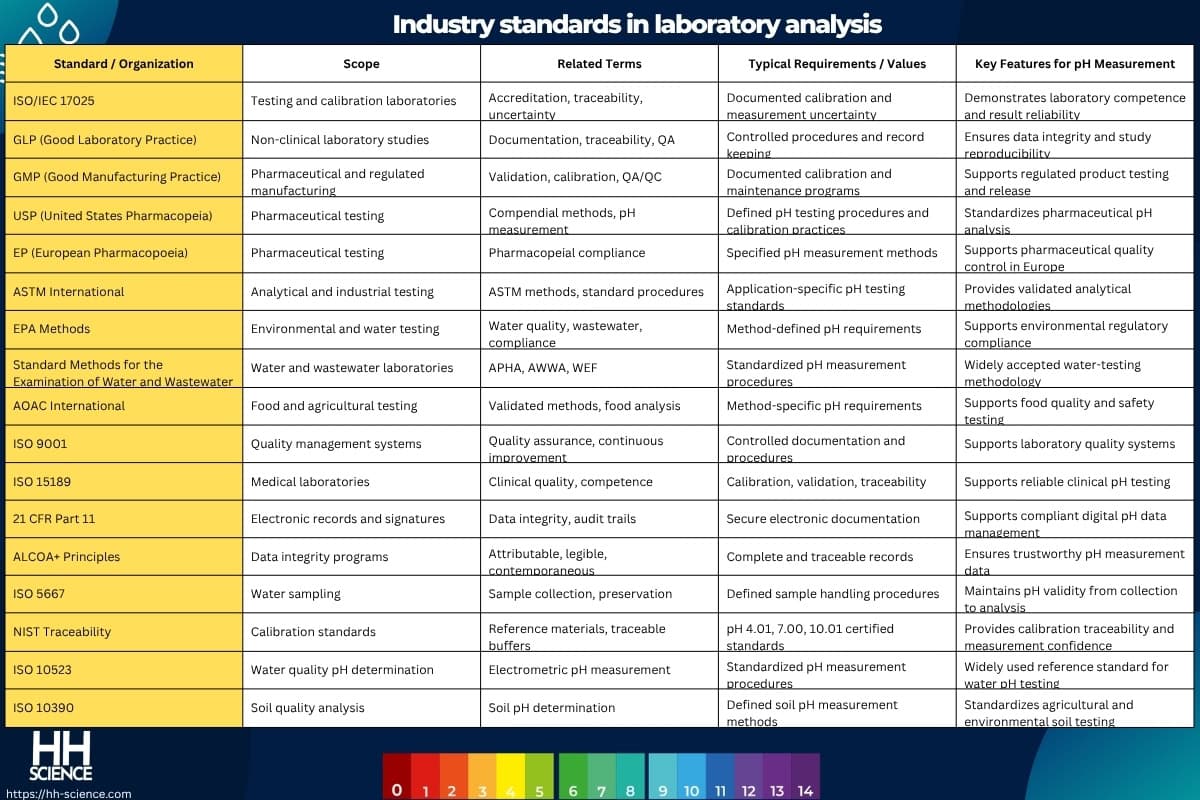
Industry standards in laboratory analysis
Industry standards in laboratory analysis establish requirements for pH measurement accuracy, calibration traceability, method validation, quality assurance, data integrity, instrument qualification, sample handling, and laboratory competence. These standards are important because they ensure that pH measurements are accurate, repeatable, auditable, and comparable across laboratories while supporting regulatory compliance, accreditation, product quality, environmental monitoring, pharmaceutical testing, food safety, and scientific research.
| Standard / Organization | Scope | Related Terms | Typical Requirements / Values | Key Features for pH Measurement |
| ISO/IEC 17025 | Testing and calibration laboratories | Accreditation, traceability, uncertainty | Documented calibration and measurement uncertainty | Demonstrates laboratory competence and result reliability |
| GLP (Good Laboratory Practice) | Non-clinical laboratory studies | Documentation, traceability, QA | Controlled procedures and record keeping | Ensures data integrity and study reproducibility |
| GMP (Good Manufacturing Practice) | Pharmaceutical and regulated manufacturing | Validation, calibration, QA/QC | Documented calibration and maintenance programs | Supports regulated product testing and release |
| USP (United States Pharmacopeia) | Pharmaceutical testing | Compendial methods, pH measurement | Defined pH testing procedures and calibration practices | Standardizes pharmaceutical pH analysis |
| EP (European Pharmacopoeia) | Pharmaceutical testing | Pharmacopeial compliance | Specified pH measurement methods | Supports pharmaceutical quality control in Europe |
| ASTM International | Analytical and industrial testing | ASTM methods, standard procedures | Application-specific pH testing standards | Provides validated analytical methodologies |
| EPA Methods | Environmental and water testing | Water quality, wastewater, compliance | Method-defined pH requirements | Supports environmental regulatory compliance |
| Standard Methods for the Examination of Water and Wastewater | Water and wastewater laboratories | APHA, AWWA, WEF | Standardized pH measurement procedures | Widely accepted water-testing methodology |
| AOAC International | Food and agricultural testing | Validated methods, food analysis | Method-specific pH requirements | Supports food quality and safety testing |
| ISO 9001 | Quality management systems | Quality assurance, continuous improvement | Controlled documentation and procedures | Supports laboratory quality systems |
| ISO 15189 | Medical laboratories | Clinical quality, competence | Calibration, validation, traceability | Supports reliable clinical pH testing |
| 21 CFR Part 11 | Electronic records and signatures | Data integrity, audit trails | Secure electronic documentation | Supports compliant digital pH data management |
| ALCOA+ Principles | Data integrity programs | Attributable, legible, contemporaneous | Complete and traceable records | Ensures trustworthy pH measurement data |
| ISO 5667 | Water sampling | Sample collection, preservation | Defined sample handling procedures | Maintains pH validity from collection to analysis |
| NIST Traceability | Calibration standards | Reference materials, traceable buffers | pH 4.01, 7.00, 10.01 certified standards | Provides calibration traceability and measurement confidence |
| ISO 10523 | Water quality pH determination | Electrometric pH measurement | Standardized pH measurement procedures | Widely used reference standard for water pH testing |
| ISO 10390 | Soil quality analysis | Soil pH determination | Defined soil pH measurement methods | Standardizes agricultural and environmental soil testing |
Internal process and quality requirements in laboratory analysis
Internal process and quality requirements in laboratory analysis are the laboratory-controlled procedures, specifications, acceptance criteria, and quality systems used to ensure that pH measurements remain accurate, repeatable, traceable, and compliant between formal regulatory audits. These requirements are important because even when external standards such as ISO 17025, GLP, GMP, USP, ASTM, or EPA methods are followed, laboratories still need internal controls for calibration, maintenance, QC verification, uncertainty management, data integrity, personnel competency, and instrument performance monitoring.
| Internal Requirement | Purpose | Related Terms | Typical Values / Criteria | Key Features |
| Standard Operating Procedures (SOPs) | Standardize measurement practices | SOP, work instruction | Document-controlled procedures | Ensures consistent pH measurement across operators |
| Calibration Program | Maintain measurement accuracy | Calibration, traceability | pH 4.01, 7.00, 10.01 buffers | Provides documented calibration control |
| Calibration Frequency Requirements | Define recalibration intervals | Daily calibration, verification | Typically daily or before critical testing | Maintains reliable measurement performance |
| Calibration Acceptance Limits | Verify sensor performance | Slope, offset | Slope typically 95–105% | Detects aging or damaged electrodes |
| Measurement Accuracy Targets | Define required performance level | Accuracy, uncertainty | Typically ±0.01–0.05 pH | Supports laboratory quality objectives |
| Quality Control Sample Program | Verify ongoing performance | QC samples, control standards | Routine scheduled testing | Detects analytical drift before failures occur |
| Buffer Verification Procedures | Ensure calibration buffer integrity | Reference standards | Certified buffer solutions | Maintains traceable calibration conditions |
| Instrument Qualification | Verify equipment suitability | IQ, OQ, PQ | Installation, operational, performance qualification | Ensures instrument fitness for use |
| Electrode Maintenance Program | Maintain sensor condition | Cleaning, storage, inspection | Scheduled maintenance intervals | Reduces drift and extends sensor lifespan |
| Electrode Replacement Criteria | Define end-of-life conditions | Slope failure, slow response | Slope below acceptable limits | Prevents use of degraded sensors |
| Temperature Control Requirements | Reduce measurement variability | ATC, thermal equilibration | Typically 20–25°C laboratory conditions | Improves repeatability and accuracy |
| Sample Handling Procedures | Protect sample integrity | Preservation, storage, transport | Method-specific requirements | Prevents pH changes before analysis |
| Measurement Uncertainty Program | Quantify result confidence | Uncertainty budget | Documented uncertainty calculations | Supports defensible laboratory results |
| Data Integrity Controls | Protect analytical records | Audit trail, electronic records | Controlled access and documentation | Ensures trustworthy measurement data |
| Corrective and Preventive Actions (CAPA) | Address quality deviations | CAPA, root cause analysis | Triggered by non-conformances | Drives continuous quality improvement |
| Proficiency Testing Program | Verify laboratory performance | Interlaboratory comparison | Periodic external assessment | Confirms analytical competence |
| Training and Competency Assessment | Ensure qualified personnel | Competency, certification | Routine training records | Reduces operator-related errors |
| Method Validation Requirements | Confirm method suitability | Validation, verification | Defined acceptance criteria | Ensures method performance under actual conditions |
| Trend Analysis and SPC | Monitor long-term performance | Control charts, SPC | Ongoing statistical monitoring | Identifies drift before quality failures occur |
| Record Retention Requirements | Maintain traceability | Laboratory records, archives | Defined retention periods | Supports audits and historical investigations |
Compliance-driven monitoring needs in laboratory analysis
Compliance-driven monitoring needs in laboratory analysis focus on measurement traceability, calibration control, method compliance, quality assurance, data integrity, instrument performance verification, sample integrity, uncertainty management, personnel competency, and audit readiness because laboratories must demonstrate that pH results are accurate, repeatable, defensible, and generated according to approved procedures. Continuous monitoring and documentation of calibration status, electrode performance, QC samples, buffer verification, temperature conditions, maintenance records, audit trails, and regulatory requirements help laboratories comply with ISO 17025, GLP, GMP, USP, EP, ASTM, EPA, ISO 15189, and other accreditation or industry-specific standards.
| Compliance Monitoring Requirement | Purpose | Related Terms | Typical Values / Criteria | Key Features |
| Calibration Compliance Monitoring | Verify measurement accuracy | Calibration, traceability | pH 4.01, 7.00, 10.01 buffers | Ensures traceable and defensible measurements |
| Calibration Interval Monitoring | Ensure timely recalibration | Calibration schedule | Daily or before critical testing | Prevents use of out-of-calibration instruments |
| Electrode Performance Monitoring | Verify sensor health | Slope, offset, response time | Slope typically 95–105% | Detects aging, fouling, and sensor failure |
| Quality Control Sample Monitoring | Verify analytical performance | QC standards, control samples | Method-defined acceptance limits | Confirms ongoing measurement reliability |
| Buffer Verification Monitoring | Ensure calibration standard quality | Certified reference buffers | Traceable standards | Protects calibration accuracy |
| Temperature Monitoring | Control measurement conditions | ATC, equilibration | Typically 20–25°C laboratory conditions | Reduces temperature-related measurement bias |
| Method Compliance Monitoring | Ensure adherence to validated procedures | SOP, validation, verification | Method-specific requirements | Supports defensible analytical results |
| Measurement Uncertainty Monitoring | Maintain confidence in results | Uncertainty budget | Documented uncertainty calculations | Supports accreditation and audit requirements |
| Data Integrity Monitoring | Protect electronic and paper records | Audit trail, ALCOA+, 21 CFR Part 11 | Complete and traceable records | Prevents unauthorized changes to analytical data |
| Maintenance Compliance Monitoring | Verify equipment upkeep | Cleaning, inspection, maintenance logs | Scheduled maintenance intervals | Reduces unexpected measurement failures |
| Electrode Replacement Monitoring | Prevent use of degraded sensors | End-of-life criteria | Slope below acceptance limits or excessive drift | Maintains analytical performance |
| Sample Integrity Monitoring | Protect sample validity | Preservation, storage, handling | Method-specific preservation requirements | Prevents sample alteration before analysis |
| Personnel Competency Monitoring | Verify analyst qualifications | Training, competency assessment | Periodic evaluation and documentation | Reduces operator-related errors |
| Proficiency Testing Monitoring | Demonstrate laboratory competence | Interlaboratory comparison | Scheduled proficiency programs | Confirms result comparability with other laboratories |
| Instrument Qualification Monitoring | Verify equipment suitability | IQ, OQ, PQ | Documented qualification activities | Ensures instruments remain fit for purpose |
| Corrective Action Monitoring | Track quality deviations | CAPA, non-conformance | Root-cause investigation records | Supports continuous quality improvement |
| Audit Readiness Monitoring | Prepare for inspections and assessments | Accreditation, regulatory audits | Complete documentation package | Supports successful audits and compliance reviews |
| Waste Neutralization Monitoring | Ensure safe disposal practices | Waste treatment, environmental compliance | Typically pH 6–9 before discharge | Supports environmental and safety requirements |
| Record Retention Monitoring | Maintain historical traceability | Archives, retention policy | Organization-specific retention periods | Supports investigations and regulatory reviews |
| Trend Analysis Monitoring | Identify long-term performance drift | SPC, control charts | Continuous data review | Detects issues before they affect reportable results |
Selecting the right pH measurement approach in laboratory analysis
Selecting the right pH measurement approach in laboratory analysis is critical because different samples, methods, and compliance requirements demand different levels of accuracy, electrode design, calibration control, temperature compensation, and contamination resistance. Choosing the proper combination of pH meter, electrode type, reference junction, calibration buffers such as pH 4.01, 7.00, and 10.01, ATC, sample handling procedure, and maintenance strategy helps laboratories achieve reliable accuracy around ±0.01–0.05 pH, reduce drift and fouling, protect sample integrity, and meet ISO, ASTM, GLP, GMP, USP, EP, EPA, and ISO 17025 quality requirements.
Decision support for laboratory analysis
Decision support for laboratory analysis helps laboratories determine the most appropriate pH measurement solution based on sample matrix, required accuracy, measurement frequency, regulatory requirements, contamination risk, temperature conditions, and maintenance resources. Factors such as measurement accuracy targets of ±0.01–0.05 pH, calibration requirements using pH 4.01, 7.00, and 10.01 buffers, sample conductivity, biological content, solvent exposure, and compliance with ISO 17025, GLP, GMP, USP, or ASTM methods influence the selection of electrodes, meters, calibration procedures, and maintenance practices. This process ensures that the chosen pH measurement system delivers reliable, traceable, and defensible laboratory results while minimizing downtime and operating costs.
Application-driven measurement strategies
Application-driven measurement strategies match the pH measurement technology to the specific laboratory application rather than relying on a single sensor type for all testing needs. For example, soil analysis may require rugged electrodes resistant to suspended solids and abrasion, biotechnology applications may require protein-resistant sensors, pharmaceutical QC may prioritize high-accuracy combination electrodes, ultrapure water testing may require low-conductivity electrodes, and wastewater analysis may benefit from differential or fouling-resistant designs. By aligning sensor capabilities with sample characteristics and method requirements, laboratories improve measurement accuracy, reduce maintenance, and achieve more consistent analytical performance.
Linking laboratory analysis to sensor selection and OEM solutions
Linking laboratory analysis to sensor selection and OEM solutions ensures that the pH measurement system is optimized for the laboratory’s specific testing environment, sample types, workflow, and compliance obligations. OEM solutions may combine specialized electrodes, automatic temperature compensation (ATC), digital diagnostics, calibration management, data logging, LIMS connectivity, and application-specific materials to support measurements ranging from biological samples and soil extracts to ultrapure water, pharmaceuticals, food products, and aggressive chemical solutions. This integration helps laboratories improve data quality, simplify regulatory compliance, extend sensor lifespan, and maintain consistent performance across routine testing, quality control, research, and accredited analytical operations.