
Why pH matters in food & beverage applications?
pH matters in food and beverage applications because it directly controls microbial safety, product stability and shelf life, flavor and sensory profile, process performance, ingredient functionality, and regulatory compliance, making it a core quality and safety parameter across production.
- Microbial safety: pH determines the growth or inhibition of pathogens and spoilage organisms, with many products relying on pH ≤4.6 as a critical limit to control Clostridium botulinum and other harmful microbes.
- Product stability and shelf life: Correct pH stabilizes emulsions, proteins, and preservatives, reducing spoilage and extending shelf life under defined storage conditions.
- Flavor and sensory profile: pH influences taste perception (acidic, sour, balanced) and aroma release, directly affecting consumer acceptance and brand consistency.
- Process performance: pH affects reaction rates in fermentation, enzymatic processing, and thermal treatment, impacting yield, consistency, and throughput.
- Ingredient functionality: Proteins, stabilizers, and colorants are pH-sensitive, with functionality changing sharply near isoelectric points or formulation limits.
- Regulatory compliance: pH is a monitored parameter under HACCP, FDA, EU food safety regulations, requiring defined limits, monitoring records, and validated measurement accuracy.
How does pH influence food & beverage quality and safety?
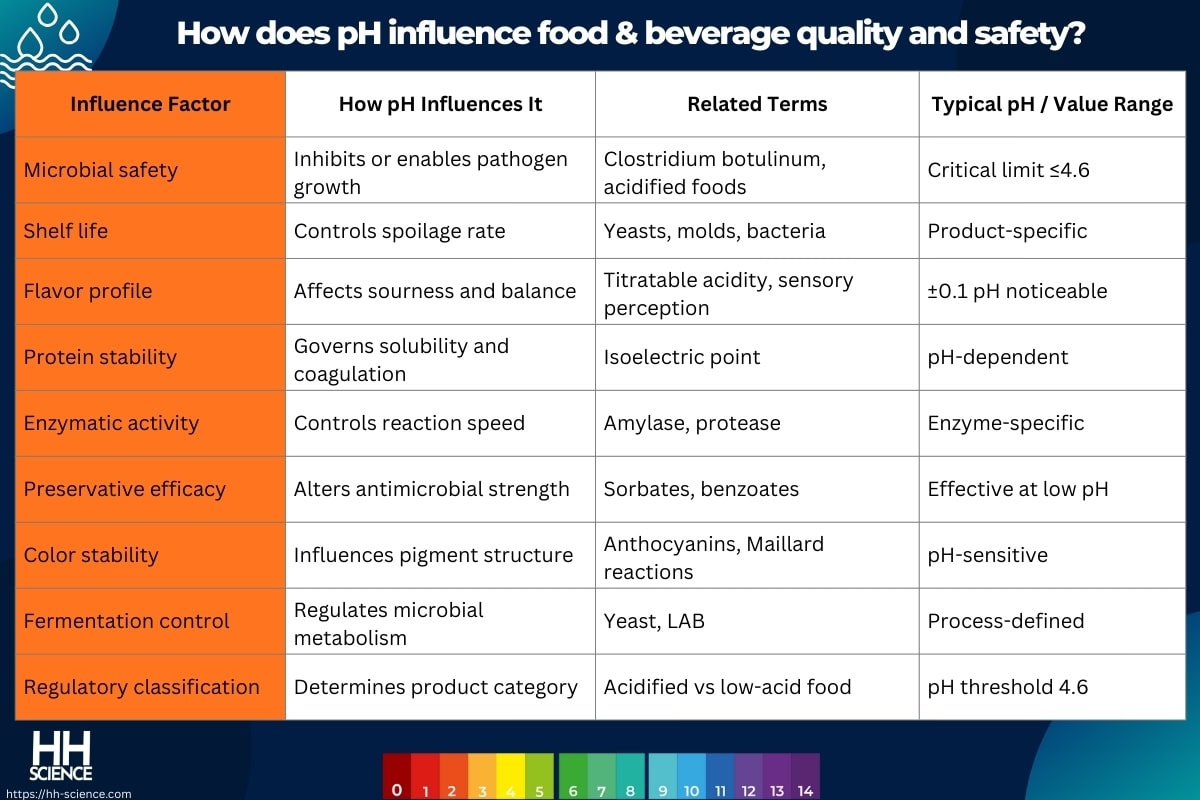
In food and beverage systems, pH directly influences microbial control, chemical stability, ingredient behavior, sensory quality, and regulatory safety status, because many biological and chemical reactions are highly pH-dependent. Small deviations in pH (often ±0.05–0.2 pH units) can shift a product from safe and stable to microbiologically risky or organoleptically unacceptable, making accurate pH control essential.
| Influence Factor | How pH Influences It | Related Terms | Typical pH / Value Range |
| Microbial safety | Inhibits or enables pathogen growth | Clostridium botulinum, acidified foods | Critical limit ≤4.6 |
| Shelf life | Controls spoilage rate | Yeasts, molds, bacteria | Product-specific |
| Flavor profile | Affects sourness and balance | Titratable acidity, sensory perception | ±0.1 pH noticeable |
| Protein stability | Governs solubility and coagulation | Isoelectric point | pH-dependent |
| Enzymatic activity | Controls reaction speed | Amylase, protease | Enzyme-specific |
| Preservative efficacy | Alters antimicrobial strength | Sorbates, benzoates | Effective at low pH |
| Color stability | Influences pigment structure | Anthocyanins, Maillard reactions | pH-sensitive |
| Fermentation control | Regulates microbial metabolism | Yeast, LAB | Process-defined |
| Regulatory classification | Determines product category | Acidified vs low-acid food | pH threshold 4.6 |
Why are food & beverage systems sensitive to pH deviations?
Food and beverage systems are highly sensitive to pH deviations because pH simultaneously controls microbial growth, chemical stability, ingredient functionality, and regulatory classification, so even small shifts (±0.05–0.2 pH units) can move a product out of its validated safety or quality window. When pH is not correctly controlled—especially around critical thresholds such as pH 4.6 for acidified foods—it can trigger food safety risks, sensory defects, process instability, and regulatory non-compliance.
- Microbial safety: pH deviations above validated limits (e.g., >4.6) can enable growth of Clostridium botulinum, Listeria, or spoilage organisms, directly compromising product safety.
- Shelf-life stability: Incorrect pH accelerates microbial spoilage and chemical degradation, shortening shelf life and increasing product loss.
- Flavor and sensory consistency: Small pH shifts (±0.1 pH) can noticeably change sourness, bitterness, and aroma balance, leading to batch-to-batch inconsistency.
- Ingredient functionality: Proteins, stabilizers, and emulsifiers can precipitate or lose functionality when pH moves toward their isoelectric point, causing separation or texture defects.
- Process control reliability: Fermentation, enzymatic reactions, and heat treatments depend on narrow pH windows, and deviations reduce yield, slow kinetics, or cause overprocessing.
- Regulatory and compliance risk: Products drifting outside declared pH ranges may be reclassified (e.g., low-acid vs acidified food), triggering recalls, rework, or audit findings.
Typical pH ranges and control targets in food & beverage applications
Typical pH ranges and control targets in food and beverage applications are established to balance microbial safety, product stability, sensory consistency, and regulatory classification, and they vary by product type, processing method, and preservation strategy. In practice, control targets often span pH 2.0–7.0 with tight operational tolerances (±0.02–0.1 pH) applied at critical control points to ensure validated safety margins and consistent product quality.
Common pH ranges in food & beverage
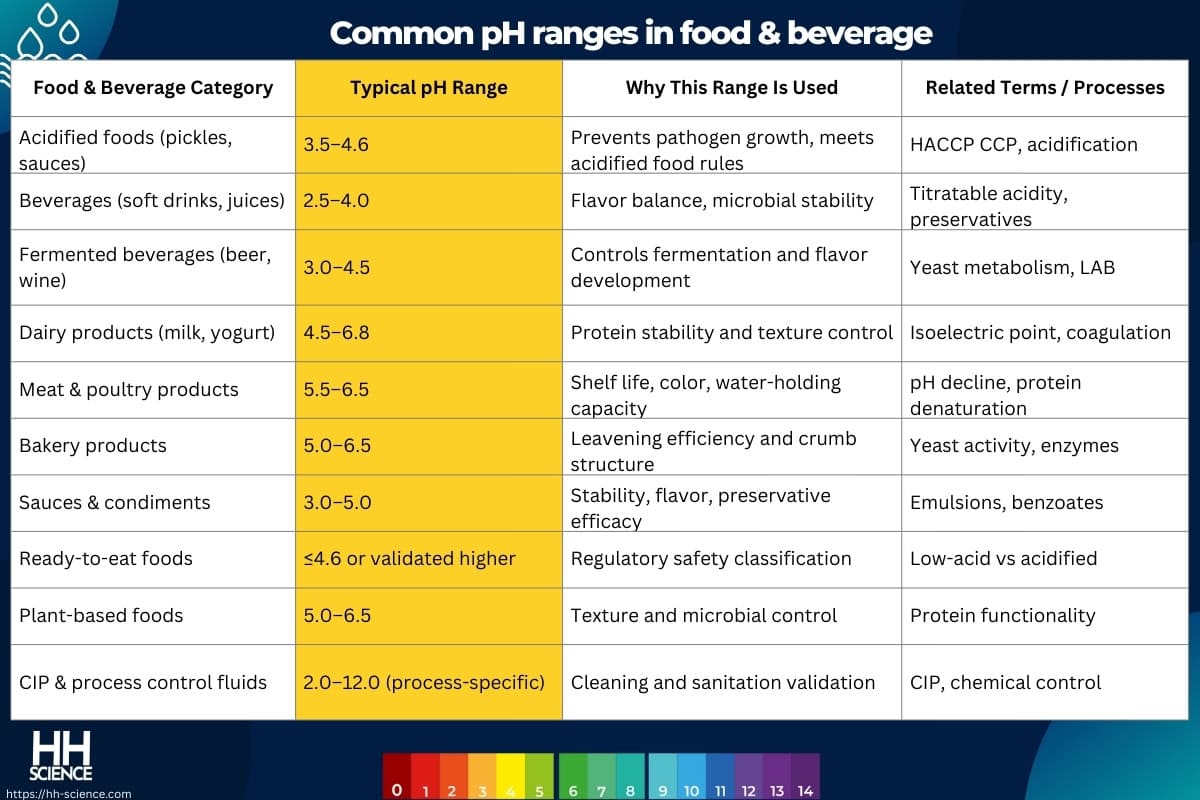
pH ranges in food and beverage vary because microbial safety requirements, preservation methods, ingredient chemistry, sensory expectations, and regulatory classification differ widely across product categories. Each range reflects a validated balance between pathogen control (e.g., pH ≤4.6), product stability, processing performance, and flavor profile, rather than a single universal target.
| Food & Beverage Category | Typical pH Range | Why This Range Is Used | Related Terms / Processes |
| Acidified foods (pickles, sauces) | 3.5–4.6 | Prevents pathogen growth, meets acidified food rules | HACCP CCP, acidification |
| Beverages (soft drinks, juices) | 2.5–4.0 | Flavor balance, microbial stability | Titratable acidity, preservatives |
| Fermented beverages (beer, wine) | 3.0–4.5 | Controls fermentation and flavor development | Yeast metabolism, LAB |
| Dairy products (milk, yogurt) | 4.5–6.8 | Protein stability and texture control | Isoelectric point, coagulation |
| Meat & poultry products | 5.5–6.5 | Shelf life, color, water-holding capacity | pH decline, protein denaturation |
| Bakery products | 5.0–6.5 | Leavening efficiency and crumb structure | Yeast activity, enzymes |
| Sauces & condiments | 3.0–5.0 | Stability, flavor, preservative efficacy | Emulsions, benzoates |
| Ready-to-eat foods | ≤4.6 or validated higher | Regulatory safety classification | Low-acid vs acidified |
| Plant-based foods | 5.0–6.5 | Texture and microbial control | Protein functionality |
| CIP & process control fluids | 2.0–12.0 (process-specific) | Cleaning and sanitation validation | CIP, chemical control |
Factors that define pH control targets
pH control targets in food and beverage applications are defined by microbial safety requirements, regulatory classification, product formulation, processing method, ingredient functionality, shelf-life objectives, sensory expectations, and equipment/measurement capability, because pH simultaneously affects safety, quality, and process validation.
- Microbial safety requirements: pH limits are set to inhibit pathogens and spoilage organisms, with critical thresholds such as pH ≤4.6 used to control Clostridium botulinum.
- Regulatory classification: Product category definitions (e.g., acidified vs low-acid foods) impose mandatory pH limits and monitoring obligations.
- Product formulation: Ingredients such as acids, buffers, proteins, and sugars determine the achievable and stable pH range.
- Processing method: Fermentation, thermal processing, aseptic filling, and preservation techniques each require specific pH windows for validated performance.
- Ingredient functionality: Protein solubility, enzyme activity, color stability, and preservative effectiveness are all pH-dependent and define practical control targets.
- Shelf-life objectives: Lower or tightly controlled pH slows spoilage reactions and microbial growth, extending validated shelf life.
- Sensory expectations: Flavor balance, sourness perception, and mouthfeel impose upper and lower pH limits for consumer acceptance.
- Equipment and measurement capability: Achievable control bands (typically ±0.02–0.1 pH) depend on sensor accuracy, response time, and process stability.
What happens when pH is out of range in food & beverage applications?
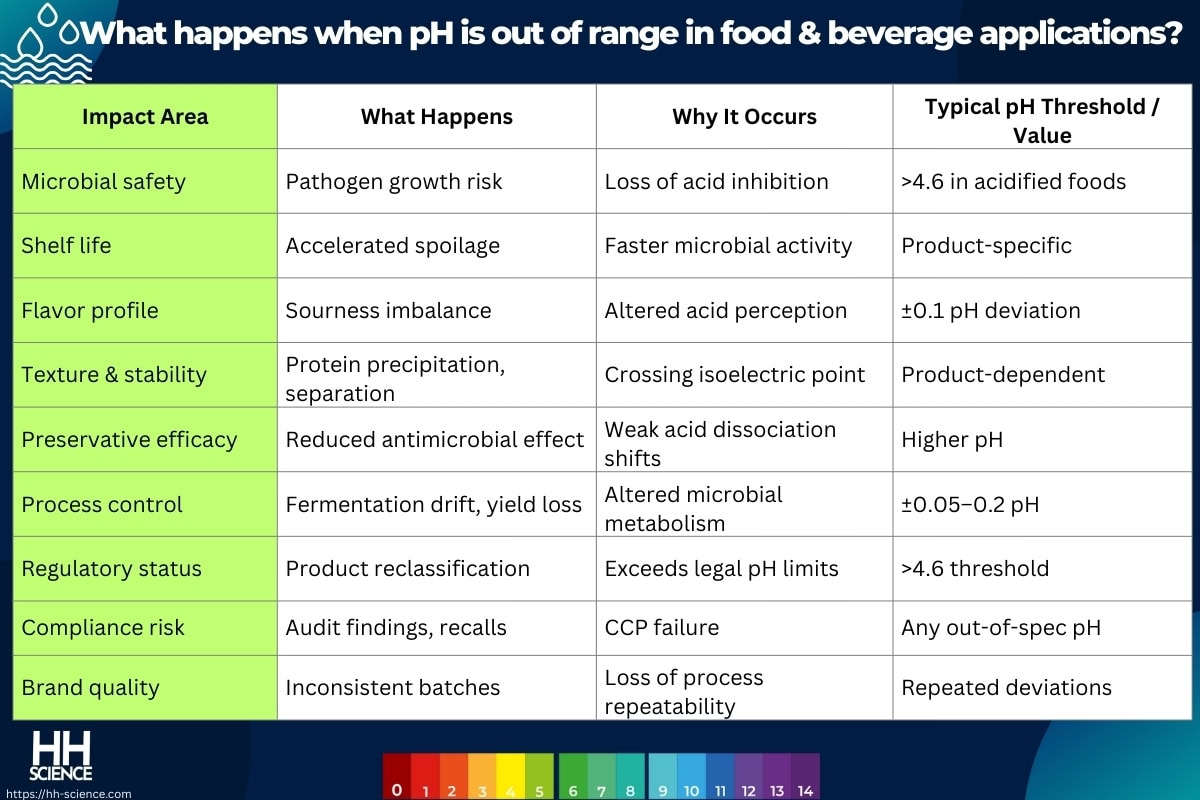
When pH moves outside validated limits in food and beverage systems, it can cause microbial safety failures, reduced shelf life, flavor and texture defects, process instability, ingredient malfunction, regulatory non-compliance, and product recall risk, because pH governs microbial inhibition, chemical stability, and product classification.
| Impact Area | What Happens | Why It Occurs | Typical pH Threshold / Value |
| Microbial safety | Pathogen growth risk | Loss of acid inhibition | >4.6 in acidified foods |
| Shelf life | Accelerated spoilage | Faster microbial activity | Product-specific |
| Flavor profile | Sourness imbalance | Altered acid perception | ±0.1 pH deviation |
| Texture & stability | Protein precipitation, separation | Crossing isoelectric point | Product-dependent |
| Preservative efficacy | Reduced antimicrobial effect | Weak acid dissociation shifts | Higher pH |
| Process control | Fermentation drift, yield loss | Altered microbial metabolism | ±0.05–0.2 pH |
| Regulatory status | Product reclassification | Exceeds legal pH limits | >4.6 threshold |
| Compliance risk | Audit findings, recalls | CCP failure | Any out-of-spec pH |
| Brand quality | Inconsistent batches | Loss of process repeatability | Repeated deviations |
Effects of low pH in food & beverage applications
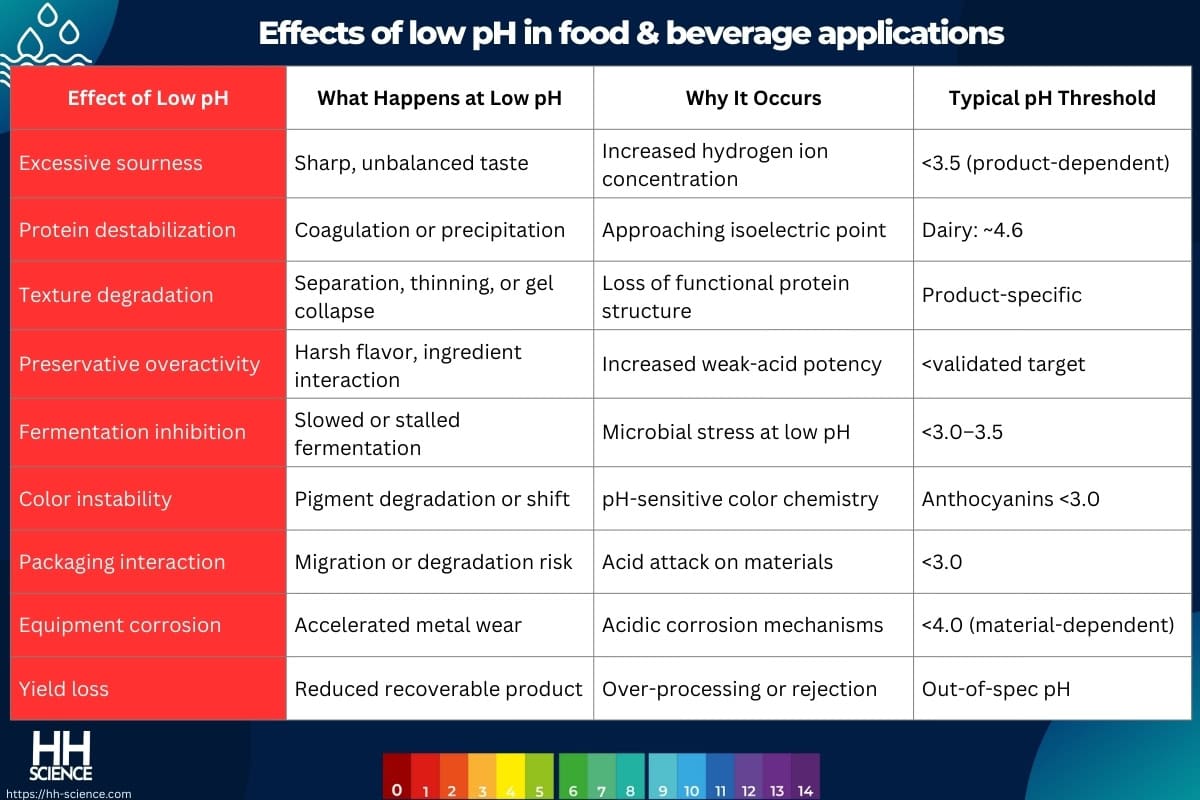
Low pH in food and beverage systems can cause over-acidification, sensory defects, ingredient instability, equipment corrosion, process inefficiency, and quality non-conformance, because highly acidic conditions alter chemical equilibria, material compatibility, and sensory perception beyond validated operating limits.
| Effect of Low pH | What Happens at Low pH | Why It Occurs | Typical pH Threshold |
| Excessive sourness | Sharp, unbalanced taste | Increased hydrogen ion concentration | <3.5 (product-dependent) |
| Protein destabilization | Coagulation or precipitation | Approaching isoelectric point | Dairy: ~4.6 |
| Texture degradation | Separation, thinning, or gel collapse | Loss of functional protein structure | Product-specific |
| Preservative overactivity | Harsh flavor, ingredient interaction | Increased weak-acid potency | <validated target |
| Fermentation inhibition | Slowed or stalled fermentation | Microbial stress at low pH | <3.0–3.5 |
| Color instability | Pigment degradation or shift | pH-sensitive color chemistry | Anthocyanins <3.0 |
| Packaging interaction | Migration or degradation risk | Acid attack on materials | <3.0 |
| Equipment corrosion | Accelerated metal wear | Acidic corrosion mechanisms | <4.0 (material-dependent) |
| Yield loss | Reduced recoverable product | Over-processing or rejection | Out-of-spec pH |
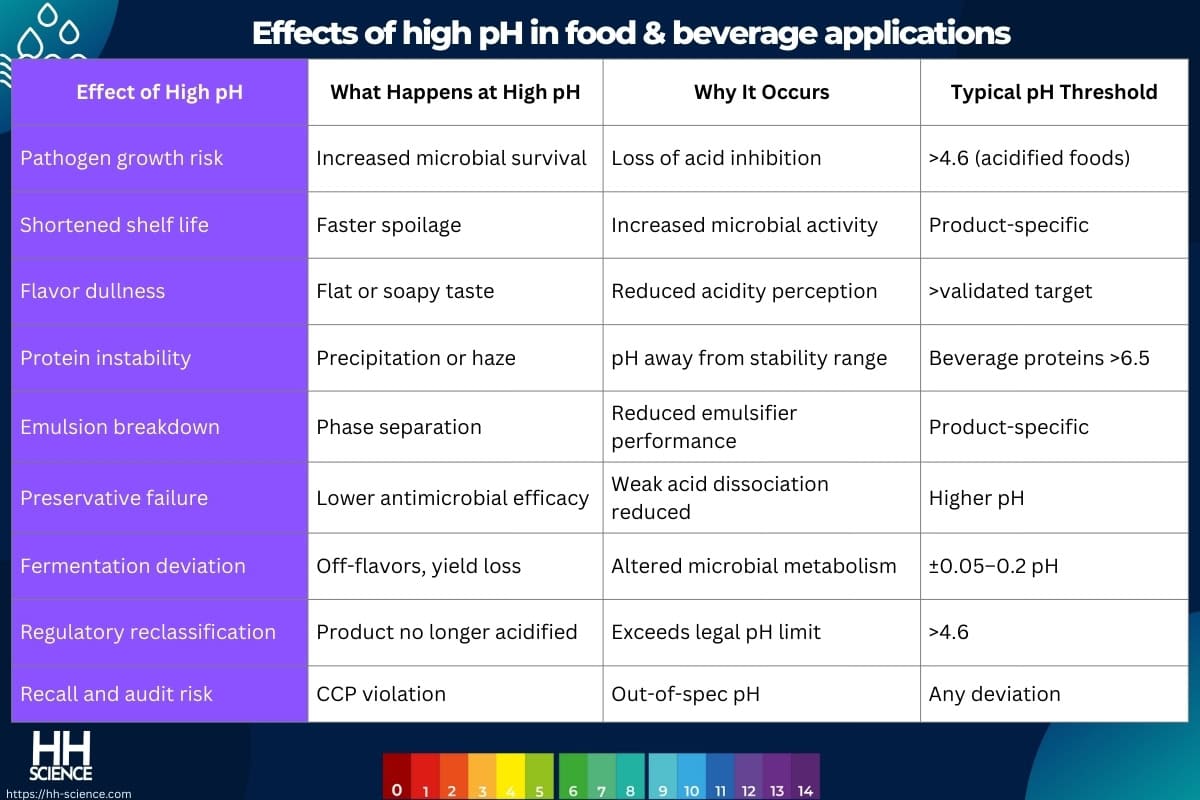
Effects of high pH in food & beverage applications
High pH in food and beverage systems can lead to microbial safety risks, reduced shelf life, flavor dullness, protein and emulsion instability, reduced preservative effectiveness, process failures, and regulatory non-compliance, because elevated pH weakens microbial inhibition and disrupts ingredient functionality.
| Effect of High pH | What Happens at High pH | Why It Occurs | Typical pH Threshold |
| Pathogen growth risk | Increased microbial survival | Loss of acid inhibition | >4.6 (acidified foods) |
| Shortened shelf life | Faster spoilage | Increased microbial activity | Product-specific |
| Flavor dullness | Flat or soapy taste | Reduced acidity perception | >validated target |
| Protein instability | Precipitation or haze | pH away from stability range | Beverage proteins >6.5 |
| Emulsion breakdown | Phase separation | Reduced emulsifier performance | Product-specific |
| Preservative failure | Lower antimicrobial efficacy | Weak acid dissociation reduced | Higher pH |
| Fermentation deviation | Off-flavors, yield loss | Altered microbial metabolism | ±0.05–0.2 pH |
| Regulatory reclassification | Product no longer acidified | Exceeds legal pH limit | >4.6 |
| Recall and audit risk | CCP violation | Out-of-spec pH | Any deviation |
Operational, quality, and compliance risks
When pH deviates from validated targets in food and beverage processing—often controlled within ±0.02–0.1 pH at critical control points (CCPs)—it creates operational disruption, product quality failure, and regulatory exposure, because pH underpins safety validation, process stability, and legal product classification.
- Operational risk: Process instability – Off-range pH disrupts fermentation kinetics, enzyme activity, and heat-treatment validation, leading to yield loss, rework, or line stoppages.
- Operational risk: Increased downtime – pH excursions trigger CIP re-cleaning, batch holds, and corrective actions, reducing throughput and equipment utilization.
- Quality risk: Sensory inconsistency – Small deviations (±0.1 pH) can cause noticeable changes in sourness, mouthfeel, color, and texture, undermining brand consistency.
- Quality risk: Shelf-life reduction – Elevated pH reduces microbial inhibition and preservative efficacy, accelerating spoilage and increasing returns or waste.
- Compliance risk: Food safety non-conformance – Exceeding critical limits (e.g., pH >4.6 in acidified foods) constitutes a HACCP CCP failure with potential recall implications.
- Compliance risk: Regulatory misclassification – Products drifting outside declared pH ranges may be reclassified (acidified vs low-acid), triggering labeling, filing, or process authority issues.
- Compliance risk: Documentation gaps – Uncontrolled pH undermines monitoring records, validation data, and audit defensibility required by FDA, EU, and customer standards.
pH measurement challenges in food & beverage applications
pH measurement in food and beverage applications presents distinct challenges because products and processes involve complex matrices, temperature variation, cleaning chemicals, high hygiene requirements, and tight control limits (often ±0.02–0.1 pH). These factors directly influence sensor response, accuracy, fouling behavior, cleanability, and validation, making careful method and sensor selection essential for reliable, audit-ready pH control.
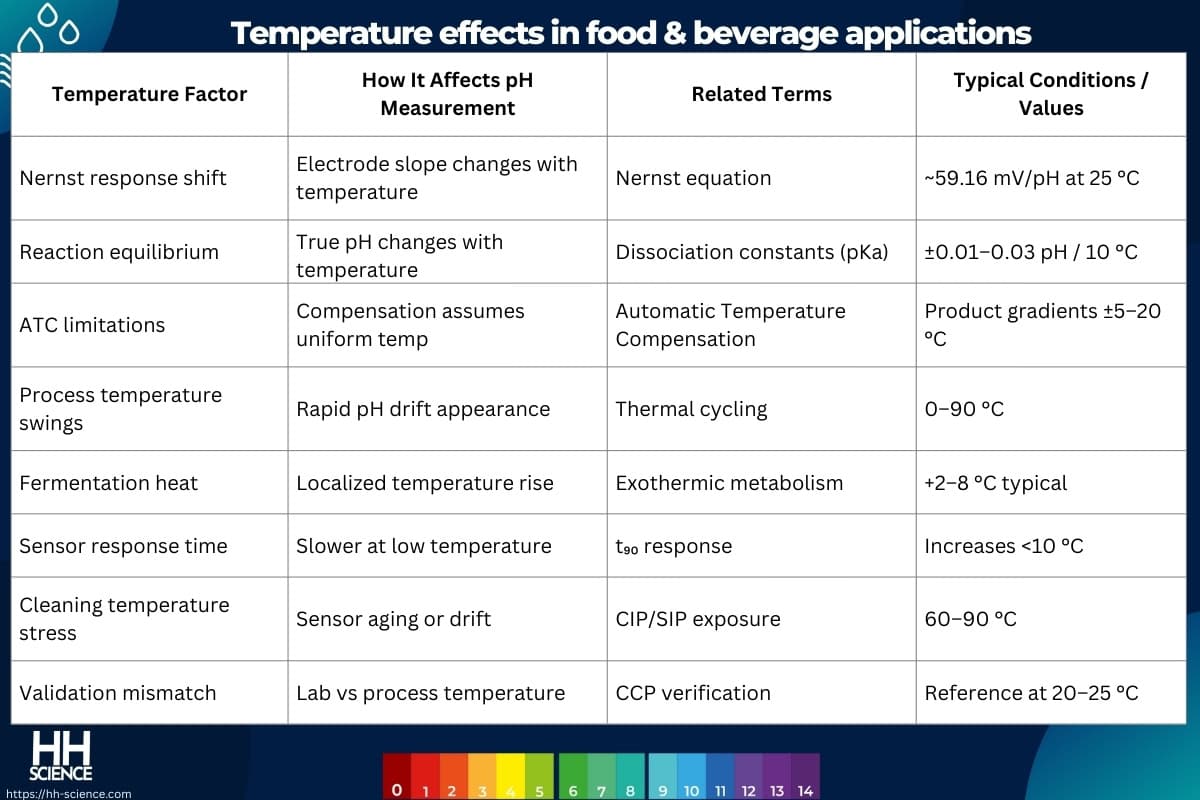
Temperature effects
Temperature is a critical challenge in food and beverage pH measurement because it affects electrode response, chemical equilibria, and biological reaction rates, while process temperatures can vary widely between cold storage, ambient processing, fermentation, pasteurization, and CIP cycles (≈0–90 °C). If temperature effects are not properly compensated or controlled, they cause systematic pH error, false CCP status, and inconsistent quality decisions, especially in high-speed or thermally dynamic processes.
| Temperature Factor | How It Affects pH Measurement | Related Terms | Typical Conditions / Values |
| Nernst response shift | Electrode slope changes with temperature | Nernst equation | ~59.16 mV/pH at 25 °C |
| Reaction equilibrium | True pH changes with temperature | Dissociation constants (pKa) | ±0.01–0.03 pH / 10 °C |
| ATC limitations | Compensation assumes uniform temp | Automatic Temperature Compensation | Product gradients ±5–20 °C |
| Process temperature swings | Rapid pH drift appearance | Thermal cycling | 0–90 °C |
| Fermentation heat | Localized temperature rise | Exothermic metabolism | +2–8 °C typical |
| Sensor response time | Slower at low temperature | t₉₀ response | Increases <10 °C |
| Cleaning temperature stress | Sensor aging or drift | CIP/SIP exposure | 60–90 °C |
| Validation mismatch | Lab vs process temperature | CCP verification | Reference at 20–25 °C |
Fouling and contamination
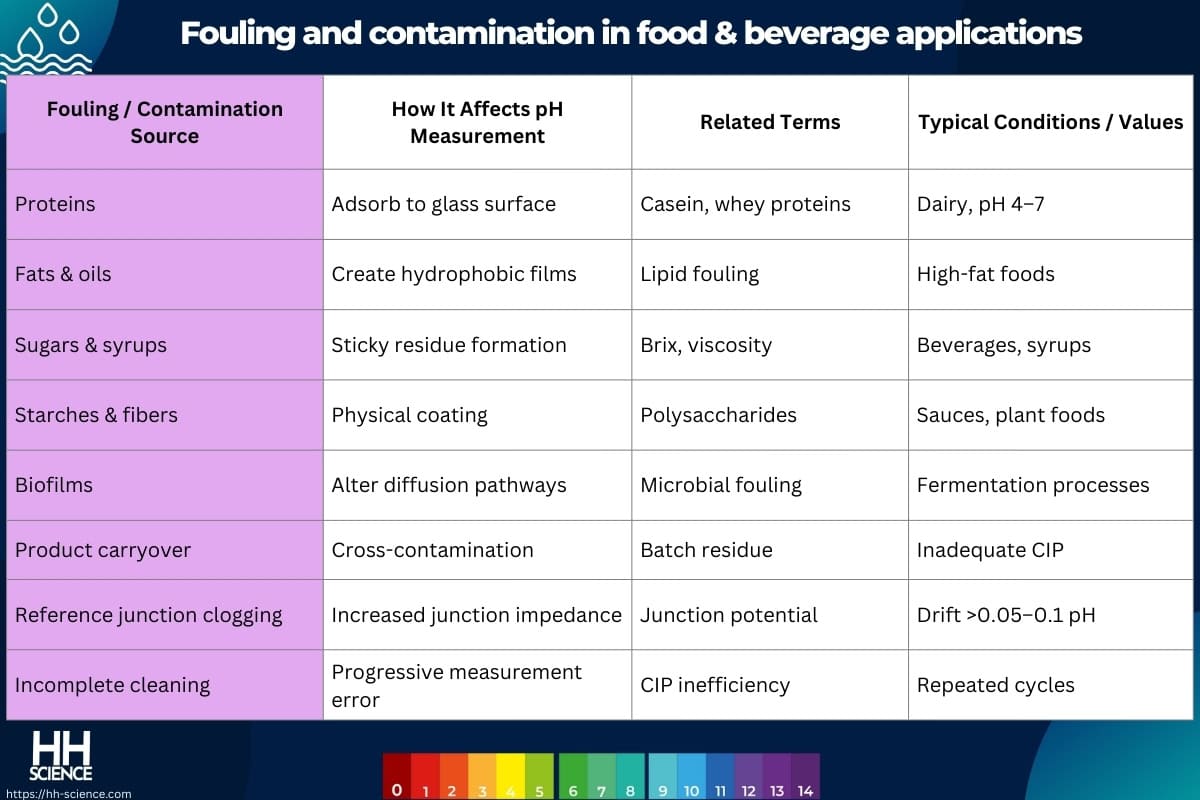
Fouling and contamination are major challenges in food and beverage pH measurement because products contain proteins, fats, sugars, starches, fibers, and microbial residues that readily coat the pH-sensitive glass membrane and reference junction. This buildup disrupts ion exchange and reference stability, causing slow response, signal drift, offset error, and false CCP readings, particularly in high-protein, high-fat, viscous, or fermenting products.
| Fouling / Contamination Source | How It Affects pH Measurement | Related Terms | Typical Conditions / Values |
| Proteins | Adsorb to glass surface | Casein, whey proteins | Dairy, pH 4–7 |
| Fats & oils | Create hydrophobic films | Lipid fouling | High-fat foods |
| Sugars & syrups | Sticky residue formation | Brix, viscosity | Beverages, syrups |
| Starches & fibers | Physical coating | Polysaccharides | Sauces, plant foods |
| Biofilms | Alter diffusion pathways | Microbial fouling | Fermentation processes |
| Product carryover | Cross-contamination | Batch residue | Inadequate CIP |
| Reference junction clogging | Increased junction impedance | Junction potential | Drift >0.05–0.1 pH |
| Incomplete cleaning | Progressive measurement error | CIP inefficiency | Repeated cycles |
Pressure and flow conditions
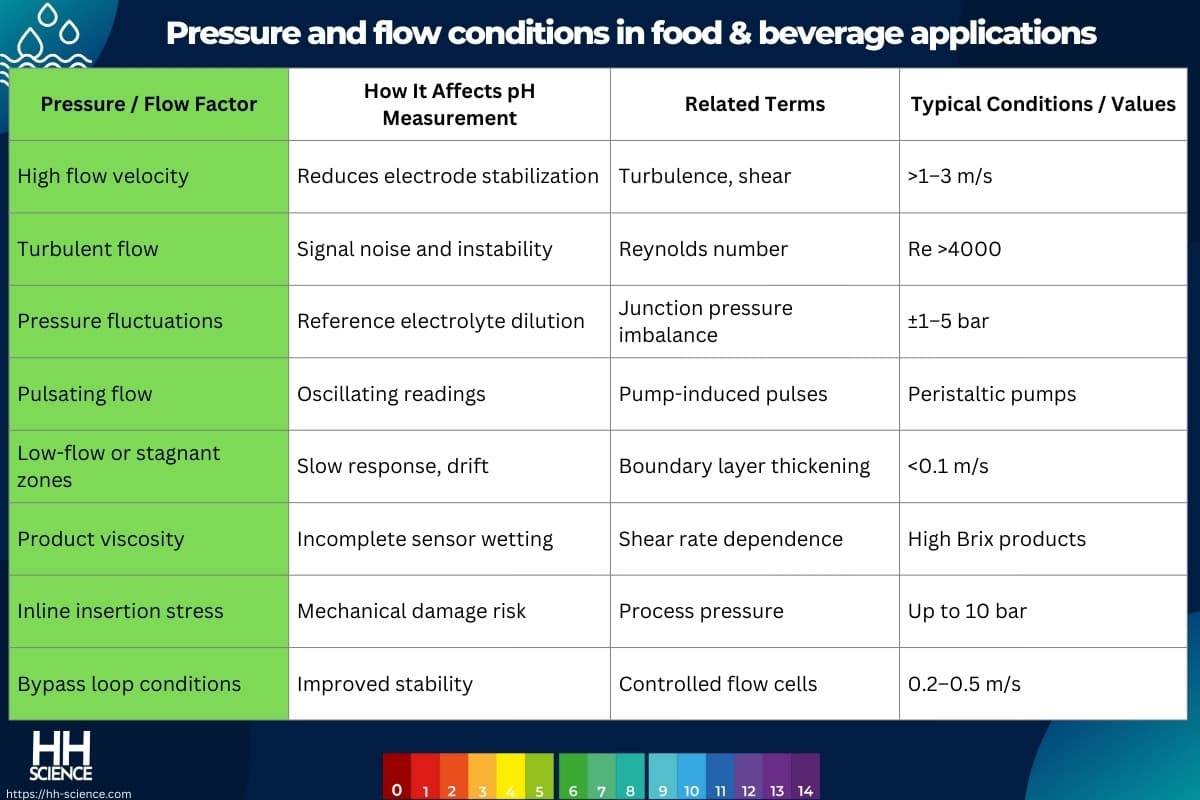
Pressure and flow conditions are challenging in food and beverage pH measurement because process streams can be fast-moving, turbulent, pressurized, or intermittent, which directly affects sensor wetting, reference stability, and signal noise. Variations in flow velocity, line pressure, and turbulence can introduce measurement lag, fluctuating readings, junction dilution, or mechanical stress, especially in inline monitoring at critical control points.
| Pressure / Flow Factor | How It Affects pH Measurement | Related Terms | Typical Conditions / Values |
| High flow velocity | Reduces electrode stabilization | Turbulence, shear | >1–3 m/s |
| Turbulent flow | Signal noise and instability | Reynolds number | Re >4000 |
| Pressure fluctuations | Reference electrolyte dilution | Junction pressure imbalance | ±1–5 bar |
| Pulsating flow | Oscillating readings | Pump-induced pulses | Peristaltic pumps |
| Low-flow or stagnant zones | Slow response, drift | Boundary layer thickening | <0.1 m/s |
| Product viscosity | Incomplete sensor wetting | Shear rate dependence | High Brix products |
| Inline insertion stress | Mechanical damage risk | Process pressure | Up to 10 bar |
| Bypass loop conditions | Improved stability | Controlled flow cells | 0.2–0.5 m/s |
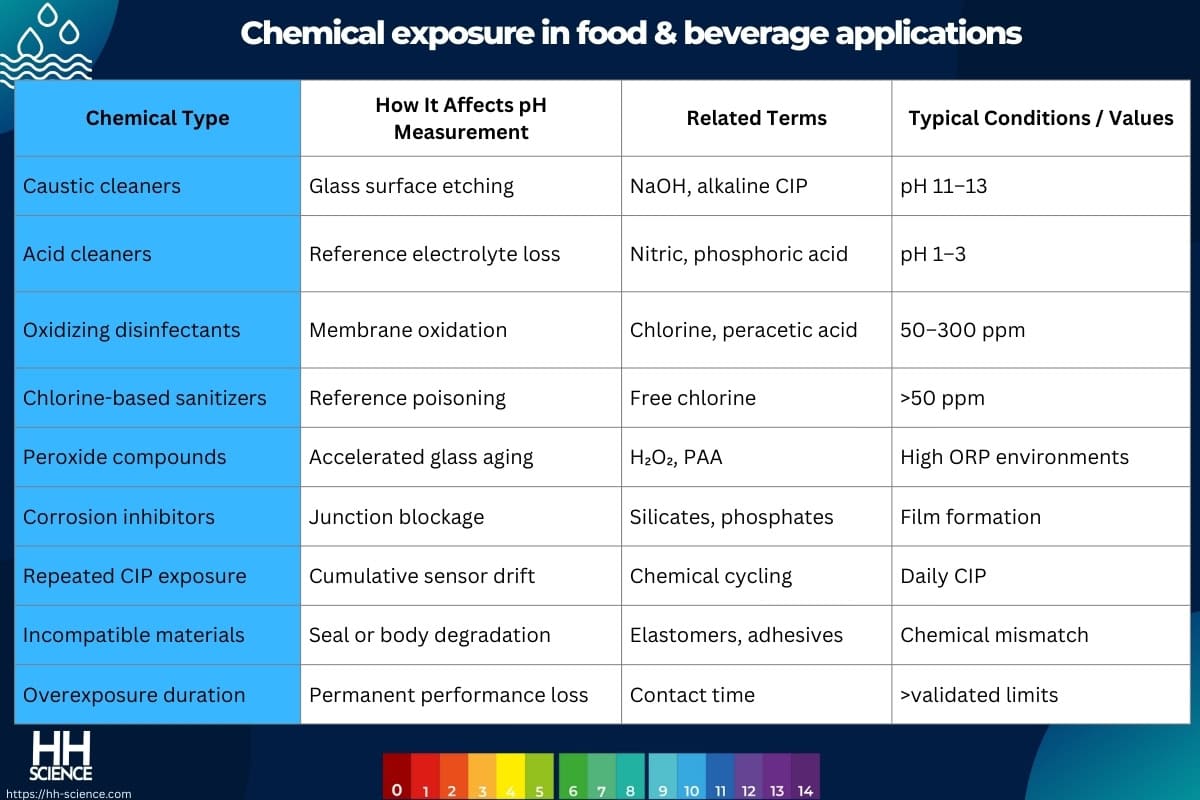
Chemical exposure
Chemical exposure is a major challenge in food and beverage pH measurement because sensors are repeatedly exposed to cleaning and sanitation chemicals, including alkalis, acids, oxidizing disinfectants, and corrosion inhibitors, during CIP/SIP cycles. These chemicals can attack the glass membrane, poison the reference system, alter junction permeability, and accelerate sensor aging, leading to offset drift, reduced slope, slow response, and shortened sensor lifespan if materials and operating limits are not properly matched.
| Chemical Type | How It Affects pH Measurement | Related Terms | Typical Conditions / Values |
| Caustic cleaners | Glass surface etching | NaOH, alkaline CIP | pH 11–13 |
| Acid cleaners | Reference electrolyte loss | Nitric, phosphoric acid | pH 1–3 |
| Oxidizing disinfectants | Membrane oxidation | Chlorine, peracetic acid | 50–300 ppm |
| Chlorine-based sanitizers | Reference poisoning | Free chlorine | >50 ppm |
| Peroxide compounds | Accelerated glass aging | H₂O₂, PAA | High ORP environments |
| Corrosion inhibitors | Junction blockage | Silicates, phosphates | Film formation |
| Repeated CIP exposure | Cumulative sensor drift | Chemical cycling | Daily CIP |
| Incompatible materials | Seal or body degradation | Elastomers, adhesives | Chemical mismatch |
| Overexposure duration | Permanent performance loss | Contact time | >validated limits |
Bio-load or process residues
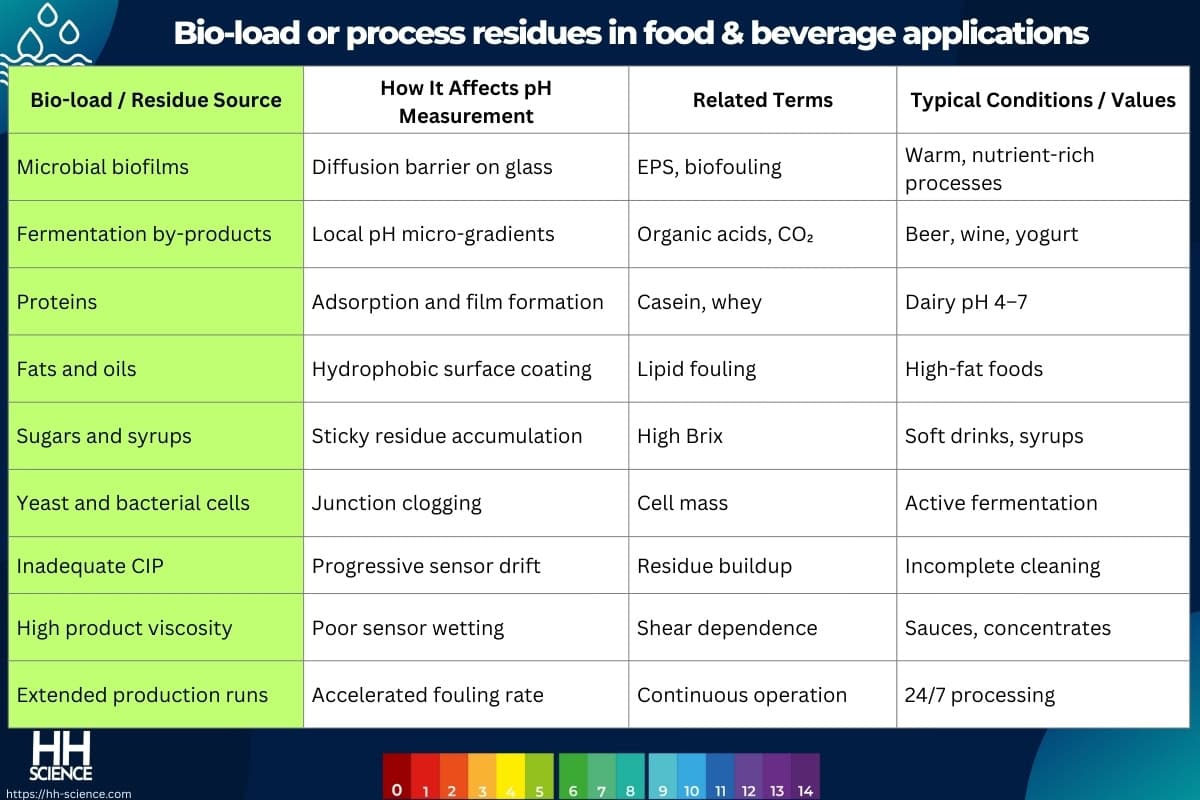
Bio-load and process residues are significant challenges in food and beverage pH measurement because products and process environments contain microorganisms, fermentation by-products, proteins, fats, sugars, and biofilms that continuously interact with the pH sensor surface. These materials cause biofouling, coating of the glass membrane, reference junction clogging, and localized biochemical pH shifts, leading to slow response, measurement drift, false CCP status, and increased cleaning frequency, especially in fermentation, dairy, beverage, and ready-to-eat food processes.
| Bio-load / Residue Source | How It Affects pH Measurement | Related Terms | Typical Conditions / Values |
| Microbial biofilms | Diffusion barrier on glass | EPS, biofouling | Warm, nutrient-rich processes |
| Fermentation by-products | Local pH micro-gradients | Organic acids, CO₂ | Beer, wine, yogurt |
| Proteins | Adsorption and film formation | Casein, whey | Dairy pH 4–7 |
| Fats and oils | Hydrophobic surface coating | Lipid fouling | High-fat foods |
| Sugars and syrups | Sticky residue accumulation | High Brix | Soft drinks, syrups |
| Yeast and bacterial cells | Junction clogging | Cell mass | Active fermentation |
| Inadequate CIP | Progressive sensor drift | Residue buildup | Incomplete cleaning |
| High product viscosity | Poor sensor wetting | Shear dependence | Sauces, concentrates |
| Extended production runs | Accelerated fouling rate | Continuous operation | 24/7 processing |
Common pH sensor types used in food & beverage applications
Common pH sensor types used in food and beverage applications include hygienic glass electrode pH sensors, combination pH sensors, differential (reference-free) pH sensors, ISFET pH sensors, and digital or smart pH sensors, each selected based on hygiene, process stress, and control requirements. Hygienic glass and combination sensors dominate inline and laboratory measurements due to high accuracy (±0.01–0.05 pH), differential and ISFET sensors are favored in high-fouling, high-bio-load, or CIP-intensive processes for improved reliability, and digital sensors support stable signal transmission, diagnostics, and traceability in automated, audit-driven production environments.
Combination pH sensors
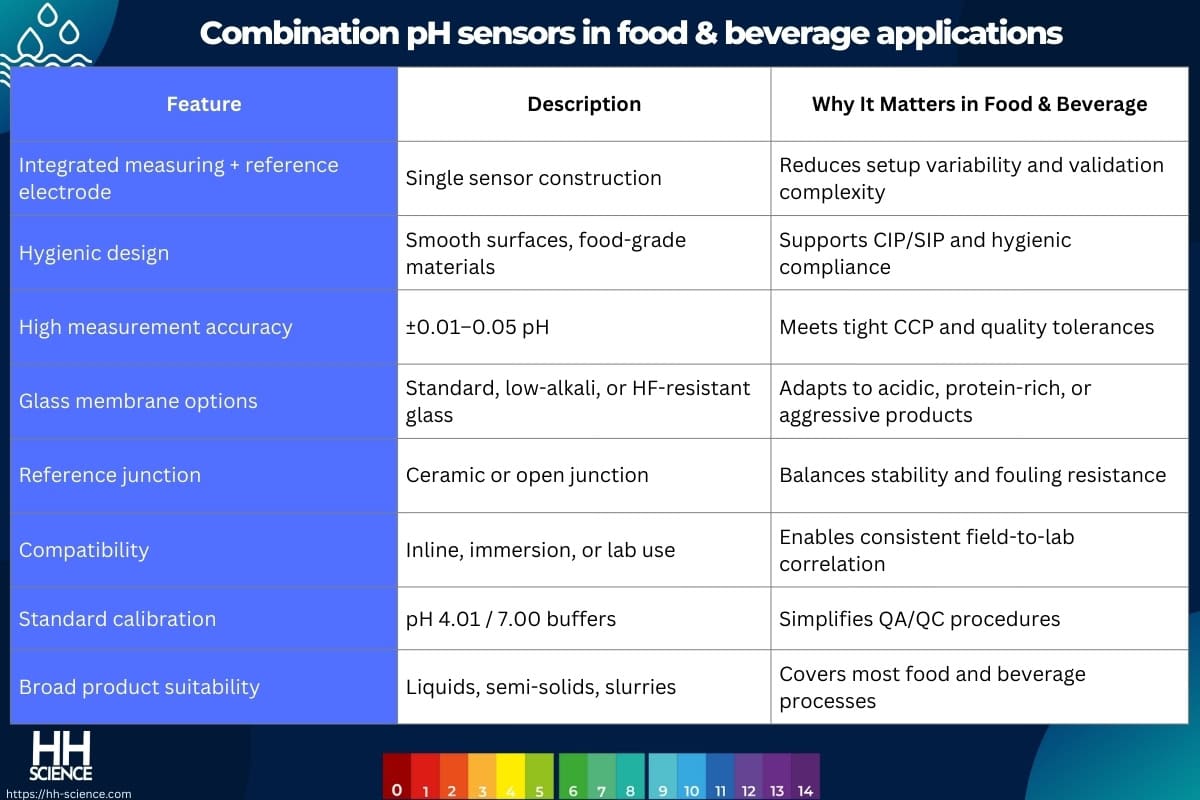
Combination pH sensors are widely used in food and beverage applications because they integrate the measuring electrode and reference electrode into a single hygienic body, simplifying installation, validation, and routine operation in both inline process control and laboratory QA/QC. Their proven design delivers high accuracy (typically ±0.01–0.05 pH) while meeting hygienic, cleanability, and regulatory expectations across diverse product matrices.
| Feature | Description | Why It Matters in Food & Beverage |
| Integrated measuring + reference electrode | Single sensor construction | Reduces setup variability and validation complexity |
| Hygienic design | Smooth surfaces, food-grade materials | Supports CIP/SIP and hygienic compliance |
| High measurement accuracy | ±0.01–0.05 pH | Meets tight CCP and quality tolerances |
| Glass membrane options | Standard, low-alkali, or HF-resistant glass | Adapts to acidic, protein-rich, or aggressive products |
| Reference junction | Ceramic or open junction | Balances stability and fouling resistance |
| Compatibility | Inline, immersion, or lab use | Enables consistent field-to-lab correlation |
| Standard calibration | pH 4.01 / 7.00 buffers | Simplifies QA/QC procedures |
| Broad product suitability | Liquids, semi-solids, slurries | Covers most food and beverage processes |
Differential pH sensors
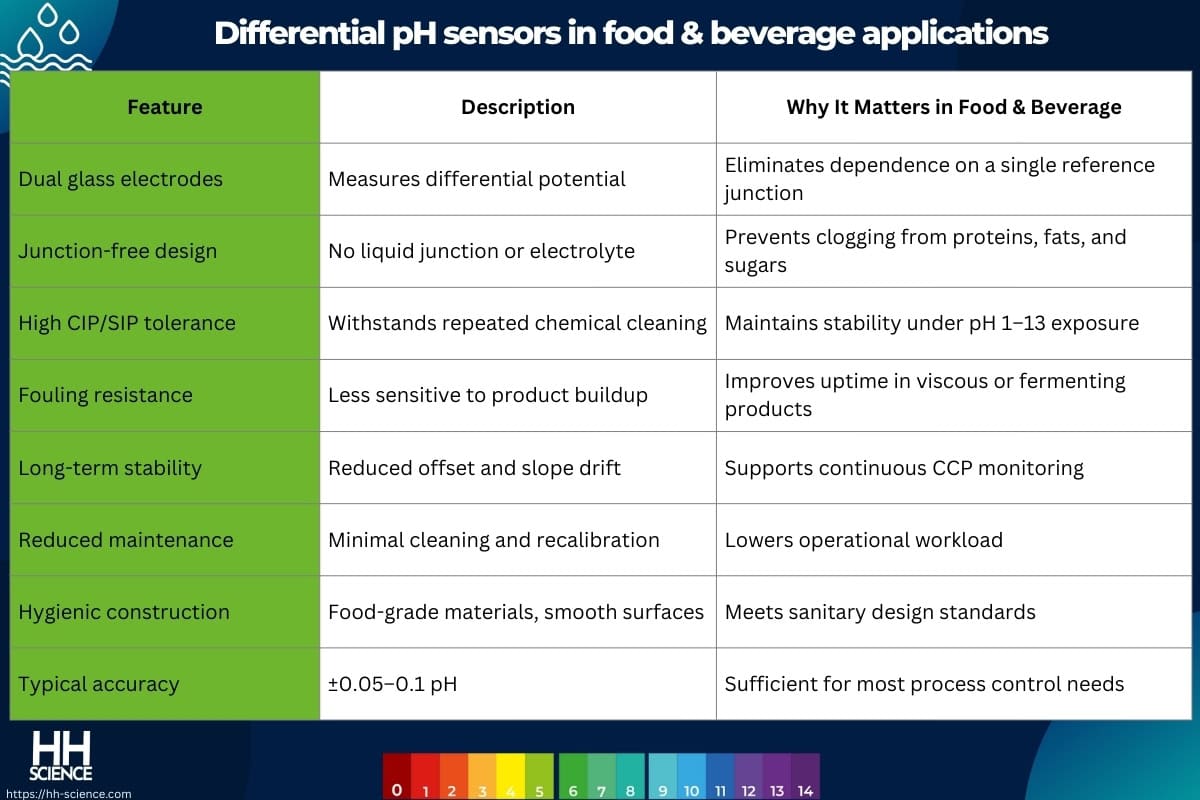
Differential pH sensors are used in food and beverage applications where reference junction fouling, chemical exposure, and CIP/SIP stress make conventional single-reference electrodes unreliable. By using two matched glass electrodes instead of a traditional reference system, these sensors deliver stable measurements in high-bio-load, high-fat, high-protein, and aggressive cleaning environments, reducing drift and maintenance effort.
| Feature | Description | Why It Matters in Food & Beverage |
| Dual glass electrodes | Measures differential potential | Eliminates dependence on a single reference junction |
| Junction-free design | No liquid junction or electrolyte | Prevents clogging from proteins, fats, and sugars |
| High CIP/SIP tolerance | Withstands repeated chemical cleaning | Maintains stability under pH 1–13 exposure |
| Fouling resistance | Less sensitive to product buildup | Improves uptime in viscous or fermenting products |
| Long-term stability | Reduced offset and slope drift | Supports continuous CCP monitoring |
| Reduced maintenance | Minimal cleaning and recalibration | Lowers operational workload |
| Hygienic construction | Food-grade materials, smooth surfaces | Meets sanitary design standards |
| Typical accuracy | ±0.05–0.1 pH | Sufficient for most process control needs |
Digital or smart pH sensors
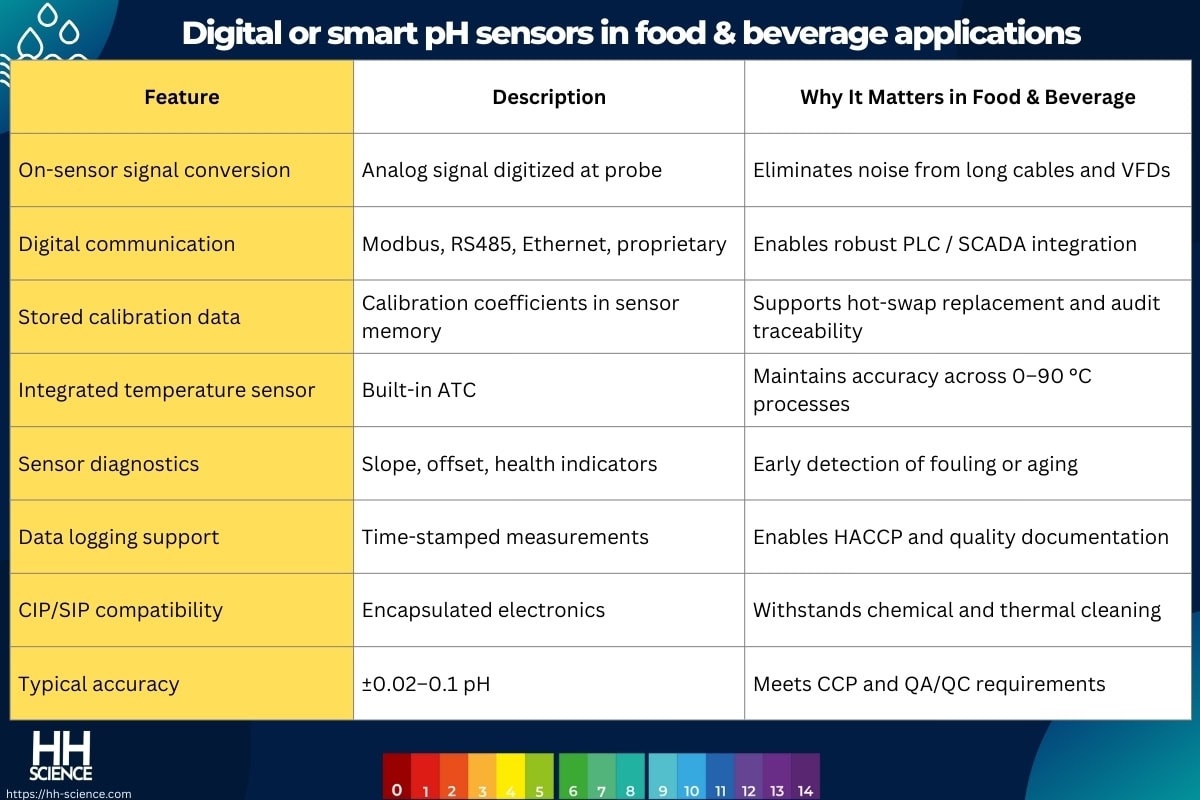
Digital (smart) pH sensors are increasingly adopted in food and beverage applications because they convert the high-impedance electrode signal into a digital output at the sensor, ensuring reliable data transmission in electrically noisy, automated, and compliance-driven production environments. They are especially valuable where tight control limits (±0.02–0.1 pH), traceability, diagnostics, and integration with PLCs or SCADA systems are required.
| Feature | Description | Why It Matters in Food & Beverage |
| On-sensor signal conversion | Analog signal digitized at probe | Eliminates noise from long cables and VFDs |
| Digital communication | Modbus, RS485, Ethernet, proprietary | Enables robust PLC / SCADA integration |
| Stored calibration data | Calibration coefficients in sensor memory | Supports hot-swap replacement and audit traceability |
| Integrated temperature sensor | Built-in ATC | Maintains accuracy across 0–90 °C processes |
| Sensor diagnostics | Slope, offset, health indicators | Early detection of fouling or aging |
| Data logging support | Time-stamped measurements | Enables HACCP and quality documentation |
| CIP/SIP compatibility | Encapsulated electronics | Withstands chemical and thermal cleaning |
| Typical accuracy | ±0.02–0.1 pH | Meets CCP and QA/QC requirements |
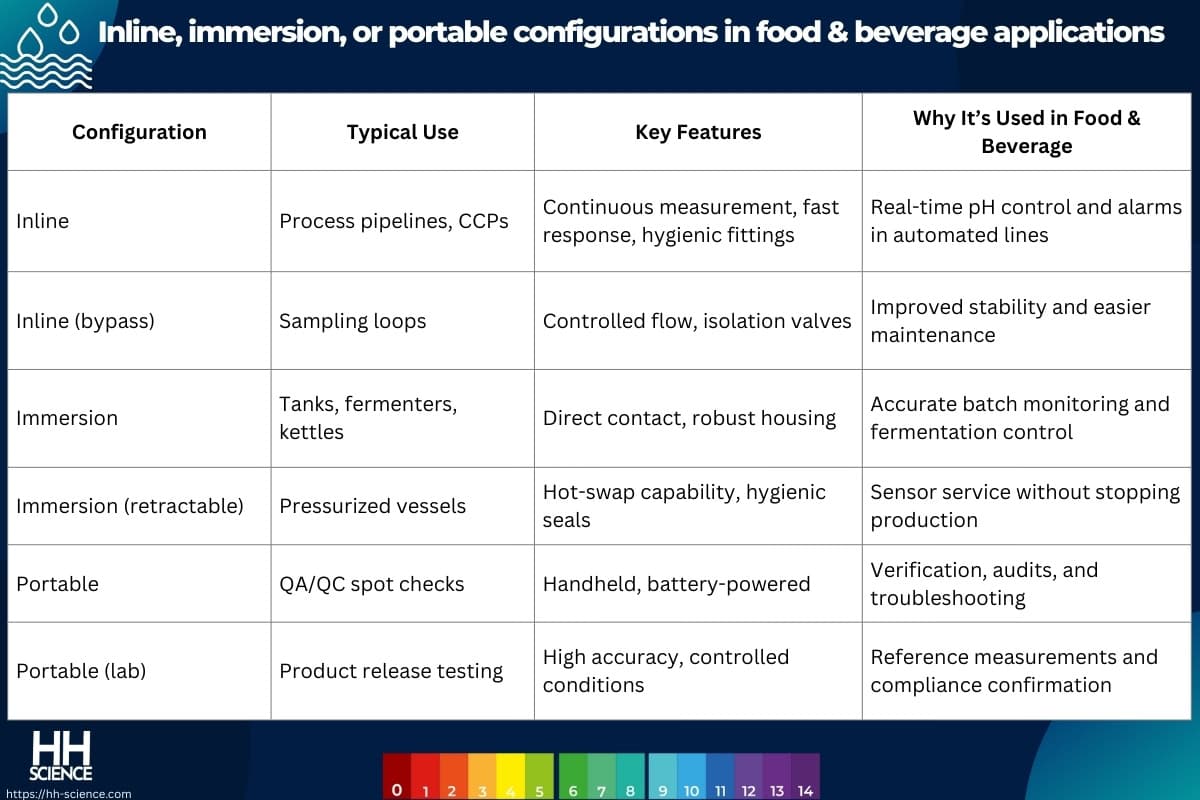
Inline, immersion, or portable configurations
Different pH sensor configurations are used in food and beverage applications because pH must be controlled at continuous process points, batch vessels, and QA/QC checkpoints, each with different demands for response time, hygiene, validation, and flexibility. Selecting the right configuration ensures representative measurement at CCPs, efficient maintenance, and compliant verification without disrupting production.
| Configuration | Typical Use | Key Features | Why It’s Used in Food & Beverage |
| Inline | Process pipelines, CCPs | Continuous measurement, fast response, hygienic fittings | Real-time pH control and alarms in automated lines |
| Inline (bypass) | Sampling loops | Controlled flow, isolation valves | Improved stability and easier maintenance |
| Immersion | Tanks, fermenters, kettles | Direct contact, robust housing | Accurate batch monitoring and fermentation control |
| Immersion (retractable) | Pressurized vessels | Hot-swap capability, hygienic seals | Sensor service without stopping production |
| Portable | QA/QC spot checks | Handheld, battery-powered | Verification, audits, and troubleshooting |
| Portable (lab) | Product release testing | High accuracy, controlled conditions | Reference measurements and compliance confirmation |
Installation and maintenance considerations in food & beverage applications
In food and beverage applications, proper installation and maintenance of pH sensors are critical because tight control limits (often ±0.02–0.1 pH), hygienic design requirements, CIP/SIP exposure (pH 1–13, 60–90 °C), and high bio-load products directly affect measurement accuracy and sensor lifespan. Correct practices—such as hygienic mounting at representative process points, stable flow conditions, regular cleaning aligned with CIP protocols, routine calibration with certified pH 4.01/7.00 buffers, temperature compensation, and proactive replacement when slope drops below ~85–90%—ensure reliable CCP monitoring, product consistency, and audit readiness.
Typical installation locations
In food and beverage processing, pH sensors are installed at locations that best represent product safety status, process control points, and quality verification needs, with placement driven by HACCP CCPs, flow conditions, hygiene requirements, and validation accessibility. Correct location selection ensures representative measurement, fast response, and compliant monitoring without disrupting production.
| Installation Location | Process Area | Related Features | Why It Is Used |
| Raw material intake | Incoming liquids, blends | Fast response, portable or inline | Verifies raw material conformity |
| Mixing tanks | Formulation vessels | Immersion, hygienic design | Confirms correct acidification or buffering |
| Fermenters | Beer, wine, dairy, cultures | Immersion, CIP/SIP capable | Controls fermentation kinetics and flavor |
| Process pipelines (CCPs) | Inline production lines | Continuous measurement, alarms | Real-time safety and quality control |
| Bypass loops | Sampling off main line | Controlled flow, isolation | Improved stability and serviceability |
| Heat treatment outlet | Pasteurization/UHT | Temperature-compensated sensors | Confirms post-process pH compliance |
| Filling lines | Final product before packaging | Inline or immersion | Last safety and quality verification |
| CIP return lines | Cleaning validation | Chemical-resistant sensors | Confirms CIP effectiveness |
| QA/QC laboratory | Product release testing | High-accuracy bench meters | Reference measurement for compliance |
| Portable spot checks | Audits, troubleshooting | Handheld meters | Independent verification and investigations |
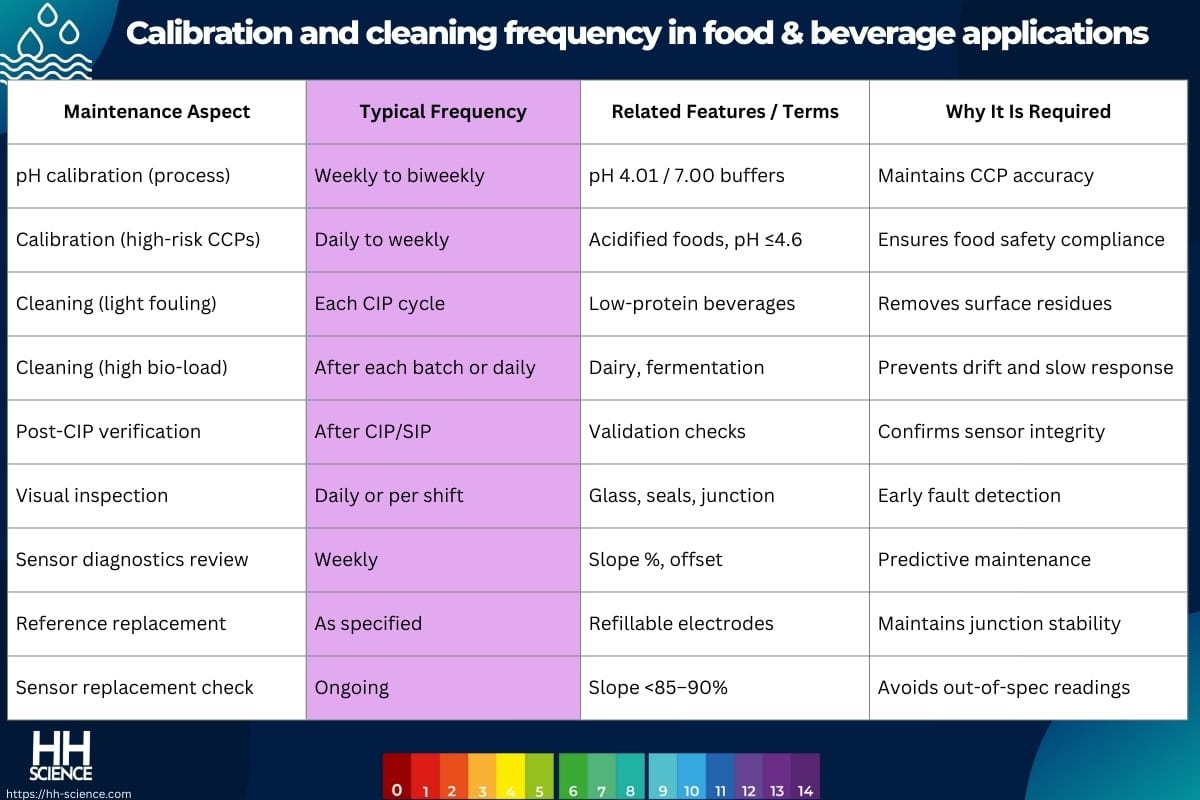
Calibration and cleaning frequency
In food and beverage applications, calibration and cleaning frequency are critical because pH sensors operate under tight control limits, frequent CIP/SIP cycles, high bio-load products, and strict audit requirements, all of which accelerate sensor drift and fouling. Maintenance intervals depend on product type, process temperature, CIP chemistry, and sensor design, making defined routines essential for reliable CCP monitoring.
| Maintenance Aspect | Typical Frequency | Related Features / Terms | Why It Is Required |
| pH calibration (process) | Weekly to biweekly | pH 4.01 / 7.00 buffers | Maintains CCP accuracy |
| Calibration (high-risk CCPs) | Daily to weekly | Acidified foods, pH ≤4.6 | Ensures food safety compliance |
| Cleaning (light fouling) | Each CIP cycle | Low-protein beverages | Removes surface residues |
| Cleaning (high bio-load) | After each batch or daily | Dairy, fermentation | Prevents drift and slow response |
| Post-CIP verification | After CIP/SIP | Validation checks | Confirms sensor integrity |
| Visual inspection | Daily or per shift | Glass, seals, junction | Early fault detection |
| Sensor diagnostics review | Weekly | Slope %, offset | Predictive maintenance |
| Reference replacement | As specified | Refillable electrodes | Maintains junction stability |
| Sensor replacement check | Ongoing | Slope <85–90% | Avoids out-of-spec readings |
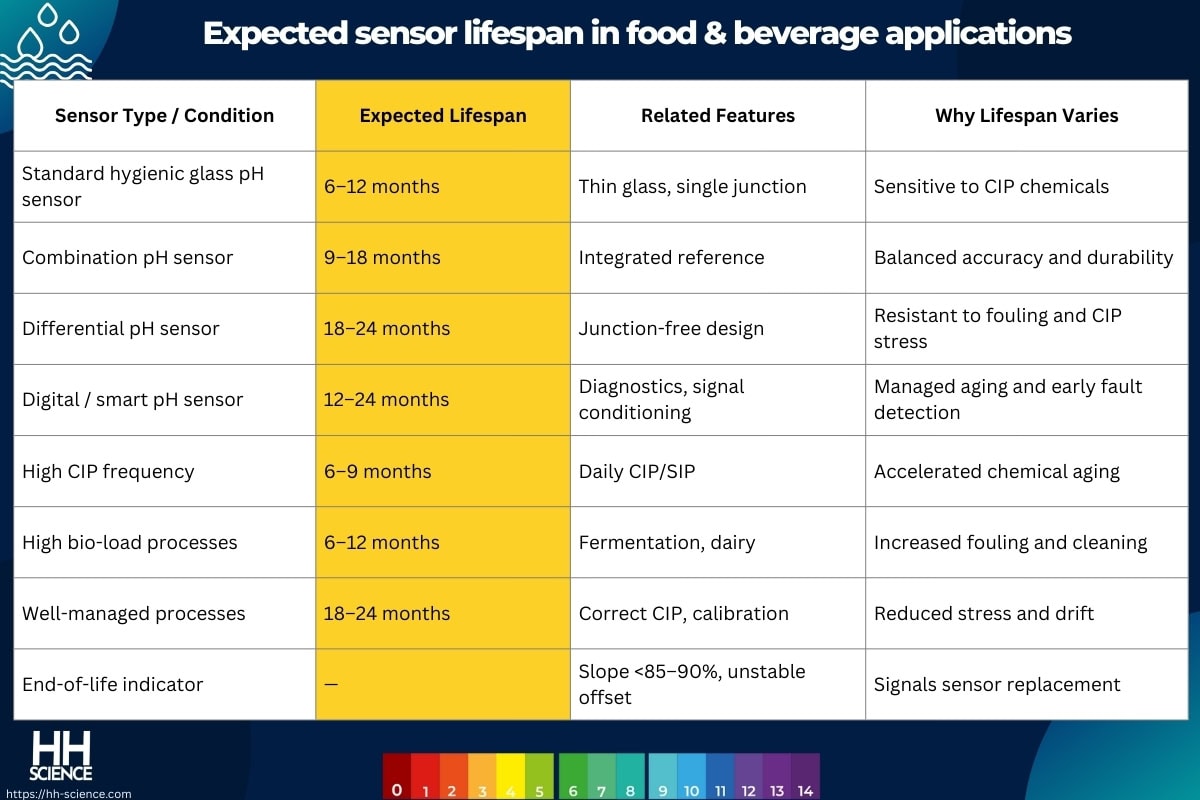
Expected sensor lifespan
In food and beverage applications, pH sensor lifespan is primarily limited by frequent CIP/SIP exposure (pH 1–13, 60–90 °C), high bio-load products, thermal cycling, and aggressive cleaning chemicals, all of which accelerate glass aging, reference system degradation, and seal wear. Actual lifespan depends on sensor design, material compatibility, process severity, and maintenance quality, making planned replacement critical for CCP reliability.
| Sensor Type / Condition | Expected Lifespan | Related Features | Why Lifespan Varies |
| Standard hygienic glass pH sensor | 6–12 months | Thin glass, single junction | Sensitive to CIP chemicals |
| Combination pH sensor | 9–18 months | Integrated reference | Balanced accuracy and durability |
| Differential pH sensor | 18–24 months | Junction-free design | Resistant to fouling and CIP stress |
| Digital / smart pH sensor | 12–24 months | Diagnostics, signal conditioning | Managed aging and early fault detection |
| High CIP frequency | 6–9 months | Daily CIP/SIP | Accelerated chemical aging |
| High bio-load processes | 6–12 months | Fermentation, dairy | Increased fouling and cleaning |
| Well-managed processes | 18–24 months | Correct CIP, calibration | Reduced stress and drift |
| End-of-life indicator | — | Slope <85–90%, unstable offset | Signals sensor replacement |
Trade-offs between accuracy, maintenance, and durability
In industrial water applications, the trade-off between accuracy, maintenance, and durability exists because high-accuracy pH sensors (±0.01–0.05 pH) rely on thin glass membranes and sensitive reference systems that are more vulnerable to abrasion, fouling, pressure, temperature swings (≈0–80 °C), and chemical exposure, while rugged designs prioritize survivability. Sensors optimized for durability—using thicker glass, protected or junction-free references, pressurized electrolytes, and reinforced housings—significantly reduce maintenance and downtime in harsh media (high TDS, solids, oxidants), but typically deliver practical control accuracy of ±0.05–0.1 pH, which is sufficient for most industrial process control but not laboratory-grade analysis.
Regulatory or quality considerations in food & beverage applications
In food and beverage applications, regulatory and quality considerations are critical because pH is a defined safety and quality parameter that directly affects microbial control, product classification, shelf life, and consumer safety. Compliance with HACCP, FDA and EU food safety regulations, acidified food rules (critical limit pH ≤4.6), process authority validations, calibration records, and documented CCP monitoring with typical control tolerances of ±0.02–0.1 pH ensures audit readiness, prevents recalls, and protects brand integrity across production and QA/QC processes.
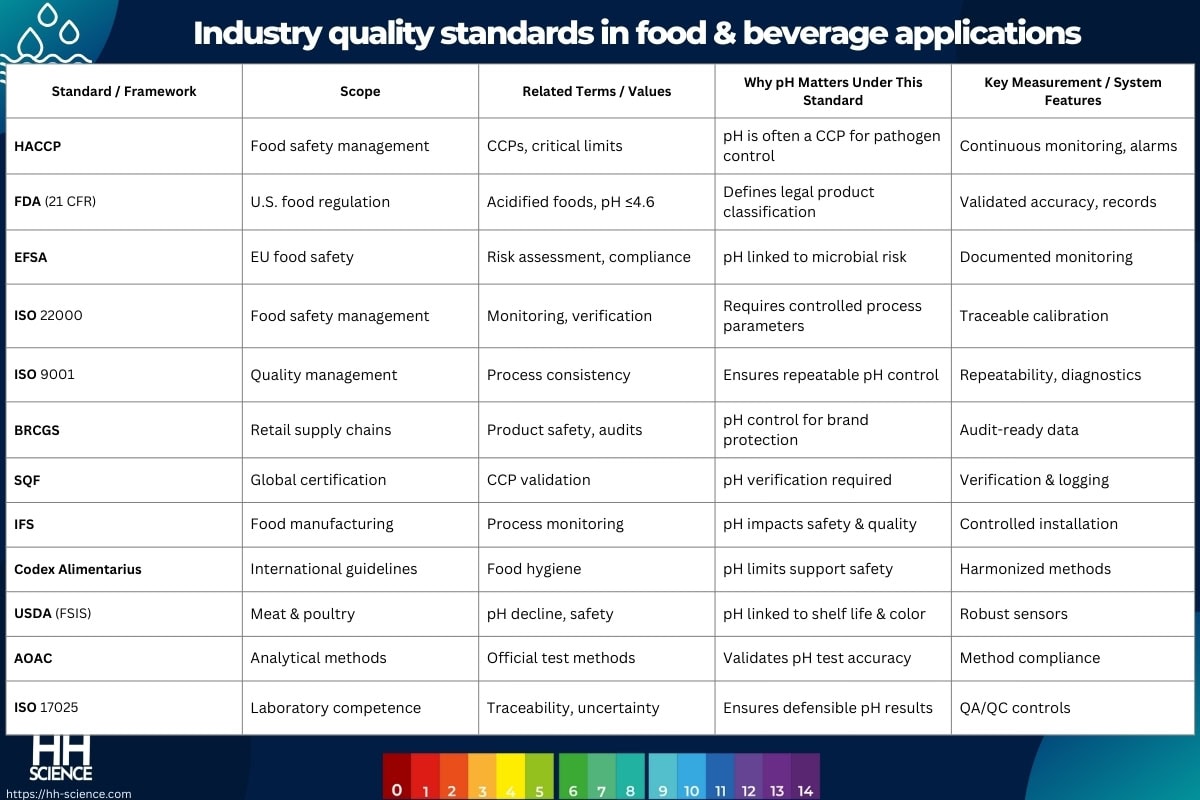
Industry quality standards in food & beverage applications
Industry quality standards in food and beverage exist to ensure microbial safety, consistent product quality, traceability, and legal compliance, with pH defined as a critical quality or safety parameter in many processes. These frameworks specify pH limits, monitoring frequency, validation methods, calibration control, and documentation, making standardized and auditable pH measurement essential across production and QA/QC.
| Standard / Framework | Scope | Related Terms / Values | Why pH Matters Under This Standard | Key Measurement / System Features |
| HACCP | Food safety management | CCPs, critical limits | pH is often a CCP for pathogen control | Continuous monitoring, alarms |
| FDA (21 CFR) | U.S. food regulation | Acidified foods, pH ≤4.6 | Defines legal product classification | Validated accuracy, records |
| EFSA | EU food safety | Risk assessment, compliance | pH linked to microbial risk | Documented monitoring |
| ISO 22000 | Food safety management | Monitoring, verification | Requires controlled process parameters | Traceable calibration |
| ISO 9001 | Quality management | Process consistency | Ensures repeatable pH control | Repeatability, diagnostics |
| BRCGS | Retail supply chains | Product safety, audits | pH control for brand protection | Audit-ready data |
| SQF | Global certification | CCP validation | pH verification required | Verification & logging |
| IFS | Food manufacturing | Process monitoring | pH impacts safety & quality | Controlled installation |
| Codex Alimentarius | International guidelines | Food hygiene | pH limits support safety | Harmonized methods |
| USDA (FSIS) | Meat & poultry | pH decline, safety | pH linked to shelf life & color | Robust sensors |
| AOAC | Analytical methods | Official test methods | Validates pH test accuracy | Method compliance |
| ISO 17025 | Laboratory competence | Traceability, uncertainty | Ensures defensible pH results | QA/QC controls |
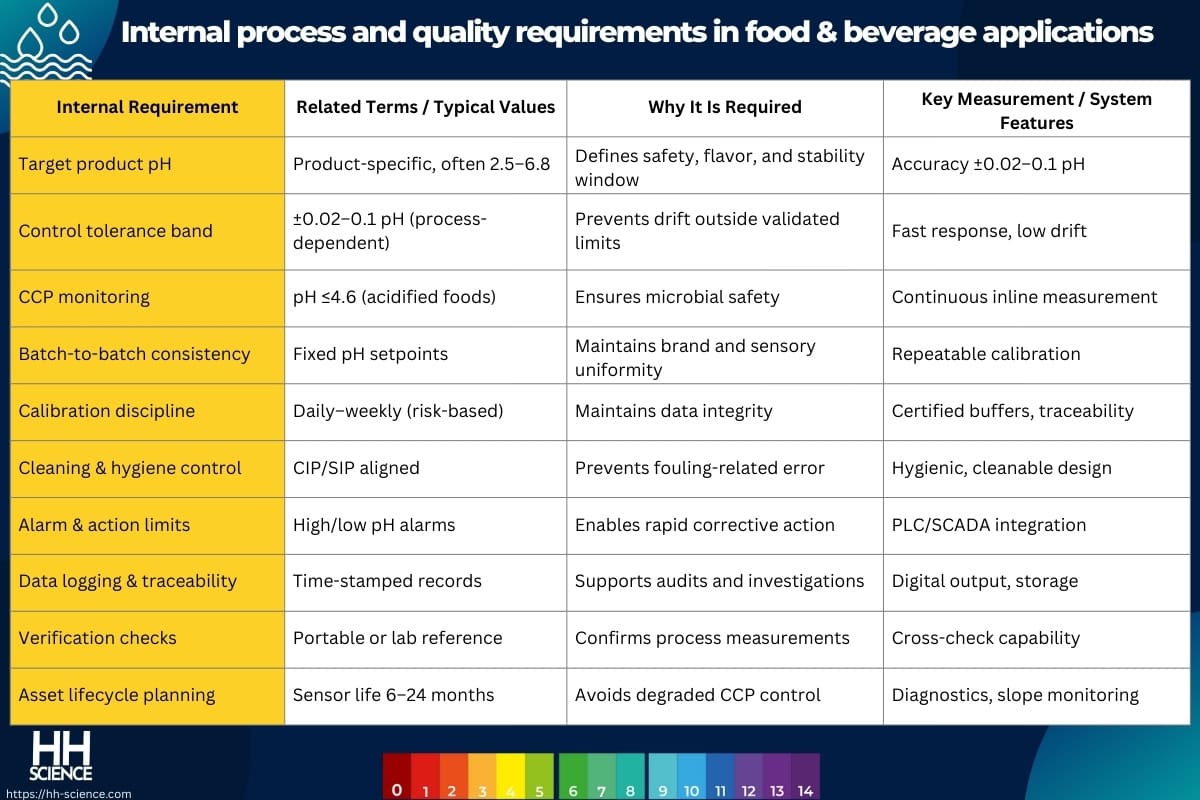
Internal process and quality requirements in food & beverage applications
In food and beverage production, internal process and quality requirements are defined to ensure consistent safety margins, repeatable sensory quality, process stability, and audit readiness, even where regulations only specify minimum thresholds. These requirements translate product specifications and risk assessments into measurable pH targets, control tolerances, monitoring routines, maintenance rules, and data practices that directly govern day-to-day operations and decision-making.
| Internal Requirement | Related Terms / Typical Values | Why It Is Required | Key Measurement / System Features |
| Target product pH | Product-specific, often 2.5–6.8 | Defines safety, flavor, and stability window | Accuracy ±0.02–0.1 pH |
| Control tolerance band | ±0.02–0.1 pH (process-dependent) | Prevents drift outside validated limits | Fast response, low drift |
| CCP monitoring | pH ≤4.6 (acidified foods) | Ensures microbial safety | Continuous inline measurement |
| Batch-to-batch consistency | Fixed pH setpoints | Maintains brand and sensory uniformity | Repeatable calibration |
| Calibration discipline | Daily–weekly (risk-based) | Maintains data integrity | Certified buffers, traceability |
| Cleaning & hygiene control | CIP/SIP aligned | Prevents fouling-related error | Hygienic, cleanable design |
| Alarm & action limits | High/low pH alarms | Enables rapid corrective action | PLC/SCADA integration |
| Data logging & traceability | Time-stamped records | Supports audits and investigations | Digital output, storage |
| Verification checks | Portable or lab reference | Confirms process measurements | Cross-check capability |
| Asset lifecycle planning | Sensor life 6–24 months | Avoids degraded CCP control | Diagnostics, slope monitoring |
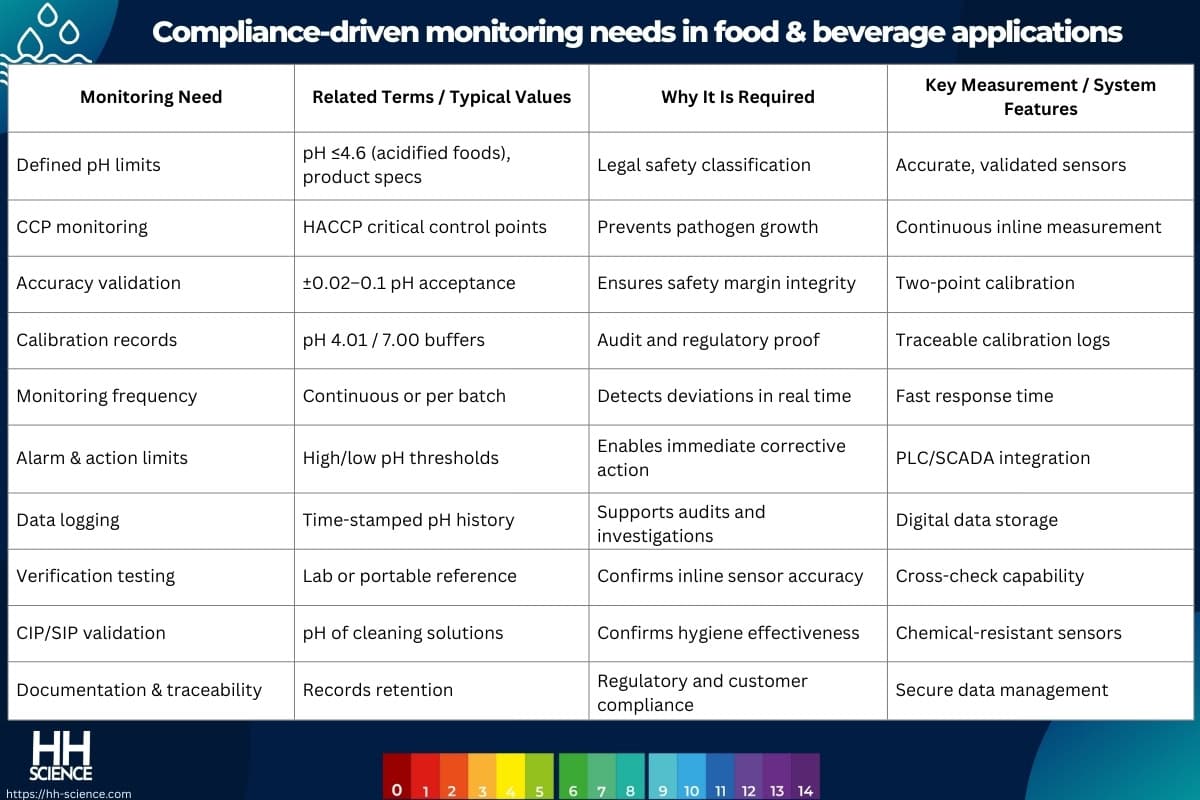
Compliance-driven monitoring needs in food & beverage applications
In food and beverage production, compliance-driven monitoring needs exist to demonstrate food safety, legal product classification, process validation, and audit readiness, with pH serving as a critical control or quality parameter in many products. These needs require continuous or verifiable pH measurement, documented calibration, defined limits, and traceable records, ensuring defensible compliance with food safety regulations and customer standards.
| Monitoring Need | Related Terms / Typical Values | Why It Is Required | Key Measurement / System Features |
| Defined pH limits | pH ≤4.6 (acidified foods), product specs | Legal safety classification | Accurate, validated sensors |
| CCP monitoring | HACCP critical control points | Prevents pathogen growth | Continuous inline measurement |
| Accuracy validation | ±0.02–0.1 pH acceptance | Ensures safety margin integrity | Two-point calibration |
| Calibration records | pH 4.01 / 7.00 buffers | Audit and regulatory proof | Traceable calibration logs |
| Monitoring frequency | Continuous or per batch | Detects deviations in real time | Fast response time |
| Alarm & action limits | High/low pH thresholds | Enables immediate corrective action | PLC/SCADA integration |
| Data logging | Time-stamped pH history | Supports audits and investigations | Digital data storage |
| Verification testing | Lab or portable reference | Confirms inline sensor accuracy | Cross-check capability |
| CIP/SIP validation | pH of cleaning solutions | Confirms hygiene effectiveness | Chemical-resistant sensors |
| Documentation & traceability | Records retention | Regulatory and customer compliance | Secure data management |
Selecting the right pH measurement approach in food & beverage applications
Selecting the right pH measurement approach in food and beverage applications is critical because pH often functions as a HACCP critical control parameter, with narrow safety and quality windows (commonly ±0.02–0.1 pH) that directly affect microbial control, product classification, and sensory consistency. The approach must align with product matrix, process temperature, hygiene and CIP/SIP conditions, monitoring frequency (continuous vs batch), and required accuracy, ensuring that measured pH values are representative, auditable, and fit for real-time process control as well as regulatory verification.
Decision support for food & beverage applications
Decision support provides a structured way to translate food safety requirements, product specifications, and regulatory thresholds—such as HACCP CCP limits, acidified food boundary pH ≤4.6, and control tolerances of ±0.02–0.1 pH—into concrete measurement requirements. Its role is to define required accuracy, monitoring continuity, redundancy, and documentation level, ensuring the selected pH measurement approach supports safe production, consistent quality, and audit-ready compliance in food and beverage operations.
Application-driven measurement strategies
Application-driven measurement strategies determine how pH should be measured based on product matrix (liquid, viscous, particulate), process mode (continuous vs batch), temperature profile, bio-load, and CIP/SIP exposure. This step guides the choice between inline, immersion, or portable measurement, as well as response time, cleaning frequency, and calibration rigor, ensuring the measurement method is fit for the specific food or beverage process rather than chosen generically.
Linking food & beverage applications to sensor selection and oem solutions
Linking applications to sensor selection converts process and compliance requirements into specific sensor features and OEM solutions, such as hygienic designs, differential or ISFET technology, CIP/SIP resistance (pH 1–13, up to 90 °C), digital diagnostics, and PLC/SCADA connectivity. This step ensures the chosen OEM pH solution aligns with process stress, maintenance capability, lifecycle cost, and data integrity needs, delivering reliable pH control at critical control points and throughout quality assurance workflows.


