
What is the pH of water?
The pH of water is the measure of its hydrogen ion activity (aH⁺), expressed on a logarithmic scale from 0 to 14, where 7.0 is neutral, values below 7 indicate acidity, and values above 7 indicate alkalinity. Pure distilled water at 25 °C has a pH close to 7.0 because the concentrations of hydrogen ions [H⁺] and hydroxide ions [OH⁻] are equal at 1 × 10⁻⁷ mol/L, but natural waters usually fall within the range of 6.5–8.5 due to dissolved minerals, gases (like CO₂), and buffering capacity. This range is critical because pH influences chemical solubility, biological activity, corrosion, and water treatment efficiency, making it a key parameter for environmental monitoring and drinking water safety.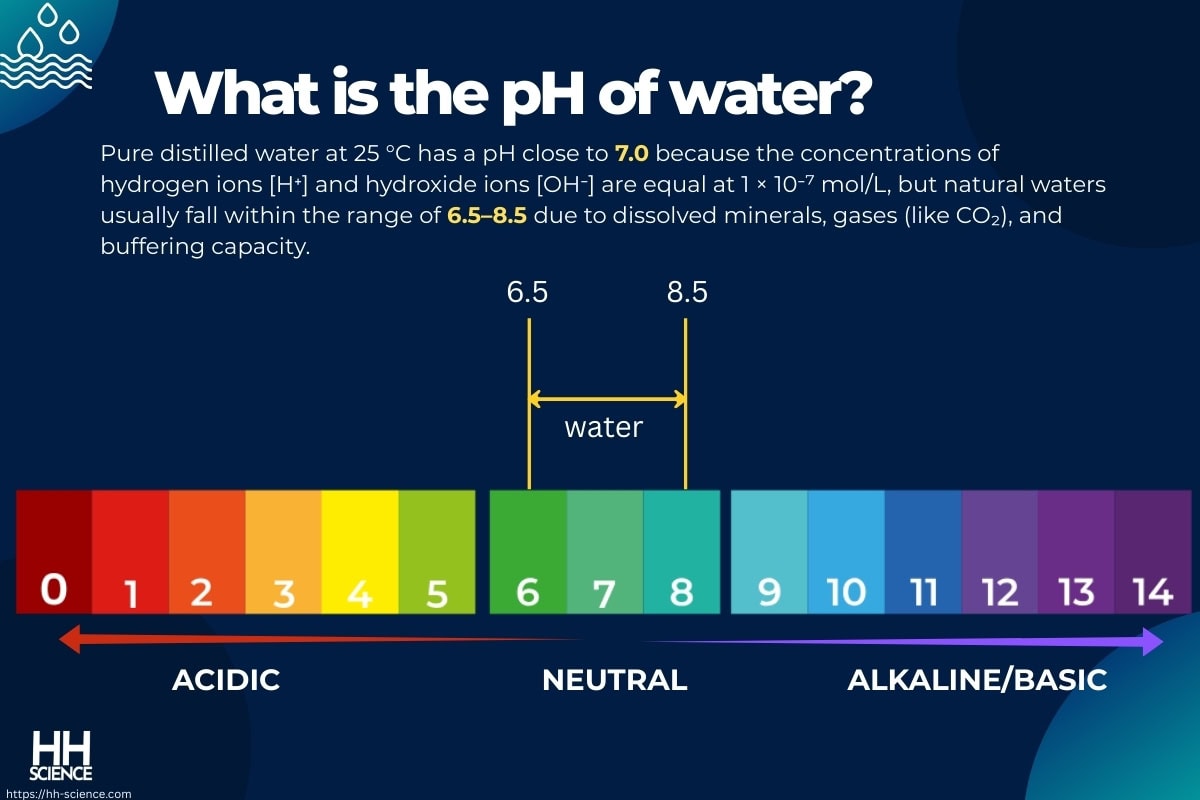
What is the best pH of drinking water?
The best pH of drinking water is in the range of 6.5 to 8.5, as recommended by the World Health Organization (WHO) and the U.S. Environmental Protection Agency (EPA), because this range ensures the water is neither too acidic nor too alkaline for safe consumption. Within this window, drinking water is palatable, non-corrosive to pipes, and compatible with the body’s natural regulation systems: the stomach maintains a highly acidic environment (pH 1.5–3.5) for digestion, while blood is tightly buffered at pH 7.35–7.45. Water within 6.5–8.5 does not disturb these processes and supports overall hydration, mineral balance, and digestive comfort.Why is the pH of water important?
The pH of water is important because it directly affects chemical stability, solubility, and biological viability, making it a critical parameter for health, environment, and industry. In drinking water, maintaining pH between 6.5 and 8.5 ensures taste quality, prevents pipe corrosion, and protects human health; in aquatic ecosystems, pH outside the range of 6.0–9.0 can stress or kill fish and aquatic organisms; in industrial processes such as food production, pharmaceuticals, and chemical manufacturing, precise pH control ensures product quality and safety; and in environmental monitoring, pH is used to detect acid rain (<5.6), ocean acidification (~8.0–8.2 trending downward), and wastewater compliance.Why is the pH of drinking water important?
The pH of drinking water is important because it influences safety, taste, and distribution system integrity, ensuring that water remains both healthy and palatable. When maintained in the recommended range of 6.5–8.5, it prevents corrosive conditions that can leach metals like lead or copper from pipes, avoids scaling that clogs plumbing, and preserves a clean taste. For human health, water in this range does not disrupt the body’s natural regulation—blood stays tightly buffered at pH 7.35–7.45, while the stomach maintains acidity at pH 1.5–3.5 for digestion—making proper drinking water pH essential for safe consumption and reliable supply.What happens if the pH of water is too high?
If the pH of water is too high (above about 8.5), it becomes excessively alkaline, which can cause several consequences for health, infrastructure, and applications. Drinking such water may taste bitter, reduce the effectiveness of chlorine disinfection, and contribute to digestive discomfort, while in the body it can temporarily irritate mucous membranes. In distribution systems, high-pH water can lead to scaling from calcium carbonate precipitation, clogging pipes and reducing efficiency in boilers and cooling systems. In agriculture and aquaculture, water with pH above 9.0 can stress plants and fish by disrupting nutrient uptake and metabolic balance, and in environmental systems, it can shift carbonate equilibria, harming aquatic ecosystems.What is the acceptable pH range of drinking water?
The acceptable pH range of drinking water is 6.5 to 8.5, as defined by the World Health Organization (WHO) and the U.S. Environmental Protection Agency (EPA), because this range ensures the water is chemically stable, non-corrosive, and safe for human consumption. Below 6.5, water becomes acidic, increasing the risk of pipe corrosion and metal leaching (e.g., lead, copper), while above 8.5, water becomes alkaline, causing bitter taste, scaling, and reduced disinfection efficiency. This range also aligns with the body’s natural balance, since blood is tightly buffered at pH 7.35–7.45 and stomach acid operates at pH 1.5–3.5, meaning properly balanced water does not disturb digestion or systemic pH regulation.What are the benefits of high pH water?
The benefits of high pH water (often called alkaline water) include neutralizing excess stomach acid, reducing acid reflux symptoms, providing a smoother taste, supporting hydration, and potentially offering antioxidant effects, because alkaline water has a pH above 7.0 (commonly 8.0–9.5) and can influence acid–base balance, gastrointestinal comfort, and overall drinking experience.- Neutralizing excess stomach acid: Helps counteract acidity in the digestive tract, which may relieve occasional heartburn.
- Reducing acid reflux symptoms: May deactivate pepsin, an enzyme that triggers acid reflux, when consumed at pH 8.8 or higher.
- Providing a smoother taste: Often tastes less bitter or metallic than lower-pH water, making it more palatable for regular drinking.
- Supporting hydration: Some studies suggest alkaline water may improve hydration efficiency after exercise compared to neutral water.
- Potential antioxidant effects: High pH water produced by ionization can contain negatively charged ions that may act as antioxidants, though evidence remains limited.
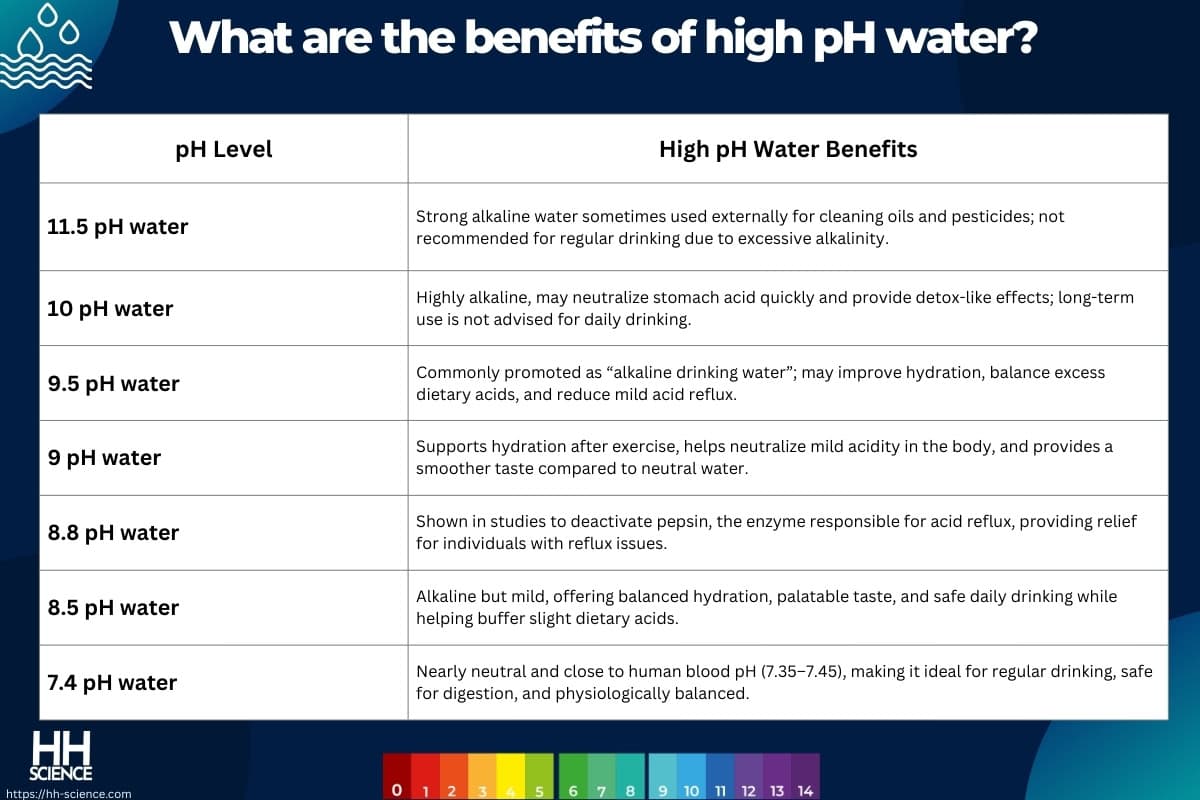
| pH Level | High pH Water Benefits |
| 11.5 pH water | Strong alkaline water sometimes used externally for cleaning oils and pesticides; not recommended for regular drinking due to excessive alkalinity. |
| 10 pH water | Highly alkaline, may neutralize stomach acid quickly and provide detox-like effects; long-term use is not advised for daily drinking. |
| 9.5 pH water | Commonly promoted as “alkaline drinking water”; may improve hydration, balance excess dietary acids, and reduce mild acid reflux. |
| 9 pH water | Supports hydration after exercise, helps neutralize mild acidity in the body, and provides a smoother taste compared to neutral water. |
| 8.8 pH water | Shown in studies to deactivate pepsin, the enzyme responsible for acid reflux, providing relief for individuals with reflux issues. |
| 8.5 pH water | Alkaline but mild, offering balanced hydration, palatable taste, and safe daily drinking while helping buffer slight dietary acids. |
| 7.4 pH water | Nearly neutral and close to human blood pH (7.35–7.45), making it ideal for regular drinking, safe for digestion, and physiologically balanced. |
What are the disadvantages of high pH water?
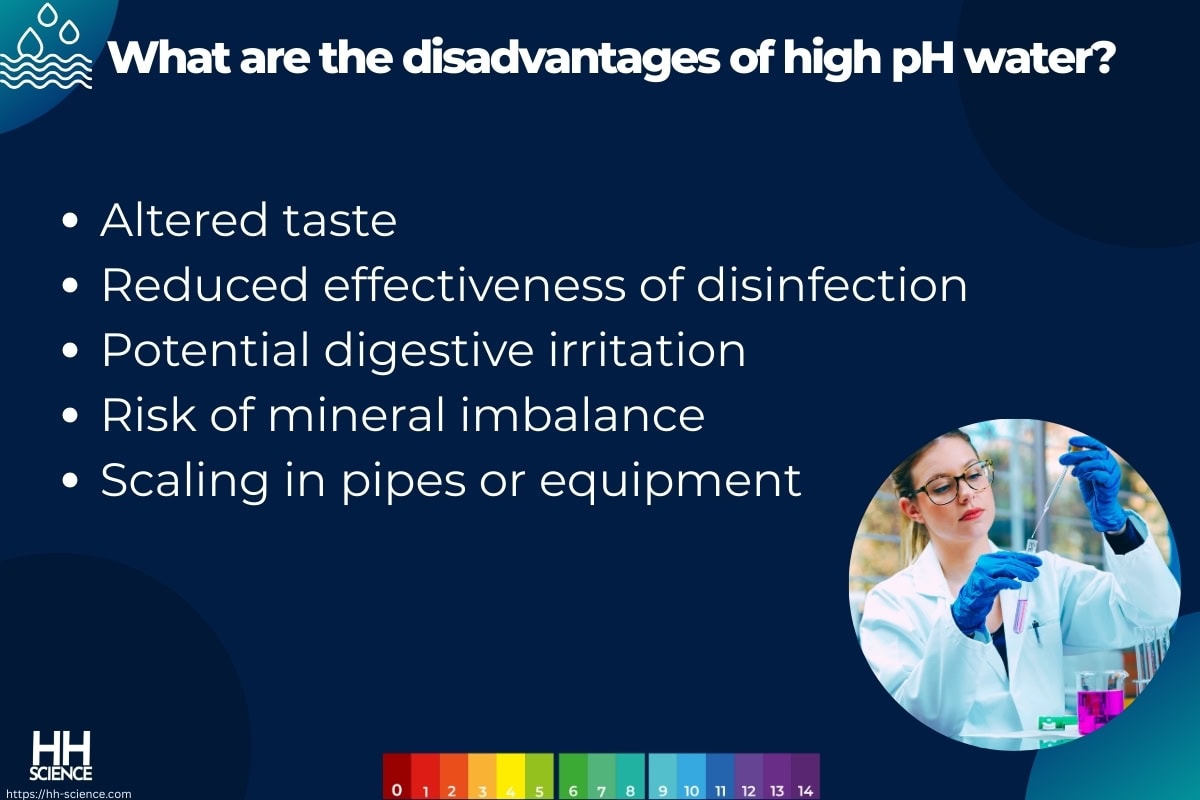
The disadvantages of high pH water include altered taste, reduced effectiveness of disinfection, potential digestive irritation, risk of mineral imbalance, and scaling in pipes or equipment, because water with a pH above 8.5 becomes excessively alkaline and can negatively impact health, water treatment, and infrastructure.- Altered taste: High pH water often tastes bitter or soapy, making it less pleasant to drink.
- Reduced effectiveness of disinfection: Chlorine and other disinfectants lose efficiency at high pH, increasing microbial risks in treated water.
- Potential digestive irritation: Excessively alkaline water may cause nausea, stomach upset, or interfere with natural gastric acidity (pH 1.5–3.5).
- Risk of mineral imbalance: Prolonged consumption can disrupt normal electrolyte balance, especially in individuals with kidney conditions.
- Scaling in pipes or equipment: High pH promotes calcium carbonate precipitation, leading to scale buildup in plumbing, boilers, and cooling systems.
What are the benefits of low pH water?
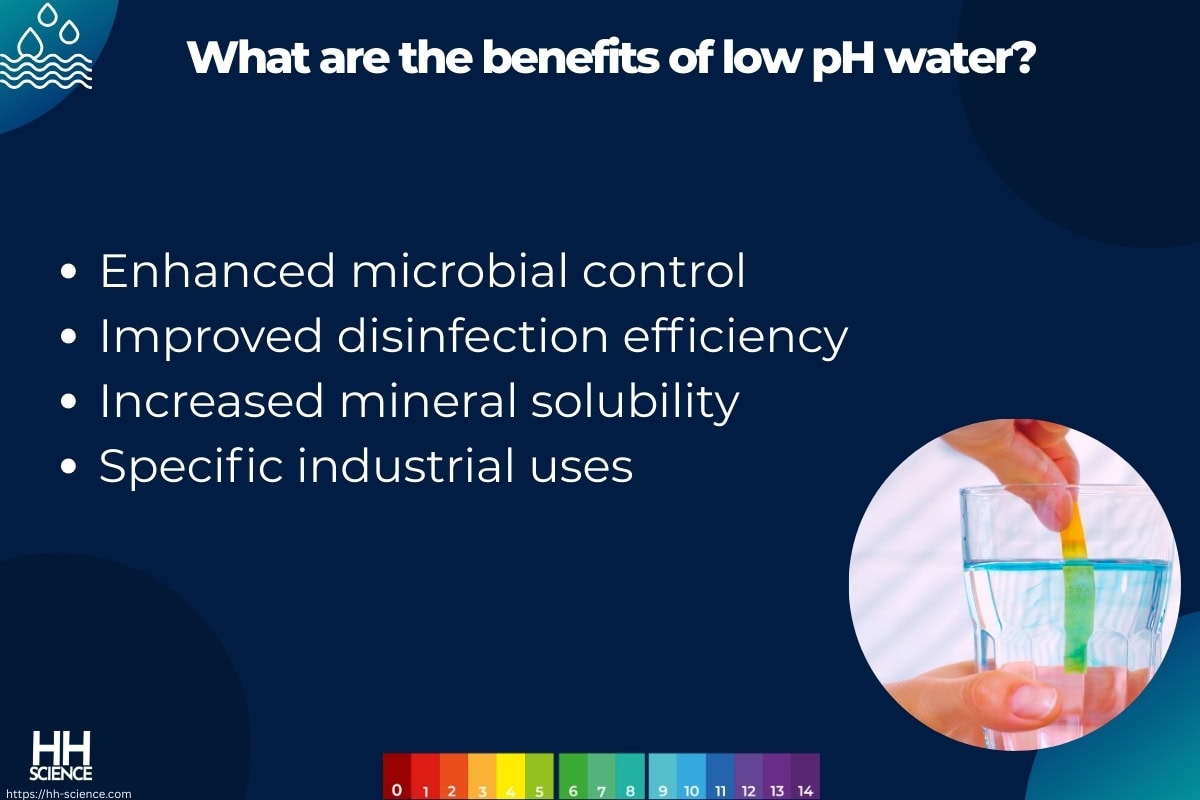
The benefits of low pH water include enhanced microbial control, improved disinfection efficiency, increased mineral solubility, and specific industrial uses, because acidic water (pH below 7.0) can inhibit microbial growth, support chemical processes, and dissolve minerals more effectively than neutral or alkaline water.- Enhanced microbial control: Acidic water can inhibit the growth of bacteria and pathogens, making it useful in sanitation.
- Improved disinfection efficiency: Chlorine and other disinfectants are more effective at lower pH values (around 6.0–7.0), ensuring safer treated water.
- Increased mineral solubility: Low pH promotes the dissolution of minerals such as iron and calcium, aiding in certain extraction or processing applications.
- Specific industrial uses: Acidic water is applied in industries like food processing, textiles, and metal treatment where controlled acidity is required.
What are the disadvantages of low pH water?
The disadvantages of low pH water include corrosion of pipes and equipment, leaching of toxic metals, unpleasant taste, health risks from metal exposure, and harm to aquatic life, because acidic water (pH below 6.5) is aggressive, unstable, and can damage infrastructure, ecosystems, and human health.- Corrosion of pipes and equipment: Acidic water dissolves metals and damages plumbing systems, increasing maintenance costs.
- Leaching of toxic metals: Low pH can mobilize lead, copper, and iron from pipes, contaminating drinking water.
- Unpleasant taste: Acidic water often tastes sour or metallic, reducing drinking quality.
- Health risks from metal exposure: Long-term consumption of low pH water contaminated with leached metals can lead to neurological, gastrointestinal, or kidney problems.
- Harm to aquatic life: Water below pH 5.5 can stress or kill fish, disrupt reproduction, and alter biodiversity in aquatic ecosystems.
What are the effects of drinking high pH water?
The effects of drinking high pH water include possible relief from acid reflux, altered taste perception, improved post-exercise hydration, potential digestive discomfort, and electrolyte imbalance if consumed excessively, because alkaline water (pH above 8.0) can influence stomach acidity, taste experience, and the body’s acid–base balance in both positive and negative ways.- Relief from acid reflux: Alkaline water at pH 8.8 may inactivate pepsin, an enzyme that contributes to reflux symptoms.
- Altered taste perception: High pH water often tastes smoother or less metallic, which some people find more pleasant.
- Improved post-exercise hydration: Some studies suggest alkaline water may enhance hydration efficiency after intense activity.
- Digestive discomfort: Excess consumption can interfere with natural stomach acidity (pH 1.5–3.5), leading to nausea or indigestion.
- Electrolyte imbalance: Long-term high intake may affect mineral and electrolyte levels, especially in individuals with kidney disorders.
What are the effects of drinking low pH water?
The effects of drinking low pH water include metal leaching into the body, sour or metallic taste, gastrointestinal irritation, increased risk of long-term health issues, and dental enamel erosion, because acidic water (pH below 6.5) is corrosive, alters water chemistry, and can negatively impact both infrastructure and human health.- Metal leaching into the body: Low pH water dissolves metals like lead, copper, and iron from pipes, increasing exposure risks.
- Sour or metallic taste: Acidic water alters flavor, making it unpleasant to drink regularly.
- Gastrointestinal irritation: Drinking acidic water may upset the stomach or aggravate acid-related conditions.
- Increased risk of long-term health issues: Chronic exposure to dissolved toxic metals can harm the nervous system, kidneys, or liver.
- Dental enamel erosion: Acidic water can contribute to gradual weakening of tooth enamel, similar to acidic foods and drinks.
How does pH affect the quality of water?
pH affects the quality of water through taste, corrosion and scaling, disinfection efficiency, biological health, and chemical solubility, because hydrogen ion activity determines how water interacts with pipes, treatment processes, ecosystems, and human perception.- Taste: Low pH water tastes sour or metallic, while high pH water can taste bitter or soapy.
- Corrosion and scaling: Acidic water (pH < 6.5) corrodes pipes and leaches metals, while alkaline water (pH > 8.5) promotes calcium carbonate scaling.
- Disinfection efficiency: Chlorine and other disinfectants work best in slightly acidic to neutral pH (around 6.5–7.5).
- Biological health: Aquatic organisms thrive only within certain pH ranges (generally 6.0–9.0), outside of which survival and reproduction are threatened.
- Chemical solubility: pH influences how minerals and contaminants dissolve or precipitate, affecting water clarity, hardness, and safety.
How does pH affect drinking water?
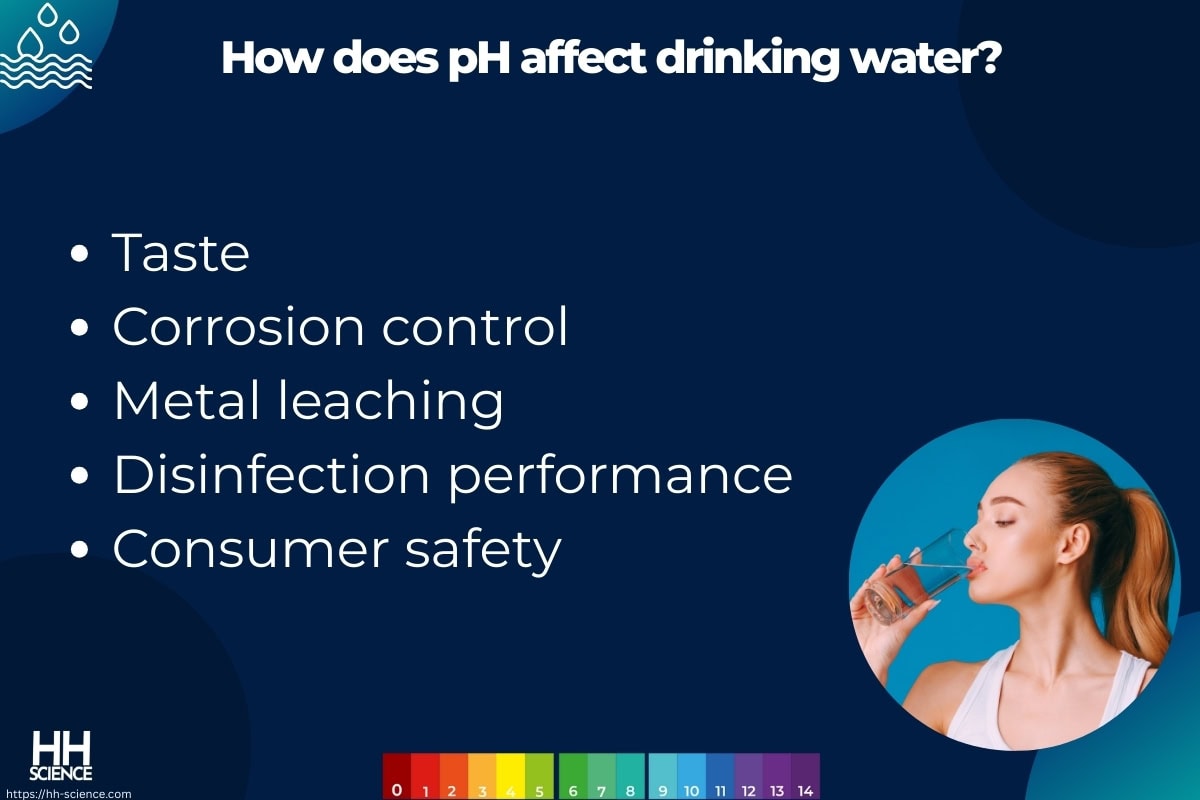
pH affects drinking water through taste, corrosion control, metal leaching, disinfection performance, and consumer safety, because the acidity or alkalinity of water changes how it interacts with pipes, treatment chemicals, and the human body.- Taste: Water with low pH tastes sour or metallic, while high pH water tastes bitter or soapy.
- Corrosion control: Acidic water (pH < 6.5) corrodes plumbing and damages infrastructure.
- Metal leaching: Low pH promotes the release of lead, copper, and iron from pipes into drinking water.
- Disinfection performance: Chlorine and other disinfectants are most effective in the pH range of 6.5–7.5.
- Consumer safety: Keeping pH in the recommended 6.5–8.5 range ensures safe, palatable water that does not harm health or plumbing systems.
What are the common water pH levels?
The common water pH levels range from 6.5 to 8.5 for most natural and treated waters, because this range reflects the balance between dissolved carbon dioxide, carbonate–bicarbonate buffering, and mineral content. Drinking water is recommended to stay within 6.5–8.5 by the WHO and EPA to ensure safety, palatability, and pipe protection; seawater is typically around 8.0–8.2 at 25 °C due to carbonate equilibrium; freshwater systems like rivers and lakes usually vary between 6.0 and 8.5, depending on geology and biological activity; and acid rain has pH values below 5.6 because of atmospheric CO₂, sulfur oxides, and nitrogen oxides dissolving into precipitation.What are the drinking water pH levels?
The drinking water pH levels are typically in the range of 6.5 to 8.5, as recommended by the World Health Organization (WHO) and the U.S. Environmental Protection Agency (EPA), because this range ensures water is chemically stable, safe for consumption, and non-corrosive to distribution systems. Below 6.5, water becomes acidic, increasing the risk of metal leaching from pipes (e.g., lead, copper), while above 8.5, it becomes alkaline, leading to bitter taste, scaling from calcium carbonate, and reduced chlorine disinfection efficiency; staying within this range maintains both consumer health and infrastructure integrity.What are the tap water pH levels?
The tap water pH levels typically range from 6.5 to 8.5, as regulated by agencies like the EPA and WHO, because this range prevents pipe corrosion at low pH and scaling or reduced disinfection efficiency at high pH, ensuring safe delivery to households.What are the Bottled water pH levels?
The bottled water pH levels usually range from 6.0 to 8.5, depending on the source and treatment, because mineral composition, carbonation, and purification methods affect hydrogen ion activity; some bottled waters are slightly acidic due to dissolved CO₂.What are the Sparkling water pH levels?
The sparkling water pH levels are generally between 3.0 and 4.0, because added carbon dioxide forms carbonic acid (H₂CO₃), lowering pH and giving the drink its characteristic tangy taste, though the acidity is mild compared to sodas.What are the mineral water pH levels?
The mineral water pH levels can vary widely from 5.0 to 9.0, depending on dissolved minerals such as calcium, magnesium, and bicarbonates; alkaline mineral waters (pH 8.0–9.0) are common from limestone aquifers, while acidic types come from volcanic sources.What are the filtered or purified water pH levels?
The filtered or purified water pH levels are usually close to 7.0, but can range from 5.5 to 7.5, because processes like reverse osmosis and deionization remove buffering minerals, making the water more sensitive to dissolved CO₂, which lowers its pH slightly.Will drinking alkaline water change the pH of your body?
Yes, drinking alkaline water can temporarily change the pH of your saliva or urine if consumed in significant amounts, but it does not change the tightly regulated pH of your blood or overall body because homeostatic mechanisms (buffer systems, lungs, and kidneys) maintain blood pH strictly between 7.35 and 7.45. The bicarbonate buffer system (H₂CO₃/HCO₃⁻) quickly neutralizes excess acids or bases, meaning alkaline water (pH 8.0–9.5) may influence short-term excretions but cannot override systemic acid–base balance.pH of tap water vs bottled water
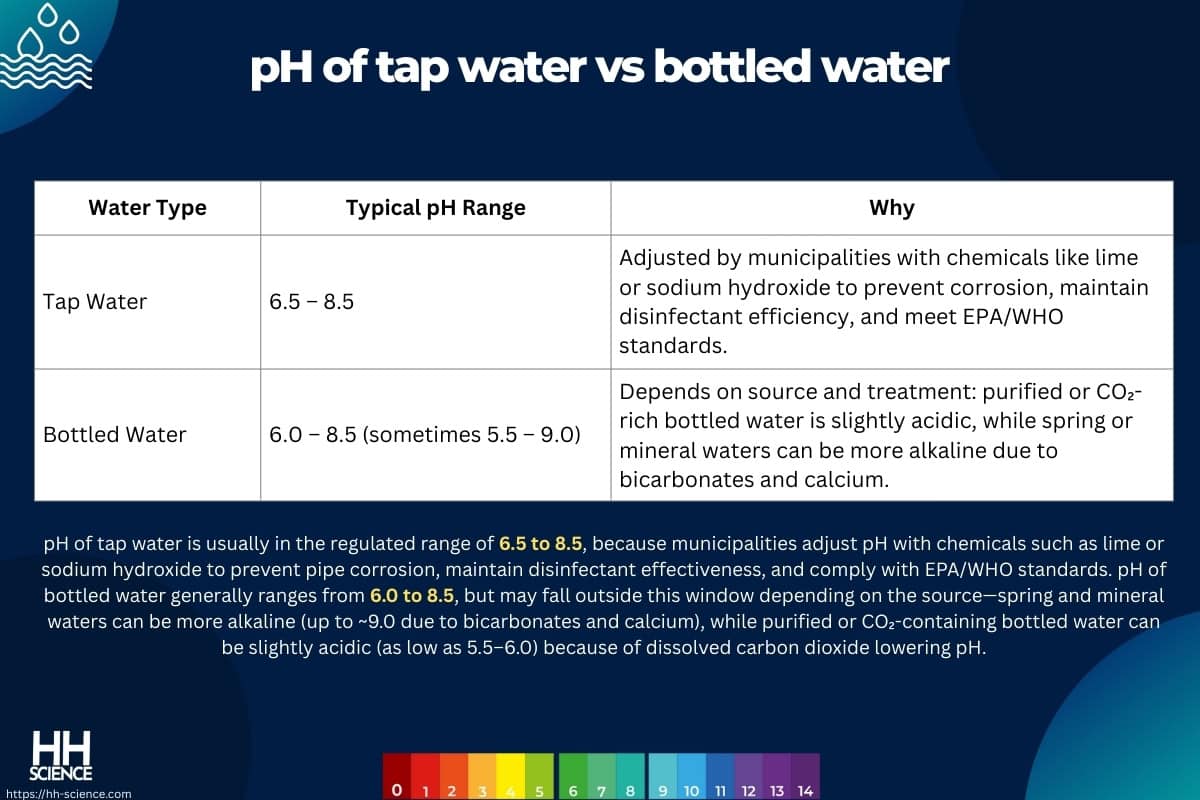
pH of tap water vs bottled water is often compared because both are major sources of drinking water, and their pH differences reflect source quality, treatment methods, and mineral composition, which in turn affect taste, safety, and health standards. pH of tap water is usually in the regulated range of 6.5 to 8.5, because municipalities adjust pH with chemicals such as lime or sodium hydroxide to prevent pipe corrosion, maintain disinfectant effectiveness, and comply with EPA/WHO standards. pH of bottled water generally ranges from 6.0 to 8.5, but may fall outside this window depending on the source—spring and mineral waters can be more alkaline (up to ~9.0 due to bicarbonates and calcium), while purified or CO₂-containing bottled water can be slightly acidic (as low as 5.5–6.0) because of dissolved carbon dioxide lowering pH.| Water Type | Typical pH Range | Why |
| Tap Water | 6.5 – 8.5 | Adjusted by municipalities with chemicals like lime or sodium hydroxide to prevent corrosion, maintain disinfectant efficiency, and meet EPA/WHO standards. |
| Bottled Water | 6.0 – 8.5 (sometimes 5.5 – 9.0) | Depends on source and treatment: purified or CO₂-rich bottled water is slightly acidic, while spring or mineral waters can be more alkaline due to bicarbonates and calcium. |
What is the pH across the United States?
The pH across the United States generally ranges from 6.5 to 8.5 for municipal tap water, as regulated by the EPA, because treatment plants add lime or sodium hydroxide to prevent corrosion and ensure compliance. Natural waters vary more widely: some groundwater sources in the Midwest can be slightly alkaline (pH ~8.5) due to limestone, while areas with acid rain in the Northeast may show surface waters closer to 5.5–6.5.What is the pH across Europe?
The pH across Europe is usually in the range of 6.5 to 9.5, following the EU Drinking Water Directive, because different geological backgrounds (limestone vs granite) and treatment practices create variability. For example, Southern European waters from limestone aquifers are often more alkaline (pH ~8.0–9.0), while Northern Europe with soft, granitic soils may have slightly lower pH (~6.5–7.5).What is the pH across the UK?
The pH across the UK typically ranges from 6.5 to 9.5, as regulated by the UK Drinking Water Inspectorate, because water hardness and treatment chemicals affect hydrogen ion balance. Southern England, with chalk and limestone, often shows more alkaline values (~7.5–8.5), while Scottish and Welsh upland waters tend to be softer and slightly acidic (~6.5–7.2).What is the pH across Asia?
The pH across Asia varies widely, typically 6.0 to 9.0, due to diverse water sources, infrastructure, and regulation. Urban tap waters in developed areas (e.g., Japan, Singapore) are generally maintained around 6.5–8.5, while some rural or untreated supplies in South and Southeast Asia may drop below 6.5 because of acid soils, industrial pollution, or poor treatment control.What is the pH across China?
The pH across China usually falls between 6.5 and 8.5 in urban water systems, as regulated by the GB 5749-2022 Drinking Water Standard, but variability exists: northern regions with carbonate-rich aquifers often have alkaline water (pH ~7.5–8.5), while southern industrial and mining regions may experience lower values (~6.0–6.5) due to acid rain and runoff.What is alkaline water?
Alkaline water is water with a pH greater than 7.0, typically in the range of 8.0 to 9.5, characterized by lower hydrogen ion activity and higher concentrations of alkaline minerals such as calcium, magnesium, and bicarbonates. It can occur naturally from contact with mineral-rich rocks (e.g., limestone aquifers) or be produced artificially through processes like ionization or mineral addition. The purpose of alkaline water is to provide a smoother taste, help neutralize excess dietary acids, and in some cases support hydration or digestive comfort, though the body’s blood pH remains tightly regulated at 7.35–7.45 regardless of consumption.What is the difference between alkaline water and regular water?
The difference between alkaline water and regular water is that alkaline water has a pH above 7.0 (typically 8.0–9.5) due to the presence of alkaline minerals like calcium, magnesium, and bicarbonates or artificial ionization, while regular water is neutral to slightly acidic, with a pH around 6.5–7.5 depending on dissolved carbon dioxide and mineral content. This difference matters because alkaline water tastes smoother, may help buffer excess stomach acid, and is marketed for potential health benefits, whereas regular water is physiologically balanced and already suitable for hydration, with the body maintaining blood pH tightly at 7.35–7.45 regardless of water type.Does alkaline water have side effects?
Yes, alkaline water has potential side effects because excessive consumption (pH above ~9.5) can interfere with natural stomach acidity (pH 1.5–3.5), leading to nausea, indigestion, or reduced absorption of nutrients, but moderate intake within the common range (8.0–9.5) is generally safe for healthy individuals.Is alkaline water natural or artificial?
Yes, alkaline water can be both natural and artificial because it occurs naturally when water passes through mineral-rich rocks like limestone, increasing bicarbonate and calcium content, but it can also be artificially produced by ionizers or mineral additives that raise pH above neutral.Is alkaline water actually healthy?
Yes, alkaline water can have some health benefits because it may neutralize excess stomach acid, reduce acid reflux at pH 8.8, and improve hydration after exercise, but its impact on overall health is limited since blood pH remains tightly regulated at 7.35–7.45 regardless of what type of water is consumed.What are the pros and cons of alkaline water?
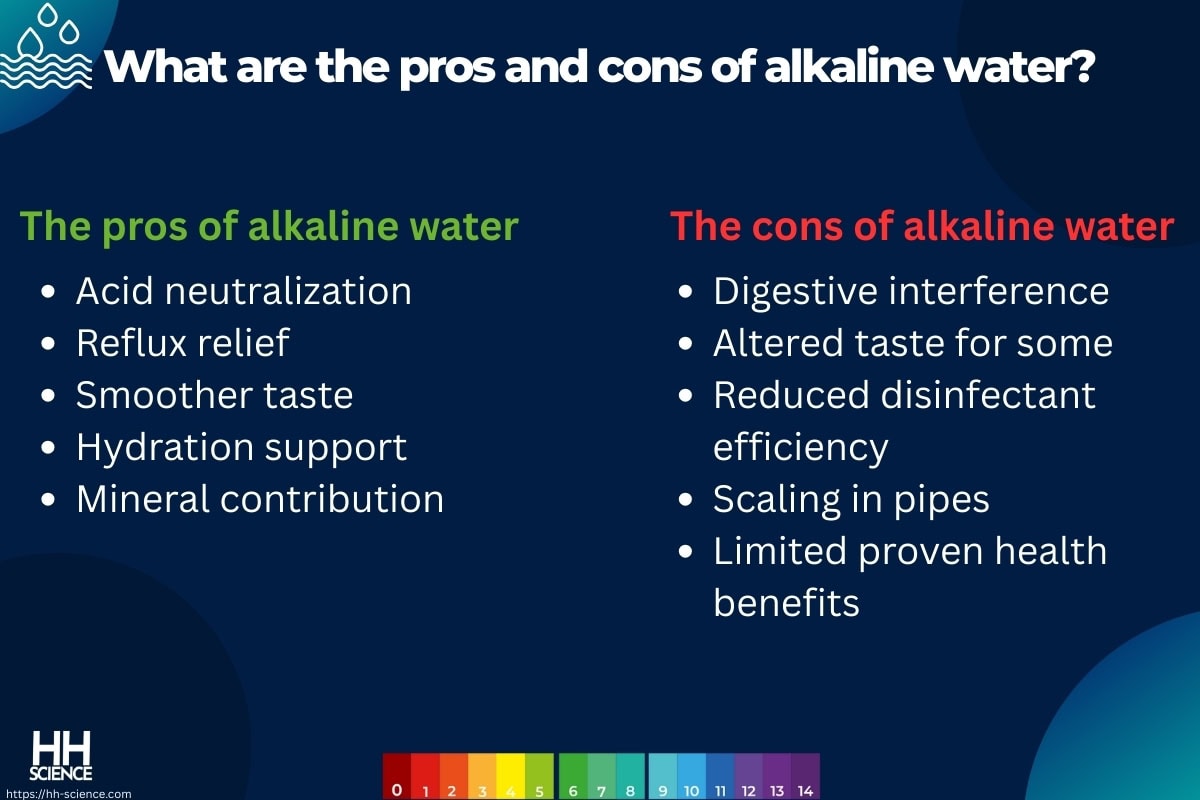
The pros of alkaline water include acid neutralization, reflux relief, smoother taste, hydration support, and mineral contribution, while the cons include digestive interference, altered taste for some, reduced disinfectant efficiency, scaling in pipes, and limited proven health benefits, because alkaline water (pH 8.0–9.5) changes hydrogen ion balance and mineral chemistry in ways that can be helpful or problematic depending on context. The pros of alkaline water are listed below.- Acid neutralization: Helps buffer excess dietary or gastric acids.
- Reflux relief: pH 8.8 water can deactivate pepsin, reducing acid reflux symptoms.
- Smoother taste: Often perceived as less metallic or bitter than lower-pH water.
- Hydration support: Some studies suggest better post-exercise hydration compared to neutral water.
- Mineral contribution: Provides calcium, magnesium, or bicarbonates that support electrolyte balance.
- Digestive interference: Excess intake can disrupt natural stomach acidity (pH 1.5–3.5), impairing digestion.
- Altered taste for some: High alkalinity may taste soapy or flat to certain drinkers.
- Reduced disinfectant efficiency: At high pH, chlorine in water treatment is less effective.
- Scaling in pipes: Alkaline water promotes calcium carbonate deposits, clogging plumbing and equipment.
- Limited proven health benefits: Most claims beyond hydration and reflux relief lack strong scientific evidence.
Who should not drink alkaline water?
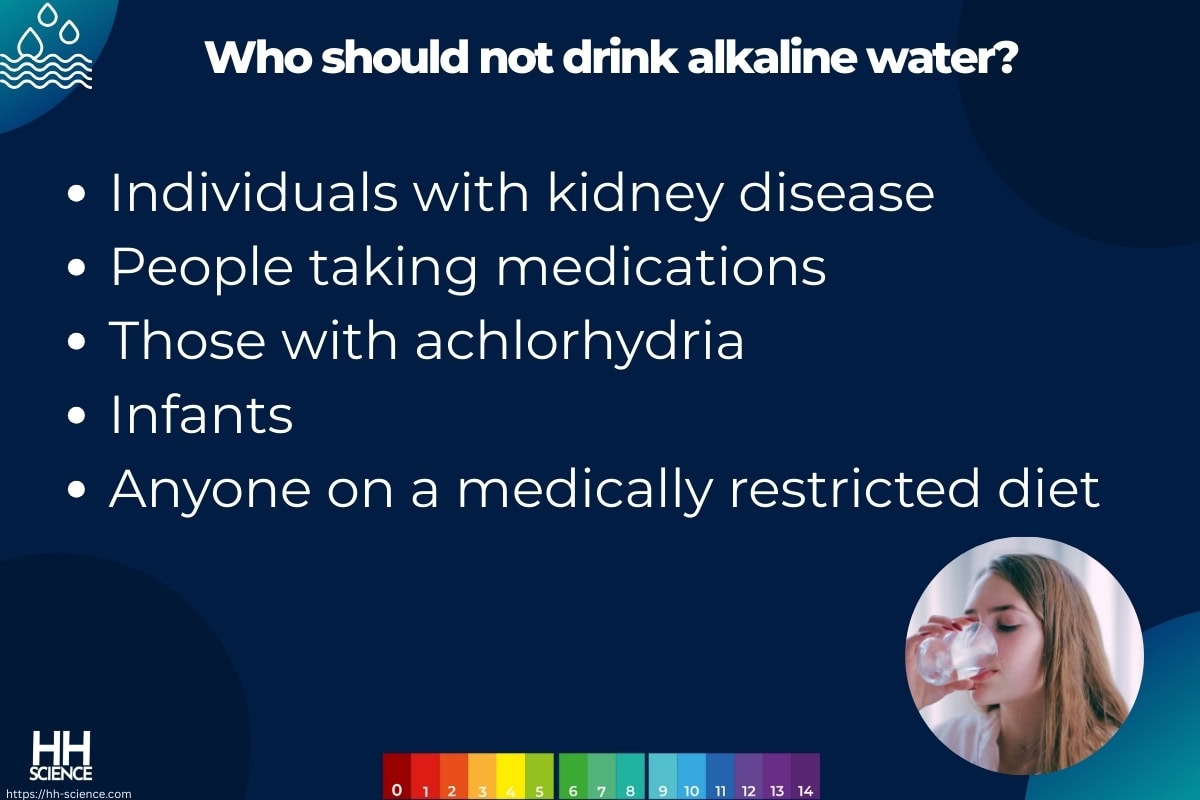
People who should not drink alkaline water include individuals with kidney disease, people taking medications that affect electrolyte balance, those with achlorhydria (low stomach acid), infants, and anyone on a medically restricted diet, because alkaline water (pH 8.0–9.5) can alter mineral absorption, stomach acidity, and fluid balance in vulnerable groups.- Individuals with kidney disease: May struggle to excrete excess minerals like calcium and magnesium from alkaline water, risking electrolyte imbalance.
- People taking medications: Drugs such as diuretics or proton pump inhibitors can interact with changes in mineral levels and stomach acidity.
- Those with achlorhydria: Already have low stomach acid (normally pH 1.5–3.5), and alkaline water can further impair protein digestion and nutrient absorption.
- Infants: Their developing digestive systems are sensitive, and alkaline water may disrupt natural acid–base balance.
- Anyone on a medically restricted diet: Patients with specific metabolic or electrolyte conditions (e.g., metabolic alkalosis) should avoid additional alkalinity.
Where can you get alkaline water?
You can get alkaline water from natural sources, bottled products, home ionizers, mineral additives, and specialized filters, because alkalinity comes either from contact with mineral-rich rocks in nature or from artificial processes that raise water’s pH above neutral. Natural alkaline water is found in springs or wells that flow through limestone, increasing bicarbonates, calcium, and magnesium (pH ~8.0–9.0). Bottled alkaline waters are commercially sold with adjusted pH levels, often labeled between 8.0 and 9.5. Home ionizers use electrolysis to separate acidic and alkaline fractions, while mineral drops or powders can be added to purified water to increase its alkalinity. Specialized alkaline filters also release minerals like calcium carbonate into tap water, raising its pH.What are the natural water pH levels?
The natural water pH levels generally range from 6.0 to 9.0, because environmental factors such as dissolved carbon dioxide, carbonate–bicarbonate buffering, mineral content, and biological activity control hydrogen ion activity. Rainwater is naturally slightly acidic (~5.6) due to dissolved atmospheric CO₂ forming carbonic acid, while rivers and lakes typically range from 6.5 to 8.5, influenced by geology and organic matter. Groundwater can be more alkaline (up to ~9.0) when flowing through limestone or carbonate-rich aquifers, whereas ocean water remains buffered around 8.0–8.2 at 25 °C due to carbonate equilibrium.What are the Rainwater pH levels?
The rainwater pH levels are typically around 5.6, because atmospheric carbon dioxide dissolves in water to form carbonic acid (H₂CO₃), lowering the pH slightly below neutral; in polluted regions with sulfur oxides (SO₂) and nitrogen oxides (NOₓ), acid rain can reach pH values as low as 4.0–4.5.What are the pH levels of groundwater (wells, aquifers)?
The groundwater pH levels usually range from 6.0 to 9.0, depending on the geological formations; aquifers rich in limestone or carbonates increase alkalinity (pH ~7.5–9.0), while granite or volcanic terrains yield slightly acidic waters (~6.0–6.5).What are the River water pH levels?
The river water pH levels generally fall between 6.5 and 8.5, because flowing water constantly exchanges gases with the atmosphere, interacts with soils and rocks, and receives inputs from biological activity and runoff, all of which buffer pH within this range.What are the Lake water pH levels?
The lake water pH levels typically range from 6.0 to 9.0, but can vary seasonally due to algal activity, temperature, and dissolved CO₂; productive lakes with photosynthesis often reach alkaline levels (>8.0), while humic lakes in forested areas may drop to ~6.0.What are the pH levels of ocean water (surface, deep, estuary/brackish)?
The ocean water pH levels are normally around 8.0 to 8.2 at the surface due to carbonate–bicarbonate buffering, but can drop to 7.5–7.8 in deep waters where CO₂ accumulates, and estuaries or brackish zones show wider variation (7.0–8.5) depending on freshwater and tidal mixing.What are the Glacial or meltwater pH levels?
The glacial or meltwater pH levels are usually 6.0 to 7.0, because freshly melted ice contains very low dissolved minerals and absorbs atmospheric CO₂, making it slightly acidic; as it flows over rocks, pH may rise toward neutrality depending on mineral content.What are the treated water pH levels?
The treated water pH levels are generally maintained in the range of 6.5 to 8.5, because water treatment facilities adjust acidity and alkalinity to ensure safety, stability, and regulatory compliance. Chemicals such as lime (Ca(OH)₂), sodium hydroxide (NaOH), or sodium carbonate (Na₂CO₃) are added to raise pH and prevent pipe corrosion, while carbon dioxide may be used to lower overly alkaline water. Keeping treated water in this range optimizes chlorine disinfection efficiency (best at pH 6.5–7.5), prevents scaling from calcium carbonate (which occurs at pH > 8.5), and ensures water remains palatable and safe for distribution to consumers.What is the pH level of Municipal water supply (treated tap water)?
The pH level of municipal water supply is typically 6.5 to 8.5, as regulated by agencies like the EPA and WHO, because treatment plants adjust pH with lime or sodium hydroxide to minimize pipe corrosion, maintain chlorine disinfection efficiency, and ensure safe, palatable drinking water.What is the pH level of Swimming pool water?
The pH level of swimming pool water is ideally maintained between 7.2 and 7.8, because chlorine disinfection is most effective in this range, while water below 7.2 causes eye and skin irritation and water above 7.8 reduces chlorine activity and increases calcium scaling.What is the pH level of Spa/hot tub water?
The pH level of spa or hot tub water is also kept between 7.2 and 7.8, because heated water accelerates chemical reactions and skin sensitivity; this range ensures effective disinfection, comfort for bathers, and prevention of scaling or corrosion in spa equipment.What is the pH level of Desalinated water?
The pH level of desalinated water (from reverse osmosis or distillation) is usually 5.5 to 7.0 before treatment, because the removal of buffering minerals and absorption of atmospheric CO₂ makes it slightly acidic; post-treatment remineralization with calcium carbonate or lime typically adjusts it to 6.5–8.5 for safe distribution.What are the wastewater & industrial waters’ pH levels?
The wastewater & industrial waters’ pH levels can range widely from 4.0 to 12.0, because discharges depend on the type of process, chemicals used, and treatment applied. Domestic wastewater (sewage) usually falls between 6.0 and 8.0, as it is influenced by human waste and household discharges. Industrial wastewater varies much more: acidic effluents from mining, metal plating, or textile dyeing can drop below pH 4.0, while alkaline effluents from cement, paper mills, or chemical manufacturing may exceed pH 11.0. Regulations typically require treated wastewater to be neutralized to about 6.0–9.0 before discharge, because extreme pH values damage aquatic ecosystems, corrode infrastructure, and reduce treatment efficiency in biological processes.What is the pH level of domestic wastewater (sewage)?
The pH level of domestic wastewater is typically 6.0 to 8.0, because it is influenced by human waste, food residues, soaps, and detergents, which generally keep it near neutral; values outside this range can disrupt biological treatment processes in wastewater plants.What is the pH level of industrial wastewater (chemical, textile, food, pharmaceutical, mining, etc.)?
The pH level of industrial wastewater can range from 4.0 to 12.0, depending on the industry: textile dyeing and metal plating often produce acidic effluents (pH < 5.0), while paper mills, cement plants, and chemical manufacturers discharge alkaline wastewaters (pH > 10.0); regulations usually require neutralization to 6.0–9.0 before discharge.What is the pH level of stormwater runoff?
The pH level of stormwater runoff generally ranges from 6.0 to 8.5, because it is a mix of rainwater (naturally ~5.6) and surface contact with soil, concrete, metals, or organic matter, which can raise or lower pH; urban runoff may be slightly higher in alkalinity due to contact with concrete and road dust.What is the pH level of cooling tower water?
The pH level of cooling tower water is usually controlled between 6.5 and 9.0, because treatment chemicals, scaling, and corrosion control require this balance: acidic water accelerates corrosion of pipes and equipment, while alkaline water (>9.0) promotes calcium carbonate scaling.What is the pH level of boiler feed water?
The pH level of boiler feed water is typically adjusted to 8.5 to 9.5, because slightly alkaline conditions help minimize corrosion of steel pipes and boilers while preventing scale formation; condensate return water is also kept alkaline using volatile amines to protect the system.What are the specialized / laboratory water pH levels?
The specialized / laboratory water pH levels vary depending on the purification process, generally ranging from 5.0 to 7.5, because removing dissolved salts and buffers makes the water more sensitive to dissolved gases like CO₂. Distilled water has a pH near 7.0 when freshly produced but quickly drops to 5.5–6.0 upon exposure to air due to carbonic acid formation. Deionized (DI) water typically measures between 5.5 and 7.0, reflecting the same CO₂ sensitivity and lack of buffering capacity. Ultrapure water (Type I laboratory water) should be theoretically neutral at 7.0, but in practice is unstable and often reads between 5.0 and 7.0, since trace CO₂ absorption and electrode limitations influence readings; in all cases, the lack of ions makes pH measurement less stable, requiring specialized low-conductivity electrodes.What is the pH level of distilled water?
The pH level of distilled water is theoretically 7.0 at 25 °C when freshly produced, but in practice it often measures 5.5 to 6.5, because it quickly absorbs carbon dioxide (CO₂) from the air, forming carbonic acid (H₂CO₃) that lowers hydrogen ion activity.What is the pH level of deionized (di) water?
The pH level of deionized water usually ranges from 5.5 to 7.0, because the removal of dissolved salts and buffers makes it highly sensitive to CO₂ absorption, and its very low ionic strength can also cause instability or drift in electrode measurements.What is the pH level of ultrapure water (type I lab water)?
The pH level of ultrapure water is theoretically 7.0 at 25 °C, but in practice it is unstable and commonly observed between 5.0 and 7.0, because even trace amounts of dissolved CO₂ and the lack of buffering capacity lead to rapid shifts, while standard electrodes struggle to give stable readings in such low-conductivity water.What are the agricultural & aquatic system waters’ pH levels?
The agricultural & aquatic system waters’ pH levels generally range from 5.5 to 9.0, because maintaining the right hydrogen ion balance is essential for plant nutrient uptake, soil chemistry, and aquatic organism health. Irrigation water is usually acceptable between 6.5 and 8.4, since outside this range salts or toxic elements can become more soluble. Soil leachate water often reflects soil acidity, commonly 5.5 to 7.5, depending on fertilizer use and soil minerals. Hydroponic nutrient solutions are carefully controlled at 5.5 to 6.5, ensuring maximum availability of macro- and micronutrients. Aquaculture water typically ranges from 6.5 to 9.0, as fish and shrimp are highly sensitive to pH shifts. Aquarium water varies by type: freshwater tanks are usually kept at 6.5 to 7.5, while marine and reef tanks require more alkaline conditions around 8.0 to 8.4 to mimic ocean chemistry.What is the pH level of Irrigation water?
The pH level of irrigation water is generally 6.5 to 8.4, because water outside this range can cause soil structure problems, reduce nutrient availability, and increase toxic ion solubility; most crops perform best when irrigation water is near neutral.What is the pH level of soil leachate water?
The pH level of soil leachate water typically ranges from 5.5 to 7.5, because it reflects soil chemistry, fertilizer application, and organic acid production; acidic leachates can mobilize metals like aluminum, while neutral levels favor balanced nutrient availability.What is the pH level of hydroponic nutrient solutions?
The pH level of hydroponic nutrient solutions is carefully controlled at 5.5 to 6.5, because this range maximizes solubility and uptake of essential nutrients such as nitrogen, phosphorus, iron, and manganese, while preventing precipitation of calcium and magnesium salts.What is the pH level of aquaculture water (fish farms, ponds, tanks)?
The pH level of aquaculture water is usually kept between 6.5 and 9.0, because fish and shrimp are highly sensitive to pH shifts; acidic water (<6.0) can damage gills and reduce growth, while alkaline water (>9.0) increases ammonia toxicity.What is the pH level of aquarium water (freshwater, marine, reef tanks)?
The pH level of aquarium water depends on the type: freshwater tanks are typically maintained at 6.5 to 7.5, marine tanks at 8.0 to 8.3, and reef aquariums at 8.1 to 8.4, because these ranges replicate natural habitats and ensure stability for fish, corals, and invertebrates.What are the environmental waters pH levels?
The environmental waters’ pH levels generally range from 4.0 to 9.0, because natural and human factors such as geology, atmospheric inputs, and pollution influence hydrogen ion balance in these ecosystems. Wetlands and marsh waters are often acidic, around 4.0 to 6.0, due to organic acids from decaying vegetation. Acid mine drainage waters can drop below pH 4.0, as sulfide minerals (like pyrite) oxidize to form sulfuric acid. Thermal spring waters vary widely from pH 5.0 to 9.0, depending on dissolved gases (like CO₂, H₂S) and local mineral content. These ranges are important because many aquatic organisms survive only between pH 6.0 and 9.0, and extreme deviations can indicate serious environmental stress or contamination.What is the pH level of Wetlands and marsh water?
The pH level of wetlands and marsh water is typically 4.0 to 6.0, because decaying organic matter releases humic and fulvic acids, and limited water circulation reduces buffering capacity; this acidity shapes the ecosystem, favoring acid-tolerant plants and microorganisms.What is the pH level of Acid mine drainage water?
The pH level of acid mine drainage water can be as low as 2.0 to 4.0, because sulfide minerals such as pyrite (FeS₂) oxidize when exposed to oxygen and water, forming sulfuric acid (H₂SO₄) and releasing iron and other metals; this creates highly acidic, metal-rich effluents harmful to aquatic ecosystems.What is the pH level of Thermal spring water (hot springs, geysers)?
The pH level of thermal spring water ranges widely from 5.0 to 9.0, because dissolved gases and minerals strongly influence chemistry: CO₂-rich springs are acidic (pH ~5.0–6.0), while alkaline springs containing bicarbonates, carbonates, or silica can reach pH values above 8.5–9.0.How do you test pH of water?
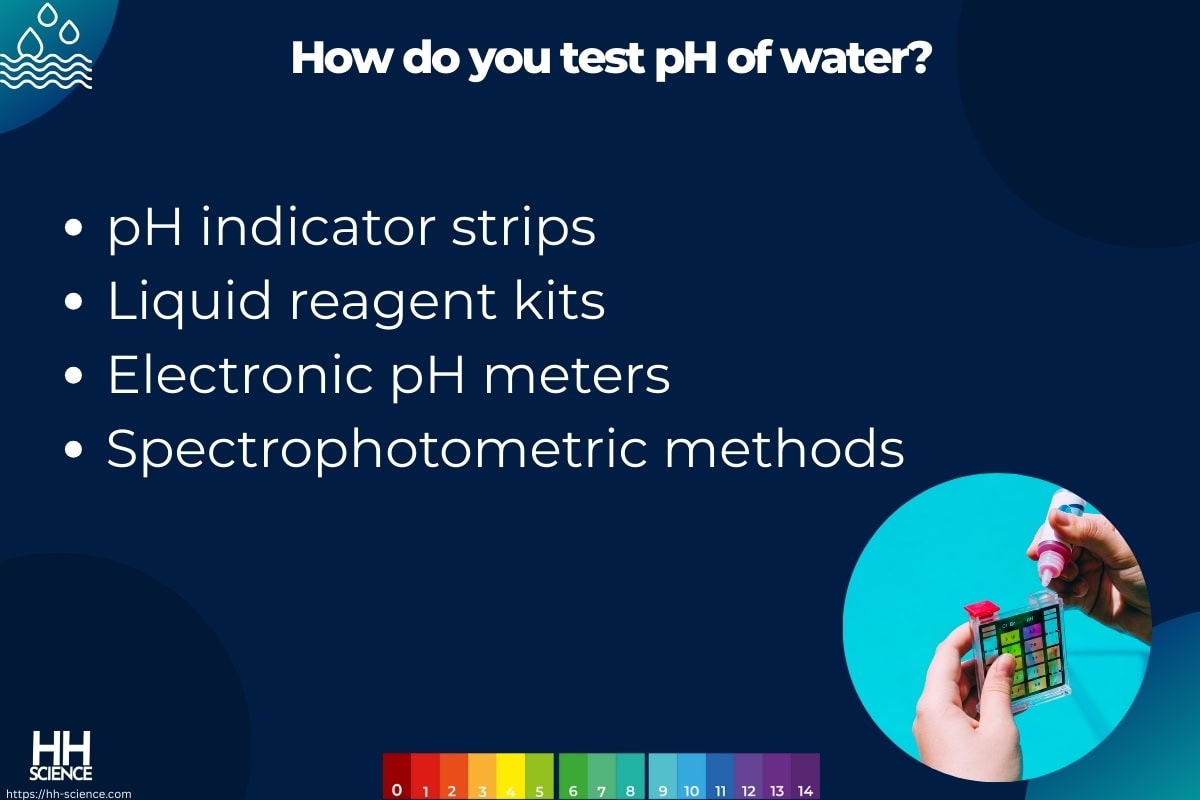
You can test the pH of water using pH indicator strips, liquid reagent kits, electronic pH meters, and spectrophotometric methods, because each method detects hydrogen ion activity differently and is chosen based on the required accuracy, cost, and application.- pH indicator strips: Paper strips impregnated with pH-sensitive dyes change color when dipped in water and are compared to a reference chart (accuracy ±0.2–0.5 pH).
- Liquid reagent kits: Drops of indicator solution are added to a water sample, producing a color change that is matched against a scale (accuracy ±0.2–0.3 pH).
- Electronic pH meters: Glass or ISFET electrodes measure the electrochemical potential of hydrogen ions and convert it to a digital pH value, with precision up to ±0.01 pH.
- Spectrophotometric methods: Laboratory instruments measure absorbance changes of pH-sensitive dyes at specific wavelengths, offering high accuracy for research and environmental monitoring.
How do you test the pH of drinking water?
You can test the pH of drinking water by using calibrated electronic pH meters, which provide high accuracy (±0.01–0.1 pH units), or with pH indicator strips and liquid reagent kits, which offer quick approximate results (±0.2–0.5 pH units). For regulatory compliance, drinking water is typically maintained between pH 6.5 and 8.5, so precise testing ensures safety, taste quality, and protection against pipe corrosion or scaling.How do you test the pH of natural watersr?
You can test the pH of natural waters (rain, rivers, lakes, oceans) with portable pH meters or field probes equipped with temperature compensation, providing accuracy of ±0.01–0.1 pH units; typical values range from 6.0 to 9.0, with oceans buffered around 8.0–8.2.How do you test the pH of treated waters?
You can test the pH of treated waters (tap, pools, spas, desalinated) using bench or handheld pH meters calibrated with buffer solutions (pH 4.00, 7.00, 10.00), since regulatory targets (drinking water 6.5–8.5, pools 7.2–7.8) require precise monitoring to balance safety, taste, and infrastructure protection.How do you test the pH of wastewater & industrial waters?
You can test the pH of wastewater and industrial waters with robust combination pH electrodes or in-line process analyzers that withstand high solids, chemicals, and extreme ranges (pH 4.0–12.0); frequent calibration ensures accuracy for discharge limits (commonly 6.0–9.0).How do you test the pH of specialized / laboratory waters?
You can test the pH of specialized waters (distilled, deionized, ultrapure) using low-conductivity pH electrodes designed for very low ionic strength, because standard electrodes drift; measurements are unstable but usually fall between 5.0 and 7.0, influenced by dissolved CO₂.How do you test the pH of agricultural & aquatic system waters?
You can test the pH of agricultural and aquatic system waters (irrigation, hydroponics, aquaculture, aquariums) with portable or continuous pH probes, since optimal ranges are crop- or species-specific (e.g., hydroponics 5.5–6.5, aquaculture 6.5–9.0, reef aquariums 8.1–8.4) and require regular monitoring.How do you test the pH of environmental waters?
You can test the pH of environmental waters (wetlands, acid mine drainage, hot springs) using field pH meters with rugged probes or spectrophotometric methods for high precision, as these waters often fall outside neutral (acidic marshes pH 4.0–6.0, acid mine drainage pH 2.0–4.0, thermal springs pH 5.0–9.0).How do you calculate the pH of water?
You calculate the pH of water by determining the hydrogen ion concentration [H⁺] in moles per liter and applying the formula pH = –log₁₀[H⁺], where a neutral solution at 25 °C has [H⁺] = 1 × 10⁻⁷ mol/L, giving pH 7.0. You can obtain [H⁺] either directly from chemical equilibrium constants (such as the ionization of water, K_w = 1 × 10⁻¹⁴ at 25 °C) or indirectly by measuring electrode potential with a pH meter, which converts the millivolt signal according to the Nernst equation (≈59.16 mV per pH unit at 25 °C).How do you calculate pH of water at different temperatures?
You calculate the pH of water at different temperatures by accounting for the temperature dependence of the water ionization constant (K_w) and the electrode slope in the Nernst equation. At 25 °C, K_w = 1.0 × 10⁻¹⁴, giving [H⁺] = 1 × 10⁻⁷ M and pH 7.0, but since K_w increases with temperature, the neutral pH decreases (e.g., pH ≈ 6.92 at 37 °C and ≈ 6.63 at 60 °C), while the Nernst slope increases from 59.16 mV/pH at 25 °C to about 64.10 mV/pH at 50 °C, meaning you must use pH = –log₁₀[H⁺] with temperature-adjusted [H⁺] values for accurate results.What affects pH of water?
Factors affects pH of water includes dissolved gases, mineral content, temperature, biological activity, pollution, and treatment chemicals, because each of these factors changes hydrogen ion activity and the balance between acidic and alkaline species in the water.- Dissolved gases: Carbon dioxide forms carbonic acid, lowering pH, while degassing raises it.
- Mineral content: Limestone or carbonate rocks increase alkalinity, while granite or volcanic soils produce more acidic water.
- Temperature: Higher temperatures increase K_w, lowering neutral pH (e.g., ~7.0 at 25 °C vs ~6.6 at 60 °C).
- Biological activity: Photosynthesis consumes CO₂ and raises pH, while respiration and decomposition release CO₂ and lower pH.
- Pollution: Industrial effluents, acid rain, or mine drainage can shift pH to extremes, harming ecosystems.
- Treatment chemicals: Additives like lime, sodium hydroxide, or chlorine adjust water pH to maintain stability, safety, and disinfection efficiency.
How does salinity affect pH of water?
Salinity affects pH of water by increasing the concentration of dissolved salts (e.g., NaCl, CaCO₃, MgSO₄), which raise alkalinity and buffering capacity, stabilizing pH against rapid fluctuations; in seawater with salinity ~35 PSU, this buffering keeps surface pH around 8.0–8.2 despite continuous CO₂ exchange.How does dissolved oxygen affect pH of water?
Dissolved oxygen affects pH of water by influencing biological processes rather than directly changing hydrogen ion activity; high DO from photosynthesis is associated with higher pH (CO₂ consumption), while low DO from respiration and decomposition corresponds with CO₂ release and lower pH, especially in eutrophic waters.How does CO2 affect the pH of water?
CO₂ affects pH of water by dissolving to form carbonic acid (H₂CO₃), which dissociates into H⁺ and bicarbonate (HCO₃⁻), lowering pH; this is why rainwater is naturally ~5.6 and why ocean acidification from excess atmospheric CO₂ has reduced average seawater pH from ~8.2 to ~8.1 over the past century.How does soil affect the pH of water?
Soil affects pH of water by leaching minerals and organic acids: carbonate-rich soils (limestone, chalk) increase alkalinity and raise pH above 7.5, while acidic soils with high organic matter or sulfides release humic acids and lower water pH to below 6.5; this interaction explains why groundwater pH varies with local geology.Why is the pH of water 7?
The pH of water is 7 at 25 °C because pure water undergoes autoionization (H₂O ⇌ H⁺ + OH⁻), producing equal concentrations of hydrogen ions [H⁺] and hydroxide ions [OH⁻], each at 1 × 10⁻⁷ mol/L. Applying the formula pH = –log₁₀[H⁺] gives –log₁₀(1 × 10⁻⁷) = 7.0, which is defined as neutral since hydrogen ion activity equals hydroxide ion activity under standard conditions.Is the pH of water always 7?
No, the pH of water is not always 7 because pure water is only exactly neutral (pH 7.0) at 25 °C, while temperature changes the ionization constant (K_w) and dissolved CO₂ lowers pH to around 5.5–6.5 in typical distilled or rainwater.Can electricity change the pH of water?
Yes, electricity can change the pH of water because electrolysis splits water into acidic (H⁺-rich) and alkaline (OH⁻-rich) fractions, which is the principle behind alkaline ionizers that produce water at pH ~4.0–10.0.Can a filter change the pH of water?
Yes, a filter can change the pH of water if it contains mineral cartridges (e.g., calcium carbonate, magnesium oxide) that raise alkalinity, or if it removes alkaline minerals (like in reverse osmosis), lowering the pH.Can you change the pH of water?
Yes, you can change the pH of water by adding acids (e.g., lemon juice, HCl) to lower it or bases (e.g., baking soda, NaOH) to raise it, directly altering the hydrogen ion concentration.Does a brita filter change the pH of water?
Yes, a Brita filter can slightly change the pH of water because it reduces chlorine and some minerals; depending on source water, this usually shifts pH by ~0.2–0.5 units, though the effect is minor.Does adding water change pH of buffer?
No, adding water does not significantly change the pH of a buffer because buffers resist pH shifts by maintaining the ratio of weak acid to conjugate base, though extreme dilution may reduce buffering capacity.Does lemon change the pH of water?
Yes, lemon changes the pH of water because it contains citric acid (pKa ≈ 3.1, 4.7, 6.4), lowering water pH to around 2.0–3.0 depending on concentration.Does salt affect pH of water?
Yes, salt can affect the pH of water depending on the ions: neutral salts like NaCl have no effect, while salts of weak acids or bases (e.g., Na₂CO₃, NH₄Cl) hydrolyze in water and shift pH significantly.Does temperature affect pH of water?
Yes, temperature affects the pH of water because the ionization constant (K_w) increases with temperature, lowering neutral pH from 7.0 at 25 °C to about 6.6 at 60 °C, even though [H⁺] and [OH⁻] remain equal.Why does pH of water decrease when temperature increases?
pH of water decreases when temperature increases because the ionization constant of water (K_w) rises with temperature, producing more hydrogen ions [H⁺] and hydroxide ions [OH⁻] in equilibrium. At 25 °C, K_w = 1.0 × 10⁻¹⁴, giving [H⁺] = 1 × 10⁻⁷ M and pH 7.0, but at 60 °C, K_w ≈ 9.6 × 10⁻¹⁴, so [H⁺] ≈ 9.8 × 10⁻⁷ M and pH falls to about 6.6, even though the solution remains neutral because [H⁺] = [OH⁻].How do you increase pH of water?
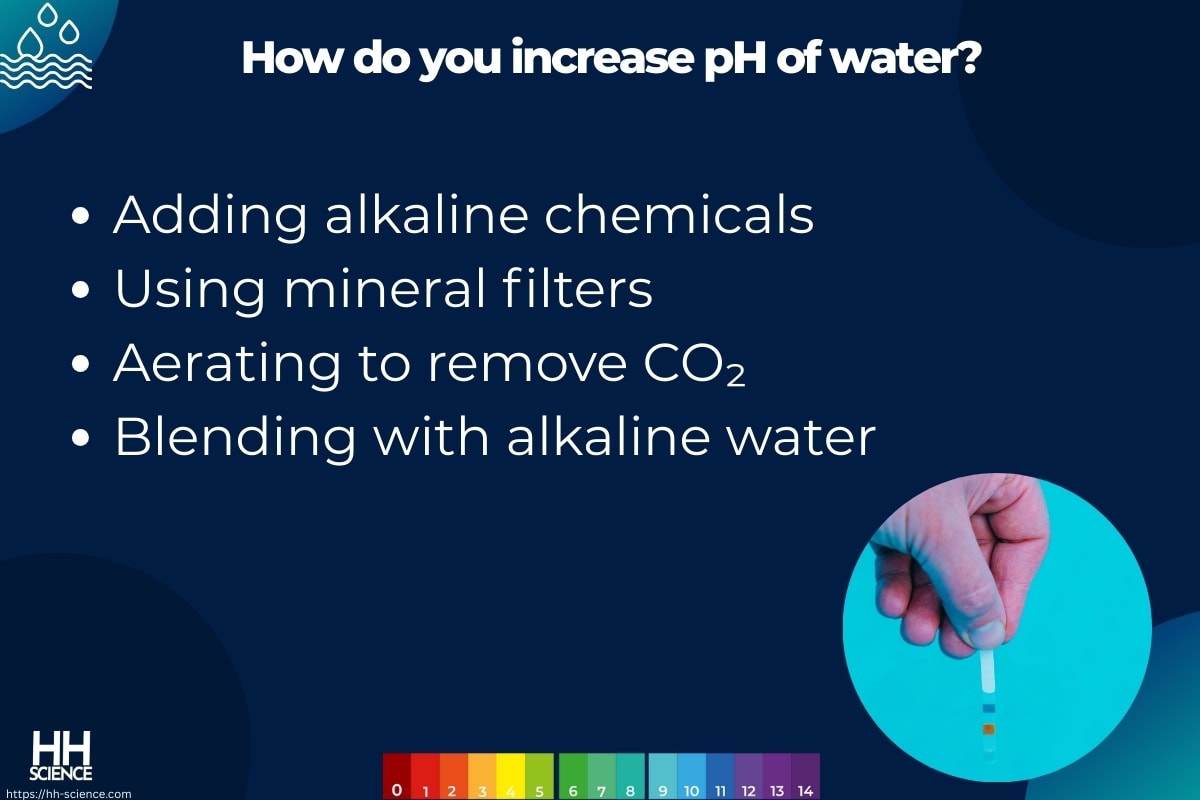
You can increase the pH of water by adding alkaline chemicals, using mineral filters, aerating to remove CO₂, and blending with alkaline water, because each method reduces hydrogen ion activity or introduces buffering minerals that raise alkalinity.- Adding alkaline chemicals: Substances like sodium hydroxide (NaOH), calcium hydroxide (Ca(OH)₂), or sodium carbonate (Na₂CO₃) neutralize acidity and increase pH.
- Using mineral filters: Cartridge filters with calcium carbonate or magnesium oxide release alkaline minerals, gradually raising pH during filtration.
- Aerating to remove CO₂: Stripping dissolved carbon dioxide decreases carbonic acid (H₂CO₃), shifting equilibrium and raising pH.
- Blending with alkaline water: Mixing acidic water with naturally alkaline sources (pH 8.0–9.0) balances the overall pH upward.
How do you increase pH of drinking water?
You can increase pH of drinking water by adding alkaline substances such as sodium hydroxide (NaOH), calcium hydroxide (Ca(OH)₂), or sodium carbonate (Na₂CO₃), which neutralize hydrogen ions (H⁺) and shift equilibrium toward higher pH values; for example, adding Ca(OH)₂ supplies OH⁻ that reacts with H⁺ to form water, raising pH from acidic ranges (<6.5) into the recommended 6.5–8.5 range for safe drinking water.How do you increase pH of drinking water naturally?
You can increase pH of drinking water naturally by aerating to remove dissolved CO₂ (reducing carbonic acid H₂CO₃), or by contact with alkaline minerals such as limestone (CaCO₃) or dolomite (CaMg(CO₃)₂), which dissolve slowly and release bicarbonate (HCO₃⁻) and carbonate (CO₃²⁻) ions, buffering pH upward; this process often raises soft, acidic waters into the 7.0–8.0 range without chemical additives.How much sodium hydroxide to raise pH of water?
There’s no single exact dose of sodium hydroxide (NaOH) to raise water pH because the needed amount depends mostly on the water’s alkalinity (buffering, mg/L as CaCO₃), volume, and target pH; unbuffered/RO water needs almost none, while buffered water needs much more. A practical dosing relation is Dose (mg/L NaOH) = 40 × Δ(meq/L OH⁻) (since 1 meq/L of NaOH ≈ 40 mg/L), so once you determine—by titration or a small jar test—how many meq/L of base your water needs to reach the target pH, multiply by 40 to get mg/L and then by volume for total grams. Quick examples: (A) Very low-alkalinity RO water, 100 L, going pH 6.0→7.5 (nearly unbuffered): chemically, only ~0.004 g NaOH is needed, but pH will drift back with CO₂, so remineralization is preferred. (B) Municipal water with alkalinity 100 mg/L as CaCO₃ (≈2 meq/L), 1000 L, raising roughly 1 pH unit typically takes ~0.5–1.0 meq/L base → 20–40 mg/L NaOH → 20–40 g total. How to get your exact dose fast: perform a jar test adding known increments of 1.0 N NaOH (e.g., 0.1 mL per liter ≈ 0.1 meq/L) until the target pH is stable, then scale to your full volume. Safety: add base slowly with mixing, measure between additions, and never overshoot—NaOH is caustic.Does ammonia increase pH of water?
Yes, ammonia increases pH of water because when dissolved it forms ammonium hydroxide (NH₄OH), releasing hydroxide ions (OH⁻) that reduce hydrogen ion activity, often raising pH above 9.0 in concentrated solutions.Does pH of water increase with temperature?
Yes, pH of water increases with temperature as measured by a pH electrode because the Nernst slope rises (from 59.16 mV/pH at 25 °C to 64.10 mV/pH at 50 °C), but the actual neutral pH decreases (from 7.0 at 25 °C to ~6.6 at 60 °C) since the water ionization constant (K_w) increases; this means readings must be corrected with temperature compensation.How do you decrease pH of water?
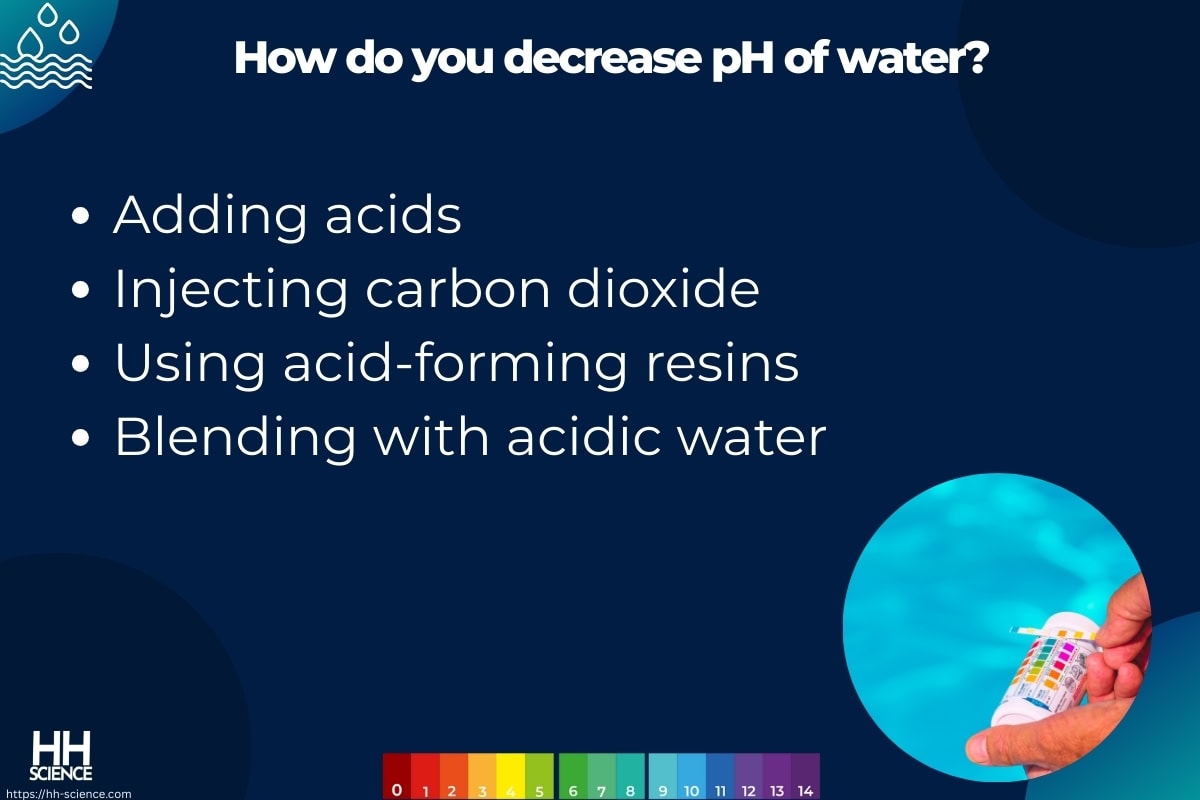
You can decrease the pH of water by adding acids, injecting carbon dioxide, using acid-forming resins, or blending with acidic water, because each method increases hydrogen ion concentration (H⁺) or reduces alkalinity, shifting the balance toward acidity.- Adding acids: Substances like hydrochloric acid (HCl), sulfuric acid (H₂SO₄), or phosphoric acid (H₃PO₄) directly increase hydrogen ion concentration, lowering pH.
- Injecting carbon dioxide: CO₂ dissolves to form carbonic acid (H₂CO₃), which dissociates into H⁺ and bicarbonate, reducing pH.
- Using acid-forming resins: Ion-exchange resins release H⁺ ions into water in exchange for cations like calcium or sodium, lowering alkalinity and pH.
- Blending with acidic water: Mixing with naturally low-pH sources such as rainwater or peat-influenced water reduces overall pH levels.
How do you decrease pH of water naturally?
You can decrease pH of water naturally by adding carbon dioxide (CO₂), which dissolves to form carbonic acid (H₂CO₃) that dissociates into H⁺ and HCO₃⁻, lowering pH, or by contact with organic acids from peat, driftwood, or leaf litter that release humic and tannic acids. These methods gradually reduce alkalinity and hydrogen ion buffering, commonly shifting water from neutral (pH ~7.0) down to mildly acidic levels (pH 6.0–6.5) without strong chemical additives.How do you decrease pH of water in aquarium?
You can decrease pH of aquarium water by injecting CO₂ for planted tanks (CO₂ + H₂O ⇌ H₂CO₃ ⇌ H⁺ + HCO₃⁻) or by adding natural acidifiers such as peat moss, Indian almond leaves, or driftwood that leach humic acids. These approaches lower pH safely within the desired range for species (freshwater aquariums often 6.5–7.5, soft-water fish like discus thrive at 5.5–6.5) while also reducing carbonate hardness (KH), which controls buffering capacity.How does maintenance of pH influence water balance?
The maintenance of pH influences water balance by stabilizing the relationship between hydrogen ions (H⁺), hydroxide ions (OH⁻), and buffering systems such as the carbonate–bicarbonate equilibrium, which controls solubility, alkalinity, and acid–base reactions. Keeping water in the optimal range (e.g., 6.5–8.5 for drinking water, 7.2–7.8 for pools, 8.0–8.2 for seawater) ensures chemical stability, prevents corrosion or scaling, and supports biological health by maintaining consistent ionic balance.


