
What does pH measure?
pH measures the activity of hydrogen ions (H⁺) in an aqueous solution, which reflects its acidity or alkalinity, and is mathematically defined as the negative base-10 logarithm of the hydrogen ion activity: pH = -log10(aH⁺) Expressed on a scale from 0 to 14 under standard conditions, pH values are critical in applications such as environmental monitoring, food and beverage quality control, water treatment, laboratory research, and industrial process control, and are determined using instruments like pH meters with glass or ISFET electrodes, colorimetric test kits, or optical pH sensors.What is pH measured in units?
pH is a dimensionless quantity with no physical units because it is the negative logarithm (base 10) of a ratio — the hydrogen ion activity in a solution relative to a standard state of 1 mol/L. While its numerical values typically range from 0 (strongly acidic) to 14 (strongly alkaline) under standard conditions, extreme environments can produce negative pH values or values above 14, and its scale is standardized using buffer solutions of known pH to ensure accuracy across different measurement systems.What ion does pH measure?
pH measures the concentration or, more precisely, the activity of hydrogen ions (H⁺) in a solution, which in aqueous systems is typically represented as hydronium ions (H₃O⁺) due to proton association with water molecules. This activity is compared to a standard state of 1 mol/L, and its logarithmic expression allows detection of extremely low hydrogen ion activities—down to about 10⁻¹⁴ mol/L in very alkaline solutions—making pH a sensitive indicator of acidity or alkalinity.
How is pH measured?
pH is typically measured using a pH meter connected to a glass electrode (or ISFET sensor) and a reference electrode, which together detect the electrochemical potential difference created by hydrogen ion activity at the sensing surface; this potential is converted via the Nernst equation into a dimensionless pH value. The measurement process involves immersing the electrode in the solution, where the hydrogen ion exchange at the glass membrane or semiconductor surface generates a voltage proportional to pH, with calibration performed against standard buffer solutions to ensure accuracy.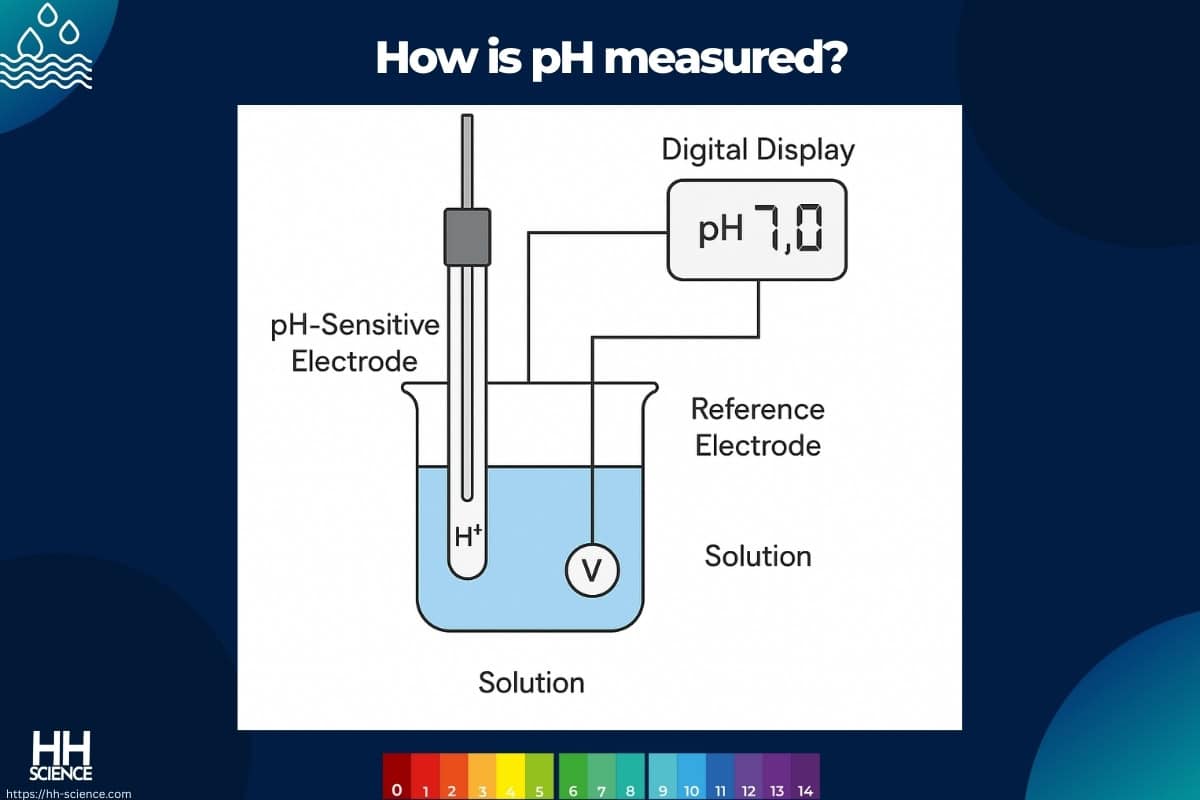
How are pH levels measured?
pH levels are measured by detecting the electrochemical potential generated by hydrogen ion activity in a solution, most commonly using a pH meter with a glass electrode or ISFET sensor paired with a reference electrode. When immersed in the sample, the sensing surface undergoes ion exchange or charge accumulation proportional to the hydrogen ion activity, producing a voltage that is converted via the Nernst equation into a dimensionless pH value, which is then classified on a scale from 0 (strongly acidic, high H⁺ activity) through 7 (neutral, equal H⁺ and OH⁻ activity) to 14 (strongly alkaline, low H⁺ activity), with calibration against standard buffers ensuring precise determination of the correct level.How are acids and bases measured by a pH indicator?
Acids and bases are measured by a pH indicator through visible color changes caused by the protonation or deprotonation of the indicator molecules in response to hydrogen ion (H⁺) activity in the solution. Each indicator has a specific pH transition range—for example, phenolphthalein changes from colorless to pink between about pH 8.2 and 10, while bromothymol blue shifts from yellow to blue between about pH 6.0 and 7.6—allowing the observed color to be compared against a reference chart to estimate whether the solution is acidic (pH < 7), neutral (pH ≈ 7), or alkaline (pH > 7).Is pH an absolute or a relative measure?
pH is a relative measure, not an absolute measure, because it expresses the hydrogen ion activity in a solution relative to a defined standard state of 1 mol/L rather than giving a direct, standalone physical quantity. Its value, calculated as pH = −log10(aH⁺), depends on calibration with standard buffer solutions and can vary with temperature, ionic strength, and measurement method, meaning it is context-dependent rather than fixed in an absolute sense.Is pH measured in PPM?
No, pH is not measured in PPM because it is a logarithmic, dimensionless scale representing hydrogen ion activity relative to 1 mol/L, whereas PPM (parts per million) is a mass-based concentration unit.Does pH measure acidity?
Yes, pH measures acidity because lower pH values (below 7) indicate higher hydrogen ion activity, which corresponds to a more acidic solution.Does pH measure alkalinity?
Yes, pH also measures alkalinity because higher pH values (above 7) indicate lower hydrogen ion activity and higher hydroxide ion (OH⁻) activity, reflecting a more alkaline solution.Does the pH scale measure hydrogen or hydroxide ions?
Yes, pH measures hydrogen ion concentration (more precisely, activity) because it is defined by the equation pH = −log10(aH⁺), where aH⁺ is the hydrogen ion activity in mol/L.Is pH a measure of hydrogen ion concentration?
Yes, pH is a measure of hydrogen ion concentration because it is defined as pH = −log10(aH⁺), where aH⁺ represents the hydrogen ion activity in moles per liter, and under ideal dilute conditions this activity is approximately equal to the molar concentration [H⁺], allowing pH values to reflect how acidic or alkaline a solution is directly.Why do we measure pH?
We measure pH because it provides a direct indication of the hydrogen ion activity in a solution, which determines its acidity or alkalinity and directly affects chemical reactions, biological processes, and material stability. Accurate pH control is essential in industrial applications like chemical manufacturing, food and beverage production, water and wastewater treatment, pharmaceuticals, and agriculture; in environmental monitoring to assess soil and water health; and in healthcare for diagnostics such as blood pH (normally 7.35–7.45), ensuring safety, quality, regulatory compliance, and optimal performance across diverse systems.Why is it important to measure pH?
It is important to measure pH because it determines the acidity or alkalinity of a solution, which directly influences chemical stability, reaction rates, and biological viability. Precise pH monitoring plays a key role in situations such as maintaining safe drinking water, optimizing crop growth in agriculture, ensuring correct formulation in pharmaceuticals, preserving food quality, regulating industrial processes, and protecting ecosystems through environmental monitoring.Why do we measure the pH of the dialysis solution?
We measure the pH of the dialysis solution because it must closely match physiological conditions—typically around pH 7.0–7.4—to prevent irritation, discomfort, or chemical imbalances in the patient’s blood during treatment. Maintaining the correct pH ensures the dialysate safely facilitates the removal of waste products and excess electrolytes without disrupting the body’s acid–base balance.Types of pH measurement
pH can be measured using electrochemical methods (such as the hydrogen-electrode method, quinhydron-electrode method, antimony-electrode method, glass-electrode method, and semiconductor sensor methods), and non-electrochemical methods (such as optical pH sensors and colorimetric indicators), because these cover the full range of principles for detecting hydrogen ion activity, from high-precision laboratory techniques to rapid, portable field tests.- Hydrogen-Electrode Method: A classical, highly accurate technique using a platinum electrode coated with hydrogen gas in equilibrium with the solution, measuring the potential difference relative to a reference electrode; mostly used in research-grade laboratory work.
- Quinhydron-Electrode Method: Uses quinhydrone (a 1:1 complex of quinone and hydroquinone) as a redox couple with a platinum electrode; simple and inexpensive but limited to near-neutral pH ranges and unsuitable for colored or strongly oxidizing solutions.
- Antimony-Electrode Method: Employs an antimony metal electrode whose surface oxide layer interacts with hydrogen ions, making it rugged for field and industrial uses where glass electrodes might break.
- Glass-Electrode Method: The most widely used modern method, with a thin glass membrane selectively permeable to hydrogen ions, producing a potential measured against a reference electrode and converted to pH using the Nernst equation.
- Semiconductor Sensor Methods (e.g., ISFET): Use ion-sensitive field-effect transistors to detect surface potential changes from hydrogen ion adsorption, enabling robust, fast-response, miniaturized sensors for portable, in-line, and biomedical applications.
- Optical pH Sensors: Utilize pH-sensitive dyes or fluorescent indicators embedded in a probe, film, or fiber optic tip, measuring light absorption or emission changes corresponding to pH; suitable for remote, continuous, or non-invasive monitoring.
- Colorimetric pH Indicators: Use organic dyes that change color over specific pH ranges, available as liquid reagents or pH paper; ideal for quick, low-cost, approximate readings without electronic equipment.
| pH Measurement Method | Principle | Typical Accuracy | pH Range | Advantages | Limitations |
| Hydrogen-Electrode Method (Electrochemical) | Measures potential between a hydrogen-saturated platinum electrode and a reference electrode via the Nernst equation. | ±0.01 | 0–14 | Extremely accurate; primary standard method. | Requires pure hydrogen gas; not practical for routine or field use. |
| Quinhydron-Electrode Method (Electrochemical) | Uses a quinhydrone/quinone redox couple with a platinum electrode; potential change correlates with pH. | ±0.05 | ~4–8 | Simple, inexpensive, quick. | Limited pH range; unsuitable for colored or oxidizing solutions. |
| Antimony-Electrode Method (Electrochemical) | Antimony surface oxide layer generates a pH-dependent potential measured vs. a reference electrode. | ±0.1 | 2–9 | Rugged, unbreakable, useful for field work. | Lower accuracy; temperature sensitive. |
| Glass-Electrode Method (Electrochemical) | Thin glass membrane selectively permeable to H⁺ develops a voltage proportional to pH, read against a reference. | ±0.01–0.02 | 0–14 | Widely used; high accuracy; versatile. | Fragile; requires regular calibration and maintenance. |
| Semiconductor Sensor (ISFET) (Electrochemical) | Ion-sensitive field-effect transistor detects surface potential changes from H⁺ adsorption. | ±0.02–0.05 | 1–13 | Robust; miniaturizable; fast response. | More expensive; requires supporting electronics. |
| Optical pH Sensors (Non-Electrochemical) | pH-sensitive dyes or fluorescent indicators change light absorption or emission with pH. | ±0.05–0.1 | ~2–12 | Remote, continuous, or non-invasive monitoring. | Dye lifespan limits; potential interference from sample color/turbidity. |
| Colorimetric Indicators (Non-Electrochemical) | Organic dyes change visible color over a specific pH transition range and are compared to a reference chart. | ±0.2–0.5 | Depends on indicator (narrow ranges, e.g., 4–6) | Low cost; simple; no electronics needed. | Low accuracy; subjective color reading; limited range per indicator. |

pH measurement techniques
pH measurement techniques include laboratory bench measurement, portable field measurement, in-line process monitoring, and disposable test kits, because these represent the main ways pH testing is applied in real-world scenarios, regardless of the underlying electrochemical or non-electrochemical method used.- Laboratory Bench Measurement: Performed with high-precision benchtop pH meters, often using glass electrodes, in controlled conditions for research, quality control, and regulatory testing.
- Portable Field Measurement: Uses handheld pH meters or ISFET probes designed for on-site water, soil, or environmental testing, offering rapid results outside the lab.
- In-Line Process Monitoring: Employs permanently installed pH sensors in industrial systems (e.g., water treatment plants, chemical reactors) for continuous, automated pH control.
- Disposable Test Kits: Includes pH paper strips, liquid indicators, or single-use optical sensors for quick, low-cost, approximate readings without complex equipment.
| pH Measurement Technique | Typical Accuracy | Cost Level | Best-Use Case |
| Laboratory Bench Measurement | ±0.01–0.02 pH units | High | Research, quality control, and regulatory compliance in controlled lab settings. |
| Portable Field Measurement | ±0.02–0.1 pH units | Medium | On-site water, soil, or environmental testing requiring quick results. |
| In-Line Process Monitoring | ±0.01–0.05 pH units | High | Continuous monitoring and automated pH control in industrial processes. |
| Disposable Test Kits | ±0.2–0.5 pH units | Low | Quick, low-cost, approximate pH checks in the field or educational use. |

What are pH measurement instruments?
pH measurement instruments include pH meters, electrodes (glass, ISFET, antimony, hydrogen), pH indicator strips, liquid indicator solutions, and optical pH probes, because these cover all major tools used to detect and quantify hydrogen ion activity, from precise laboratory devices to quick visual test kits.- pH Meters: pH is measured using an electronic device that reads the voltage from a pH-sensitive electrode and converts it into a pH value, offering high accuracy and a digital readout.
- Electrodes: pH is detected by specialized sensors such as glass electrodes, ISFET probes, antimony electrodes, or hydrogen electrodes, which respond to hydrogen ion activity in the solution.
- pH Indicator Strips: pH is estimated by immersing treated paper into the sample and matching the resulting color change to a reference chart for quick, low-cost readings.
- Liquid Indicator Solutions: pH is determined by adding a pH-sensitive dye to the sample and comparing the resulting color to a standard, useful in titrations and simple visual checks.
- Optical pH Probes: pH is measured through changes in light absorption or fluorescence of a pH-sensitive dye in a probe, enabling remote or continuous monitoring without direct electrical contact.
What are the types of pH meters?
pH meter types include benchtop pH meters, portable pH meters, handheld pH meters, field pH meters, in-line pH meters, in-situ pH meters, pH analyzers, online pH sensors, and online pH meters, because each is designed for specific measurement environments and applications while using similar electrochemical measurement principles.- Benchtop pH Meters: pH is measured in controlled laboratory environments with high-precision instruments featuring advanced calibration, temperature compensation, and multi-parameter analysis for research, quality control, and regulatory work.
- Portable pH Meters: pH is measured using lightweight, battery-powered devices designed for quick on-site testing in diverse locations, from farms to manufacturing facilities.
- Handheld pH Meters: pH is measured with compact, ergonomically designed units that can be easily carried in one hand, offering convenience for frequent spot checks in the field or laboratory.
- Field pH Meters: pH is measured in outdoor or industrial field conditions using rugged, waterproof devices built to withstand temperature extremes, dust, and moisture.
- In-Line pH Meters: pH is monitored continuously in process lines or pipelines using sensors that remain in contact with the flowing sample for automated process control.
- In-Situ pH Meters: pH is measured directly in the medium (e.g., water bodies, tanks, reactors) without removing samples, enabling real-time monitoring in environmental and industrial applications.
- pH Analyzers: pH is monitored by advanced analytical systems integrating sensors, transmitters, and controllers to provide continuous data logging, alarms, and process adjustments.
- Online pH Sensors: pH is measured in real-time and transmitted digitally to control systems for remote monitoring and automated adjustments in treatment or manufacturing processes.
- Online pH Meters: pH is monitored continuously via an internet-connected meter that provides live readings and historical data accessible from remote locations for ongoing quality and compliance control.
| pH Meter Type | Typical Accuracy | Cost Level | Best-Use Case |
| Benchtop pH Meters | ±0.01–0.02 pH units | High | High-precision laboratory measurements for research, quality control, and regulatory compliance. |
| Portable pH Meters | ±0.02–0.1 pH units | Medium | On-site testing in agriculture, food processing, and industrial facilities. |
| Handheld pH Meters | ±0.02–0.1 pH units | Medium | Convenient spot checks in laboratories, aquariums, hydroponics, or field surveys. |
| Field pH Meters | ±0.05–0.1 pH units | Medium | Outdoor and industrial field work in harsh environments, including water and soil monitoring. |
| In-Line pH Meters | ±0.01–0.05 pH units | High | Continuous pH control in pipelines, treatment plants, and production processes. |
| In-Situ pH Meters | ±0.01–0.05 pH units | High | Direct measurement in tanks, reactors, or natural water bodies without sample removal. |
| pH Analyzers | ±0.01–0.05 pH units | High | Advanced process monitoring with data logging, alarms, and automated adjustments. |
| Online pH Sensors | ±0.02–0.05 pH units | High | Real-time pH measurement and digital signal output for process control systems. |
| Online pH Meters | ±0.02–0.05 pH units | High | Internet-connected monitoring with live readings and remote access for ongoing quality management. |

How does a pH meter work?
A pH meter works by measuring the voltage (electrochemical potential) generated between a pH-sensitive electrode and a stable reference electrode, then converting this voltage into a pH value using the Nernst equation. When the pH-sensitive electrode—most commonly a glass membrane electrode—is immersed in a solution, hydrogen ions (H⁺) interact with the glass surface, creating a potential difference relative to the reference electrode. This potential is proportional to the hydrogen ion activity in the solution and changes by approximately 59.16 mV per pH unit at 25 °C. The meter’s electronics read this voltage, apply temperature compensation, and display the result as a dimensionless pH value on the scale from 0 (acidic) to 14 (alkaline).How do you use a pH meter?
You can use a pH meter by calibrating it with standard buffer solutions, rinsing the electrode, immersing the electrode in the sample, waiting for a stable reading, recording the pH value, and cleaning/storing the electrode, because these steps ensure accurate measurements, prevent contamination, and extend the lifespan of the instrument.- Calibrate the pH meter: Calibration with standard buffer solutions (pH 4.00, 7.00, 10.00)
- Rinse the electrode: Rinse the electrode with distilled or deionized water before and after use
- Immerse the electrode in the sample: Submerge the sensing bulb and junction fully in the solution
- Wait for a stable reading: Allowing time for the electrode to respond to the sample
- Record the pH value: Documenting the displayed pH reading and temperature if needed
- Clean and store the electrode: Rinsing and placing it in the recommended storage solution
What is offset in pH measurement?
Offset in pH measurement is the electrode potential reading in a neutral pH 7.00 buffer when no slope error is present, representing the baseline voltage difference between the measuring electrode and the reference electrode. Ideally, this offset should be 0.0 mV at pH 7, but in practice it may vary (commonly within ±30 mV) due to factors such as electrode aging, membrane hydration state, reference junction condition, or contamination. According to the Nernst equation, this offset shifts the entire calibration curve up or down, affecting all subsequent readings, which is why regular calibration is essential to correct it.Can a pH meter measure conductivity?
No, a pH meter cannot measure conductivity because pH meters detect hydrogen ion activity via electrode potential, whereas conductivity meters measure the ability of a solution to carry electric current, which depends on total ion concentration; however, some multi-parameter instruments can measure both if equipped with separate sensors.Can a conductivity meter measure pH?
No, a conductivity meter cannot measure pH because it measures ionic strength, not hydrogen ion activity; but, as with pH meters, some combination devices include both pH and conductivity probes in one unit.Is pH the best way to measure ammonia?
No, pH is not the best way to measure ammonia because pH only indirectly affects the ammonia–ammonium equilibrium; direct ammonia measurement requires selective electrodes, colorimetric tests, or gas-sensing probes for accuracy.Is pH only measured in whole numbers?
No, pH is not measured only in whole numbers because it is a logarithmic scale and can be read to two decimal places (e.g., 7.25) for precise scientific and industrial applications.Does a TDS meter measure pH?
No, a TDS meter does not measure pH because it estimates total dissolved solids based on electrical conductivity, not hydrogen ion activity, but high TDS can indirectly influence pH stability.Does pH measure hydrogen ion concentration?
Yes, pH can measure hydrogen ion concentration because it is defined as pH = −log10[H⁺], but in practice, it measures hydrogen ion activity, which is the effective concentration considering ionic interactions.Does pH measure hydronium ion concentration?
Yes, pH can measure hydronium ion concentration because in aqueous solutions, hydrogen ions exist primarily as hydronium ions (H₃O⁺), and pH reflects their activity in the solution.Does pH measure hydroxide ion concentration?
Yes, pH can indirectly measure hydroxide ion concentration because pH and pOH are linked by the equation pH + pOH = 14 at 25 °C, meaning high hydroxide activity corresponds to high pH values.Does pH measure sweetness?
No, pH does not measure sweetness because sweetness is a sensory perception linked to specific molecules like sugars, not hydrogen ion activity; however, acidic solutions can taste sour, which is unrelated to sweetness.Does pH measure contamination?
No, pH does not directly measure contamination because contamination can be biological, chemical, or particulate and may not affect hydrogen ion activity, but significant contamination could indirectly alter pH depending on the substances present.What is industrial pH measurement (applications)?
pH measurement applications in industry include water and wastewater treatment, food and beverage processing, chemical manufacturing, pharmaceuticals, agriculture, pulp and paper production, mining and metallurgy, textiles, and aquaculture, because accurate pH control is essential for product quality, process efficiency, safety, and regulatory compliance across these sectors.- Water and wastewater treatment: pH is monitored to ensure compliance with discharge regulations, optimize chemical dosing, and protect downstream equipment.
- Food and beverage processing: pH is controlled to maintain product flavor, texture, preservation, and safety in items like dairy, brewing, and soft drinks.
- Chemical manufacturing: pH is regulated to ensure correct reaction conditions, maximize yield, and prevent equipment corrosion.
- Pharmaceuticals: pH is measured to meet strict formulation specifications, ensure drug stability, and comply with GMP standards.
- Agriculture: pH is monitored in soil, irrigation water, and nutrient solutions to optimize plant growth and nutrient uptake.
- Pulp and paper production: pH is controlled during pulping, bleaching, and paper finishing to ensure fiber quality and color consistency.
- Mining and metallurgy: pH is adjusted in ore processing, flotation, and metal recovery to enhance separation efficiency and product purity.
- Textiles: pH is managed in dye baths and finishing processes to achieve consistent color fastness and fabric quality.
- Aquaculture: pH is monitored in fish tanks and ponds to maintain a stable aquatic environment and prevent stress or mortality in stock.

What do scientists use to measure pH?
Scientists use pH meters equipped with glass or ISFET electrodes, optical pH sensors, and colorimetric indicators to measure hydrogen ion activity in a solution, typically within the standard pH scale range of 0 to 14. These instruments allow precise determination of pH by detecting electrochemical potential or optical changes, often calibrated with standard buffer solutions (e.g., pH 4.00, 7.00, 10.00) to ensure accuracy in laboratory, environmental, and industrial applications.What is the most precise way to measure pH?
The most precise way to measure pH is the standard hydrogen electrode (SHE) method because it is the primary reference method defined by IUPAC, directly measuring the electrochemical potential of a hydrogen-saturated platinum electrode relative to a reference electrode according to the Nernst equation. This method can achieve an accuracy of ±0.001 pH units under controlled laboratory conditions, making it the benchmark against which all other pH measurement methods—such as glass electrodes or ISFET sensors—are calibrated.Which is the least accurate method of measuring pH?
The least accurate method of measuring pH is the colorimetric indicator method because it relies on visually comparing the color change of a pH-sensitive dye (in solution or on pH paper) to a reference chart, making the result subjective and highly dependent on lighting and human perception. This method typically has an accuracy of only ±0.2 to ±0.5 pH units, and its limited color transition range means it cannot provide precise readings outside the indicator’s specific pH range.How do pH strips and meters differ in accuracy and efficiency?
pH strips and pH meters differ in both accuracy and efficiency because they rely on different measurement principles—pH strips use colorimetric indicators that change color based on hydrogen ion activity, while pH meters use electrodes (glass or ISFET) to detect electrochemical potential. pH meters are generally more accurate (±0.01–0.1 pH units) because they provide objective digital readings unaffected by human perception, whereas pH strips are less accurate (±0.2–0.5 pH units) due to color interpretation variability and limited pH range. Efficiency also varies: strips are faster and require no calibration, but meters can measure continuously, store data, and integrate with automated systems.| Aspect | pH Strips | pH Meters |
| Measurement Principle | Color change of pH-sensitive dye compared to a reference chart | Electrochemical potential measurement via glass or ISFET electrode |
| Typical Accuracy | ±0.2 to ±0.5 pH units | ±0.01 to ±0.1 pH units |
| Calibration Requirement | Not required | Required (usually with pH 4.00, 7.00, and 10.00 buffers) |
| Speed of Use | Very fast (seconds) | Fast but requires setup and stabilization (tens of seconds) |
| Continuous Monitoring | No | Yes (with in-line or data-logging systems) |
| Cost | Low | Medium to high |
| Best Use Case | Quick, approximate checks in field or educational settings | Precise measurement in lab, industrial, or regulatory applications |

What should labs consider when choosing pH testing tools?
LABs should consider accuracy requirements, measurement range, sample type, temperature conditions, frequency of use, calibration needs, maintenance requirements, data logging capabilities, and budget when choosing pH testing tools, because these factors determine whether a simple, low-cost solution or a high-precision, feature-rich instrument is most suitable for their applications.- Accuracy requirements: Determine if the application needs ±0.01 pH precision for research or if ±0.1–0.5 pH is sufficient for routine checks.
- Measurement range: Ensure the tool covers the expected pH range (e.g., 0–14 for general work, extended ranges for specialized samples).
- Sample type: Consider whether samples are aqueous, viscous, oily, or contain solids, which may require specific electrode designs.
- Temperature conditions: Select tools with automatic temperature compensation if samples vary in temperature, as pH readings are temperature dependent.
- Frequency of use: Match tool durability and calibration stability to how often measurements are taken—daily use may require rugged or high-end equipment.
- Calibration needs: Choose devices with easy, multi-point calibration if high accuracy is required and buffers are readily available.
- Maintenance requirements: Factor in electrode cleaning, storage, and replacement schedules to maintain accuracy over time.
- Data logging capabilities: Decide if digital recording, connectivity, or integration with lab information systems is needed.
- Budget: Balance initial purchase cost with long-term consumables and maintenance expenses.

What are the main uses of pH measurement across industries?
pH measurement is used across industries for process control, product quality assurance, safety compliance, environmental monitoring, research and development, regulatory reporting, and equipment protection, because controlling acidity or alkalinity is essential to ensure efficiency, consistency, safety, and compliance in both production and environmental contexts.- Process control: Maintain optimal pH levels to ensure chemical reactions, fermentation, and manufacturing processes occur efficiently.
- Product quality assurance: Verify that finished goods meet pH specifications for taste, texture, stability, and shelf life.
- Safety compliance: Monitor pH to prevent hazardous conditions, such as corrosive or caustic environments, that could endanger workers or consumers.
- Environmental monitoring: Track pH in water, soil, and effluents to protect ecosystems and comply with environmental regulations.
- Research and development: Use precise pH control in experiments to study reaction mechanisms, product formulations, or material properties.
- Regulatory reporting: Document pH levels as part of compliance with government or industry standards.
- Equipment protection: Prevent damage to pipelines, tanks, and machinery caused by corrosive or scaling conditions linked to improper pH.

How does automated pH testing improve lab workflows and product quality?
Automated pH testing improves lab workflows and product quality by using in-line or robotic systems equipped with pH electrodes, automatic calibration stations, and data integration software to perform frequent, consistent, and high-precision measurements without manual intervention. These systems automatically rinse and calibrate electrodes with standard buffers, immerse them in samples, apply temperature compensation, and log results directly into laboratory information management systems (LIMS), ensuring repeatability within ±0.01 pH units. This reduces human error, increases throughput, enables real-time quality control adjustments, and ensures products consistently meet specifications while maintaining full traceability for regulatory compliance.How do features like temperature compensation improve pH measurements?
Temperature compensation improves pH measurements because both the electrode response and the sample’s chemistry change with temperature, and the meter must correct for these effects in real time to avoid bias. In practice, a pH probe includes a thermistor or RTD (e.g., Pt100/1000) that feeds temperature to the meter, which then converts the measured millivolts to pH using the Nernst slope S(T) = (2.303 × R × T) / F: about 54.20 mV/pH at 0 °C, 59.16 mV/pH at 25 °C, 61.54 mV/pH at 37 °C, and 64.10 mV/pH at 50 °C; without this correction, using a 25 °C slope at 50 °C can introduce an ≈8% slope error (e.g., ~0.17 pH error two units from pH 7). Temperature compensation also addresses solution effects (changes in pKₐ and buffer/sample pH with temperature—often ~0.01–0.03 pH/°C, especially in alkaline buffers), so best practice is to calibrate at or near the measurement temperature (or use temperature-adjusted buffer values) and apply ATC; done correctly, this reduces typical temperature-related errors from ±0.1–0.3 pH to ±0.01–0.02 pH in lab conditions.What are the benefits of advanced pH equipment in lab operations?
The benefits of advanced pH equipment in lab operations include higher measurement accuracy, faster analysis, greater repeatability, automated temperature compensation, multi-parameter capability, data logging and integration, reduced human error, extended electrode life, and compliance with regulatory standards, because these features improve reliability, efficiency, and traceability in research, quality control, and industrial testing.- Higher measurement accuracy: Provide precise pH readings (±0.01 pH or better) that are essential for critical research and product formulation.
- Faster analysis: Reduce turnaround time with rapid electrode response and automated calibration features.
- Greater repeatability: Ensure consistent results across multiple operators and testing sessions.
- Automated temperature compensation: Eliminate temperature-related errors by adjusting readings in real time according to the Nernst equation.
- Multi-parameter capability: Allow simultaneous measurement of pH, conductivity, dissolved oxygen, or ion concentration, saving time and resources.
- Data logging and integration: Enable automatic recording of results and direct transfer to laboratory information management systems (LIMS) for traceability.
- Reduced human error: Minimize mistakes through guided calibration procedures and automated quality checks.
- Extended electrode life: Achieve longer operational use through optimized storage, cleaning alerts, and self-diagnostic functions.
- Compliance with regulatory standards: Facilitate audits and certification by meeting ISO, GMP, or GLP requirements with validated measurement systems.

How does a pH electrode work?
A pH electrode works by converting the activity of hydrogen ions (H⁺) in a solution into an electrical potential that can be measured and converted into a pH value using the Nernst equation. A standard glass pH electrode consists of a thin hydrogen-ion–sensitive glass membrane that selectively allows H⁺ ions to exchange with the outer hydrated gel layer, a reference electrode (usually silver/silver chloride in KCl solution) that provides a stable potential, and an internal buffer solution of known pH (commonly pH 7.00). When the glass membrane contacts the sample, a potential difference forms between the internal solution and the sample due to the difference in hydrogen ion activity; this potential changes by approximately 59.16 mV per pH unit at 25 °C. The pH meter measures this millivolt signal, applies temperature compensation, and calculates the pH value, displaying it as a dimensionless number on the 0–14 scale under standard conditions.What are the types of reference electrodes?
The types of reference electrodes include silver/silver chloride (Ag/AgCl) electrodes, calomel (Hg/Hg₂Cl₂) electrodes, and double-junction reference electrodes, because these designs provide a stable, known potential against which the measuring electrode’s potential can be compared, ensuring accurate pH measurement under different chemical and environmental conditions.- Silver/silver chloride (Ag/AgCl) electrodes: Use a silver wire coated with silver chloride, immersed in a potassium chloride solution, offering good stability, low toxicity, and suitability for most aqueous pH measurements.
- Calomel (Hg/Hg₂Cl₂) electrodes: Contain mercury in contact with mercurous chloride and a saturated potassium chloride solution, providing stable potential over a wide temperature range but with higher toxicity concerns.
- Double-junction reference electrodes: Feature two electrolyte chambers separated by an additional junction, reducing contamination and chemical interaction between the reference electrolyte and the sample, ideal for dirty or reactive samples.
Types of reference junctions
The types of reference junctions include ceramic junctions, platinum junctions, and ground-joint junctions, because these designs control the flow of electrolyte from the reference electrode into the sample, ensuring a stable ionic connection and consistent potential measurement in different sample conditions.- Ceramic junctions: Use a porous ceramic frit to allow a slow, steady electrolyte flow (typically 15–20 μL/h), offering stable performance in most laboratory pH measurements.
- Platinum junctions: Incorporate a platinum wire or pin in contact with the electrolyte, providing excellent conductivity and faster response in solutions with low ionic strength.
- Ground-joint junctions: Feature a precision-ground glass-to-glass contact that creates a large surface area for electrolyte flow (often >50 μL/h), reducing clogging and ensuring stable readings in viscous, dirty, or high-solid samples.
How does a glass electrode measure pH?
A glass electrode measures pH by detecting the electrochemical potential difference that develops across its thin, hydrogen-ion–selective glass membrane when it is immersed in a solution. The electrode consists of a bulb-shaped glass membrane with an outer hydrated gel layer in contact with the sample, an internal reference electrode (usually Ag/AgCl) immersed in an internal buffer solution of known pH (commonly pH 7.00), and an external reference electrode that completes the circuit. Hydrogen ions (H⁺) from the sample exchange with alkali ions (usually Na⁺) in the hydrated layer of the glass, creating a charge separation between the inner and outer surfaces of the membrane. This potential difference changes by approximately 59.16 mV per pH unit at 25 °C according to the Nernst equation, and the pH meter measures this voltage relative to the reference electrode, applies temperature compensation, and converts it into a dimensionless pH value on the 0–14 scale under standard conditions.Why must two electrodes be used to measure pH?
Two electrodes must be used to measure pH because one functions as the measuring electrode (usually a glass electrode sensitive to hydrogen ion activity) and the other as a reference electrode that maintains a constant, stable potential, allowing the pH meter to measure only the potential difference caused by the sample’s hydrogen ion activity. According to the Nernst equation, the measured voltage (typically changing by about 59.16 mV per pH unit at 25 °C) reflects the difference between the variable potential of the measuring electrode and the fixed potential of the reference electrode; without the reference electrode, the system would lack a stable baseline, making accurate and repeatable pH measurement impossible.What is the effect of temperature on pH measurement?
The effect of temperature on pH measurement comes from both the electrode’s response and the solution’s chemistry, because temperature changes the slope in the Nernst equation and alters the actual pH of the sample. The electrode slope, given by S(T) = (2.303 × R × T) / F, increases from about 54.20 mV/pH at 0 °C to 64.10 mV/pH at 50 °C, meaning the same hydrogen ion activity produces a larger voltage at higher temperatures; without compensation, this causes proportional reading errors (e.g., ~0.17 pH error two units from pH 7 when using a 25 °C slope at 50 °C). At the same time, temperature can change the pKₐ of acids and bases and shift equilibria, so the true pH of many buffers and samples changes—often by 0.01–0.03 pH/°C—even if the electrode response is corrected, which is why temperature compensation and calibration at or near the measurement temperature are critical for accuracy.Does heat affect pH measurements?
Yes, heat can affect pH measurements because it changes both the electrode’s Nernst slope and the actual pH of the solution. According to the Nernst equation, the electrode slope S(T) = (2.303 × R × T) / F increases from about 59.16 mV/pH at 25 °C to 64.10 mV/pH at 50 °C, meaning that without temperature compensation, a sample two pH units from neutral could show an error of ~0.17 pH. Heat also alters the pKₐ of acids and bases and shifts chemical equilibria, causing the true pH of many solutions to change—often by 0.01–0.03 pH/°C—even if the electrode’s temperature effect is corrected.How does temperature affect pH measurement?
Temperature affects pH measurement by changing the electrode’s Nernst slope and altering the actual pH of the solution. The slope, given by S(T) = (2.303 × R × T) / F, increases from about 54.20 mV/pH at 0 °C to 64.10 mV/pH at 50 °C, so without temperature compensation, a sample two pH units from neutral could show an error of ~0.17 pH. Additionally, temperature shifts the pKₐ of acids and bases and affects chemical equilibria, causing real pH changes in many solutions—often around 0.01–0.03 pH/°C—even when the electrode’s temperature dependence is corrected.How does temperature affect pH measurement for buffers?
Temperature affects pH measurement for buffers by changing both the electrode response and the intrinsic pH of the buffer solution due to shifts in the buffer’s pKₐ with temperature. While the electrode’s Nernst slope increases from about 54.20 mV/pH at 0 °C to 64.10 mV/pH at 50 °C, the true pH of many common buffers also changes—often by 0.01–0.03 pH/°C—even if the electrode effect is fully temperature-compensated; for example, a phosphate buffer at pH 7.00 at 25 °C may read around pH 6.88 at 37 °C due solely to chemical equilibrium shifts.How do pH buffer solutions work in pH measurement?
pH buffer solutions work in pH measurement by providing a stable, well-defined hydrogen ion activity that resists pH changes when small amounts of acid or base are added, allowing accurate calibration of pH meters and electrodes. They function through the common ion effect and the Henderson–Hasselbalch equation, maintaining a consistent ratio of weak acid to its conjugate base (or vice versa), which fixes the solution’s pH at a known value (e.g., 4.00, 7.00, or 10.00 at 25 °C). During calibration, the electrode’s measured potential is matched to the known pH of the buffer, compensating for any offset or slope deviation from the theoretical Nernst slope (≈59.16 mV/pH at 25 °C), ensuring accurate measurement of unknown samples.What does calibration do?
Calibration in pH measurement adjusts the pH meter’s response so that the voltage measured by the electrode system matches the known pH values of standard buffer solutions, compensating for offset (potential at pH 7.00) and slope deviations from the theoretical Nernst slope (≈59.16 mV/pH at 25 °C). By immersing the electrode in one or more buffers (commonly pH 4.00, 7.00, and 10.00), the meter stores correction factors that account for electrode aging, junction contamination, or temperature effects, ensuring that subsequent pH readings of unknown samples are accurate and traceable to defined reference standards.How often should I calibrate?
You should calibrate a pH meter at least once daily for routine laboratory work, or before each measurement session when high accuracy (±0.01 pH) is required, because electrode offset and slope can drift due to membrane hydration changes, reference junction contamination, temperature fluctuations, and sample carryover. In critical applications such as pharmaceutical QC or environmental compliance testing, multi-point calibration with fresh standard buffers (e.g., pH 4.00, 7.00, 10.00 at 25 °C) should be performed before and after measurements, while in less demanding uses, calibration every few days may suffice if slope remains within 95–102% of the theoretical Nernst value (≈59.16 mV/pH at 25 °C).How many calibration points should I use?
You should use at least two calibration points for accurate pH measurement, because this allows the meter to correct both the offset (potential at pH 7.00) and the slope (mV change per pH unit) relative to the theoretical Nernst slope of ≈59.16 mV/pH at 25 °C. For the highest accuracy, especially when measuring across a wide pH range, a three-point calibration using standard buffers (commonly pH 4.00, 7.00, and 10.00) is recommended so the calibration curve accurately fits the entire measurement range and minimizes interpolation errors outside the neutral point.What is pH electrode efficiency?
pH electrode efficiency is the ratio of the electrode’s actual slope to the theoretical Nernst slope (≈59.16 mV/pH at 25 °C), expressed as a percentage, indicating how effectively the electrode converts changes in hydrogen ion activity into measurable voltage. A new, well-maintained electrode typically shows 95–102% efficiency, while values below 90% suggest issues such as membrane degradation, reference junction clogging, or contamination; efficiency is calculated during calibration from the mV difference between two buffer solutions with a known pH difference.How do you choose a pH meter?
You can choose a pH meter by considering applications, accuracy, electrode types, reference system, reference junction, design, body type, material, cost, and durability, because these factors ensure the instrument matches your measurement needs, sample conditions, budget, and long-term performance expectations.- Applications: Matching the pH meter to laboratory, field, industrial, or continuous process use
- Accuracy: Selecting the required precision, from ±0.01 pH for research to ±0.1 pH for routine checks
- Electrode types: Choosing glass, ISFET, antimony, or combination electrodes based on sample compatibility
- Reference system: Deciding between silver/silver chloride or calomel systems for stability and chemical resistance
- Reference junction: Selecting ceramic, platinum, or ground-joint junctions for different sample conditions
- Design: Choosing benchtop, portable, or in-line models depending on measurement location and workflow
- Body type: Picking pen-style, handheld, or modular bodies for handling convenience
- Material: Choosing glass, plastic, or epoxy bodies for durability and chemical resistance
- Cost: Balancing initial purchase with ongoing maintenance and consumable expenses
- Durability: Ensuring the meter and electrodes withstand environmental and usage demands

How do you measure pH?
You can measure pH by calibrating the meter, rinsing the electrode, immersing the electrode in the sample, allowing the reading to stabilize, recording the pH value, and cleaning/storing the electrode, because these steps ensure measurement accuracy, prevent contamination, and prolong electrode lifespan.- Calibrate the meter: Use at least two standard buffer solutions (e.g., pH 4.00 and 7.00, or pH 7.00 and 10.00) to set offset and slope according to the Nernst slope (≈59.16 mV/pH at 25 °C).
- Rinse the electrode: Wash with distilled or deionized water before and after each measurement to prevent sample carryover.
- Immerse the electrode in the sample: Ensure the sensing bulb and junction are fully submerged for proper ionic contact.
- Allow the reading to stabilize: Wait until the displayed value stops drifting, which may take several seconds depending on electrode response.
- Record the pH value: Note the reading along with the sample temperature, as pH is temperature-dependent.
- Clean and store the electrode: Rinse after use and place in the recommended storage solution (never pure water) to maintain membrane hydration and reference stability.

How do you measure pH accurately?
You can measure pH accurately by calibrating the meter with at least two fresh standard buffer solutions (e.g., pH 4.00 and 7.00, or 7.00 and 10.00), ensuring the electrode slope is within 95–102% of the theoretical Nernst slope (≈59.16 mV/pH at 25 °C), rinsing the electrode between solutions, immersing it fully in the sample, applying temperature compensation, and recording the stable reading.How do you measure pH electronically?
You can measure pH electronically by using a pH meter with a glass or ISFET electrode paired with a reference electrode, which detects the electrochemical potential difference created by hydrogen ion activity, converts it to millivolts, and calculates pH using the Nernst equation, with typical accuracy ranging from ±0.01 to ±0.1 pH units.How can you measure the pH of a solution?
You can measure the pH of a solution by using a calibrated pH meter, optical pH sensor, or colorimetric indicator (pH strips or liquid dye), immersing the sensing element or strip in the sample, and comparing the reading or color change to a standard scale, with pH meters providing the highest precision and pH strips offering quick approximate values (±0.2–0.5 pH units).How do you measure your pH level?
You can measure your pH level by collecting a saliva or urine sample and testing it with pH indicator strips or a portable pH meter, comparing the color change or digital reading to the pH scale; saliva typically ranges from pH 6.2–7.6 and urine from pH 4.5–8.0, but these values reflect general body chemistry rather than exact blood pH, which is tightly regulated at 7.35–7.45.How do you measure skin pH?
You can measure skin pH using a flat-surface skin pH meter with a glass electrode or ISFET sensor, lightly placing it on the skin surface (usually the forearm or face) for a few seconds to detect the thin film of moisture and oils, with healthy skin normally showing a slightly acidic pH of 4.5–5.5 to maintain the acid mantle and barrier function.How do you measure stomach pH?
You can measure stomach pH with a gastric pH probe or pH capsule passed through the nose or mouth into the stomach, where the sensor records readings continuously or at intervals, with normal gastric pH typically ranging from 1.5–3.5 due to hydrochloric acid secretion.How do you measure vaginal pH?
You can measure vaginal pH by applying a vaginal pH test strip to the vaginal wall or to fluid collected with a swab, comparing the color change to a reference chart; healthy vaginal pH is usually between 3.8 and 4.5, and higher values may indicate bacterial vaginosis or other infections.How is blood pH measured?
You can measure blood pH using an arterial blood gas (ABG) analyzer, which draws a small sample of arterial blood—usually from the radial artery—and measures pH with a glass electrode while also determining partial pressures of oxygen (PaO₂) and carbon dioxide (PaCO₂); normal blood pH is tightly regulated between 7.35 and 7.45.How is the pH of blood measured in a hospital?
You can measure the pH of blood in a hospital with a point-of-care or laboratory-based ABG analyzer, where the sample is collected anaerobically in a heparinized syringe, inserted into the analyzer, and evaluated using an electrochemical sensor system that provides pH, PaO₂, PaCO₂, and bicarbonate values to assess acid–base balance and respiratory/metabolic function.How do you measure pH in urine?
You can measure pH in urine by collecting a midstream sample in a clean container and testing it immediately with pH indicator strips or a portable pH meter, comparing the strip’s color change to a pH scale or reading the meter’s digital value; normal urine pH typically ranges from 4.5 to 8.0, depending on diet, hydration, and health status.How accurate are strips in measuring urine pH?
You can expect pH indicator strips to measure urine pH with an accuracy of about ±0.2 to ±0.5 pH units, because they rely on visual color comparison and can be affected by urine concentration, lighting conditions, and observer perception; for higher accuracy (±0.01 to ±0.1 pH units), a properly calibrated pH meter is preferred.How do you measure pH levels in food?
You can measure pH levels in food by homogenizing a representative sample with distilled water (usually in a 1:1 or 1:2 ratio by weight to volume), then using a calibrated food-grade pH meter with a spear-tip or flat-surface electrode to account for semi-solid textures; most foods range from acidic (pH <4.6, like fruits) to neutral or slightly alkaline.How do you measure the pH of yogurt?
You can measure the pH of yogurt by inserting a calibrated flat-surface or spear-tip electrode directly into the yogurt or into a well-mixed slurry made with equal parts yogurt and distilled water, with fresh yogurt typically having a pH around 4.0–4.6 due to lactic acid fermentation.How do you measure pH level in meat?
You can measure the pH level in meat by inserting a calibrated spear-tip pH electrode directly into the muscle tissue, avoiding fat and bone, or by blending a meat sample with distilled water before testing; fresh meat usually has a pH of about 5.4–5.8, which rises during spoilage.How do you measure the pH of alcohol?
You can measure the pH of alcohol by using a pH meter with an electrode designed for low-conductivity solutions, rinsing the electrode in distilled water, and immersing it directly in the alcoholic beverage; ethanol can interfere with normal electrodes, so specialized glass membranes or double-junction references are recommended.How do you measure the pH of beer?
You can measure the pH of beer by degassing the sample (stirring or gently heating to remove CO₂) and then immersing a calibrated pH electrode into the liquid; finished beer typically has a pH between 4.0 and 4.6, while mash and wort pH during brewing are often targeted between 5.2 and 5.6 for optimal enzyme activity.Can you measure the pH of oil?
Yes, you can measure the pH of oil by first creating an oil–water emulsion or extract, because pure oils are non-aqueous and lack free hydrogen ions for direct pH measurement. The standard method involves mixing the oil with distilled or deionized water (commonly in a 1:1 or 1:2 ratio), agitating to allow any acidic or basic components to dissolve into the water phase, and then measuring the pH of that aqueous phase with a calibrated pH meter; this approach is widely used in food, cosmetics, and industrial quality control to assess oil acidity indirectly.How do you measure soil pH?
You can measure soil pH by mixing a representative soil sample with distilled or deionized water (commonly at a 1:1 or 1:2 ratio by weight to volume), stirring thoroughly, allowing solids to settle, and then testing the liquid phase with a calibrated pH meter or soil pH probe; most agricultural soils fall between pH 5.5 and 7.5, with values outside this range affecting nutrient availability.Can pH be measured in dry soil?
Yes, you can measure pH in dry soil by first moistening it with distilled or deionized water to create a soil–water slurry, because pH measurement requires an aqueous phase for hydrogen ions to interact with the electrode. The standard approach is to mix the dry soil with water at a defined ratio (commonly 1:1 or 1:2 by weight to volume), stir thoroughly, allow it to settle, and then measure the pH of the liquid phase with a calibrated soil pH probe or standard pH electrode.How do you measure the pH of water?
You can measure the pH of water by immersing a calibrated pH electrode or optical pH sensor directly into the sample, allowing the reading to stabilize, and recording the value; typical natural waters range from pH 6.5 to 8.5, depending on dissolved minerals, gases, and pollutants.How do you measure the pH of deionized water?
You can measure the pH of deionized water by using a high-sensitivity, low-conductivity pH electrode, rinsing it with the same water before measurement, and minimizing CO₂ absorption from the air; due to low ionic strength, readings can be unstable, and fresh DI water often measures around pH 5.5–7.5 depending on dissolved CO₂.How do you measure the pH of distilled water?
You can measure the pH of distilled water by using a calibrated pH meter with a low-ionic-strength electrode and testing the water immediately after distillation to avoid CO₂ contamination; freshly distilled water should be near neutral (pH 7.0 at 25 °C), but it often drops to around pH 5.5–6.5 upon exposure to air.How do you measure the pH of drinking water?
You can measure the pH of drinking water by using a calibrated pH meter or colorimetric test kit, following standardized methods such as EPA 150.1, with typical municipal water supplies maintained between pH 6.5 and 8.5 to balance corrosion control and taste quality.How do you measure pH in an aquarium?
You can measure pH in an aquarium by collecting a water sample or testing directly in the tank using a calibrated pH meter, digital probe, or colorimetric test kit; freshwater aquariums typically have a target pH range of 6.5–7.5, while marine tanks are maintained around 8.0–8.4 for optimal fish and coral health.How do you measure pH in a fish tank?
You can measure pH in a fish tank by dipping a pH test strip, adding reagent drops to a water sample, or immersing a pH meter probe directly in the tank, ensuring the electrode is rinsed before and after use; maintaining pH stability within the species-specific range is critical to avoid stress or mortality.How do you measure the pH of air?
You can measure the pH of air indirectly by dissolving airborne particles or gases into distilled water using an air-sampling impinger or rain collector, then measuring the resulting solution’s pH with a calibrated pH meter; this method is commonly used for assessing acid rain, where precipitation pH below 5.6 indicates elevated acidity from sulfur and nitrogen oxides.How do you measure pH in a pool?
You can measure pH in a pool using a digital pH meter, test strips, or a liquid reagent test kit by sampling water from about 30–45 cm below the surface, with proper pool chemistry aiming for a pH range of 7.2–7.8 to balance swimmer comfort, chlorine effectiveness, and equipment protection.How is ocean pH measured?
Ocean pH is measured using high-precision electrochemical sensors (glass pH electrodes or ion-sensitive field-effect transistors) and spectrophotometric methods that detect pH-dependent color changes in seawater indicator dyes, both calibrated to the total scale (pHT) or seawater scale (pHS) for marine chemistry. Measurements are often taken from shipboard CTD (conductivity–temperature–depth) rosettes, autonomous floats, or moored buoys, with open-ocean surface waters typically ranging from pH 8.0 to 8.2 at 25 °C; long-term monitoring is essential because ocean acidification is causing a gradual decrease of ~0.001–0.002 pH units per year due to increased atmospheric CO2.How is pH measured in chemistry?
pH is measured in chemistry using electrochemical methods—most commonly a glass pH electrode paired with a reference electrode—to detect the potential difference caused by hydrogen ion activity, which is then converted to a pH value using the Nernst equation (slope ≈ 59.16 mV per pH unit at 25 °C). The process requires calibration with standard buffer solutions (e.g., pH 4.00, 7.00, and 10.00) to ensure accuracy, with typical laboratory measurements achieving ±0.01 pH unit precision; alternative methods such as colorimetric indicators or spectrophotometry are also used for specific applications.How do you measure dissolved oxygen with a pH meter?
You can measure dissolved oxygen with a pH meter only if it is part of a multi-parameter instrument that also includes a dedicated dissolved oxygen (DO) sensor, because a standard pH electrode cannot detect oxygen directly. In such systems, DO is typically measured using either electrochemical probes (Clark-type polarographic or galvanic sensors) that produce a current proportional to oxygen concentration, or optical DO sensors that detect changes in luminescence caused by oxygen quenching; readings are expressed in milligrams per liter (mg/L) or percent saturation (% sat), with typical freshwater at 25 °C holding about 8.3 mg/L at 100% saturation.


