
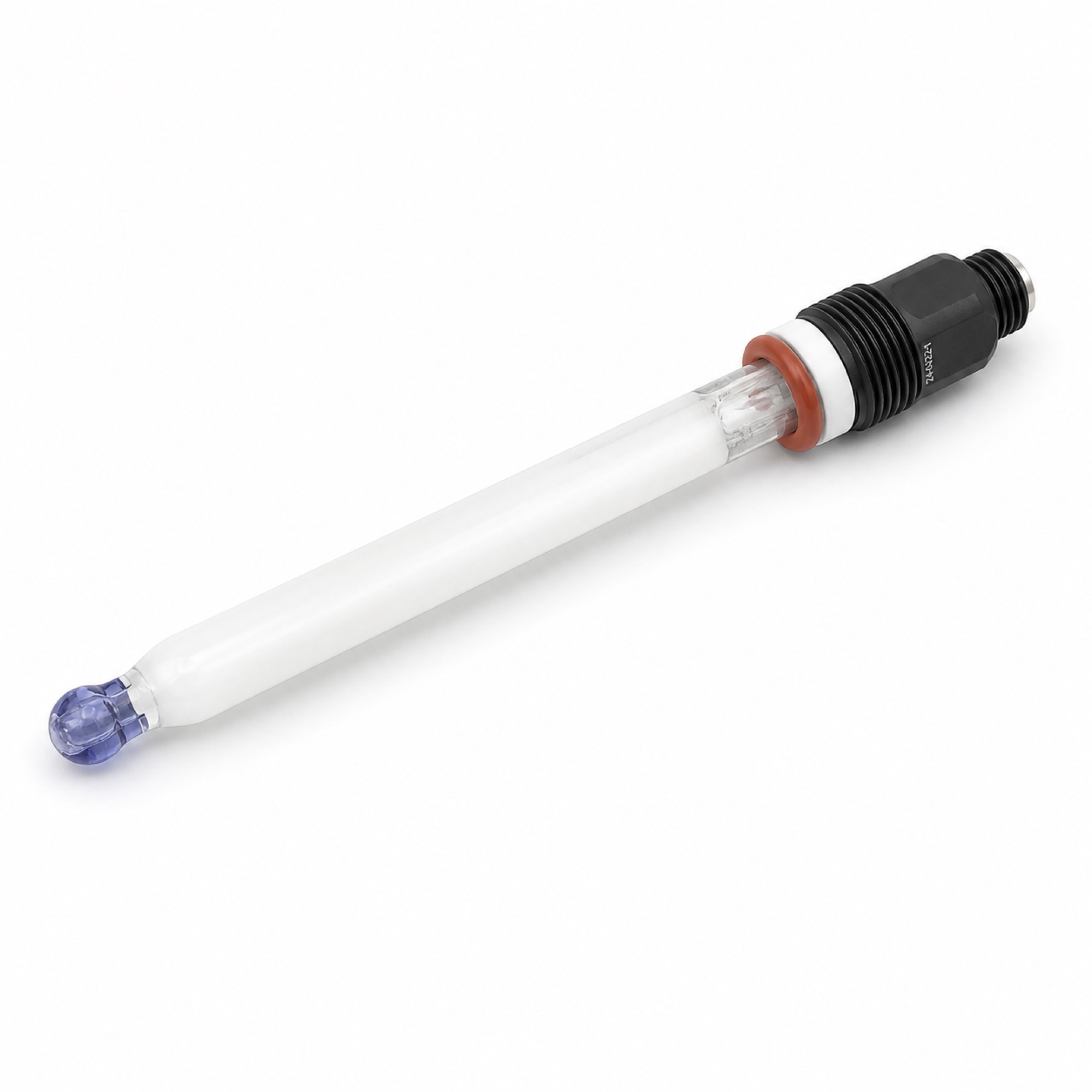
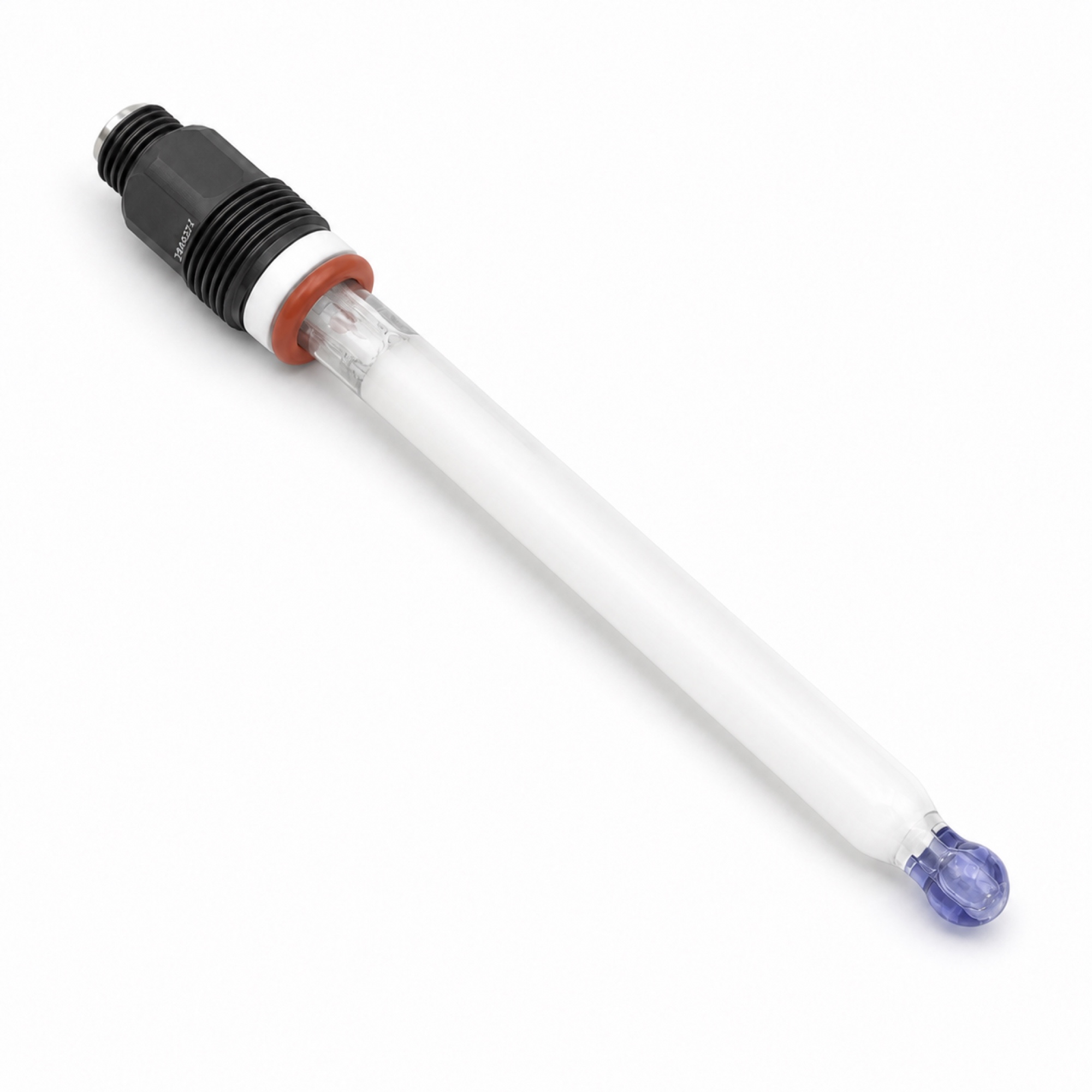
HH6500 Open-Junction pH Electrode for Viscous and Highly Contaminated Media

US$600.00
The HH6500 is an industrial pH electrode designed for viscous, solids-containing, and highly contaminated process liquids. Its single-hole open junction eliminates the microporous diaphragm found in conventional electrodes, helping maintain reference contact where ceramic or PTFE junctions are prone to blockage.
Key Features
- Single-hole open junction without a porous diaphragm
- Designed for viscous, fouling-prone, and solids-containing media
- Double-junction reference with specialized solidified synthetic gel
- HA acid/alkali-resistant glass membrane covering pH 0–14
- PG13.5 glass body with customizable length, temperature sensor, and connector
The HH6500 is a combination pH electrode developed for process liquids that frequently block conventional porous reference junctions. Typical challenges include suspended solids, sludge, fibres, proteins, oils, pigments, precipitates, biological material, and high sample viscosity.
Conventional industrial pH electrodes usually establish electrical contact between the reference electrolyte and sample through a porous ceramic, sintered-glass, or microporous PTFE junction. These junctions perform well in clean and moderately contaminated liquids, but their small pores can gradually become obstructed in difficult process media.
A blocked or restricted junction can result in:
- Slow pH response
- Unstable or drifting readings
- Calibration difficulty
- Increased liquid-junction potential
- Intermittent signal loss
- Premature electrode replacement
The HH6500 addresses this problem with a single-hole open junction. No microporous diaphragm material is installed at the external reference opening. Instead, a specially formulated solidified synthetic gel contacts the process through an unobstructed opening, reducing susceptibility to the mechanical blockage associated with porous junctions.
How the Open-Junction Reference Works
Direct Ionic Contact
The open reference hole allows the solidified synthetic-gel electrolyte to contact the process sample directly. Removing the narrow pores found in ceramic or PTFE junctions creates a larger ionic contact path that is better suited to viscous and solids-containing media.
Because the reference electrolyte is supplied as a solidified gel rather than a freely flowing liquid, the design limits uncontrolled electrolyte loss while maintaining contact with the sample.
Double-Junction Reference Protection
The HH6500 uses a double-junction reference system. The process-facing gel and open junction form the first interface, while an additional internal junction separates the sample from the internal reference element.
This construction helps slow the migration of sulfides, heavy metals, proteins, organic contaminants, and other process components toward the internal reference. It reduces the risk of reference contamination and poisoning, although compatibility must still be evaluated for the actual process chemistry.
HA pH-Sensitive Glass Membrane
The HA acid/alkali-resistant membrane supports measurement across the full pH 0–14 range in compatible aqueous process liquids. Its reinforced glass construction is intended for industrial use while maintaining the electrochemical response required for pH measurement.
The glass membrane must still be protected from direct impact, abrasive solids, excessive installation force, and thermal shock.
Key Benefits
Reduced Susceptibility to Junction Blockage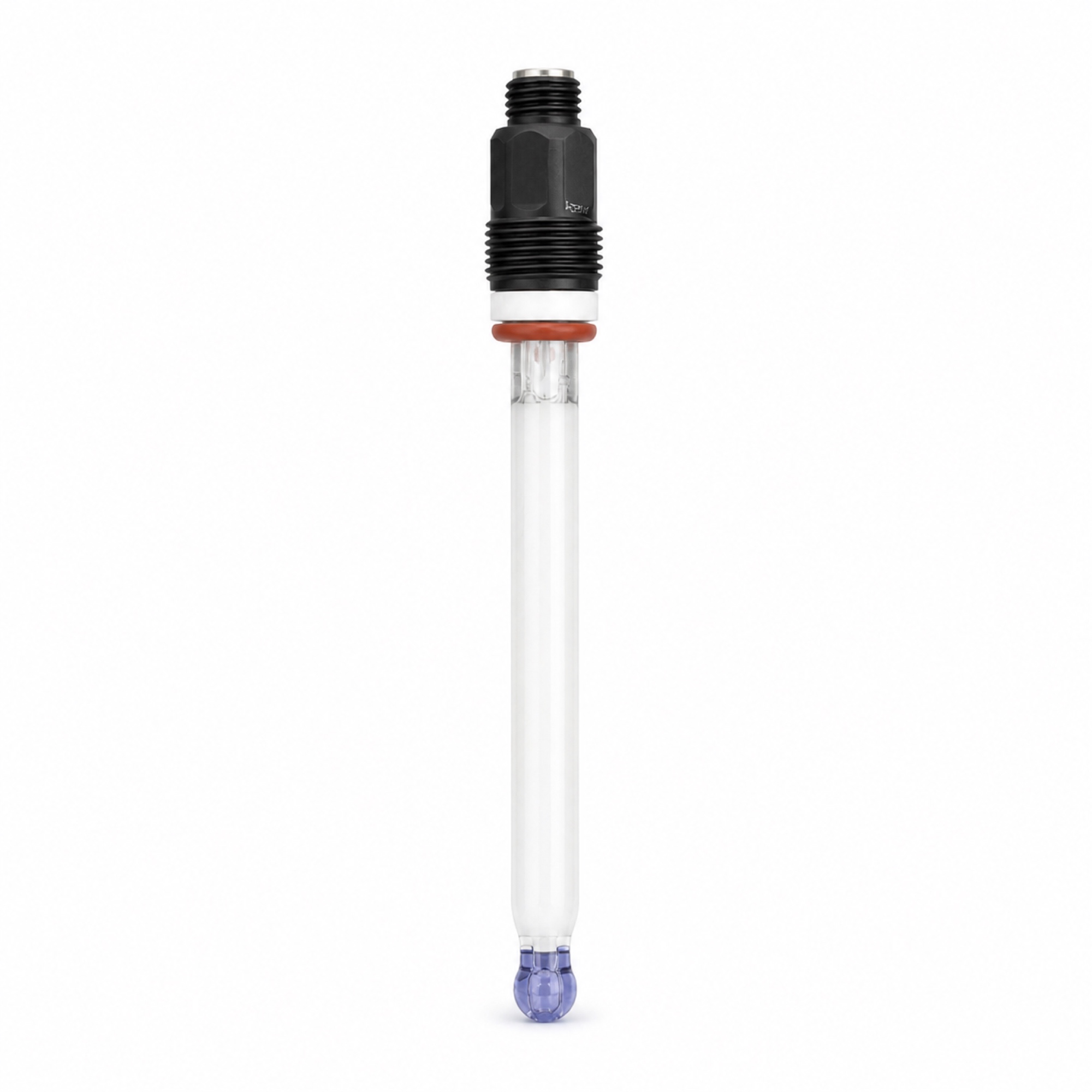
The single open hole removes the microporous structure that commonly traps sludge, fibres, proteins, polymers, pigments, and precipitated solids.
This helps maintain electrical contact between the reference system and process sample in applications where conventional junctions require frequent cleaning or replacement.
More Stable Measurement in Viscous Media
High-viscosity samples move slowly through conventional porous junctions and can produce unstable reference contact. The HH6500 provides a more open process interface, supporting more consistent ionic contact in compatible viscous liquids.
Additional Resistance to Reference Contamination
The double-junction construction provides an additional separation barrier between the process and internal reference element, helping slow contaminant migration.
Flexible Process Integration
The standard 12 mm glass body and PG13.5 thread are compatible with suitable immersion, inline, flow-through, and retractable holders.
Multiple insertion lengths, temperature elements, and cable connectors allow the electrode to be configured for different process assemblies and pH transmitters.
Open Junction vs. Conventional Porous Junction
| Design characteristic | Conventional porous junction | HH6500 open junction |
|---|---|---|
| Process interface | Ceramic, sintered glass, or microporous PTFE | Single open reference hole |
| Ionic contact | Through multiple small pores | Direct contact with solidified gel |
| Blockage risk in viscous media | Higher | Reduced |
| Suspended-solids suitability | Depends on pore size and cleaning frequency | Designed for solids-containing media |
| Internal reference protection | Single or double junction | Double-junction reference system |
| Primary application | Clean to moderately contaminated liquids | Highly contaminated and viscous liquids |
| Maintenance consideration | Internal pore blockage may be difficult to reverse | Open hole and glass membrane still require inspection |
Typical Applications
The HH6500 is intended for pH measurement in:
- Industrial wastewater with high suspended-solids content
- Municipal sewage and sludge-treatment processes
- Textile dyeing and printing wastewater
- Pulp and paper process liquids
- Paint, coating, ink, and pigment production
- Protein-rich fermentation media
- Food-processing slurries and viscous liquids
- Sugar-processing and syrup-related process streams
- Oily or grease-containing wastewater
- Polymer-containing process liquids
- Mineral-processing slurries
- Metallurgical wastewater
- Chemical reaction mixtures
- OEM wastewater-treatment equipment
Application suitability depends on the complete sample composition, water content, temperature, pressure, viscosity, solids loading, and required cleaning method.
Suitable Process Conditions
Highly Contaminated Water and Wastewater
The HH6500 is suitable where conventional junctions are frequently affected by sludge, biological growth, suspended solids, fibres, precipitates, metal hydroxides, dyes, pigments, oils, or grease.
Install the electrode in a representative and adequately mixed location. Avoid positions where settled solids can permanently bury the open junction or glass membrane.
High-Viscosity Media
The open-junction design is intended for slurries, pastes, syrups, emulsions, protein-rich liquids, and polymer-containing media.
The sample must contain sufficient mobile liquid phase to establish ionic contact. Extremely dry pastes, nonaqueous solvents, or mixtures with very low water content may not produce a conventional aqueous pH measurement.
Inline and Immersion Measurement
The PG13.5 connection supports installation in compatible:
- Process pipelines
- Tanks and vessels
- Open channels
- Immersion holders
- Flow-through chambers
- Retractable sensor assemblies
The complete holder, seals, fittings, and cable connection must meet the process temperature, pressure, and chemical-compatibility requirements.
Installation Considerations
Keep the Open Junction in Contact with the Sample
The single reference opening must remain exposed to the process medium. Do not install the electrode where hardened deposits or settled solids can completely cover the opening.
Although the design reduces internal pore blockage, dried process material can still seal the external opening.
Protect the Glass Membrane
Install the electrode with the glass membrane facing downward or at a suitable downward angle. Do not install it with the membrane facing upward.
Protect the electrode from:
- Direct mechanical impact
- Excessive tightening
- High-velocity abrasive particles
- Vessel walls and moving agitators
- Sudden thermal changes
- Pressure outside the specified limits
Confirm Pressure at the Operating Temperature
The standard pressure range is 0–3 bar, with a stated maximum of 6 bar for a compatible configuration.
The maximum pressure should not be assumed to apply across the entire 0–100 °C range. Verify the pressure-temperature limits of the electrode, holder, seals, and process connection.
Match the Temperature Element and Connector
Select the temperature sensor and cable connector according to the intended pH transmitter.
Available temperature elements include multiple NTC values, Pt100, and Pt1000. Incorrect selection or wiring can produce incorrect temperature readings and compensation.
Cleaning and Maintenance
The open-junction design reduces reference blockage, but it does not make the electrode maintenance-free.
The pH-sensitive glass can still become coated by:
- Oil and grease
- Protein and biological material
- Mineral scale
- Sludge and suspended solids
- Polymers, dyes, and pigments
- Crystallized process chemicals
Inspect the electrode according to the process fouling rate. Use a cleaning method compatible with the glass membrane, synthetic gel, seals, holder, and sample chemistry.
Do not scrape the glass membrane or open junction with metal tools. Chemical cleaning must follow the applicable electrode instructions, SDS, PPE requirements, and site-safety procedures.
Calibration and Measurement Notes
Calibrate the HH6500 with fresh buffer solutions selected for the normal process pH range. Allow the electrode, temperature element, and buffer to reach temperature equilibrium before accepting the calibration.
The stated factory slope above 95% confirms the electrode’s initial response under factory calibration conditions. It does not guarantee identical performance after extended process exposure.
A successful buffer calibration also does not automatically confirm accuracy in a highly viscous, contaminated, or high-salinity process. Differences in sample composition can produce liquid-junction potentials not reproduced by standard buffer solutions.
| Parameter | Specification |
| Measurement principle |
Combination glass pH electrode
|
| Measuring range | 0–14 pH |
| Operating temperature | 0–100 °C |
| Standard operating pressure | 0–3 bar |
| Maximum pressure |
Up to 6 bar, subject to configuration and temperature
|
| Factory-calibrated slope | >95% |
| Membrane resistance | <250 MΩ |
| Zero potential, E₀ | Within ±10 mV |
| Stated response time | <10 seconds |
| pH-sensitive membrane |
HA acid/alkali-resistant glass
|
| Junction type |
Single-hole open junction
|
| Reference electrolyte |
Special solidified synthetic gel
|
| Reference system |
Double-junction reference system
|
| Housing material | Glass |
| Body diameter | 12 mm |
| Process connection | PG13.5 thread |
| Available insertion lengths |
120, 150, 225, 325 or 425 mm
|
| Temperature-sensor options |
NTC 2.252K, 5K, 10K, 22K or 30K; Pt100 or Pt1000
|
| Connector options |
S8, S8M, S7, VP8, K8S, K2 and other custom configurations
|
| Weight | 0.3 kg |
|---|---|
| Dimensions | 20 × 6 × 6 cm |
| Insertion Depth | 120 mm, 150 mm, 225 mm, 325 mm, 425 mm, custom |
| Temperature Compensation Options | NTC 2.252K, NTC 5K, NTC 10K, NTC 22K, NTC 30K, PT100, PT1000 |
| Cable Connection | Integrated direct-connection cable, S8, S8M, S7, K8S, VP4, VP, K2, K9, 4 PIN |
| Application | Chemical Processing, Fermentation & Protein-Rich Media, Food & Beverage, High-Viscosity Process Media, Industrial Water & Wastewater Treatment, Metallurgy & Mining, Municipal Water & Wastewater Treatment, OEM Water-Treatment Equipment, Pulp and paper production, Textile & Dyeing Wastewater |
| Parameters | pH |
Related Products

A configurable pH electrode for cold aqueous process liquids operating down to −25 °C. The HH2800L combines a low-temperature PCG reference electrolyte, HA glass membrane, double-junction reference, and PG13.5 connection for refrigerated brines, compatible antifreeze solutions, cold surface water, and chemical processes.
Key Features:
- Reliable performance in temperatures as low as -25°C
- Dual-junction design resists contamination
- IP68-rated for immersion use
- Chemically resistant to strong acids, alkalis, and solvents
- Minimal temperature and signal drift over long-term operation

A robust glass-body pH electrode for wastewater and contaminated process liquids. The HH2100 combines a ring-shaped ceramic junction, double-junction reference system, and HA acid/alkali-resistant glass membrane to reduce sensitivity to junction contamination in suspended-solids and fouling-prone applications.
Key Features:
- Ring-shaped ceramic junction for anti-clogging
- Double-junction reference system for contamination resistance
- IP68 waterproof rating for submersion
- Reinforced pH-sensitive glass membrane
- Full-range pH measurement (0–14) with stable slope response

A durable process ORP electrode for oxidation-reduction potential measurement from −2000 to +2000 mV. The HH4000 combines a large-area 99.99% platinum ring, double-junction reference system, glass housing, and customizable PG13.5 construction for chemical processing, industrial wastewater, and equipment integration.
Key features
- Large-area 99.99% platinum-ring measuring element
- Wide −2000 to +2000 mV measurement range
- Double-junction reference system
- Operation at temperatures up to 130 °C
- PG13.5 connection with customizable insertion lengths
- Optional ceramic-junction and cable configurations

A specialized process pH electrode for aqueous media containing hydrofluoric acid or fluoride. The HH2500HF combines an HF-resistant glass membrane, customized PCG electrolyte, dual-junction reference, and configurable porous-ceramic junction for semiconductor, metal-finishing, petrochemical, and industrial wastewater applications.
Key Features:
- HF-resistant membrane handles up to 5000 ppm HF
- Dual-junction system resists contamination and drift
- IP68-rated for continuous submersion
- Reinforced membrane offers excellent mechanical strength
- Long-term stability in harsh acid process environments