
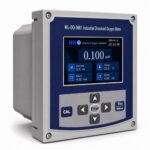
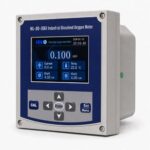
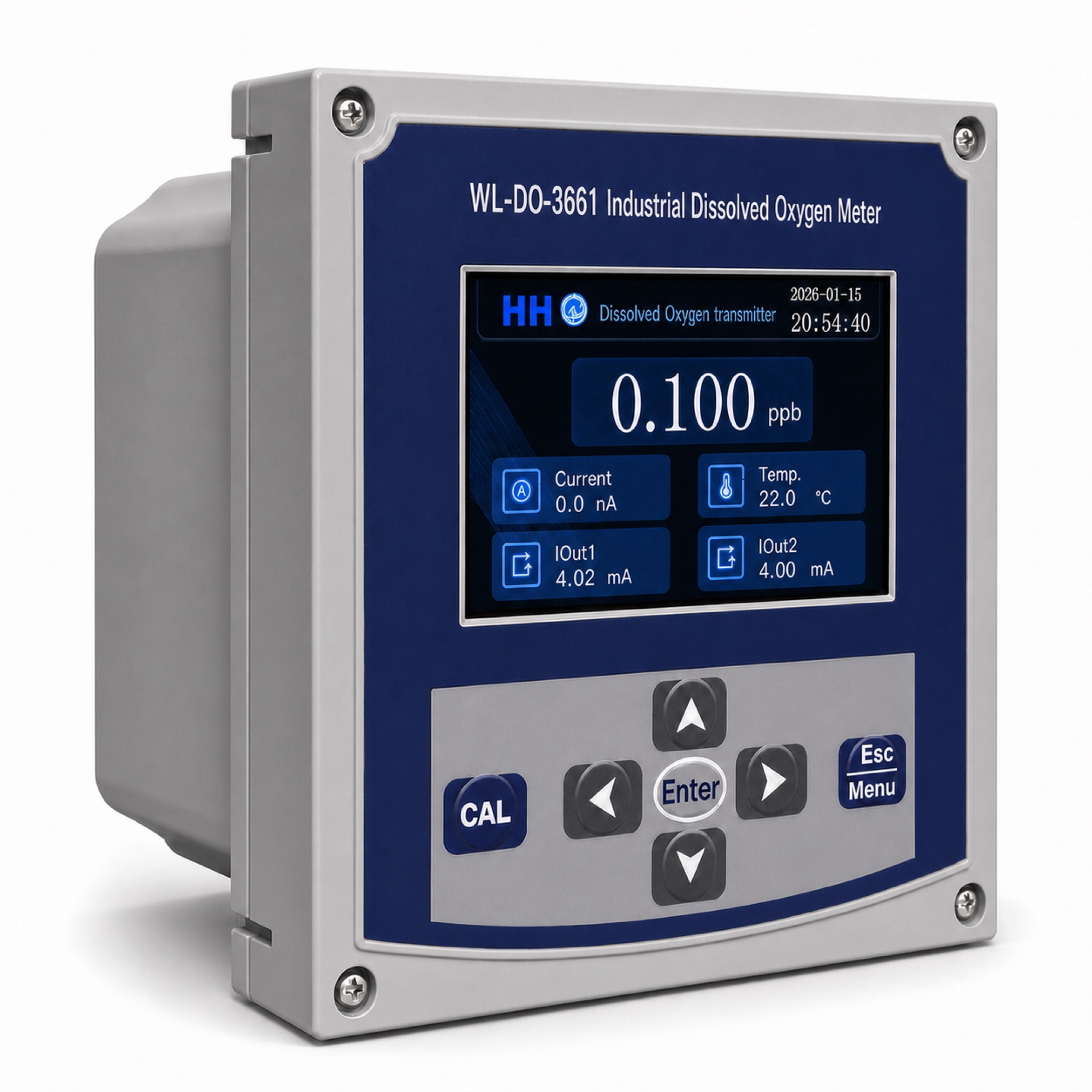
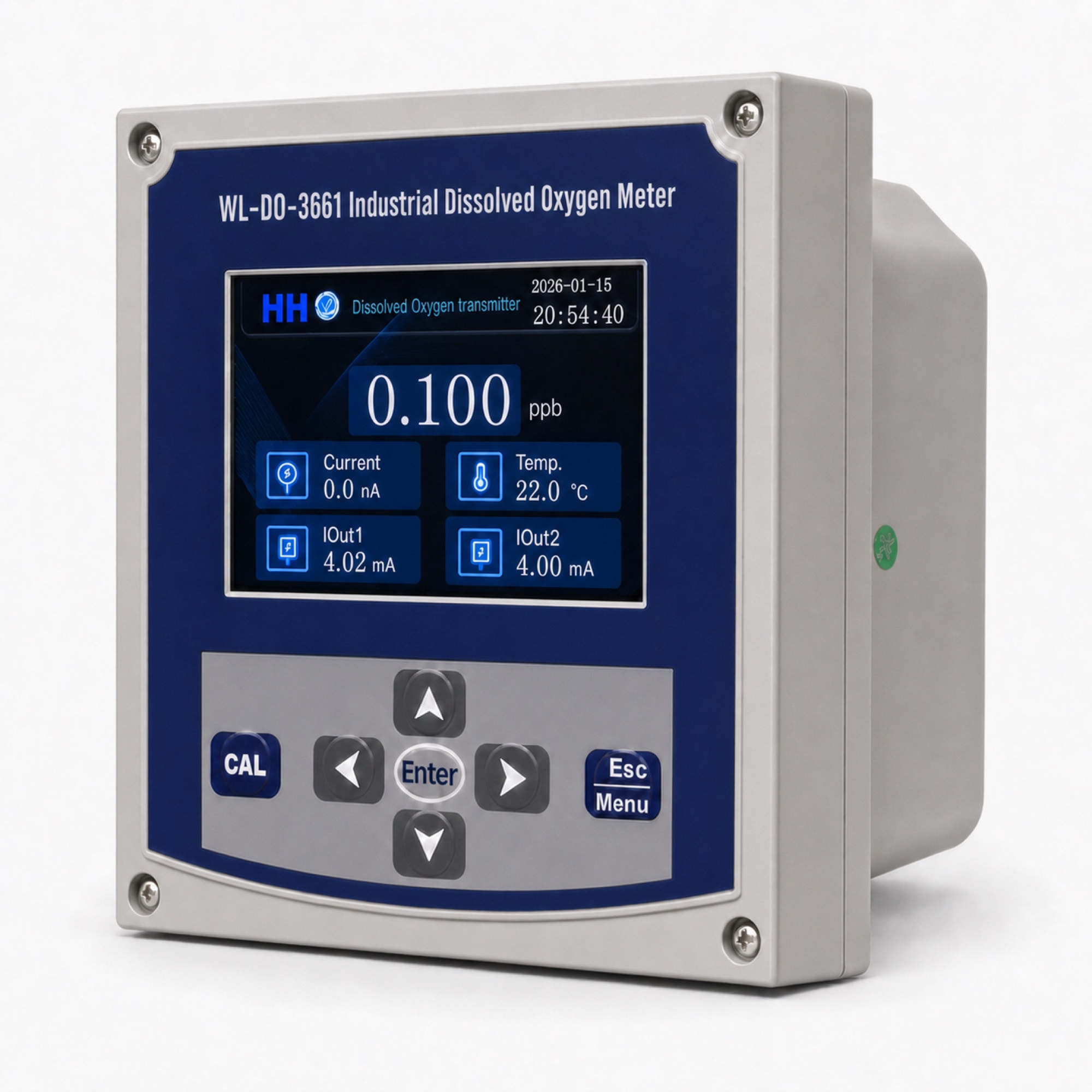
WL-DO-3661 Industrial Dissolved Oxygen Meter
US$1,400.00
A panel-mounted industrial dissolved oxygen meter for continuous online monitoring across μg/L and mg/L concentration ranges. The WL-DO-3661 combines automatic range switching, temperature compensation, two-point calibration, isolated 4–20 mA output, alarms, self-diagnostics, and Modbus RTU communication.
Key Features
- Dual measuring ranges: 0–200.0 μg/L and 0.200–20.00 mg/L
- Automatic range switching and temperature compensation
- Zero-point and full-scale two-point calibration
- Isolated 4–20 mA output and RS485 Modbus RTU communication
- Adjustable alarms, self-diagnostics, and watchdog protection
The WL-DO-3661 is an industrial dissolved oxygen meter designed for continuous online water-quality monitoring and process control. It receives the signal from a compatible membrane-based dissolved oxygen electrode, processes the measurement, displays dissolved oxygen and temperature information, and transmits the results to plant monitoring and control systems.
Two measuring ranges cover dissolved oxygen concentrations from the μg/L level up to 20.00 mg/L. Automatic range switching allows the meter to move between the low and standard concentration ranges without repeated manual adjustment.
The meter also provides automatic temperature compensation, zero-point and full-scale calibration, software-based amplifier-zero correction, configurable alarms, and integrated self-diagnostics.
An isolated 4–20 mA output and RS485 Modbus RTU communication enable integration with compatible PLC, SCADA, aeration-control, data-logging, and process-monitoring systems.
Measurement and Control Functions
Dual Dissolved Oxygen Ranges
The WL-DO-3661 provides separate μg/L and mg/L measurement ranges:
| Measurement range | Approximate equivalent in water | Application direction |
|---|---|---|
| 0–200.0 μg/L | Approximately 0–200.0 ppb | Low-concentration and trace dissolved oxygen |
| 0.200–20.00 mg/L | Approximately 0.200–20.00 ppm | General water and process measurement |
For dilute aqueous samples with a density close to 1 kg/L:
- 1 μg/L is approximately equal to 1 ppb
- 1 mg/L is approximately equal to 1 ppm
- 0.200 mg/L equals 200 μg/L
For formal technical specifications, μg/L and mg/L are preferable because they are direct mass-concentration units.
Automatic Range Switching
The meter automatically selects the appropriate concentration range according to the measured dissolved oxygen value. This allows low and higher readings to be displayed without repeated manual range changes.
The transition point and display resolution should be confirmed against the supplied instrument configuration.
Membrane-Based Measurement System
The paired dissolved oxygen electrode uses an oxygen-permeable PTFE sensing membrane. Oxygen from the process liquid diffuses through the membrane and produces an electrical response in the internal electrochemical system.
The meter converts this sensor signal into a dissolved oxygen concentration. The measurement can be affected by membrane condition, sample temperature, pressure, flow, salinity, calibration, and the condition of the electrode’s internal electrolyte.
The exact electrochemical principle—polarographic or galvanic—should be confirmed for the supplied electrode.
Automatic Temperature Compensation
The solubility of oxygen in water and the response of an electrochemical dissolved oxygen electrode both change with temperature. The meter uses the connected temperature sensor to compensate the measurement according to the instrument’s configured calculation.
Temperature compensation does not correct errors caused by membrane fouling, insufficient sample flow, air leakage, pressure variation, or incorrect salinity settings.
Two-Point Calibration
The WL-DO-3661 supports:
- Zero-point calibration
- Full-scale or span calibration
Zero calibration checks the sensor response under a defined oxygen-free condition. Full-scale calibration establishes the sensor’s sensitivity using a defined calibration environment or reference solution.
Calibration media, temperature, stabilization time, pressure, and acceptance criteria should follow the electrode and instrument instructions.
Automatic Zero Correction
Software-based amplifier-zero correction compensates for drift originating in the meter’s electronic measurement circuit. It does not replace electrode inspection, membrane maintenance, electrolyte servicing, or calibration verification.
Analog and Digital Communication
An isolated 4–20 mA output is provided for connection to compatible recorders, PLCs, control systems, and data-acquisition equipment.
RS485 communication using the Modbus RTU protocol enables a compatible host system to read measurement values and instrument parameters remotely.
Alarm and Self-Diagnostic Functions
Users can configure upper and lower dissolved oxygen alarm limits. Alarm conditions are shown on the display and can activate the normally open relay contact.
The integrated self-diagnostic function displays relevant instrument or fault information. A watchdog monitors program execution and helps the instrument recover from abnormal software conditions.
Typical Applications
The WL-DO-3661 can be configured for continuous dissolved oxygen monitoring in:
- Municipal wastewater treatment
- Domestic sewage treatment
- Industrial wastewater treatment
- Biological treatment and aeration control
- Surface and natural water monitoring
- Aquaculture and fish-farming systems
- Food and beverage water systems
- Pharmaceutical water treatment
- Electronics manufacturing
- Pulp and paper production
- Chemical processing
- Power-generation water systems
- OEM water-treatment and automation equipment
Final suitability depends on the paired electrode, measurement range, required accuracy, sample conditions, and installation design.
Suitable Operating Environments
Control Panel Installation
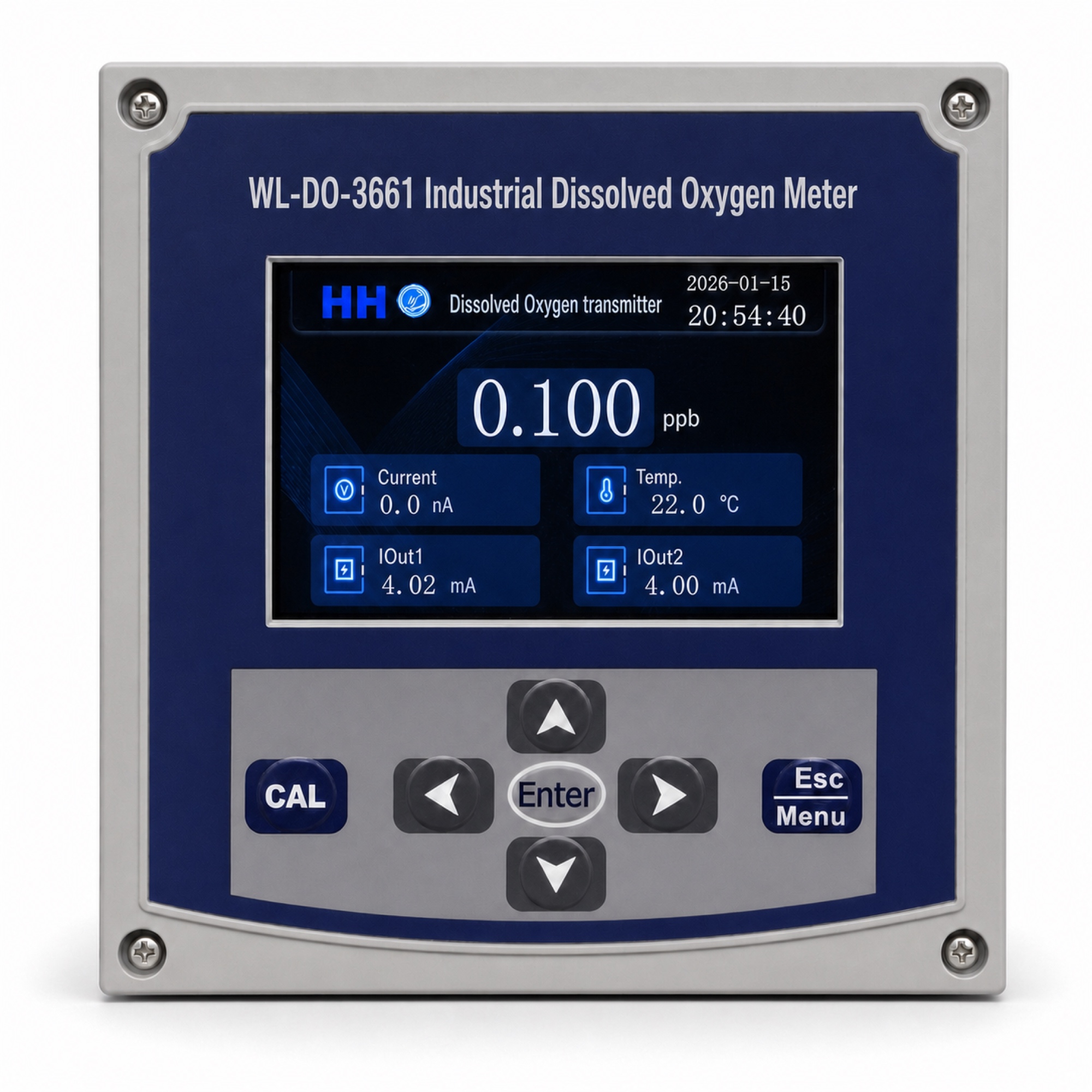 The WL-DO-3661 is intended for installation in an indoor control panel or instrument cabinet where:
- Ambient temperature remains between 0 and 45 °C
- Relative humidity does not exceed 85%
- Condensation is prevented
- The meter is protected from direct water spray
- Excessive dust and vibration are controlled
- Corrosive gas cannot enter the instrument enclosure
- A stable 220 VAC power supply is available
- Adequate clearance is provided for wiring and maintenance
No enclosure protection rating has been provided for the meter. Outdoor, washdown, or exposed installations require a suitably rated protective cabinet.
General Water and Wastewater Monitoring
For wastewater, aquaculture, and biological treatment, install the electrode where the water is representative and adequately mixed.
Avoid locations where:
- Sludge can completely bury the sensing membrane
- Large bubbles remain trapped against the sensor
- Grease or floating solids accumulate
- The sensor is exposed to direct mechanical impact
- Reagent injection produces a locally unrepresentative concentration
Low-Concentration Dissolved Oxygen Monitoring
For low-μg/L dissolved oxygen measurement, use a closed and leak-tight sample line where practical. Small amounts of air ingress can significantly increase the measured oxygen concentration.
Stable low-level measurement may require:
- Leak-tight tubing and fittings
- Stable sample flow
- Controlled sample pressure
- Minimal atmospheric exposure
- Low-oxygen-compatible tubing materials
- Appropriate zero verification
- A sensor validated for the required concentration
A displayed range beginning at zero does not by itself establish the instrument’s detection limit or accuracy at single-digit ppb concentrations.
Process Measurement Conditions
The connected electrode and process assembly should be selected for:
- Process-liquid temperatures from 5 to 45 °C
- Process pressures not exceeding 0.3 MPa
- The expected dissolved oxygen range
- The required sample flow
- The salinity and chemical composition
- The required pipeline, immersion, or flow-through installation
- The compatibility of the membrane, housing, seals, cable, and electrolyte
The stated process conditions apply to the paired sensor and measurement assembly, not only to the panel-mounted meter.
Installation and Measurement Considerations
Confirm Electrode Compatibility
Before ordering, confirm:
- Dissolved oxygen electrode model
- Polarographic or galvanic measurement principle
- Required excitation or polarization voltage
- Electrode output range
- Temperature-sensor type
- Cable connector and wiring
- Membrane and electrolyte configuration
- Minimum sample-flow requirement
- Calibration procedure
A dissolved oxygen electrode cannot automatically be connected to every dissolved oxygen meter, even when the measurement range appears similar.
Maintain Adequate Sample Flow
Many membrane-based electrochemical dissolved oxygen electrodes consume a small amount of oxygen at the sensing surface. Insufficient sample movement can create a local oxygen-depleted layer and cause a low or slow reading.
Install the electrode where the required minimum flow can be maintained without exposing the membrane to excessive hydraulic force.
Prevent Air Leakage and Trapped Bubbles
In low-oxygen applications, air entering through loose fittings, permeable tubing, or negative-pressure sample lines can produce a falsely high reading.
Bubbles trapped against the membrane may also cause unstable or high results. Install the sensor so that bubbles can move away from the sensing surface.
Keep the Membrane Clean and Intact
The sensing membrane must remain clean and undamaged. Measurement errors can be caused by:
- Biofilm
- Sludge
- Oil and grease
- Mineral scale
- Suspended solids
- Scratches or punctures
- Membrane stretching
- Internal air bubbles
- Electrolyte leakage or ageing
Cleaning methods must be compatible with the membrane, sensor housing, seals, and internal electrode system.
Consider Temperature, Pressure and Salinity
Oxygen solubility changes with temperature, pressure, and salinity. These variables are particularly important when displaying dissolved oxygen in mg/L or percent saturation.
The available data confirms automatic temperature compensation but does not specify salinity or atmospheric-pressure compensation. These functions should not be claimed until verified.
Allow Sufficient Stabilization Time
The stated reading-establishment time is no more than 90 seconds, but the actual time required depends on:
- The magnitude of the concentration change
- Sample temperature
- Sample flow
- Membrane thickness
- Membrane condition
- Electrode polarization
- Calibration method
- Acceptance criterion
For low-concentration measurements, allow the reading to stabilize fully before recording or adjusting the process.
Calibrate Under Controlled Conditions
Use defined zero and span conditions and allow the electrode and calibration medium to reach temperature equilibrium.
A successful calibration confirms sensor response under the calibration conditions. It does not automatically confirm measurement accuracy under actual online flow, pressure, salinity, contamination, and sampling conditions.
Protect Signal and Communication Cables
Route electrode and communication cables separately from motors, variable-frequency drives, power cables, relay wiring, and other interference sources.
Avoid unnecessary cable extension. The stated maximum sensor cable length is 20 m, but the practical limit may depend on the electrode output, cable construction, connector, and installation environment.
Plan for Shutdown and Storage
Do not allow the electrode membrane and internal system to deteriorate during prolonged shutdown. Storage, wetting, polarization, membrane replacement, and restart procedures should follow the instructions for the paired dissolved oxygen electrode.
Required System Components
The WL-DO-3661 is a panel-mounted meter and does not contact the process liquid directly. A complete measurement system normally requires:
- A compatible dissolved oxygen electrode
- A compatible temperature sensor
- Membrane and electrolyte components, where serviceable
- Sensor cable and connector
- An immersion holder or flow-through chamber
- Suitable seals and process fittings
- Representative and stable sample flow
- Connection to the plant power and control system
- Suitable zero and span calibration arrangements
| Parameter | Specification |
|---|---|
| Product model | WL-DO-3661 |
| Product type | Industrial online dissolved oxygen meter |
| Measured parameters | Dissolved oxygen, oxygen saturation and temperature* |
| Display | 128 × 64 dot-matrix LCD or color LCD, depending on configuration |
| Low measuring range | 0–200.0 μg/L |
| Standard measuring range | 0.200–20.00 mg/L |
| Approximate water equivalents | 0–200.0 ppb and 0.200–20.00 ppm |
| Range switching | Automatic |
| Basic dissolved oxygen error | ±1% FS |
| Stability | ±0.3% FS per 24 hours |
| Reading stabilization time | ≤90 seconds |
| Temperature compensation | Automatic |
| Calibration | Zero-point and full-scale calibration |
| Sensing membrane | PTFE, fitted to the compatible electrode |
| Analog output | Isolated 4–20 mA |
| Maximum analog-output load | <500 Ω |
| Digital communication | RS485 |
| Communication protocol | Modbus RTU |
| Alarm functions | Adjustable high and low limits |
| Alarm relay | Normally open contact, 220 VAC/3 A |
| Self-diagnostics | Supported |
| Maximum sensor cable length | ≤20 m |
| Ambient operating temperature | 0–45 °C |
| Maximum relative humidity | 85% |
| Process-liquid temperature | 5–45 °C |
| Maximum process pressure | 0.3 MPa |
| Power supply | 220 VAC ±22 V, 50 Hz ±1 Hz |
| Power consumption | 12 W |
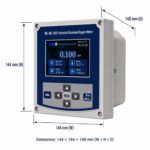
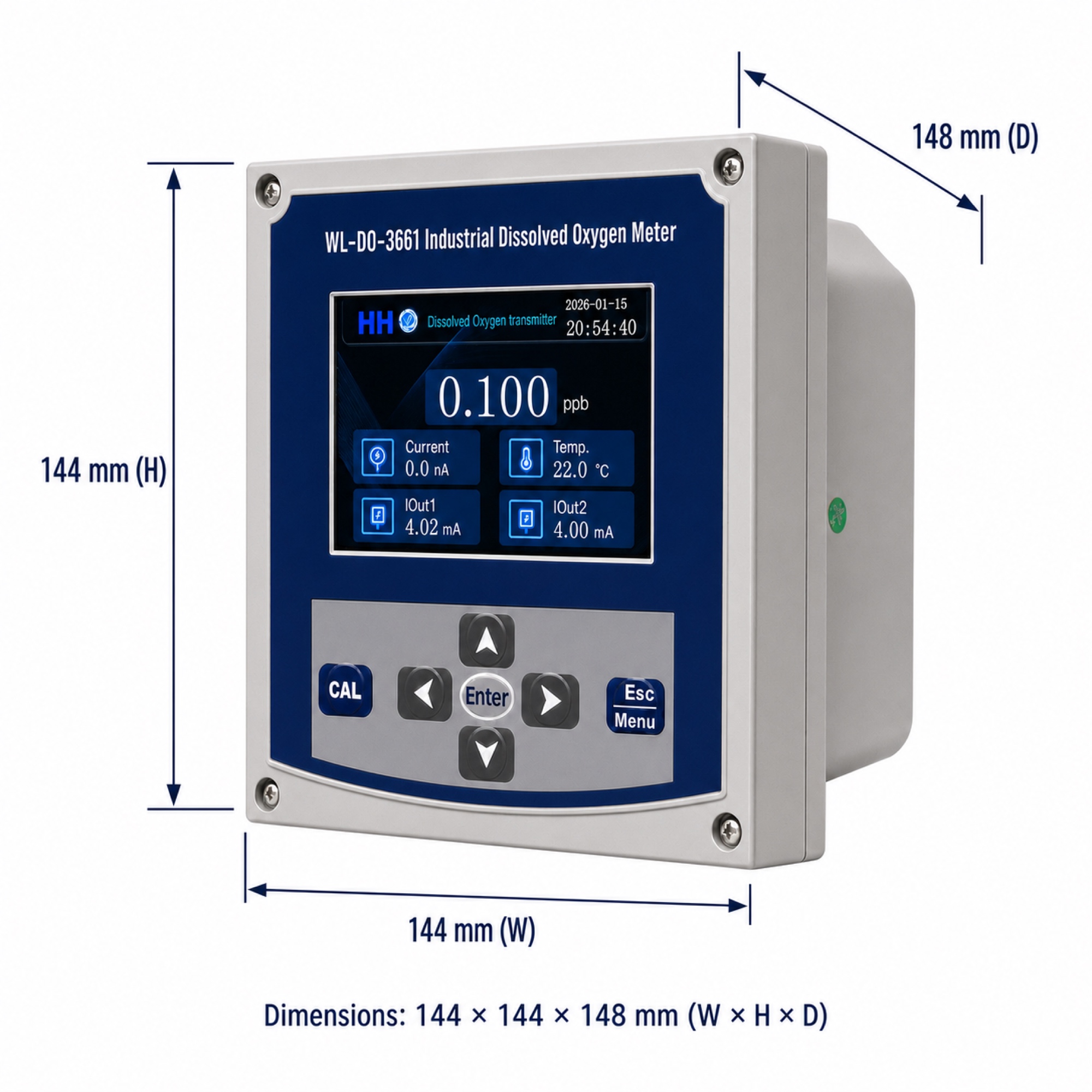
| Instrument dimensions | 144 × 144 × 148 mm |
| Panel cutout | 139 × 139 mm |
| Installation method | Panel mounting |
| Weight | 2 kg |
|---|---|
| Dimensions | 30 × 30 × 30 cm |
| Parameters | Dissolved Oxygen |
| Application | Aquaculture & Aquarium, Chemical Processing, Domestic sewage treatment, Electronics Manufacturing Wastewater, Food & Beverage, Industrial Water & Wastewater Treatment, Municipal Water & Wastewater Treatment, OEM Water-Treatment Equipment, Pharmaceutical & Biotechnology, Power Generation & Steam-Water Cycle, Pulp and paper production, Surface and natural water monitoring |
Related Products
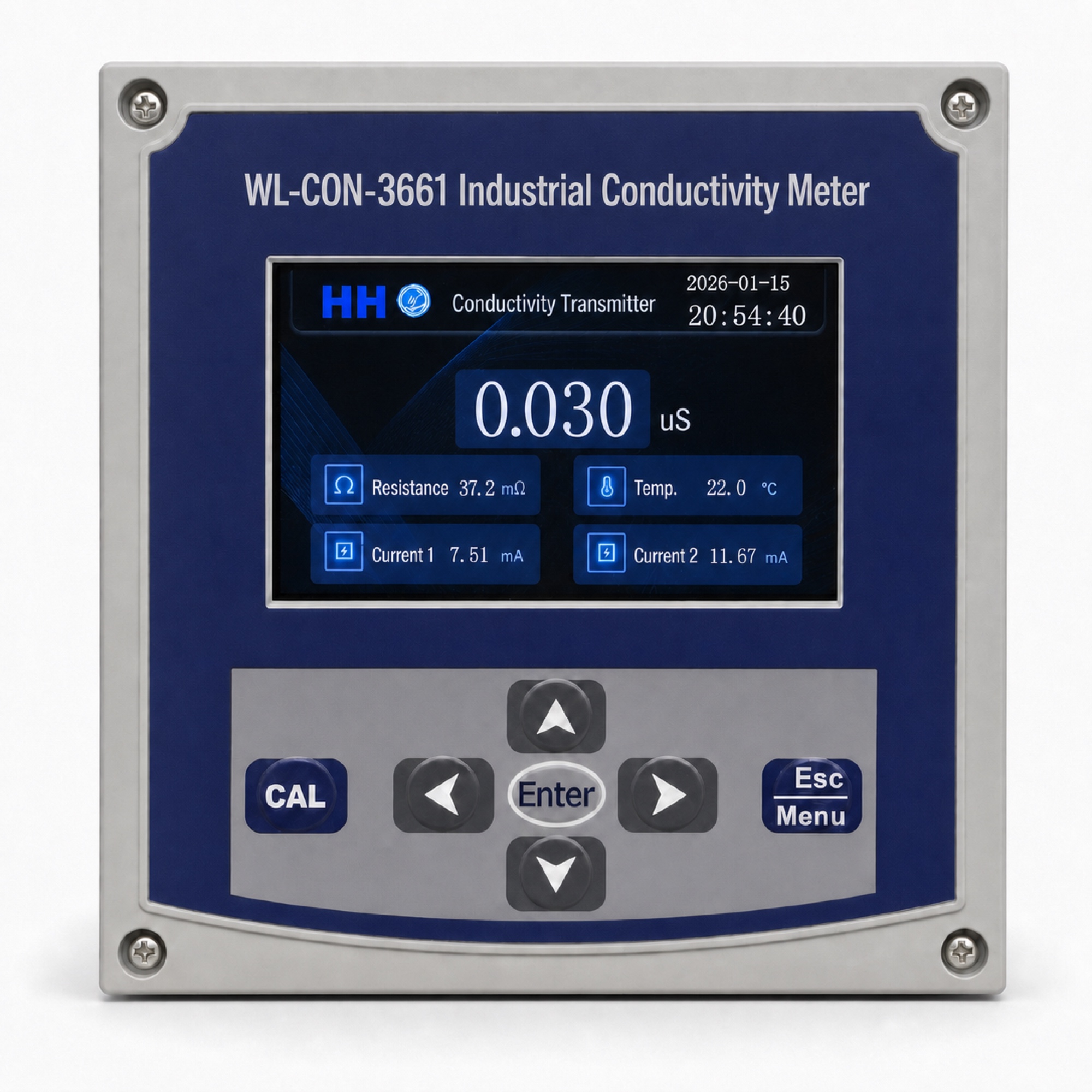
A panel-mounted industrial conductivity meter for continuous online monitoring of conductivity, resistivity, and temperature in pure water and general process water. Compatible with multiple conductivity-cell constants, it provides automatic range switching, configurable temperature compensation, isolated analog outputs, alarms, and Modbus RTU communication.
Key Features
- Four sensor configurations covering 0–20 μS/cm to 0–20.00 mS/cm
- Automatic range switching and configurable temperature compensation
- Dedicated compensation mode for pure-water conductivity measurement
- Two isolated 4–20 mA outputs and RS485 Modbus RTU communication
- Adjustable alarms, non-volatile parameter storage, and watchdog protection
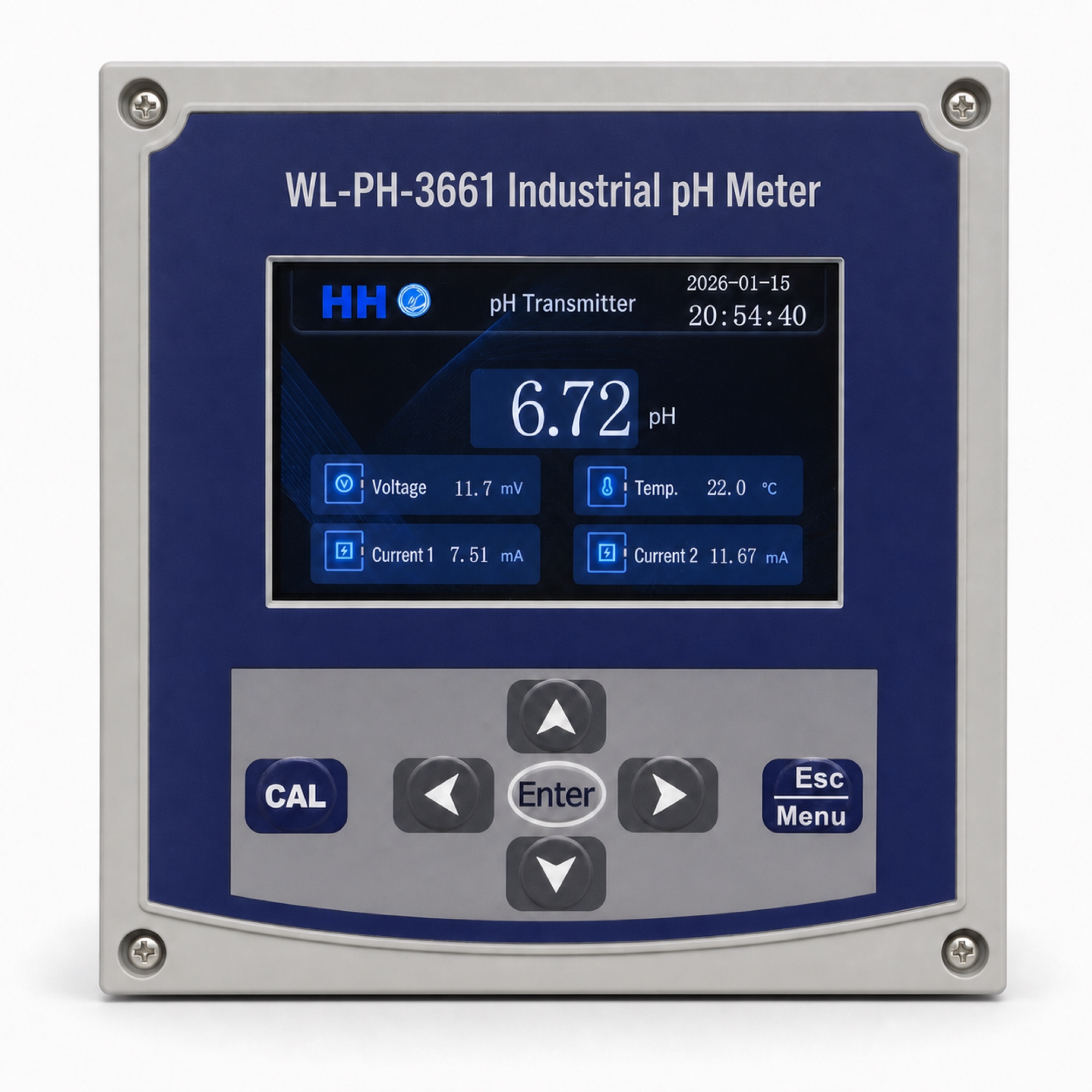
A panel-mounted industrial pH meter for continuous online measurement and process control in water treatment and industrial applications. It combines high-input-impedance signal processing, automatic temperature compensation, isolated analog outputs, alarm control, and Modbus RTU communication.
Key features
- 0–14.00 pH measurement with ±0.05 pH stated accuracy
- Automatic temperature compensation from 5 to 60 °C
- Two configurable isolated 4–20 mA outputs
- RS485 communication with Modbus RTU protocol
- Adjustable high and low alarms with relay outputs